Rustic Dining Room Design Ideas: 12 Real Examples (2026 Guide)
Reclaimed-wood farm table, mismatched cane chairs, a wrought-iron chandelier over the centre — the rustic dining room is the room your family actually lingers in. We unpack the rules, then show 12 photorealistic examples.
- 12
- Real examples
- ~30s
- AI render time
- 4 free
- Credits, no card
What is Rustic Dining Room Design?
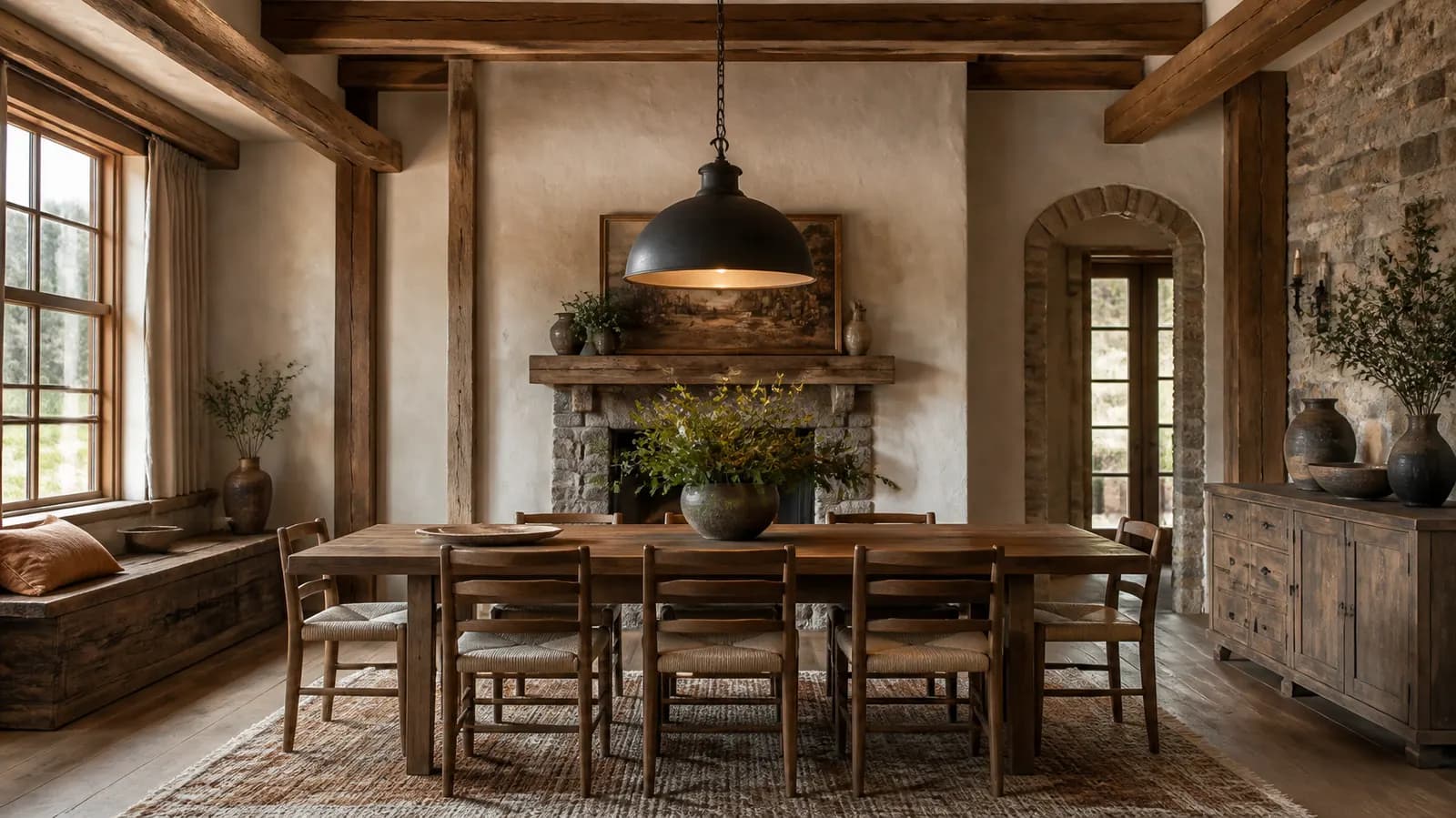
The rustic dining room is the room that descended directly from the European farmhouse kitchen-table tradition. For three or four centuries the farm table was the busiest piece of furniture in the house — it was where bread was kneaded at six, where children did their lessons at noon, where neighbours ate at eight. The look celebrates that history: a heavy reclaimed-wood table that bears the dings of real use, chairs that have been reupholstered or re-caned, a chandelier with the iron forged by hand.
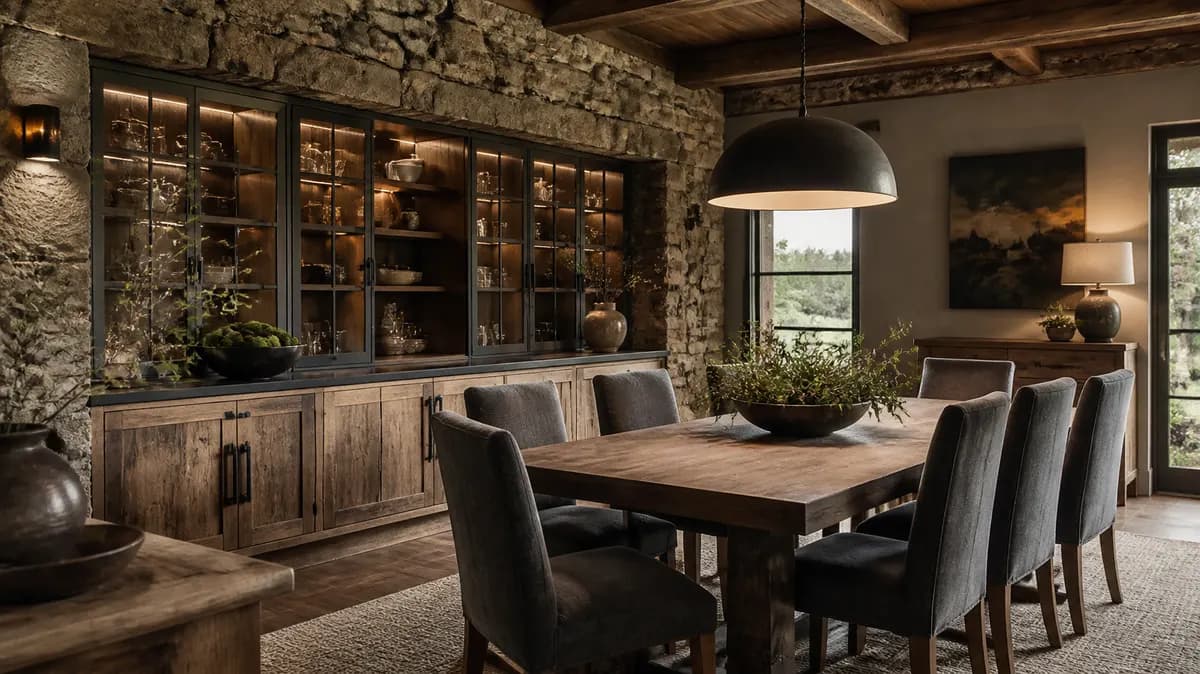
Three principles guide the authentic rustic dining room. First, a hero table: the entire room is composed around one long, heavy farm table in reclaimed oak, walnut or pine. Second, layered warmth: lime-plaster or wainscoted walls, a wool rug under the table, a linen runner across it. Third, deliberate imperfection: mismatched chairs, a slightly chipped jug as the centrepiece, a candle holder that has melted wax down its side from years of use.
In 2026 rustic dining sits at the intersection of two trends: the global return to the long table after a decade of compact city dining, and the wider rejection of glossy showroom kitchens. The look pairs naturally with Modern Farmhouse for a lighter American read, with Mediterranean for a Tuscan-villa take and with English country for the dark-green wainscot version. The throughline is always a heavy wood table, a real iron light overhead and the unspoken sense that ten people just left, or are about to arrive.
12 Real Rustic Dining Room Examples
Each example below is a complete look — not a mood board. Click any image to see it full-size, then hit the generate button to try the same combination on your own room photo.
 1Example
 2Example
 3Example
 4Example
 5Example
 6Example
 7Example
 8Example
 9Example
 10Example
 11Example
 12Example
Key Design Elements
Colors
- Warm cream and limewashed plaster walls
- Reclaimed walnut and oak table tones
- Sage green and dusty olive textile accents
- Terracotta and burnt sienna ceramics
- Wrought-iron black and aged brass hardware
Materials
- Reclaimed barn wood or solid oak for the table
- Lime plaster or shiplap on the walls
- Wool kilim or jute area rug under the table
- Stoneware ceramics and hand-blown glass
- Wrought iron and aged brass for chandelier and hardware
Furniture
- Heavy reclaimed-wood farm table, 220 cm minimum
- Mismatched solid-wood chairs or a long bench
- Antique pine sideboard or hutch for serving
- Hand-caned or rush-seat dining chairs
- Linen-skirted banquette in a window nook
Lighting
- Wrought-iron chandelier over the table centre
- Wall sconces in aged brass beside the sideboard
- Beeswax candles on the table every meal
- Warm-white bulbs at 2700 K everywhere
- Dimmer on the chandelier for evening control
Textiles
- Linen table runner in oatmeal, sage or terracotta
- Linen napkins, one per setting, never matching plates
- Wool kilim or jute rug under the table
- Sheepskin or wool throw on the bench seat
- Heavy linen drapes at the windows
Rustic Dining Room Color Palette
Six pigments do most of the work — start here, then add one accent of your own.
The base white for plaster walls and ceilings. Warmer than pure white, it makes the wood table glow gold once the candles are lit.
The hero wood for the table — deep brown with knots and saw marks visible. Repeat it on the sideboard but never go three competing browns.
The muted accent on linen runners, wool seat cushions and a single hand-thrown vase. Lifts the brown palette without breaking the warmth.
Warm-pop colour on ceramics, candle holders and one wool stripe. Adds the fire-glow undertone the rustic dining room is built around.
Limewash plaster, slate hearth, raw linen drapes. Grounds the palette and gives the eye somewhere quiet to land between meals.
Strict accent — chandelier frame, candle holders, drawer hardware. Used sparingly so the candle flame always reads brighter than the metal.
Must-Have Furniture & Fixtures
If you only buy these seven, you will read as authentically rustic.
Reclaimed-wood farm table
Single-slab or three-plank top, 220–280 cm long, in oak, walnut or aged pine. Hand-forged iron base or heavy turned wood legs.
Mismatched dining chairs
Six to eight chairs in solid wood — a mix of hand-caned, rush-seat, ladder-back and Windsor styles works beautifully. Or a long bench on one side.
Wrought-iron chandelier
Eight- or twelve-arm chandelier in black wrought iron with Edison-bulb candle sleeves. Hung 80–90 cm above the table on a dimmer.
Antique pine sideboard
Long, low cabinet with three or four drawers, hand-forged iron hardware and a slightly worn finish. Used for serving and storing linen.
Wool kilim or jute rug
Hand-knotted rug under the table — large enough that the chairs stay on it when pulled out. Earth tones with one terracotta or sage stripe.
Linen textiles
Stonewashed linen runner across the table, one linen napkin per setting, full-height linen drapes on the windows. Three weights minimum.
Stoneware service
Hand-thrown stoneware platters, a pair of pitchers and a small bowl set. Beeswax candles and one fig or olive branch as the centrepiece.
Common Mistakes to Avoid
Buying a matching dining set — six identical chairs around a matching table reads suburban catalogue, not rustic. Mix at least two chair styles or use a bench on one side.
Using a glass tabletop — the rustic dining room is built around the wood. A glass top, even on a wood base, erases the texture that makes the look read.
Over-styling the centrepiece — a single ceramic jug with a branch and two beeswax candles beats a maximalist tablescape every time. Restraint reads as country wealth.
Cold overhead light — a single 4000 K LED kills the whole mood. The chandelier needs Edison bulbs at 2700 K on a dimmer, plus candles on the table at dinner.
Forgetting the rug — wood chair on wood floor reads thin and bare. A wool kilim or jute rug under the table is what tells the eye this is a room, not a passage.
Try Rustic Dining Room in Your Own Room
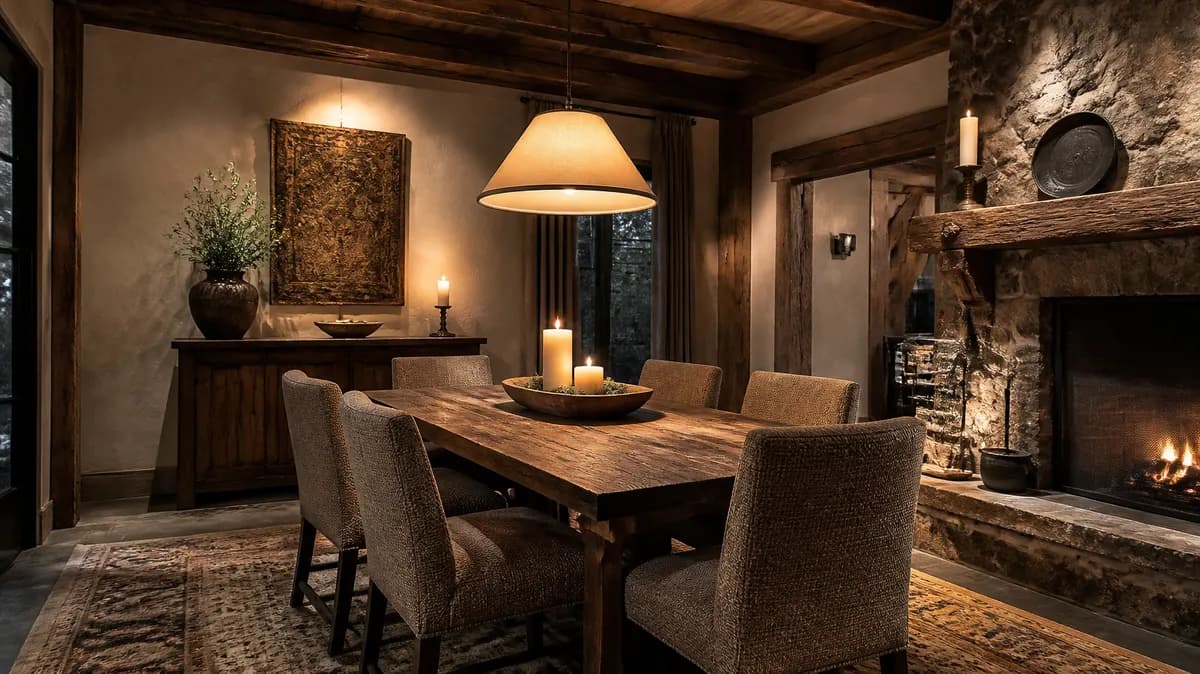
Upload a photo of your real dining room. Get a photorealistic rustic redesign in about 30 seconds. 4 free credits, no card.
Generate Your Rustic Dining Room FreeOther Rustic Rooms
Apply the same palette and principles to the rest of the home.


Other Dining Room Styles
Same room, different aesthetic — explore the rest of the dining style library.


Rustic Dining Room — Frequently Asked Questions
What colors define rustic dining room design?
How big should a rustic dining table be?
Should I mix or match the dining chairs?
What lighting works above a rustic dining table?
Does a rustic dining room work in a modern home?
Is rustic dining good for small open-plan apartments?
How to Design a Rustic Dining Room
Five decisions, in this order. Skip any of them and the look will not land.
- 1
Buy the right table first
Everything else hangs off this one decision. Pick a reclaimed-wood farm table, 220–280 cm long, in oak, walnut or aged pine with a hand-forged iron base or heavy turned legs. Spend more here than on any other piece in the room. The table is what photographs and what your guests touch — invest accordingly.
- 2
Mix the chairs, add a bench
Resist the urge to buy a set. Combine two chair styles — ladder-back plus hand-caned, or Windsor plus rush-seat — and put a long bench on one side. Match the wood tones loosely, not exactly. This is the move that separates a real rustic dining room from a furniture-store mock-up.
- 3
Hang the wrought-iron chandelier
Centre an eight- or twelve-arm wrought-iron chandelier over the table at 80–90 cm above the tabletop. Edison bulbs at 2700 K on a dimmer. Add two aged-brass sconces beside the sideboard. Every bulb in the room should be 2700 K or warmer — no exceptions.
- 4
Treat the walls and floor
Limewash or warm-cream plaster on the walls. Whitewashed shiplap or vertical beadboard behind the sideboard as an accent. Wide-plank reclaimed wood underfoot, with a wool kilim or jute rug under the table large enough to keep the chairs on it when pulled out. The room should read warm before any furniture goes in.
- 5
Set the table — linen, ceramics, candles, one branch
Stonewashed linen runner down the middle. One linen napkin per setting, never matching the plates exactly. A pair of beeswax pillar candles in iron holders. A single hand-thrown ceramic jug with a fig branch, olive sprig or seasonal fruit. Resist any further styling — the discipline is what makes the warmth read.
Keep Exploring
Tools and guides that pair with this style.