Minimalist Dining Room Design Ideas: 12 Real Examples (2026 Guide)
Less is more. A philosophy of subtraction that creates calm, intentional spaces defined by light, form, and material. We unpack what makes a dining room feel truly Minimalist, then show 12 photorealistic examples you can replicate.
- 12
- Real examples
- ~30s
- AI render time
- 4 free
- Credits, no card
What is Minimalist Dining Room Design?
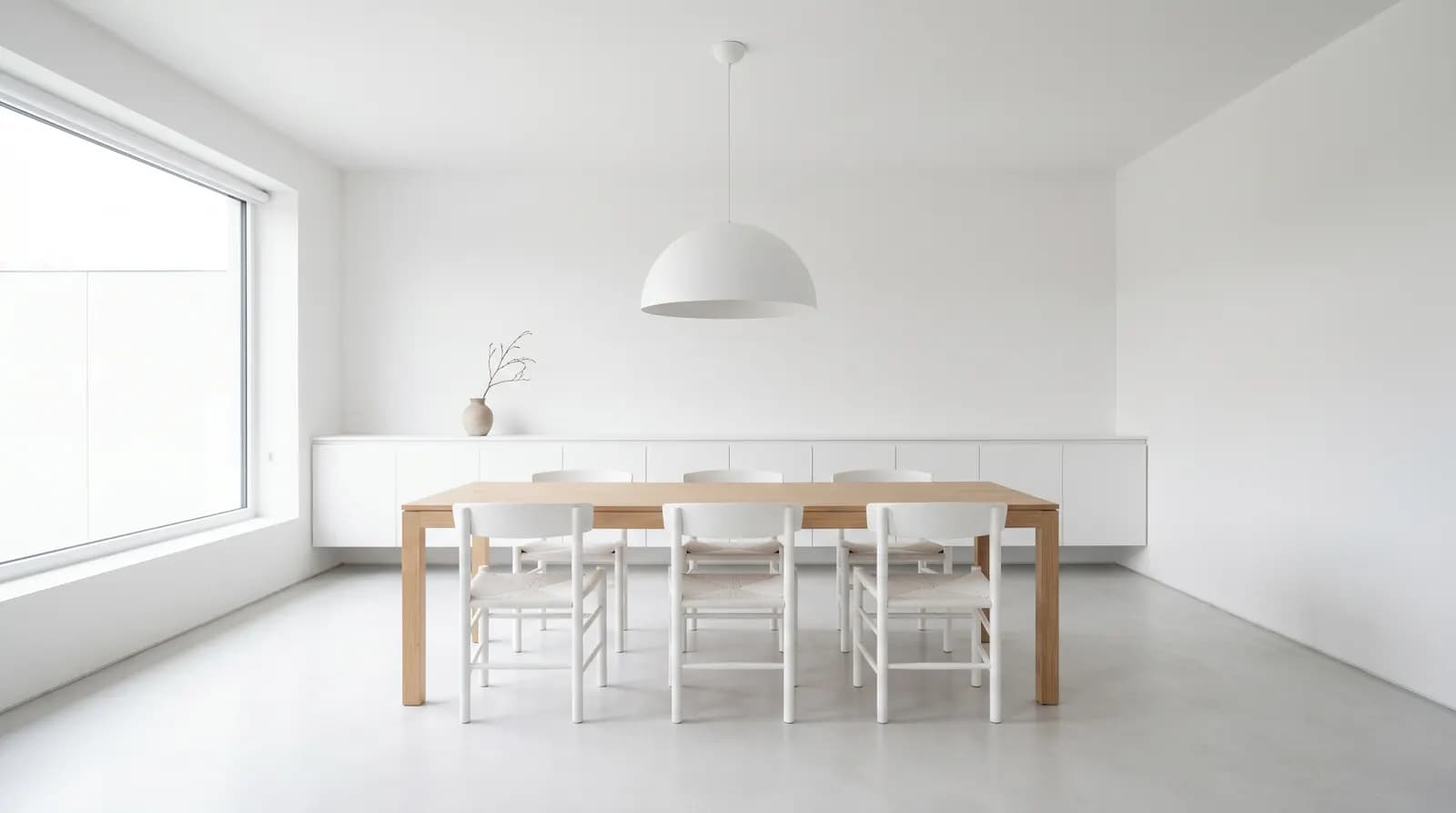
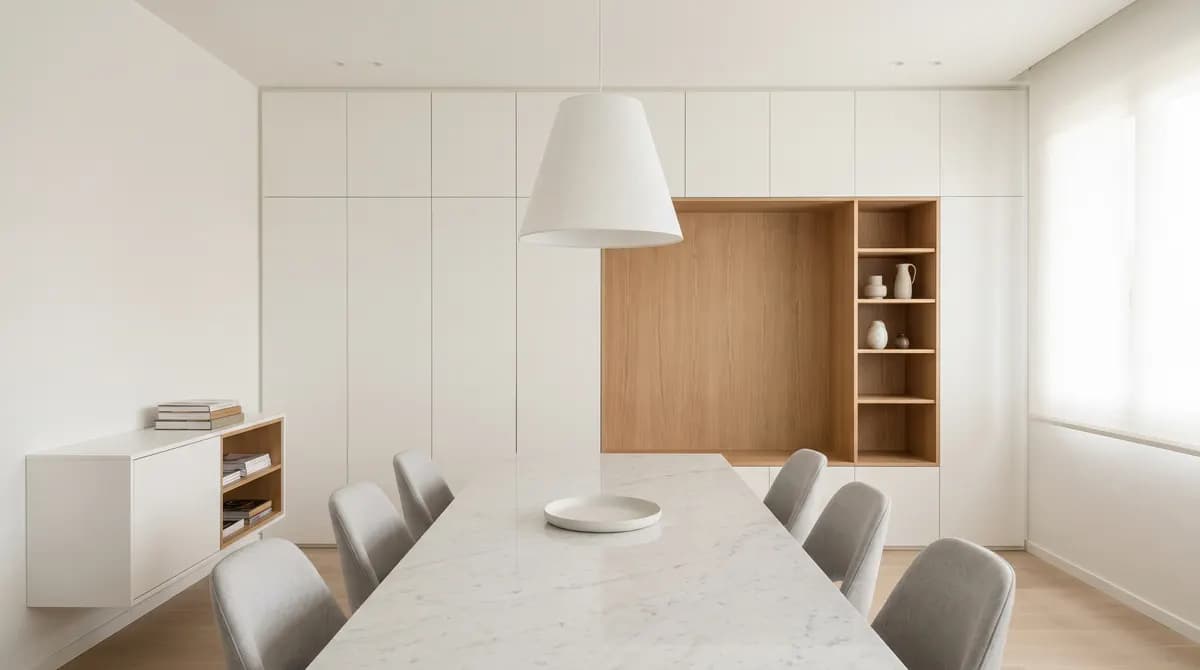
Minimalist design is an aesthetic and philosophical approach that strips away non-essential elements to focus on what truly matters. In a dining room, this translates to clean lines, a restrained color palette, and an uncluttered composition. Its roots lie in the De Stijl and Bauhaus movements of the early 20th century, which championed pure geometry and the rejection of ornament. A minimalist dining room is not about emptiness, but about intentionality; every object, surface, and piece of furniture earns its place.
Three principles guide authentic Minimalist design. First, subtraction: the practice of removing elements until the design can no longer be improved by taking anything else away. Second, material honesty: using materials like solid wood, concrete, stone, and steel for their intrinsic texture and character, without disguise. Third, the power of negative space: the empty areas around objects are treated as active design elements, creating a sense of breathability and calm, allowing the forms of the furniture to stand out.
In 2026, Minimalism remains a powerful antidote to a culture of excess. It resonates with a desire for mindful living and sustainability, favoring high-quality, long-lasting pieces over transient trends. It often overlaps with Japandi and Wabi-Sabi, which share its appreciation for natural materials and imperfection, but Minimalism itself is a broader church, encompassing both cool, architectural spaces and warmer, more textural interpretations. It’s a style that offers visual quiet in a loud world.
12 Real Minimalist Dining Room Examples
Each example below is a complete look — not a mood board. Click any image to see it full-size, then hit the generate button to try the same combination on your own dining room photo.
 1Example
 2Example
 3Example
 4Example
 5Example
 6Example
 7Example
 8Example
 9Example
 10Example
 11Example
 12Example
Key Design Elements
Colors
- A monochromatic base of soft whites, greiges, and muted greys.
- Deep charcoal and matte black as sharp, graphic accents.
- Warm, earthy neutrals like sand, limestone, and terracotta.
- The natural tones of wood, from pale ash to rich walnut.
- A strict avoidance of bright, primary colors and busy patterns.
Materials
- Polished or honed concrete for floors and feature walls.
- Solid wood, particularly oak, walnut, and ash, for tables and chairs.
- Natural stone like travertine, limestone, or honed marble for tabletops.
- Blackened or powder-coated steel for chair legs and lighting fixtures.
- Raw, textural fabrics like linen, wool, and bouclé.
Furniture
- A dining table with a simple, strong silhouette—rectangular or round.
- Iconic chair designs (e.g., Eames, Wegner, Breuer) with clean lines.
- A low, long sideboard or credenza with handleless, flat-front doors.
- Minimal bench seating to reduce visual clutter on one side of the table.
- Furniture chosen for its sculptural form as much as its function.
Lighting
- A single, large-scale pendant light acting as a sculptural focal point.
- Recessed, trimless downlights or architectural track lighting for a clean ceiling.
- Hidden LED strips in ceiling coves or under furniture for ambient glow.
- Large, unadorned windows with sheer curtains to maximize natural light.
- A single, iconic floor lamp in a corner for layered lighting.
Textiles
- Floor-to-ceiling sheer linen or raw cotton curtains.
- A large, low-pile wool or jute rug to ground the dining set.
- High-quality linen napkins and placemats, used sparingly.
- Chair upholstery in solid, textural neutrals like bouclé or felted wool.
- A complete absence of pattern; texture provides all the variation.
Minimalist Dining Room Color Palette
Six pigments create a quiet, intentional backdrop. Start here, then add one accent of your own.
The quintessential gallery white for walls and ceilings. It's a soft, non-clinical white that creates the perfect canvas for light and shadow.
A warm, sophisticated blend of grey and beige. Use it for limewash walls or upholstery to add depth without adding color.
A true mid-tone grey that mimics the color of poured concrete. The grounding element for floors, feature walls, or stone tabletops.
A deeper, earthy neutral with brown undertones. Perfect for adding a touch of organic warmth to ceramics or a feature wall.
A soft, grounding black, less harsh than pure jet black. Used as a graphic accent for chair frames, lighting, and window trim.
The rich, warm tone of natural walnut or dark-stained oak. Provides a crucial organic counterpoint to the cooler architectural elements.
Must-Have Furniture & Fixtures
If you only invest in these seven pieces, your space will read as authentically Minimalist.
The Statement Table
A solid wood, stone, or high-quality laminate table with a clean, geometric form. This is the anchor of the room; invest in the best you can afford.
Sculptural Chairs
A set of six to eight chairs with an iconic, sculptural silhouette. They should be beautiful enough to be viewed as individual objects.
The Single Pendant
One large, dramatic pendant light hung low over the center of the table. Its form is more important than the light it casts.
The Invisible Sideboard
A long, low credenza with flat-front, handleless doors, often in the same color as the wall to make it visually disappear.
Large-Scale Art
A single, oversized, unframed abstract painting or a large-format photograph. This is the room's focal point and emotional core.
Sheer Curtains
Floor-to-ceiling sheer linen curtains that run wall-to-wall. They soften the architecture and beautifully diffuse natural light.
The Grounding Rug
A large, solid-colored, low-pile rug in wool or jute. It defines the dining area and adds a crucial layer of texture and warmth.
Common Mistakes to Avoid
Confusing minimal with cold — a truly minimalist space is warm and inviting, achieved through rich textures, natural materials, and soft lighting.
Using low-quality materials — minimalism exposes every detail, so cheap furniture or poor finishes will be immediately obvious. Invest in quality over quantity.
Forgetting storage — without considered, integrated storage (like a seamless sideboard), clutter inevitably takes over and destroys the calm.
Ignoring texture — an all-white, textureless room feels like a sterile lab. Layer plaster, wood, linen, bouclé, and stone to create sensory depth.
Choosing form over function — furniture must still be comfortable and the room usable. A beautiful chair no one wants to sit in is a failure of design.
Try Minimalist Design in Your Own Dining Room
Upload a photo of your real dining room. Get a photorealistic Minimalist redesign in about 30 seconds. 4 free credits, no card.
Generate Your Minimalist Dining Room FreeOther Minimalist Rooms
Apply the same palette and principles to the rest of the home.


Other Dining Room Styles
Same room, different aesthetic — explore the rest of the dining room style library.


Minimalist Dining Room — Frequently Asked Questions
What are the core principles of a minimalist dining room?
How do I make a minimalist dining room feel warm and not cold?
What kind of dining table is best for a minimalist look?
Is minimalist design practical for a family with kids?
What is the difference between Minimalist and Japandi style?
How should I handle storage in a minimalist dining room?
How to Design a Minimalist Dining Room
Five decisions, in this order. Skip any of them and the look will not land.
- 1
Begin with Subtraction
Before buying anything, declutter ruthlessly. Remove every object that is not essential or beautiful. The goal is to create a clean canvas. Minimalism is defined by what is not there.
- 2
Define a Neutral Palette
Choose a tight palette of 3-4 neutrals. Start with a soft white or greige for the walls. Add a mid-tone grey or beige, a dark charcoal accent, and the warmth of one wood tone. Stick to it.
- 3
Select the Anchor: Your Table & Chairs
Invest the largest part of your budget here. Choose a table with a simple, powerful form and chairs that are sculptural objects in their own right. This grouping is the heart of the room.
- 4
Layer Textures, Not Things
Now, add warmth. Bring in a low-pile wool rug, floor-to-ceiling linen curtains, and natural stone or ceramic accessories. The interplay of different textures is what makes the space feel rich and inviting.
- 5
Choose One Focal Point
Select one—and only one—star element. This could be a large sculptural pendant light hanging over the table or a single, oversized piece of abstract art on the main wall. Let it be the room's sole statement.
Keep Exploring
Tools and guides that pair with this style.