Rustic Nursery Design Ideas: 12 Real Examples (2026 Guide)
Reclaimed-wood crib, woollen throws, a soft woodland palette — the rustic nursery is the calm, warm room a baby actually settles in. We unpack the rules, then show 12 photorealistic examples.
- 12
- Real examples
- ~30s
- AI render time
- 4 free
- Credits, no card
What is Rustic Nursery Design?
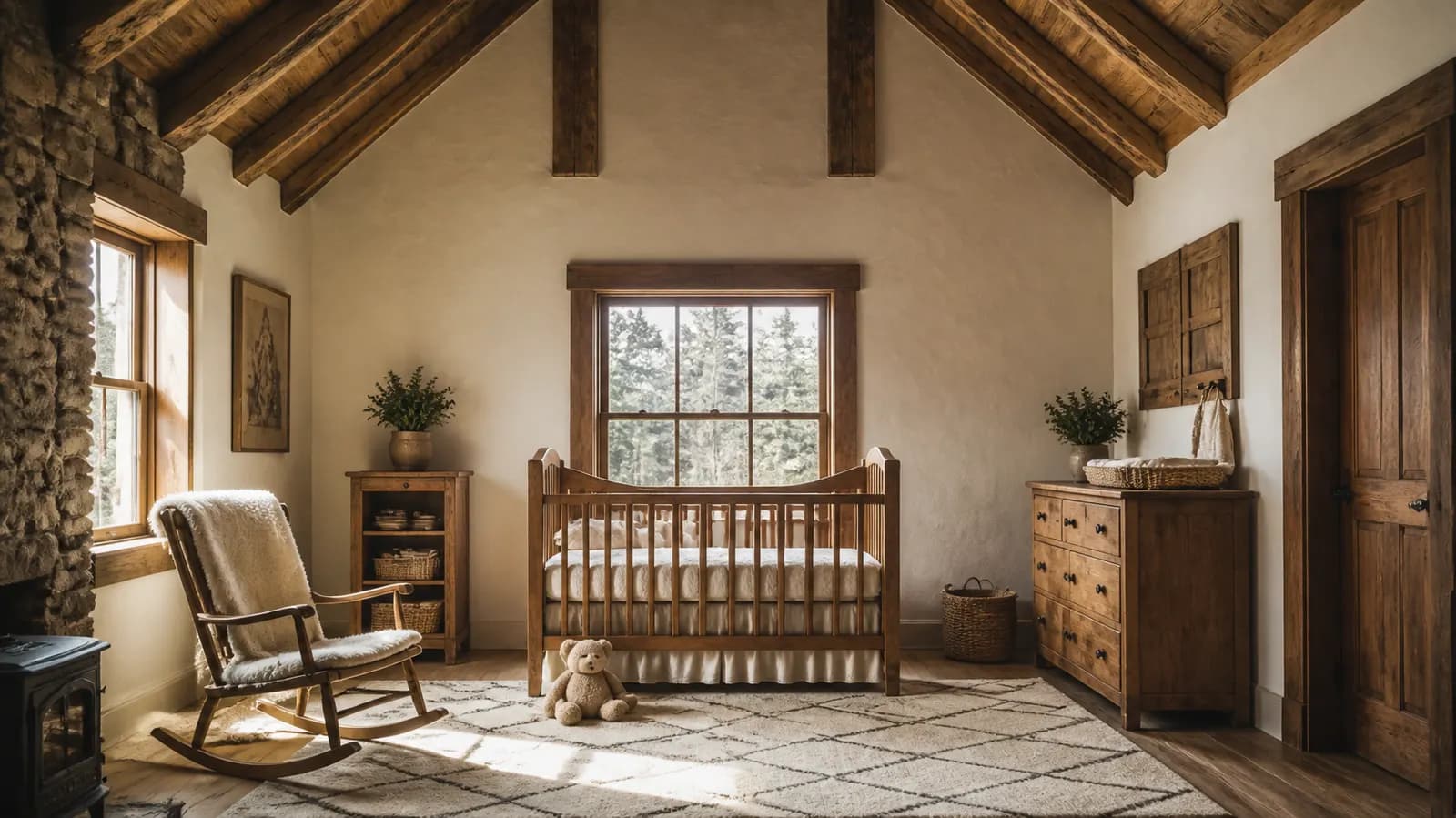
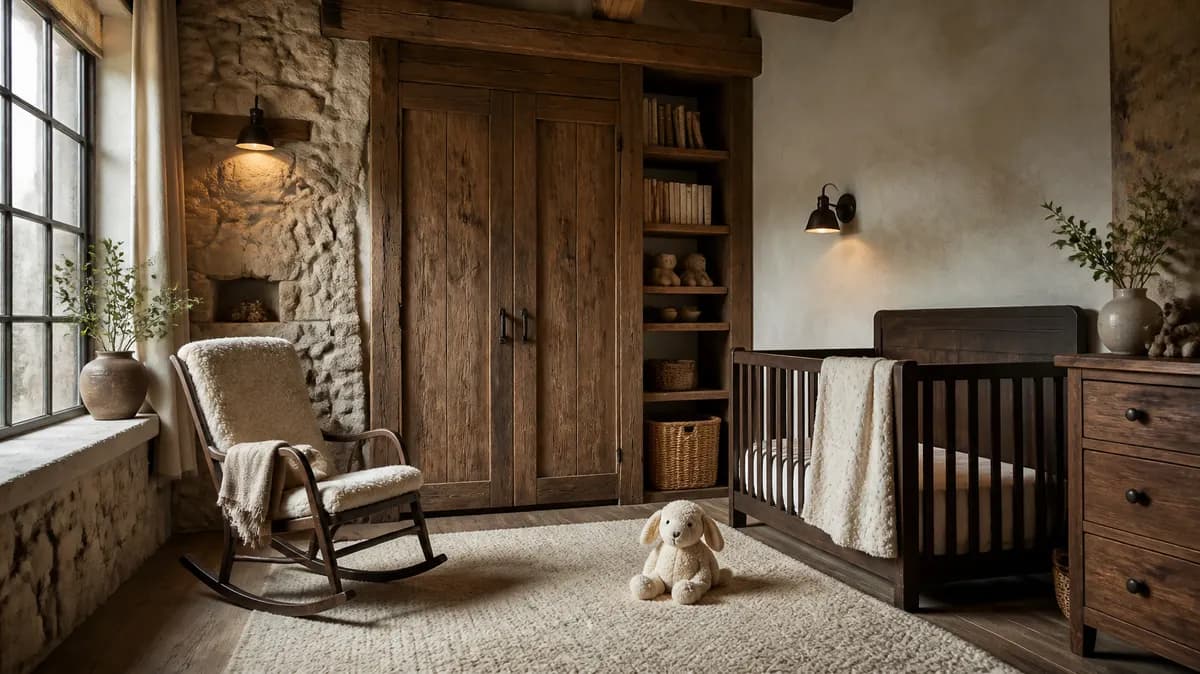
The rustic nursery takes the cabin and farmhouse aesthetic and adapts it for a baby — softer textiles, lower furniture, woodland imagery and a palette that calms rather than stimulates. The look avoids primary colours, plastic pastel mountains and printed character bedding, and instead leans on the same honest materials the rest of the rustic home uses: solid wood, undyed linen, hand-loomed wool, hand-thrown ceramics and warm-white lighting. It is the nursery a Scandinavian midwife would design.
Three principles guide an authentic rustic nursery. First, safe natural materials: solid hardwood crib, organic linen and cotton, wool rugs with low pile, water-based wood finishes. Second, a quiet palette: warm cream walls, soft sage and dusty rose accents, deep wood tones in moderation, a single woodland mural or framed botanical print as the visual focal point. Third, real warmth: layered warm lighting, a wool throw on the rocker, a sheepskin under tiny feet, a small basket of soft toys.
In 2026 rustic nursery design has become the most popular alternative to the all-pink or all-pastel-blue baby room. The look pairs naturally with Scandinavian (which shares the wood and linen), with Modern Farmhouse (for a brighter American take) and with Wabi-Sabi for the most pared-back version. The throughline is always solid wood furniture, the absence of plastic, and the sense that this room is a part of the home rather than a themed annex.
12 Real Rustic Nursery Examples
Each example below is a complete look — not a mood board. Click any image to see it full-size, then hit the generate button to try the same combination on your own room photo.
 1Example
 2Example
 3Example
 4Example
 5Example
 6Example
 7Example
 8Example
 9Example
 10Example
 11Example
Key Design Elements
Colors
- Warm cream and limewashed plaster walls
- Soft sage and eucalyptus accent walls
- Reclaimed pine and warm oak furniture tones
- Dusty rose, terracotta and butter-yellow textiles
- Aged brass hardware and rattan baskets
Materials
- Solid pine, oak or birch for crib and dresser
- Organic linen for bedding, drapes and crib skirts
- Hand-loomed wool for throws, cushions and rug
- Rattan and woven seagrass for baskets
- Hand-thrown ceramics and water-based wood finishes
Furniture
- Reclaimed-wood slatted crib with linen skirt
- Antique pine dresser doubling as changing table
- Heirloom rocking chair or wooden glider
- Low ladder bookshelf for board books
- Woven seagrass baskets for soft toys
Lighting
- Single linen-shade pendant on a dimmer
- Brass wall sconces beside the crib
- Floor lamp by the rocking chair for night feeds
- Layered warm-white sources at 2700 K
- Plug-in nightlight in carved wood or pottery
Textiles
- Stonewashed linen drapes in oatmeal
- Wool throw on the rocking chair
- Low-pile wool rug under the crib
- Sheepskin on the floor by the chair
- Cotton muslin swaddles in soft sage and rose
Rustic Nursery Color Palette
Six pigments do most of the work — start here, then add one accent of your own.
The base white for plaster walls and ceilings. Calmer and warmer than pure white, it lets soft sage and dusty rose accents read at their best.
The dominant wood tone for crib, dresser and shelving — paler and more honey-coloured than rustic adult rooms, so the nursery reads lighter.
The signature accent — used on one wall, on the linen cot skirt or on a wool blanket. Soothing, recognisably woodland, never aggressive.
The warm-pop accent — cushions, a mobile, a wool throw. Replaceable with butter yellow or terracotta depending on preference.
Raw linen drapes, oatmeal wool rug, a slate-grey ceramic vase. Grounds the palette and gives the eye somewhere quiet to rest.
Strict accent — sconce arms, drawer pulls, a small framed botanical. Used very sparingly so the room never reads adult or hard.
Must-Have Furniture & Fixtures
If you only buy these seven, you will read as authentically rustic.
Solid-wood slatted crib
Pine, oak or birch with water-based finish, slats spaced to current safety standards. Avoid any painted MDF or plastic-coated panel cribs.
Antique pine dresser
Six-drawer dresser doubling as a changing table, with a safety-strapped changing mat on top. Hand-forged iron or aged brass drawer pulls.
Heirloom rocking chair
Solid-wood rocker or wooden glider with a linen cushion and wool throw. Positioned beside the crib for night feeds, never opposite it.
Woven baskets
Three or four rattan or seagrass baskets for soft toys, muslins and folded blankets. Stored under the dresser or on the lower shelf.
Low-pile wool rug
Hand-loomed wool or jute, soft underfoot but not shaggy. Large enough to extend under both crib and chair so floor noise is muffled.
Single linen-shade pendant
One central pendant with a soft linen drum shade, on a dimmer. 2700 K bulb. No ceiling fan, no recessed pot lights, no track lighting.
Woodland visual focal point
One large hand-painted mural, three small framed botanical prints or a hand-stitched cloth wall hanging. Never themed character art.
Common Mistakes to Avoid
Painting the room a strong primary colour — bright red, navy blue or fire-engine green over-stimulate a baby. Stay in the warm-cream, sage and dusty-rose family.
Plastic plug-in nightlights — colour-changing plastic gadgets break the rustic read instantly. Use a low-wattage carved-wood or pottery nightlight on a dimmer instead.
Themed character bedding — printed cartoon sheets and bumpers shorten the room's useful life and clash with every other rustic surface. Plain linen or muslin lasts.
Cool overhead light — a single 4000 K LED panel above the crib is the most common mistake. Use one warm linen-shade pendant on a dimmer and add a floor lamp.
Visible cables and plugs — baby monitors, sound machines and humidifiers create a cable mess. Tuck cords behind the dresser, route them under the rug edge and use a single power strip in a wood-fronted box.
Try Rustic Nursery in Your Own Room
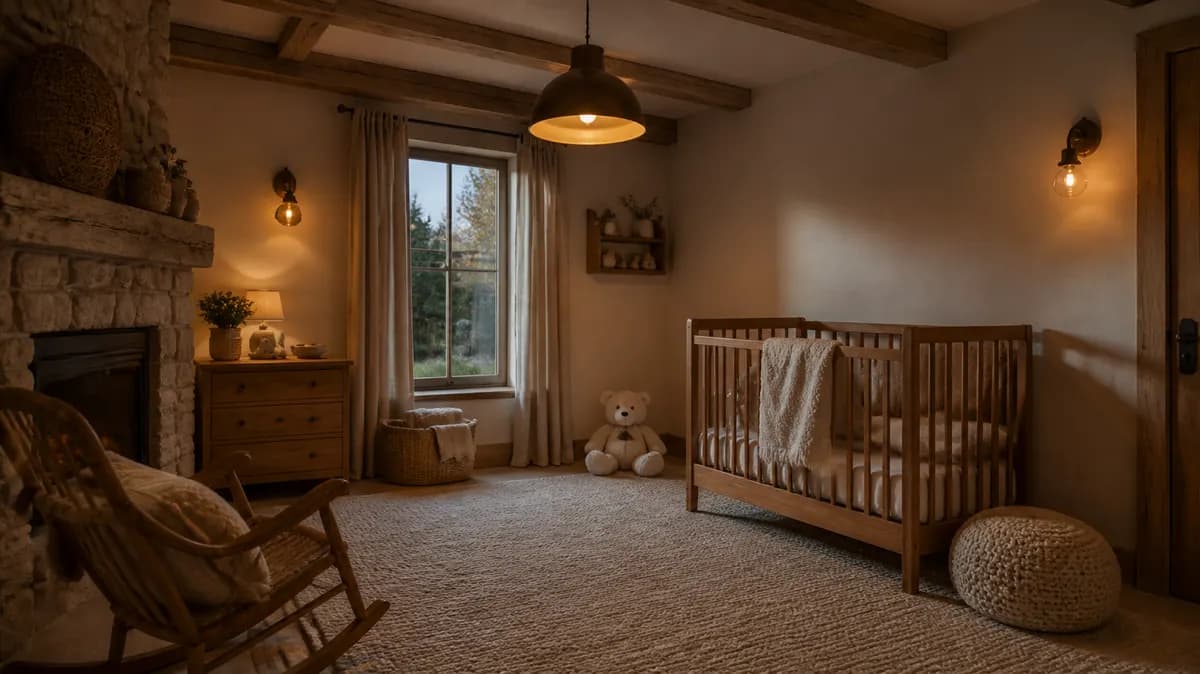
Upload a photo of your real nursery. Get a photorealistic rustic redesign in about 30 seconds. 4 free credits, no card.
Generate Your Rustic Nursery FreeOther Rustic Rooms
Apply the same palette and principles to the rest of the home.


Other Nursery Styles
Same room, different aesthetic — explore the rest of the nursery style library.


Rustic Nursery — Frequently Asked Questions
What colors define rustic nursery design?
Is reclaimed wood safe in a nursery?
How do I keep a rustic nursery low-stimulation?
What flooring works best for a rustic nursery?
Can a rustic nursery grow with the child?
Is rustic nursery design good for a small room?
How to Design a Rustic Nursery
Five decisions, in this order. Skip any of them and the look will not land.
- 1
Buy the crib first
Solid pine, oak or birch slatted crib with a water-based food-safe finish. Choose a model that converts to a toddler bed and (later) a daybed — this stretches the investment across at least five years. The crib is the single biggest piece in the room; everything else is composed around it.
- 2
Paint the walls — cream, with one sage accent
Warm cream limewash on three walls. One accent wall behind the crib in soft sage, eucalyptus or dusty rose — or a hand-painted forest mural in the same tones. Avoid wallpaper with strong patterns; they over-stimulate and date faster than paint.
- 3
Add the dresser, rocker and shelf
An antique pine dresser doubles as a changing table with a strapped mat on top. A solid-wood rocker beside the crib with a wool throw and linen cushion. A low ladder shelf or built-in nook for cloth books and a few wooden toys. Three pieces — never four, never five.
- 4
Layer the lighting
One central linen-shade pendant on a dimmer. One aged-brass wall sconce by the crib for night feeds. One floor lamp by the rocker. A carved-wood or pottery nightlight on the dresser. Every bulb at 2700 K or warmer. The room should be able to dim from bright play-time to bare ember without ever feeling clinical.
- 5
Style the soft layers — linen, wool, woven, one plant
Stonewashed linen drapes at the window. Wool throw on the rocker. Low-pile wool rug under the crib. Three or four rattan baskets for soft toys. One small framed botanical print on the dresser. One real, easy-care plant on a high shelf (an olive sprig or a trailing pothos out of reach). These soft layers are what separate a real rustic nursery from a furniture-store mock-up.
Keep Exploring
Tools and guides that pair with this style.