Modern Living Room Design Ideas: 12 Real Examples (2026 Guide)
Clean lines, natural materials, and sculptural forms — the enduring aesthetic born from the Bauhaus. We unpack the principles of true Modernism, then show 12 photorealistic examples you can replicate.
- 12
- Real examples
- ~30s
- AI render time
- 4 free
- Credits, no card
What is Modern Living Room Design?
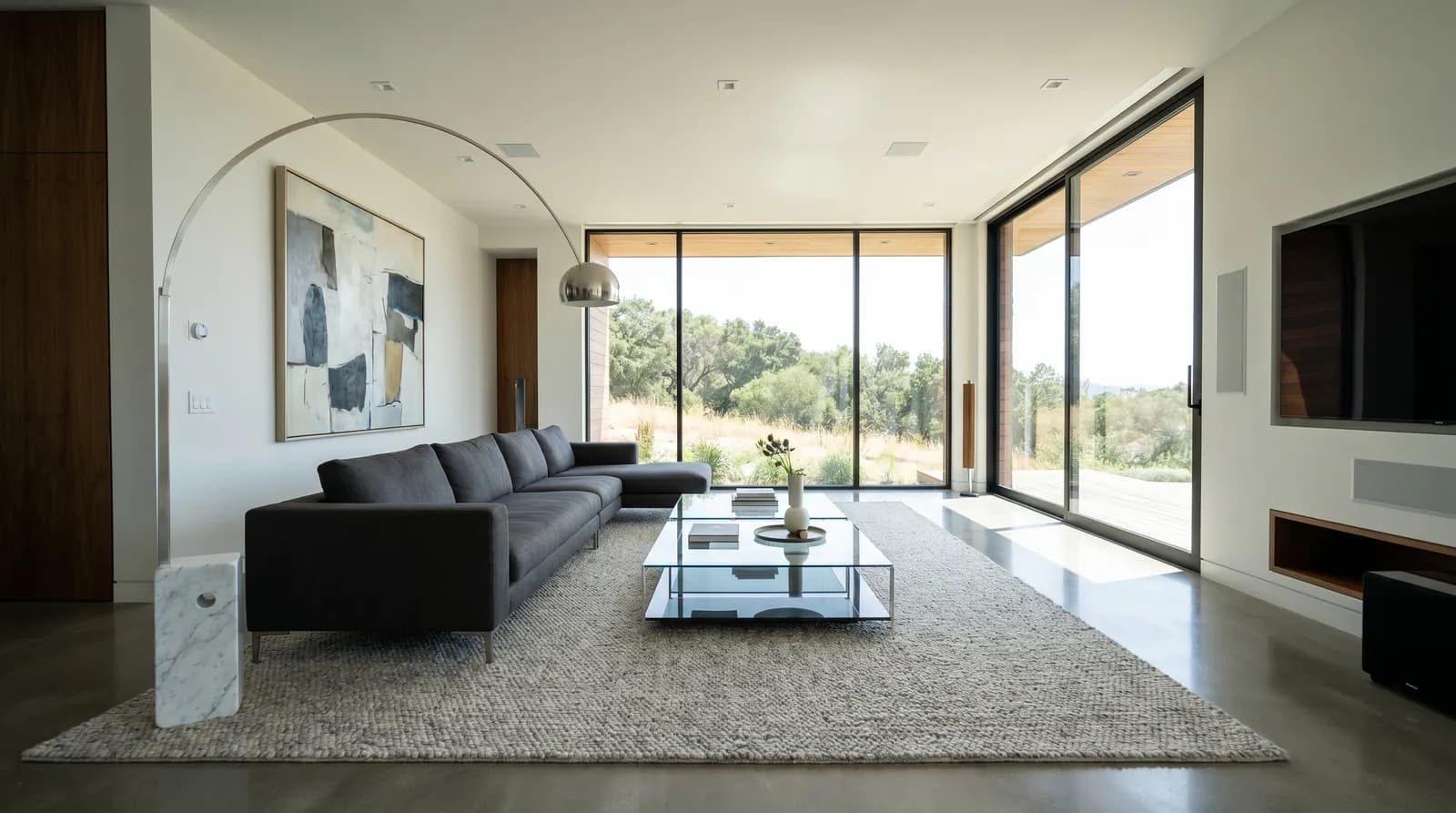
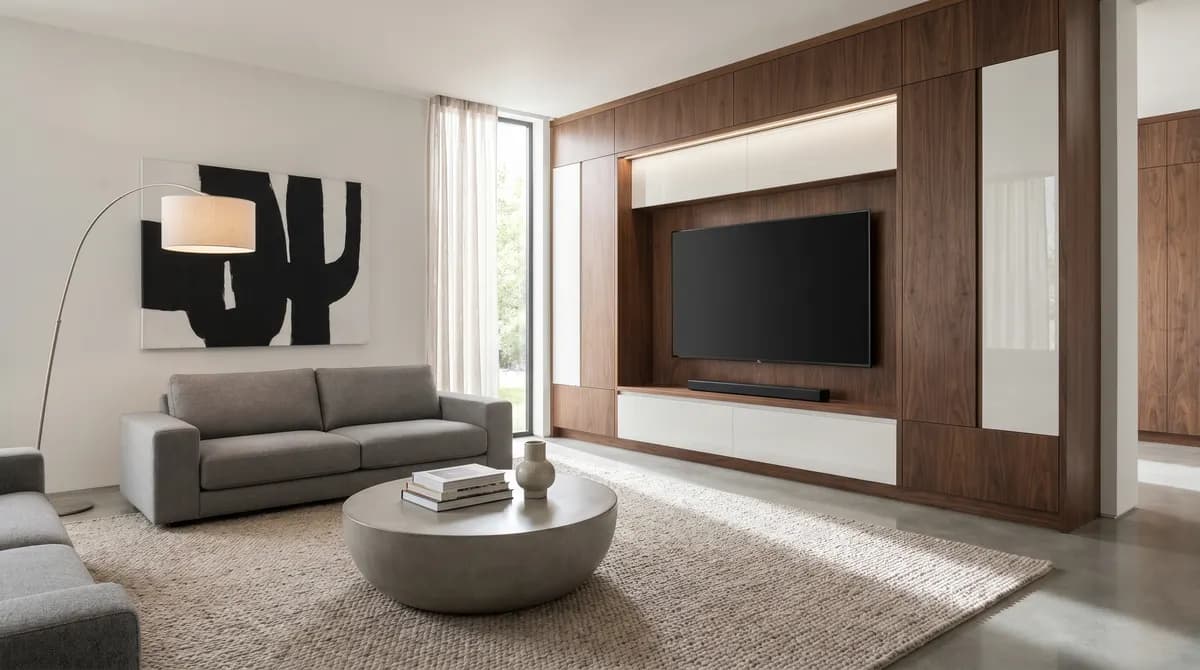
Modern design is a specific aesthetic movement from the early- to mid-20th century, rooted in the German Bauhaus school and Scandinavian modernism. It is a direct rejection of ornament. Instead, it celebrates clean lines, geometric shapes, and natural materials like wood, leather, and metal. A Modern living room follows the principle of 'form follows function' — every piece of furniture is intentional, sculptural, and free of unnecessary detail.
Three principles define an authentic Modern living room. First, a neutral color palette: white, beige, grey, and black form the base, allowing the texture of materials and the form of furniture to stand out. Second, a focus on natural materials: think walnut paneling, leather upholstery, travertine tables, and wool rugs. Third, a strong connection to the outdoors, achieved through large, unadorned windows and open-plan layouts that prioritize natural light and space.
In 2026, Modernism remains a foundational style, distinct from 'contemporary' design (which simply means 'of the moment'). Its enduring appeal lies in its quiet confidence and architectural integrity. It serves as a sophisticated canvas that pairs well with Minimalist, Industrial, and even Japandi elements, making it a timeless choice for living spaces from spacious suburban homes to compact urban apartments.
12 Real Modern Living Room Examples
Each example below is a complete look — not a mood board. Click any image to see it full-size, then hit the generate button to try the same combination on your own room photo.
 1Example
 2Example
 3Example
 4Example
 5Example
 6Example
 7Example
 8Example
 9Example
 10Example
 11Example
 12Example
Key Design Elements
Colors
- Architectural whites and light greys for walls
- Deep charcoal and black for structural accents
- Warm neutrals like beige, taupe, and cream
- Earthy accent tones: cognac, olive green, rust
- Natural wood tones from light oak to dark walnut
Materials
- Honest woods: walnut, teak, oak, and rosewood
- Natural stone: travertine, slate, and marble
- Metals: chrome, stainless steel, and blackened steel
- Architectural elements: exposed concrete and glass
- Upholstery: genuine leather, wool, bouclé, and linen
Furniture
- Low-profile sofas and sectionals with clean lines
- Iconic, sculptural lounge chairs and armchairs
- Geometric coffee tables and simple side tables
- Minimalist media consoles, often wall-mounted
- Built-in shelving and cabinetry with flat-front doors
Lighting
- Sculptural arc floor lamps
- Architectural track or recessed lighting
- Globe or sputnik-style pendant chandeliers
- Simple, functional table lamps with geometric bases
- Large, unadorned windows to maximize natural light
Textiles
- High-pile wool or jute area rugs with simple patterns
- Linen or sheer cotton curtains, hung floor-to-ceiling
- Cashmere or merino wool throws
- Cushions in solid colors with textural fabrics like bouclé
- Leather upholstery as a primary texture
Modern Living Room Color Palette
Six pigments do most of the work — start here, then add one accent of your own.
The gallery-white base for walls. It creates negative space and allows furniture and art to become the focus.
For concrete floors, stone features, and soft furnishings. It's the grounding mid-tone that adds depth without adding color.
The punctuation mark. Used for window frames, metal legs on furniture, and lighting fixtures to create sharp, graphic lines.
The essential warm accent. Brings richness and a human touch through an iconic armchair or sofa.
The primary material tone for media consoles, wall paneling, and furniture frames. Its dark, rich grain is quintessentially Modern.
A sophisticated, natural accent. Used sparingly on a throw pillow, a piece of art, or a large fiddle-leaf fig plant.
Must-Have Furniture & Fixtures
If you only invest in these seven, you will read as authentically Modern.
Low-Profile Sectional Sofa
Characterized by a low back, clean lines, and simple legs. Upholstered in a neutral fabric like wool, linen, or bouclé.
Sculptural Lounge Chair
An iconic piece that doubles as art. Think an Eames Lounge Chair, a Wassily Chair, or a Barcelona Chair.
Geometric Coffee Table
A simple form in natural materials. A block of travertine, a glass-and-wood Noguchi table, or a set of nesting metal tables.
Arc Floor Lamp
A statement piece that provides overhead light without ceiling wiring. Typically in chrome or black metal with a simple dome shade.
Slat Wood Feature Wall
Vertical paneling in walnut or oak, often used behind a sofa or media console to add texture and architectural interest.
Minimalist Media Console
A long, low credenza with flat-front doors and minimal hardware, often in a rich wood grain like walnut. Can be floating or on simple legs.
Large Abstract Art
A single, large-scale abstract or geometric painting. It provides the room's main source of color and personality.
Common Mistakes to Avoid
Confusing 'Modern' with 'Contemporary' — Modern is a historical design style (c. 1920-1970). Contemporary is whatever is popular now. Stick to the principles of Modernism for a timeless look.
Making it too cold — A room with only hard surfaces and neutrals can feel sterile. Add warmth with wood tones, leather, and soft textiles like wool and cashmere.
Too much clutter — Modernism requires negative space to breathe. Edit your decor ruthlessly. Surfaces should be mostly clear, showcasing the form of the furniture itself.
Ignoring scale — Modern furniture often has a strong, horizontal presence. A tiny rug or a small coffee table will look lost. Ensure pieces are proportional to the room and to each other.
Forgetting texture — In a neutral palette, texture does the work of pattern. Mix smooth leather, nubby bouclé, polished chrome, and rough-hewn stone to create visual interest.
Try Modern in Your Own Living Room
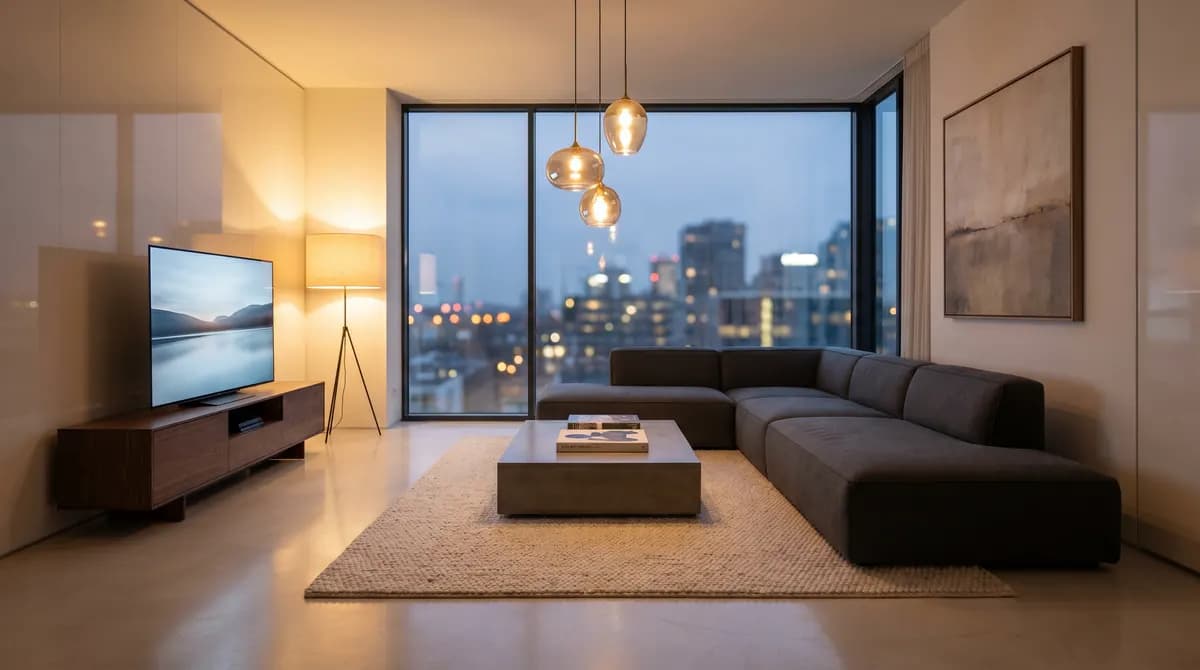
Upload a photo of your real living room. Get a photorealistic Modern redesign in about 30 seconds. 4 free credits, no card.
Generate Your Modern Living Room FreeOther Modern Rooms
Apply the same palette and principles to the rest of the home.


Other Living Room Styles
Same room, different aesthetic — explore the rest of the living room style library.


Modern Living Room — Frequently Asked Questions
What's the difference between Modern and Contemporary design?
What colors define Modern living room design?
How do I make a Modern living room feel warm and inviting?
What is the difference between Modern and Mid-Century Modern?
Is Modern design good for small living rooms?
What kind of art works in a Modern living room?
How to Design a Modern Living Room
Five decisions, in this order. Skip any of them and the look will not land.
- 1
Establish a Neutral Base
Start with the shell of the room. Paint walls a shade of architectural white or a very light warm grey. Choose flooring in a natural material like light oak hardwood, polished concrete, or large-format neutral tile.
- 2
Choose an Anchor Furniture Piece
Your sofa is the foundation. Select a low-profile sectional or sofa with clean lines, a simple form, and neutral upholstery. This piece will dictate the scale and placement of everything else.
- 3
Layer in Natural Materials
This is where the warmth comes from. Introduce a rich wood like walnut through a media console or side table. Add a stone element with a travertine coffee table. Bring in leather with a statement lounge chair.
- 4
Add Sculptural Forms
Think of lighting and accent furniture as sculpture. An arc floor lamp, a Noguchi-style coffee table, or an iconic chair like the Wassily chair adds a dynamic, artistic quality to the space. These pieces should have a strong, clear form.
- 5
Curate, Don't Decorate
Modernism is about subtraction. Resist the urge to fill every surface. Limit coffee table objects to three items of varying heights. Choose one large plant over several small ones. Select a single, impactful piece of art. Negative space is an active element in the design.
Keep Exploring
Tools and guides that pair with this style.