Industrial Living Room Ideas: 12 Real Examples (2026 Guide)
Exposed brick, raw concrete, reclaimed wood, and metal accents — the loft aesthetic born in New York and London. We unpack what makes a living room feel truly Industrial, then show 12 photorealistic examples you can replicate.
- 12
- Real examples
- ~30s
- AI render time
- 4 free
- Credits, no card
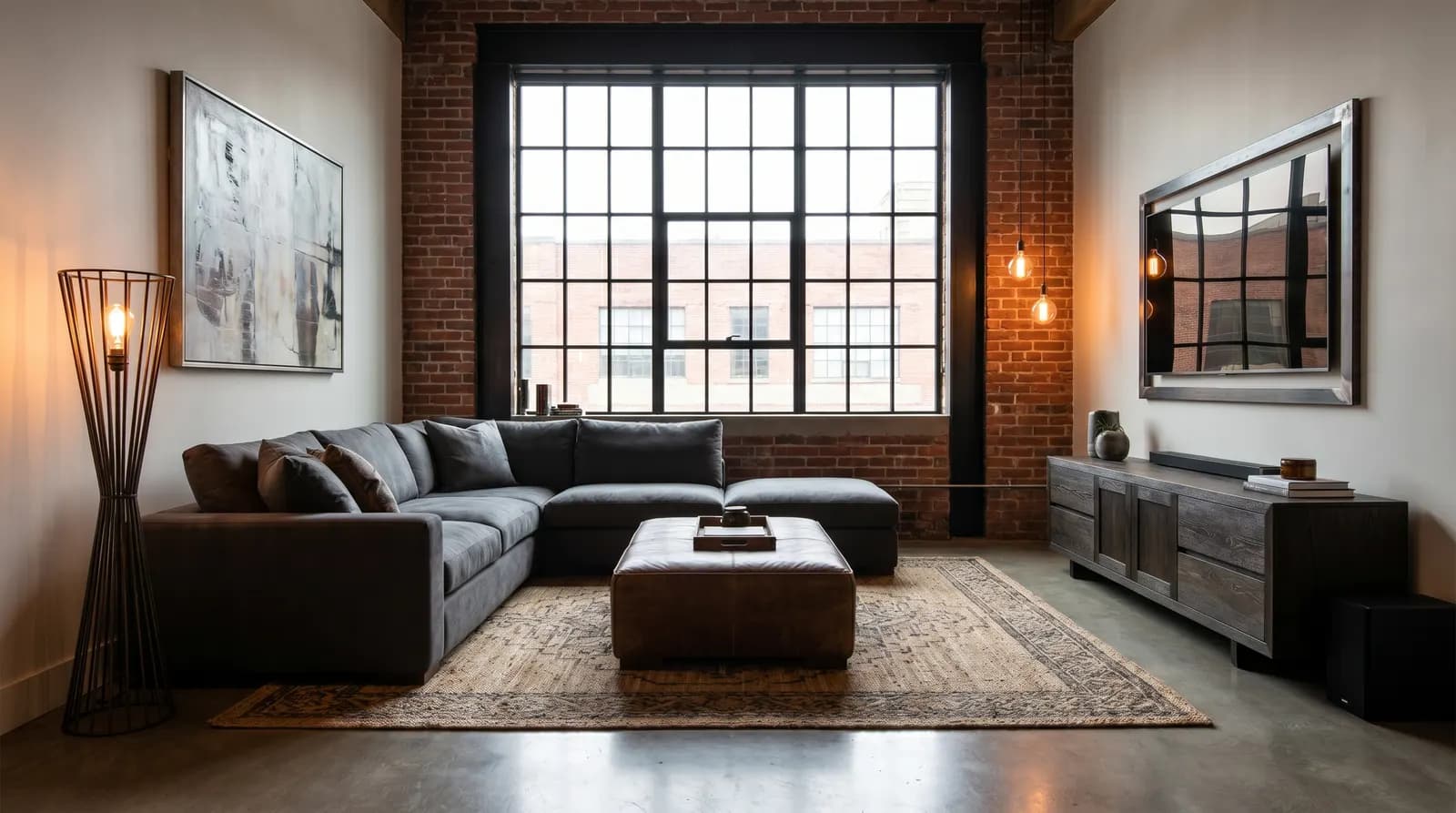
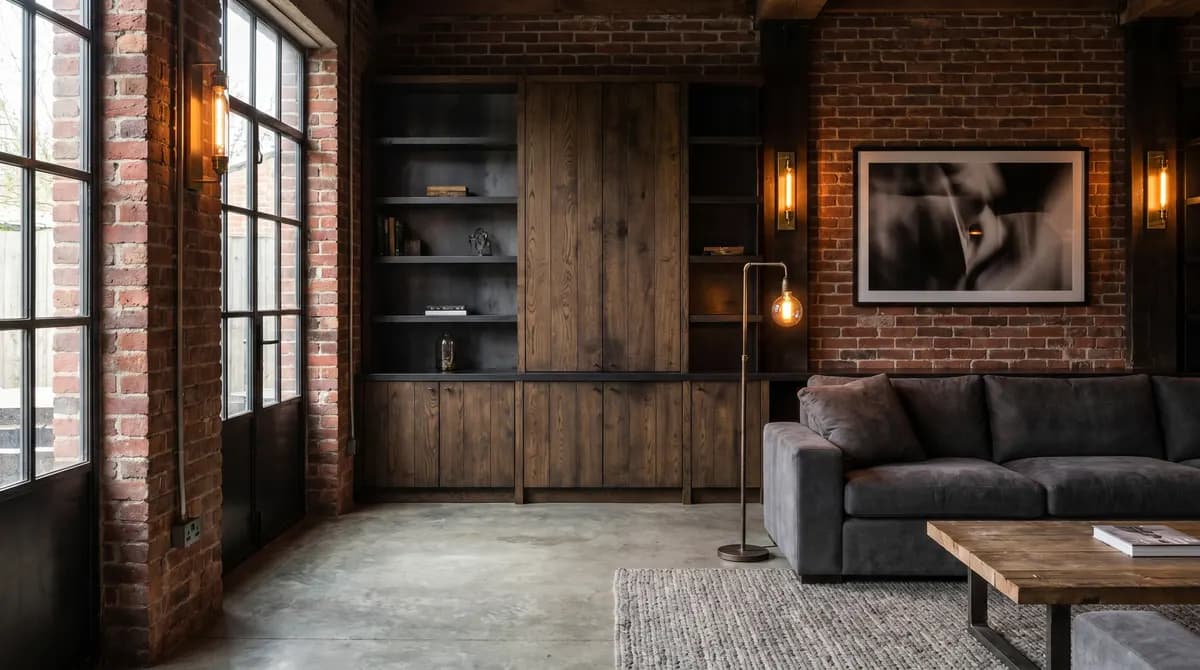
What is Industrial Living Room Design?
Industrial design celebrates the raw, unfinished aesthetic of old factories, warehouses, and urban lofts. Emerging in the late 20th century as artists colonized vast, affordable industrial spaces in cities like New York and London, the style is defined by its honesty. Instead of concealing structural elements, it exposes them: brick walls, concrete floors, steel beams, and visible ductwork become the primary architectural features.
Three principles guide authentic Industrial design. First, material truth: surfaces are left in their raw state — weathered wood, unpolished concrete, and patinated metal. Second, structural exposure: pipes, conduits, and beams are celebrated as ornament. Third, spaciousness: the style thrives in open-plan layouts with high ceilings and large windows, reflecting its origins in cavernous industrial buildings. Furniture is often functional, durable, and large-scale to match the room's proportions.
In 2026, the Industrial look has evolved beyond true loft conversions. It's now a globally recognized aesthetic applied to standard homes, often softened with plush textiles and refined finishes for a look known as 'Industrial Chic'. It pairs exceptionally well with Mid-Century Modern furniture and Bohemian textiles, creating a layered, personal space that feels both historic and contemporary. This guide focuses on the core principles you can apply to any living room.
12 Real Industrial Living Room Examples
Each example below is a complete look — not a mood board. Click any image to see it full-size, then hit the generate button to try the same combination on your own room photo.
 1Example
 2Example
 3Example
 4Example
 5Example
 6Example
 7Example
 8Example
 9Example
 10Example
 11Example
 12Example
Key Design Elements
Colors
- Neutral base of grey, white, and black
- Warm tones from brick, leather, and wood
- Matte black for metal frames and fixtures
- Deep blues, forest greens, or rust as accents
- The natural grey of concrete and galvanized steel
Materials
- Exposed brick (either original or thin veneer)
- Raw or polished concrete for floors and walls
- Blackened or unfinished steel for window frames and legs
- Reclaimed wood for flooring, tables, and beams
- Distressed leather for sofas and armchairs
Furniture
- Large, comfortable sectional or Chesterfield sofa
- Solid wood and metal coffee table
- Open-pipe or metal frame shelving units
- Vintage leather armchairs or club chairs
- Repurposed items like factory carts or lockers
Lighting
- Metal dome factory pendant lights
- Exposed Edison bulb fixtures
- Adjustable track lighting on ceilings
- Metal tripod or pharmacy-style floor lamps
- Articulated wall sconces in black or brass
Textiles
- Worn leather upholstery
- Large, low-pile wool or jute area rugs
- Chunky knit wool or cashmere throws
- Canvas, linen, or flannel cushion covers
- Vintage or antique Persian rugs to add color and history
Industrial Living Room Color Palette
Six pigments do most of the work — start here, then add one accent of your own.
The foundational neutral for floors and walls. It provides a cool, utilitarian backdrop that makes warm materials pop.
Used for steel window frames, furniture legs, and light fixtures. Provides sharp, graphic contrast and definition.
The essential warm tone, derived from exposed brickwork. It adds texture, history, and a human scale to the space.
The color of a well-worn leather sofa or armchair. It introduces a soft, organic element that ages beautifully.
A deep, warm brown from aged timber on floors, tables, or ceiling beams. It's the primary source of natural warmth.
A dark, moody grey for metal surfaces like ductwork or shelving. Softer than pure black, it feels more authentic and less graphic.
Must-Have Furniture & Fixtures
If you only buy these seven, you will read as authentically Industrial.
A Distressed Leather Sofa
The anchor of the room. Look for a Chesterfield or a simple, square-armed model in a worn brown or black leather.
Exposed Brick Wall
The quintessential industrial backdrop. If you don't have original brick, high-quality thin brick veneers are a convincing alternative.
Metal & Wood Coffee Table
A substantial piece, typically with a thick reclaimed wood top and a heavy steel or cast iron base.
Large Area Rug
Crucial for softening hard surfaces like concrete or wood floors. A vintage Persian or a simple jute rug works best.
Factory Pendant Lights
One or more oversized metal dome pendants, or a cluster of bare Edison bulbs, to define the seating area.
Steel-Framed Windows or Mirror
Large, multi-pane Crittall-style windows are ideal. If not possible, a large grid mirror achieves a similar effect.
Open Pipe Shelving
DIY-friendly and visually light, these shelves made from plumbing pipes and wood planks are perfect for books and objects.
Common Mistakes to Avoid
Making it too cold — without warm elements like wood, leather, and soft textiles, an industrial space can feel like a garage. Balance is key.
Creating a theme park — avoid clichés like fake rust, oversized gear décor, and generic 'Factory' signs. The look should feel authentic, not staged.
Uncomfortable furniture — industrial doesn't have to mean uncomfortable. Choose a deep, plush sofa and armchairs you actually want to sit in.
Ignoring scale — small, delicate furniture gets lost in high-ceilinged, open-plan spaces. Opt for substantial pieces with visual weight.
Poor lighting — industrial spaces can be dark. A single overhead light won't do. Layer lighting with pendants, floor lamps, and task lights.
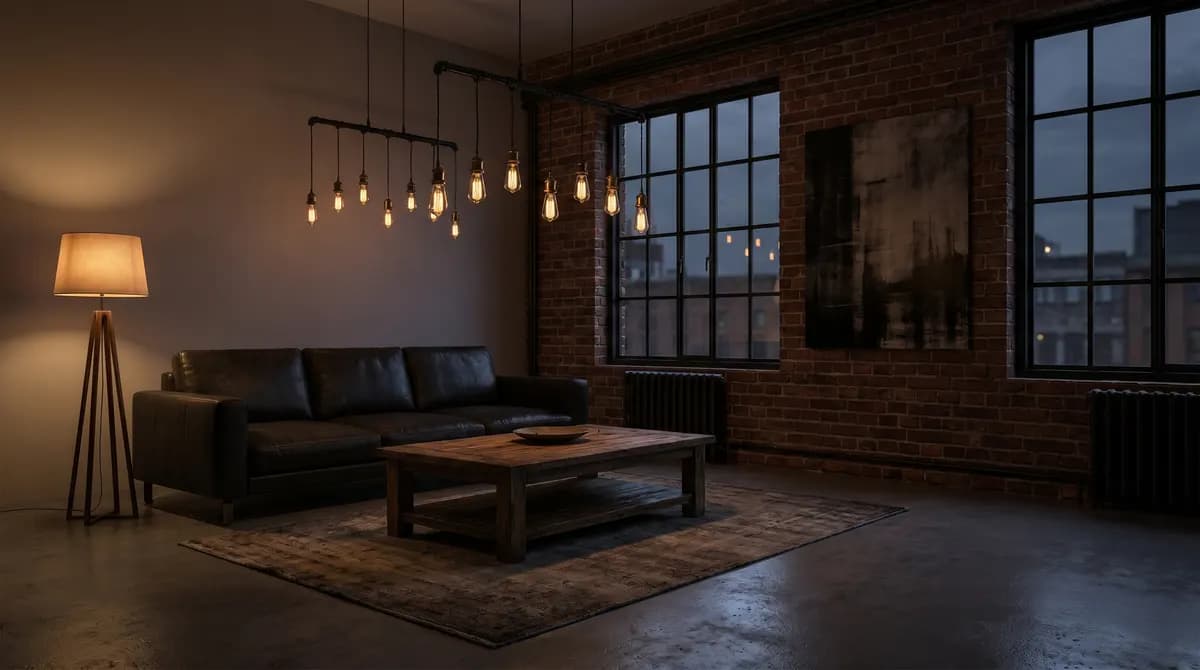
Try Industrial Style in Your Own Living Room
Upload a photo of your real living room. Get a photorealistic Industrial redesign in about 30 seconds. 4 free credits, no card.
Generate Your Industrial Living Room FreeOther Industrial Rooms
Apply the same palette and principles to the rest of the home.


Other Living Room Styles
Same room, different aesthetic — explore the rest of the living room style library.


Industrial Living Room — Frequently Asked Questions
What colors define Industrial design?
How do I make an industrial living room feel cozy?
What kind of flooring is best for an industrial look?
Can I have an industrial style in a new-build home?
What's the difference between Industrial and Rustic?
Is industrial design good for small living rooms?
How to Design an Industrial Living Room
Five decisions, in this order. Skip any of them and the look will not land.
- 1
Establish the architectural shell
Decide on your core surfaces. Will you have an exposed brick wall? A concrete floor? Dark wood floors? This is the foundation. If your home has none of these, choose one to add as a feature, like a brick veneer wall behind the sofa.
- 2
Choose your anchor furniture
Select the two most important pieces: the sofa and the coffee table. A large, comfortable leather or dark fabric sofa is the heart of the room. Pair it with a substantial coffee table made of wood and metal to ground the space.
- 3
Layer the lighting
Industrial spaces require thoughtful lighting. Start with a statement overhead fixture like a metal pendant or track lighting for general ambiance. Add a floor lamp for reading (task) and perhaps a small table lamp or wall sconce to highlight art (accent).
- 4
Add warmth and texture with textiles
This step is crucial to prevent the room from feeling cold. Lay down a large area rug to define the seating area. Add a mix of cushions in materials like canvas or linen, and drape a chunky knit throw over the sofa or an armchair.
- 5
Curate with art and objects
Finish the space with personal touches. Industrial style suits large-scale art, like abstract paintings or black-and-white photography. Use open shelving to display books, plants, and found objects. Edit carefully to avoid clutter.
Keep Exploring
Tools and guides that pair with this style.