Farmhouse Kitchen Design Ideas: 12 Real Examples (2026 Guide)
Shaker cabinets, apron sinks, and warm, natural materials — the look that turns a kitchen into the heart of the home. We unpack what makes a kitchen feel authentically Farmhouse, then show 12 photorealistic examples you can replicate.
- 12
- Real examples
- ~30s
- AI render time
- 4 free
- Credits, no card
What is Farmhouse Kitchen Design?
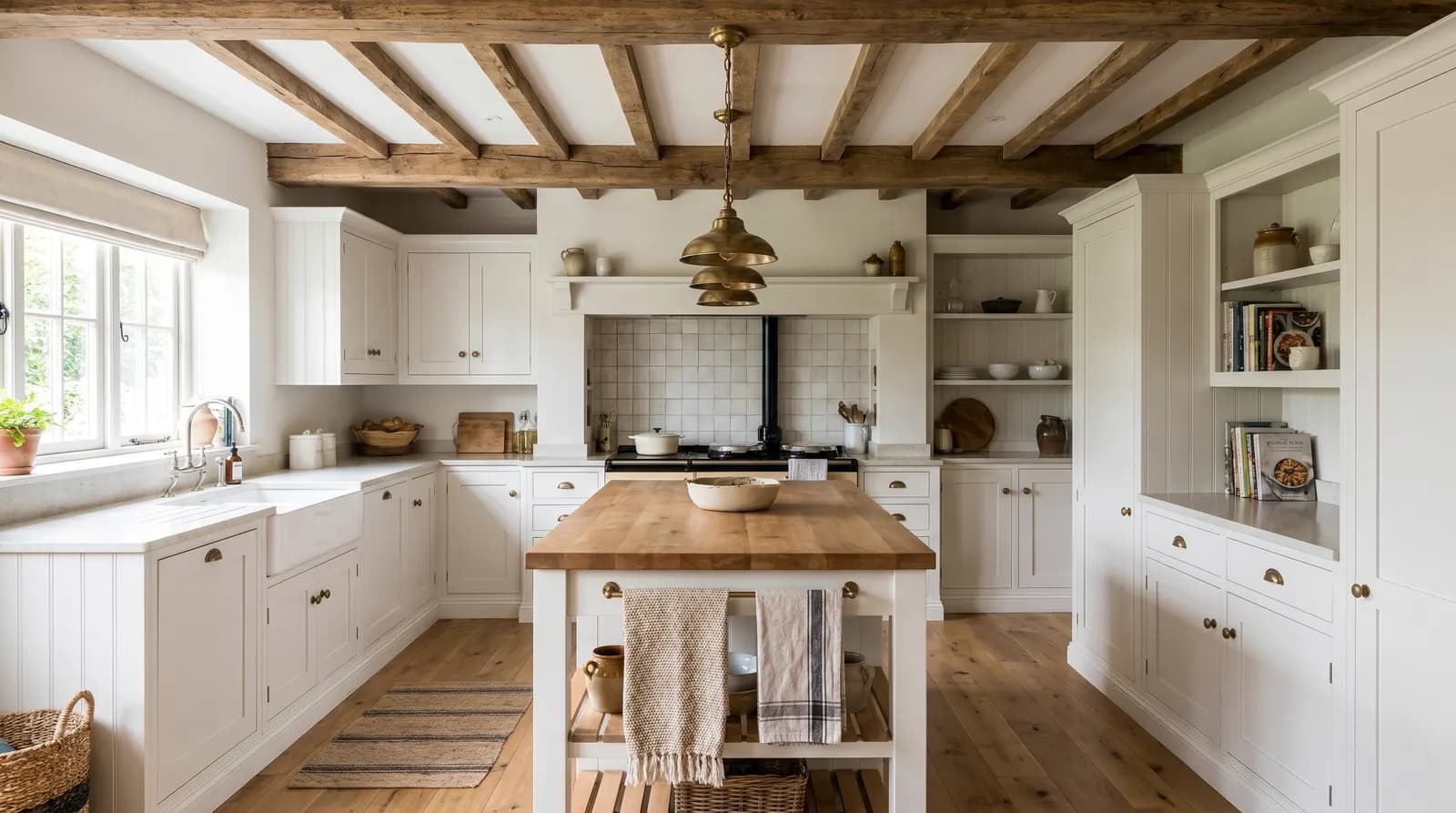
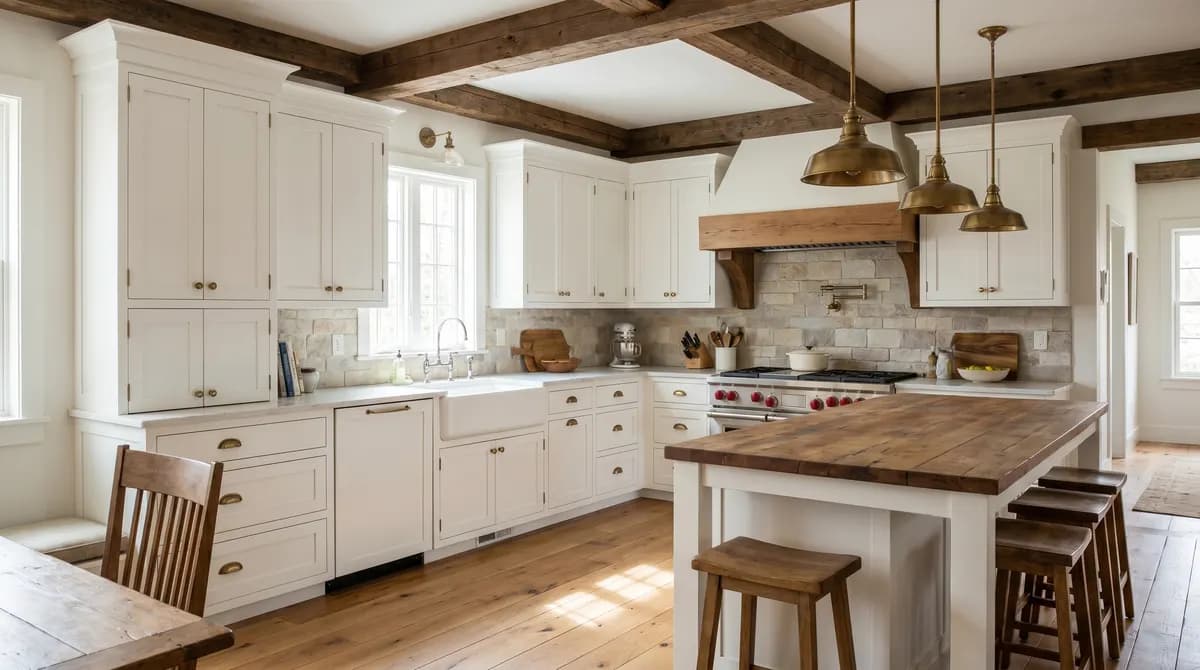
Farmhouse kitchen design originates from the practical, hard-working kitchens of rural homes. It’s a style built around a central gathering space, defined by durability, simplicity, and a connection to the land. Unlike more formal styles, it prioritizes function and comfort over ornament, using honest materials like wood, stone, and iron that age gracefully.
Three principles define the Farmhouse aesthetic. First, utilitarianism: the large apron-front sink was for canning and washing, the oversized island for communal prep work. Second, warmth: achieved through natural wood tones, textured textiles, and a palette of creamy whites and muted earth tones. Third, a sense of history: pieces feel collected over time, whether through genuine antiques, reclaimed materials, or simply designs that have stood the test of time, like Shaker cabinetry.
In 2026, the style is most often expressed as 'Modern Farmhouse.' It keeps the core elements—shiplap, Shaker doors, natural materials—but pares back the clutter and kitsch. Lines are cleaner, palettes are more restrained, and industrial elements like black metal and concrete are often mixed in. It's a timeless look that pairs naturally with Industrial and Traditional styles, making it a versatile foundation for any home.
12 Real Farmhouse Kitchen Examples
Each example below is a complete look — not a mood board. Click any image to see it full-size, then hit the generate button to try the same combination on your own room photo.
 1Example
 2Example
 3Example
 4Example
 5Example
 6Example
 7Example
 8Example
 9Example
 10Example
 11Example
 12Example
Key Design Elements
Colors
- Warm, creamy whites for walls and cabinetry (e.g., Benjamin Moore White Dove).
- Muted earth tones like sage green, dusty blue, and greige for islands or lower cabinets.
- Natural wood tones from light pine to medium oak.
- Matte black or oil-rubbed bronze for hardware, lighting, and faucets.
- Deep charcoal or soapstone grey for countertops as a grounding element.
Materials
- Reclaimed wood for beams, islands, and flooring.
- Shiplap or beadboard for walls and backsplashes.
- Honed natural stone like soapstone, marble, or slate for countertops.
- Butcher block for island tops or prep areas.
- Handmade tile (zellige, subway) with visible imperfections for backsplashes.
Furniture
- Shaker-style cabinet doors are non-negotiable.
- A large, often contrasting, central island that acts as a workhorse.
- Open shelving made from thick wooden planks and iron brackets.
- Windsor-style or cross-back wooden bar stools and chairs.
- A freestanding hutch or pantry cabinet for dishware display.
Lighting
- Large, simple pendants (metal dome, lantern, or glass) over the island.
- Gooseneck or barn-style sconces over the sink or open shelves.
- Wrought-iron or simple wood chandeliers over a dining area.
- Emphasis on large, bare windows to maximize natural light.
- Under-cabinet lighting for modern task-functionality.
Textiles
- Linen or cotton café curtains on windows.
- Simple patterns like gingham, ticking stripes, or block prints.
- Braided jute or vintage-style wool runner rugs.
- Linen or cotton tea towels and aprons.
- Upholstered cushions for window seats or banquettes.
Farmhouse Kitchen Color Palette
Six pigments do most of the work — start here, then add one accent of your own.
A warm, creamy white that forms the base for walls and upper cabinets. It feels soft and historic, not clinical.
A soft, earthy neutral for textiles, wall treatments, or a gentler cabinet color. Adds depth without demanding attention.
A muted, calming green drawn from nature. Perfect for a statement island, lower cabinets, or a pantry door.
A deep, natural grey that grounds the palette. Use it for countertops or a dramatic accent wall to add weight and contrast.
A soft, matte black for hardware, faucets, and lighting fixtures. It provides a touch of industrial contrast to the rustic elements.
The essential warm tone from aged pine, oak, or barn wood. This isn't a paint, but a material that must be present.
Must-Have Furniture & Fixtures
If you only invest in these seven, you will read as authentically Farmhouse.
Apron-Front Sink
The single most iconic element. A deep, single-basin sink in white fireclay or cast iron. Also called a 'farmhouse' or 'butler's' sink.
Shaker Cabinets
Characterized by a simple, five-piece door with a recessed center panel. The timeless foundation of any Farmhouse kitchen.
Bridge Faucet
A two-handle faucet where the spout and handles are connected by a horizontal pipe. Often in oil-rubbed bronze, polished nickel, or aged brass.
Open Shelving
Thick, solid wood shelves on simple iron brackets, used to display everyday dishes, glassware, and serving pieces.
A Large, Workhorse Island
The central hub of the kitchen, often with a contrasting base color and a durable top like butcher block or soapstone.
A Statement Range Hood
A prominent vent hood, often custom-built from shiplap, reclaimed wood, or plaster, creating a focal point.
Wide-Plank Wood Flooring
Flooring with planks 15 cm or wider, typically in pine or oak, with a matte or satin finish that celebrates natural imperfections.
Common Mistakes to Avoid
Too much kitsch — An over-saturation of "farm" motifs like roosters, word art, or faux-distressed signs reads as cliché, not authentic.
Faking the distress — Factory-distressed furniture often looks artificial. Opt for genuinely aged pieces or simple, solid new ones that will earn their patina.
Forgetting texture — A kitchen with only smooth, painted surfaces misses the point. Layer in rough wood, honed stone, woven textiles, and handmade tile.
Using cool, stark whites — Farmhouse style relies on warmth. Choose creamy, warm whites (like BM White Dove) over cool, blue-toned whites which feel too modern.
Ignoring modern function — Don't sacrifice essential modern conveniences like proper task lighting, soft-close drawers, and adequate storage for pure aesthetics.
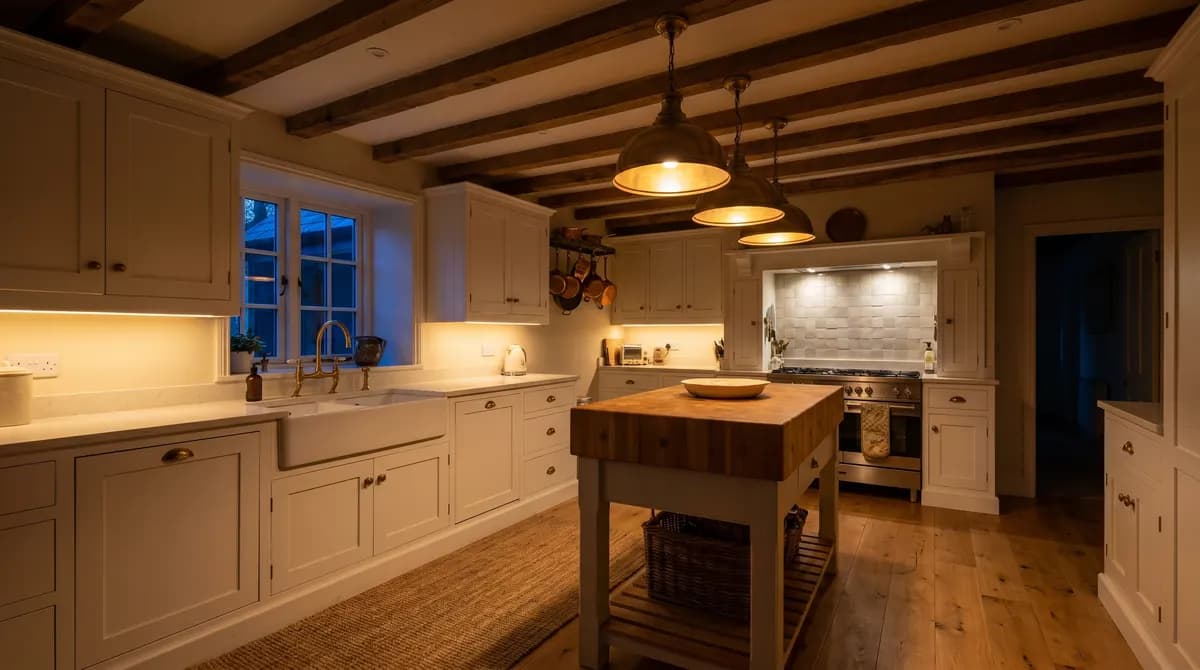
Try Farmhouse Kitchen in Your Own Room
Upload a photo of your real kitchen. Get a photorealistic Farmhouse redesign in about 30 seconds. 4 free credits, no card.
Generate Your Farmhouse Kitchen FreeOther Farmhouse Rooms
Apply the same palette and principles to the rest of the home.


Other Kitchen Styles
Same room, different aesthetic — explore the rest of the kitchen style library.


Farmhouse Kitchen — Frequently Asked Questions
What's the difference between Farmhouse and Modern Farmhouse?
What are the best countertops for a Farmhouse kitchen?
Are shiplap walls still in style for 2026?
What flooring is best for a Farmhouse kitchen?
How do I add character without being cliché?
Can I have a Farmhouse kitchen in a new build?
How to Design a Farmhouse Kitchen
Five decisions, in this order. Skip any of them and the look will not land.
- 1
Build the Foundation: Walls & Floor
Start with the shell. Choose wide-plank wood floors and add texture to the walls with shiplap, beadboard, or a simple plaster finish in a warm white. This creates the authentic backdrop for everything else.
- 2
Select Shaker Cabinets & an Apron Sink
These two elements are non-negotiable. Choose Shaker-style doors for all cabinetry. Then, design the sink wall around a large, deep apron-front sink. This pairing is the heart of the Farmhouse kitchen.
- 3
Choose Natural Countertops & Hardware
Ground the design with honest materials. Opt for soapstone, butcher block, or honed marble. Pair cabinets with simple, utilitarian hardware like cup pulls and knobs in matte black or oil-rubbed bronze.
- 4
Layer in Utilitarian Lighting
Lighting should feel functional. Hang large pendants over the island and place gooseneck sconces over the sink or open shelves. Ensure you have modern, hidden task lighting under the cabinets.
- 5
Add Warmth with Textiles & Found Objects
This is the final step that makes it feel like a home. Add a wool or jute runner, linen dish towels, and display antique crocks, cutting boards, or ironstone pitchers on open shelves. This layer tells a story.
Keep Exploring
Tools and guides that pair with this style.