Mid-Century Modern Kitchen Design Ideas: 12 Real Examples (2026 Guide)
Warm woods, clean lines, pops of color — the look born from post-war optimism that still defines modern living. We unpack the core principles of MCM kitchens, then show 12 photorealistic examples you can replicate.
- 12
- Real examples
- ~30s
- AI render time
- 4 free
- Credits, no card
What is Mid-Century Modern Kitchen Design?
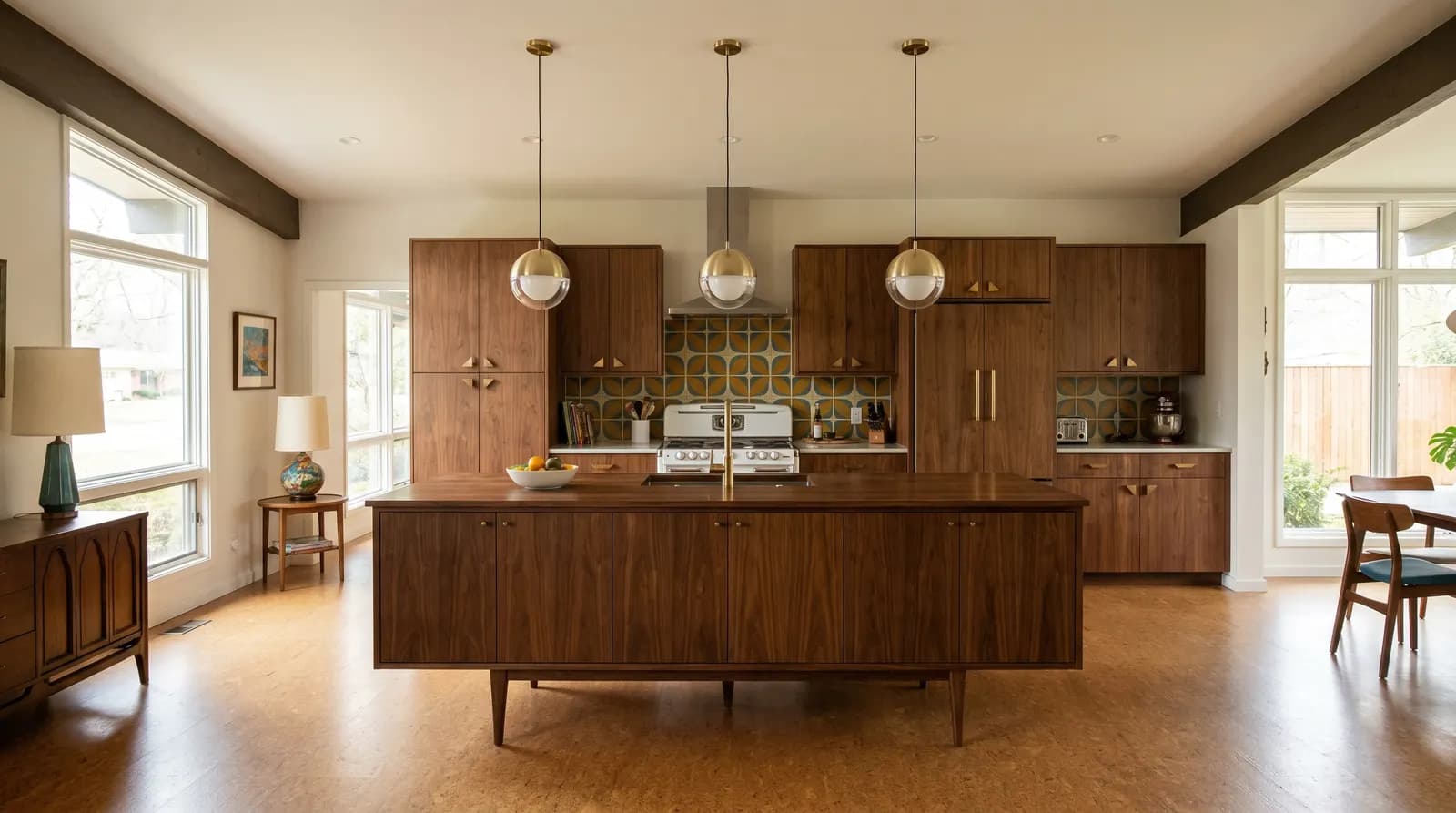
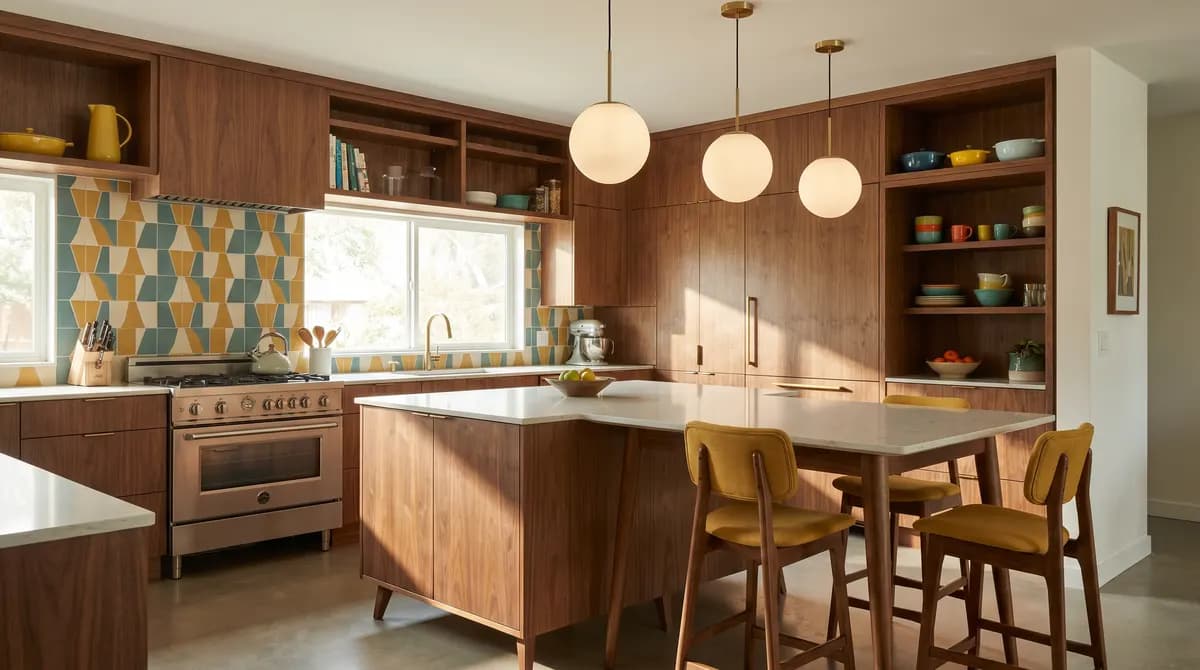
Mid-Century Modern (MCM) kitchen design is an American classic, born from the vibrant, optimistic post-war period from roughly 1945 to 1969. It champions clean lines, organic forms, and a deep connection to nature. Characterized by unadorned, flat-panel wood cabinetry—often in rich walnut or teak—the style is defined by its elegant simplicity and functional, open layouts that erase the barriers between kitchen, dining, and living spaces.
Three principles are foundational to the MCM aesthetic. First, an honesty of materials: wood is celebrated for its grain, metal for its sleekness, and glass for its transparency. Second, form follows function, but with a sculptural sensibility; even the most practical elements, like cabinet pulls or light fixtures, have an artistic quality. Third, a seamless indoor-outdoor connection, achieved through expansive glass, clerestory windows, and sliding doors that make the landscape a part of the room's design.
In 2026, the Mid-Century Modern kitchen remains an enduring favorite for its warmth and timeless appeal. It's the go-to style for renovating period homes from architects like Eichler and Neutra, but it's equally at home in new builds. Its principles have influenced contemporary styles like California Modern and Desert Modern, proving that its core tenets—simplicity, functionality, and a reverence for natural materials—are truly evergreen.
12 Real Mid-Century Modern Kitchen Examples
Each example below is a complete look — not a mood board. Click any image to see it full-size, then hit the generate button to try the same combination on your own room photo.
 1Example
 2Example
 3Example
 4Example
 5Example
 6Example
 7Example
 8Example
 9Example
 10Example
 11Example
 12Example
Key Design Elements
Colors
- Warm wood tones (walnut, teak, oak)
- Earthy neutrals: avocado green, mustard yellow, burnt orange
- Crisp white for contrast on walls and countertops
- Splashes of turquoise or sky blue for accents
- Matte black for structural elements and hardware
Materials
- Walnut and teak for cabinetry and furniture
- Laminate (like Formica) with graphic patterns for countertops
- Terrazzo or cork for flooring
- Ceramic tile, often in geometric or stacked patterns
- Brass and chrome for hardware and lighting fixtures
Furniture
- Flat-panel, grain-matched cabinetry with minimal hardware
- Eames or Cherner-style molded plywood chairs and stools
- Saarinen-style Tulip tables and stools
- Floating shelves or open-ended shelving units
- Built-in banquettes or breakfast nooks
Lighting
- Sputnik chandeliers or other sculptural ceiling fixtures
- Globe or saucer-shaped pendant lights
- Clerestory windows and large panes of glass
- Arc lamps for adjacent dining areas
- Under-cabinet lighting to highlight countertops
Textiles
- Upholstery in textured fabrics like tweed or boucle
- Graphic patterns from designers like Marimekko or Alexander Girard
- Simple linen or cotton tea towels in bold colors
- No heavy drapery; simple roller shades or bare windows
- A low-pile wool rug with a geometric pattern
Mid-Century Modern Kitchen Color Palette
Six pigments do most of the work — start here, then add one accent of your own.
The foundational warm wood tone for cabinetry. Its rich, deep grain provides the organic warmth central to the style.
An earthy, muted green for backsplashes, accent walls, or even appliances. It connects the interior to the outdoors.
A deep, warm yellow that evokes optimism. Perfect for upholstery, ceramics, or a statement piece of cookware.
A sophisticated, fiery accent color. Use it sparingly on textiles, a single stool, or artwork to add dynamic energy.
A clean, warm white for walls and countertops that allows the wood tones and accent colors to stand out without feeling stark.
A soft, playful blue that contrasts beautifully with warm woods. Ideal for small appliances, tile details, or dishware.
Must-Have Furniture & Fixtures
If you only buy these seven, you will read as authentically Mid-Century Modern.
Flat-Panel Walnut Cabinets
The cornerstone of the MCM kitchen. Look for continuous, horizontal grain and minimal hardware like tab pulls or integrated handles.
Sculptural Lighting
A statement fixture is non-negotiable. Think Sputnik chandeliers, George Nelson bubble lamps, or multi-arm pendants.
Iconic Stools
Counter stools are a chance for classic design. Choose molded plywood (Eames), wireframe (Bertoia), or Tulip bases (Saarinen).
Geometric Tile Backsplash
Stacked tile, penny rounds, or starburst patterns in ceramic. Often in a muted green, blue, or yellow to contrast the wood.
Clerestory Windows
High, narrow windows just below the ceiling line. They bring in light while maintaining privacy and wall space.
Laminate or Quartz Countertops
Authentic looks use patterned laminate (like Formica), but a modern update is a simple white or light grey quartz for durability.
Statement Appliance
A retro-style refrigerator (like a Smeg or Big Chill) in a bold color like orange, mint green, or blue can be the room's focal point.
Common Mistakes to Avoid
Overly ornate details. MCM is about clean lines. Avoid crown molding, shaker cabinets, or elaborate hardware.
Ignoring the wood grain. The beauty is in the material. Don't paint over quality walnut or teak; let the continuous grain be the pattern.
Too much brown. A room of only wood can feel heavy. Break it up with crisp white walls, colorful tile, and bold textiles.
Choosing the wrong lighting. A generic flush-mount light fixture will kill the vibe. Invest in a period-appropriate sculptural pendant or chandelier.
Cluttered surfaces. The style celebrates open space and clean lines. Keep countertops clear, displaying only a few select, beautiful objects.
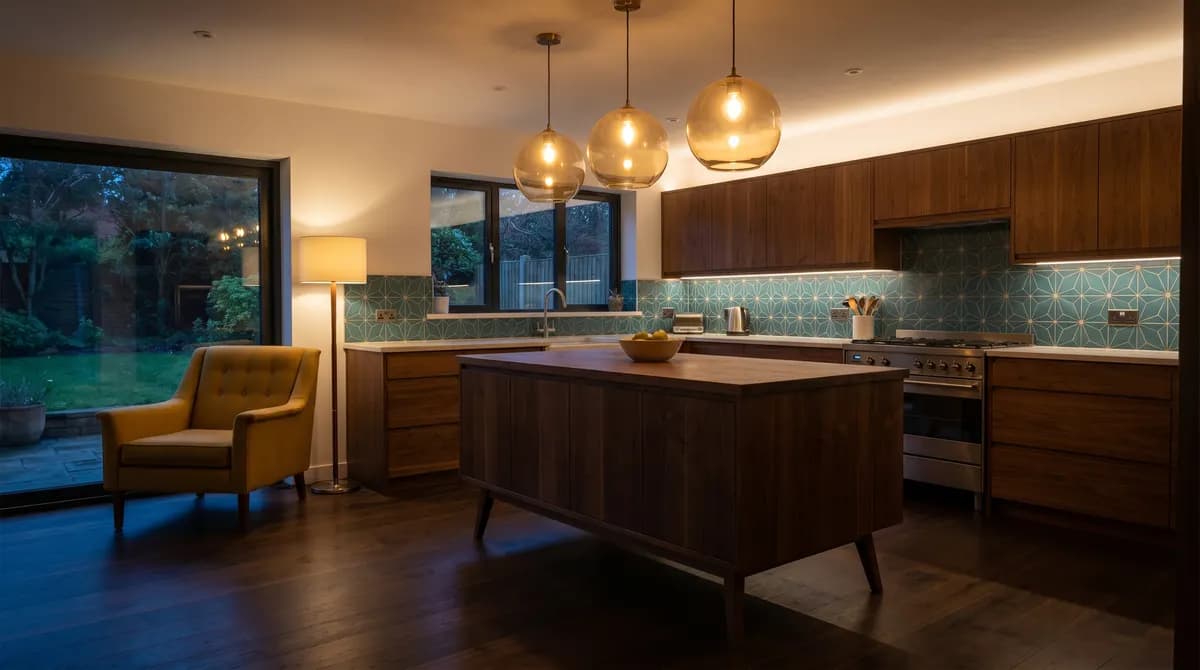
Try Mid-Century Modern Kitchen in Your Own Room
Upload a photo of your real kitchen. Get a photorealistic Mid-Century Modern redesign in about 30 seconds. 4 free credits, no card.
Generate Your Mid-Century Modern Kitchen FreeOther Mid-Century Modern Rooms
Apply the same palette and principles to the rest of the home.


Other Kitchen Styles
Same room, different aesthetic — explore the rest of the kitchen style library.


Mid-Century Modern Kitchen — Frequently Asked Questions
What are the key features of a Mid-Century Modern kitchen?
What materials are used in MCM kitchens?
How do I add color to a Mid-Century Modern kitchen?
What kind of lighting is best for an MCM kitchen?
Is Mid-Century Modern still in style for kitchens in 2026?
Can I have an island in a Mid-Century Modern kitchen?
How to Design a Mid-Century Modern Kitchen
Five decisions, in this order. Skip any of them and the look will not land.
- 1
Establish the Wood Foundation
Select a warm wood, typically walnut or teak, for your flat-panel cabinets. This is the soul of the room. Ensure the grain runs horizontally for a classic MCM look. This single decision will guide all others.
- 2
Create Contrast with White and Color
Use a crisp or warm white for walls and countertops to make the wood pop. Then, choose one or two bold, earthy accent colors (avocado, mustard, orange) for your backsplash, a statement appliance, or textiles.
- 3
Select a Sculptural Light Fixture
Treat lighting as the room's jewelry. A Sputnik chandelier, a set of globe pendants, or a Nelson Bubble Lamp isn't just for illumination—it's a critical piece of the design that establishes the MCM aesthetic.
- 4
Incorporate Iconic Forms
Bring in furniture with classic MCM shapes. This could be molded plywood stools by Eames, Tulip stools by Saarinen, or wireframe chairs by Bertoia. These recognizable silhouettes are visual shorthand for the style.
- 5
Connect to the Outdoors
Honor the MCM principle of indoor-outdoor living. Maximize natural light with large, unadorned windows, clerestory windows, or sliding glass doors. Add a few simple houseplants like a snake plant or fiddle-leaf fig.
Keep Exploring
Tools and guides that pair with this style.