Farmhouse Home Office Ideas: 12 Real Examples (2026 Guide)
Reclaimed wood, shiplap walls, and cozy practicality — the look that brings rustic warmth to the modern workday. We unpack what makes a home office feel truly Farmhouse, then show 12 photorealistic examples you can replicate.
- 12
- Real examples
- ~30s
- AI render time
- 4 free
- Credits, no card
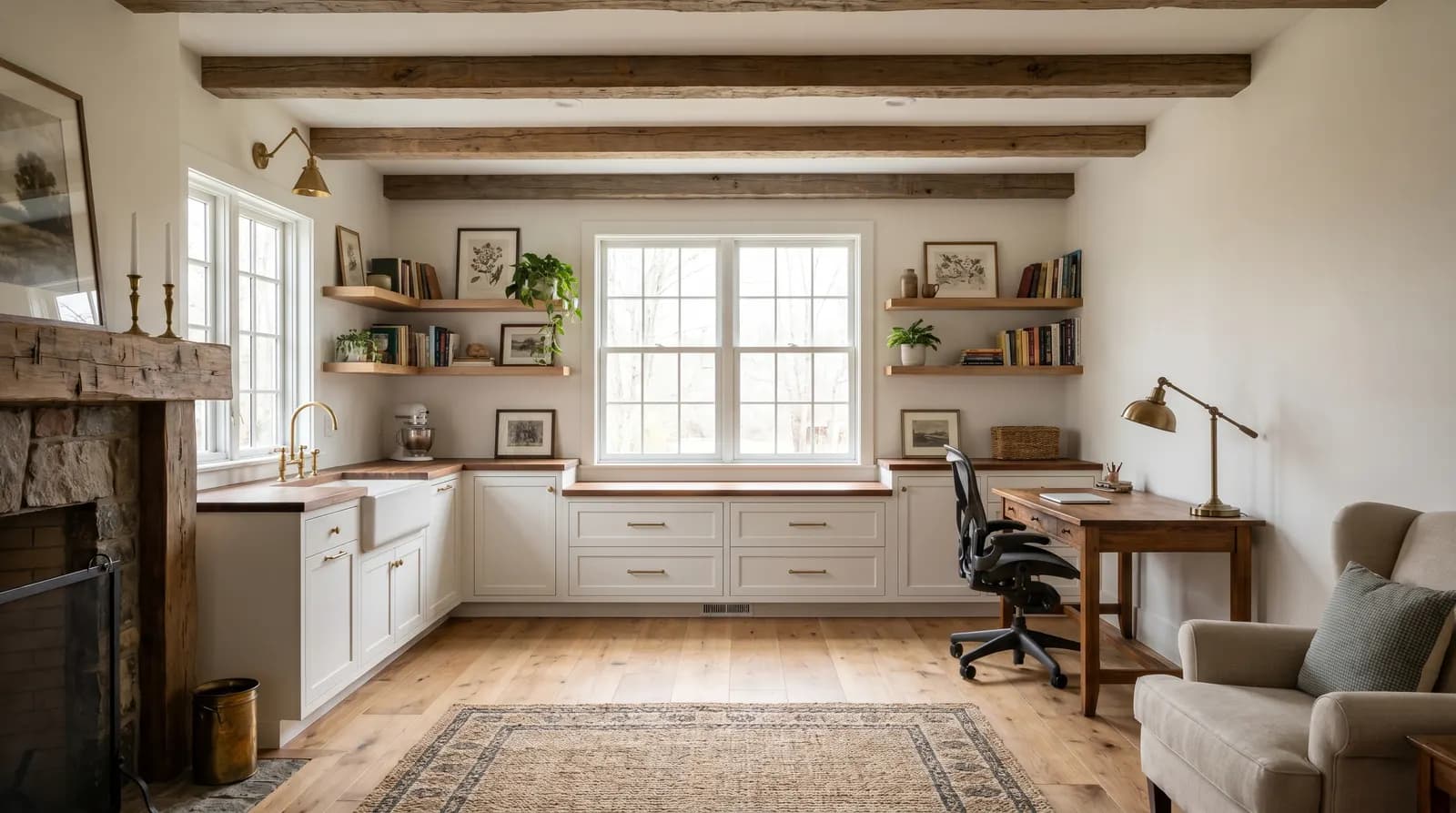
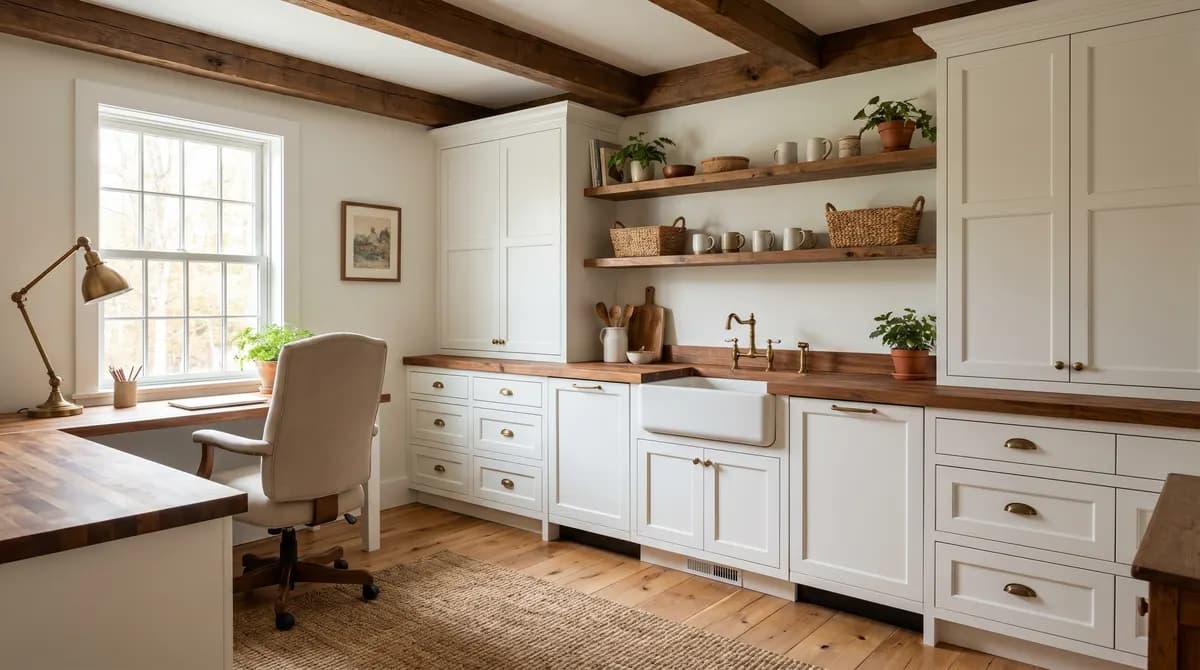
What is Farmhouse Home Office Design?
Farmhouse home office design is a style rooted in the practicality and simplicity of rural American farmhouses. It prioritizes comfort, utility, and a connection to natural materials. Unlike sterile corporate offices, it strips away cold metals and plastics in favor of warm woods, textured fabrics, and vintage or handmade elements. What remains is a space that feels lived-in, authentic, and conducive to focused work without sacrificing warmth.
Three principles define the modern Farmhouse office. First, reclaimed and natural materials: weathered wood, wrought iron, and natural fibers like cotton and jute are central. Second, practical comfort: furniture is sturdy and chosen for longevity, like a solid wood desk or a comfortable linen task chair. Third, a sense of history: this is achieved through vintage finds, antique-style lighting, and details like shiplap walls or barn-style doors, creating a narrative of a space that has evolved over time.
In 2026, the style has evolved beyond its rustic origins, often blending with modern or industrial elements. It's a popular choice for home offices in suburban and even urban homes, offering a comforting escape from the digital world. It pairs well with Industrial, Rustic, and Transitional styles, making it a versatile foundation for a home workspace that needs to feel both productive and personal.
12 Real Farmhouse Home Office Examples
Each example below is a complete look — not a mood board. Click any image to see it full-size, then hit the generate button to try the same combination on your own room photo.
 1Example
 2Example
 3Example
 4Example
 5Example
 6Example
 7Example
 8Example
 9Example
 10Example
 11Example
 12Example
Key Design Elements
Colors
- Warm whites and creams for walls (e.g., shiplap).
- Muted earth tones: sage green, dusty blue, greige.
- Natural wood tones from pine, oak, and reclaimed barn wood.
- Matte black or oil-rubbed bronze for metal accents.
- Soft neutrals from natural textiles like linen and cotton.
Materials
- Reclaimed wood for desks, shelves, and ceiling beams.
- Shiplap or board-and-batten wall paneling.
- Wrought iron or oil-rubbed bronze for hardware and lighting.
- Natural fibers: jute rugs, linen curtains, cotton upholstery.
- Galvanized metal for storage bins and decorative accents.
Furniture
- A large, sturdy desk made of solid or reclaimed wood.
- Open industrial-style shelving (wood and pipe).
- A comfortable, upholstered task chair in a neutral fabric.
- Vintage-inspired storage, like a rustic filing cabinet or credenza.
- A cozy armchair or small sofa for a reading corner.
Lighting
- Industrial-style pendant or cage lights.
- Gooseneck or barn-style wall sconces.
- A vintage-inspired metal task lamp on the desk.
- Large windows with simple linen or cotton curtains to maximize natural light.
- A classic schoolhouse-style flush mount for ambient light.
Textiles
- Natural jute or sisal area rugs.
- Linen or simple cotton-duck curtain panels.
- Grain sack or ticking stripe pillows on an accent chair.
- A cozy wool or chunky-knit throw blanket.
- Upholstery in durable, natural fabrics like linen-blend or canvas.
Farmhouse Home Office Color Palette
Six pigments do most of the work — start here, then add one accent of your own.
A soft, warm white that's the quintessential base for walls and trim. It feels clean and bright without being stark or cold.
The perfect blend of grey and beige, used for a warmer, more grounded wall color or on upholstered furniture.
The rich, varied brown tones of reclaimed pine or oak. This is the heart of the palette, found in desks, shelves, and floors.
A muted, earthy green that brings a touch of nature indoors. Use it as a soft accent wall color or on a vintage cabinet.
A matte, slightly textured black for hardware, light fixtures, and furniture legs. It adds a necessary industrial edge.
The natural, unbleached color of linen fabric. Found in curtains, upholstery, and pillows, it adds softness and texture.
Must-Have Furniture & Fixtures
If you only buy these seven, you will read as authentically Farmhouse.
Reclaimed Wood Desk
A solid, substantial desk with a natural or lightly distressed finish. It should be the anchor piece of the room.
Shiplap Feature Wall
Horizontal wood paneling, typically painted a warm white, installed behind the desk to create a focal point.
Open Pipe Shelving
A combination of dark metal pipes and thick wooden planks, used for storing books and displaying decor.
Sliding Barn Door
A space-saving and iconic element, often used for a closet or as the main entry to the office. Choose a classic Z-brace design.
Oil-Rubbed Bronze Lighting
Whether a desk lamp, wall sconce, or pendant, this dark, warm metal finish is a signature of the style.
Jute Area Rug
A large, hard-wearing rug made from natural jute fiber adds essential texture and defines the workspace.
Upholstered Task Chair
Forget mesh and plastic. Opt for a comfortable chair with arms, upholstered in a neutral fabric like linen or canvas.
Common Mistakes to Avoid
Too much kitsch — Avoid an over-reliance on word art ('Live, Laugh, Love'), faux-distressed items, and roosters. Keep it authentic.
Ignoring modern needs — A farmhouse office still needs to be functional. Ensure you have proper cable management and ergonomic support.
Making it too 'new' — The charm comes from a sense of history. Mix in at least one or two genuine vintage or antique pieces.
Forgetting texture — A room with only smooth, painted surfaces will fall flat. Layer in jute, linen, chunky knits, and rough-hewn wood.
Cluttered surfaces — While not minimalist, the style is rooted in practicality. Use wire baskets and vintage boxes to keep desk clutter organized.
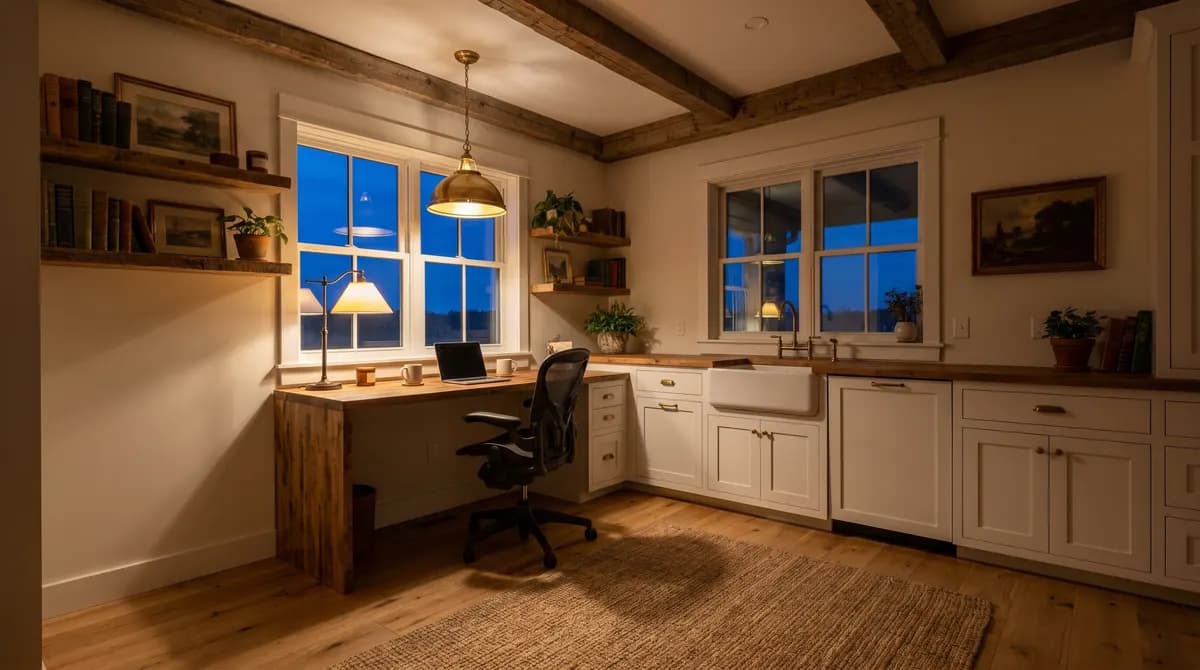
Try Farmhouse Style in Your Own Home Office
Upload a photo of your real office. Get a photorealistic Farmhouse redesign in about 30 seconds. 4 free credits, no card.
Generate Your Farmhouse Home Office FreeOther Farmhouse Rooms
Apply the same palette and principles to the rest of the home.


Other Home Office Styles
Same room, different aesthetic — explore the rest of the home office style library.


Farmhouse Home Office — Frequently Asked Questions
What defines a Farmhouse home office?
Is Farmhouse style still popular for offices in 2026?
How can I make my Farmhouse office feel authentic, not fake?
What kind of desk is best for a Farmhouse office?
How is Farmhouse different from Rustic style?
How do I organize a Farmhouse office without it looking cluttered?
How to Design a Farmhouse Home Office
Five decisions, in this order. Skip any of them and the look will not land.
- 1
Establish the Foundation: Walls & Floor
Start with the backdrop. Install a shiplap or board-and-batten feature wall behind the desk, painted a warm white. For flooring, choose wide-plank hardwood in a natural or medium stain. This creates the authentic canvas for everything else.
- 2
Anchor with a Solid Wood Desk
Choose a large, sturdy desk made of reclaimed or solid wood. This is the centerpiece of the room and sets the tone. Its finish—whether natural pine, stained oak, or painted—will guide your other wood choices.
- 3
Layer in Lighting & Hardware
Select fixtures in a consistent metal finish, typically matte black or oil-rubbed bronze. This includes your main pendant light, a gooseneck wall sconce or a desk task lamp, and all cabinet hardware. This industrial touch provides crucial contrast.
- 4
Add Texture with Rugs & Textiles
Ground the space with a large jute or other natural fiber rug. Add softness with linen curtains, an upholstered task chair, and a chunky knit throw over an accent chair. These layers prevent the wood and metal from feeling too cold.
- 5
Accessorize with Vintage & Natural Elements
This is the final step that brings personality. Hang botanical prints, add a few live plants, and use vintage items like old books, wire baskets, or an antique globe for decor. Edit to keep it feeling curated, not cluttered.
Keep Exploring
Tools and guides that pair with this style.