Scandinavian Home Office Design Ideas: 12 Real Examples (2026 Guide)
Light wood, white walls, functional minimalism — the look that started in Copenhagen and conquered the global workspace. We unpack what makes a home office feel truly Scandi, then show 12 photorealistic examples you can replicate.
- 12
- Real examples
- ~30s
- AI render time
- 4 free
- Credits, no card
What is Scandinavian Home Office Design?
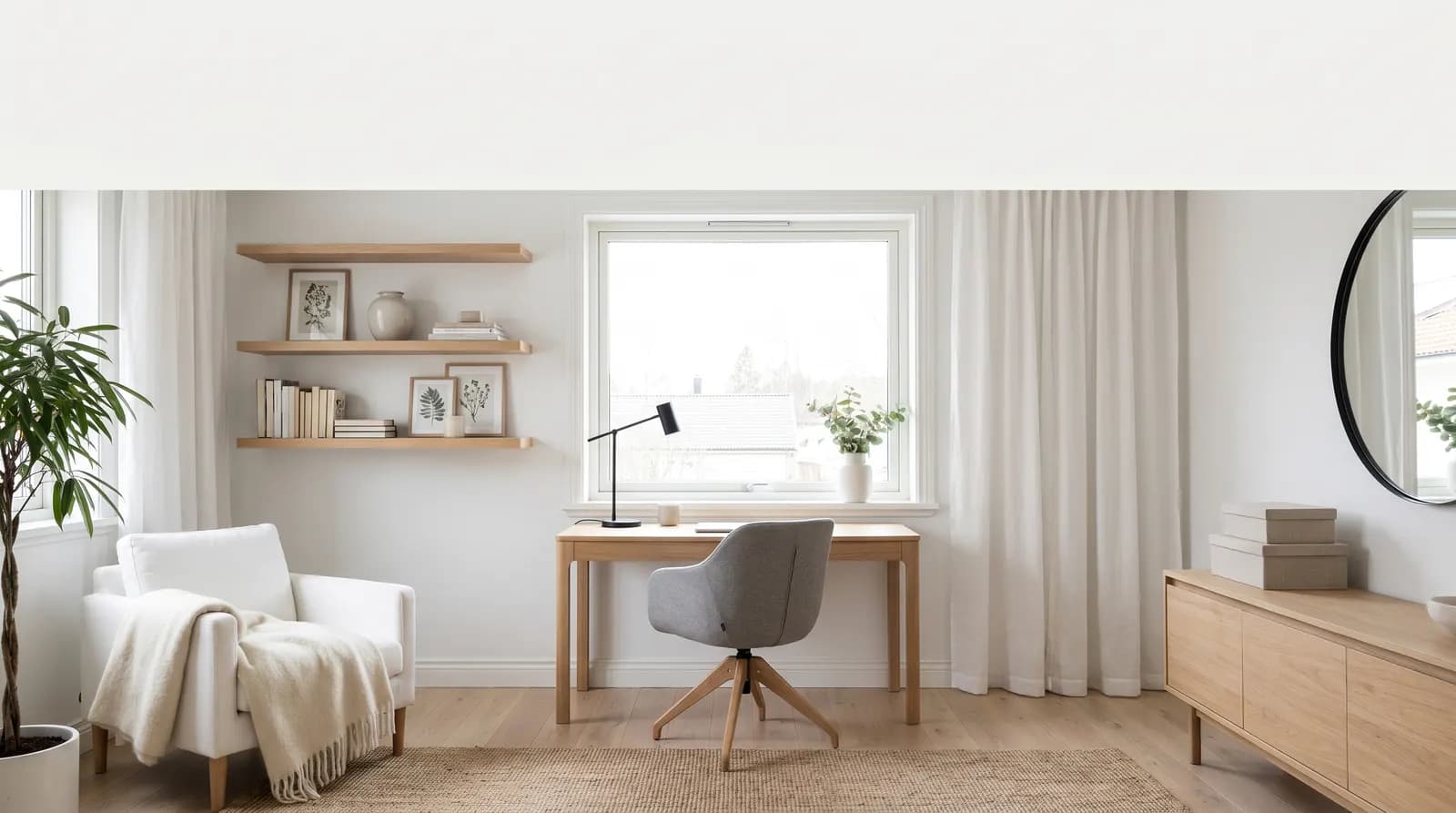
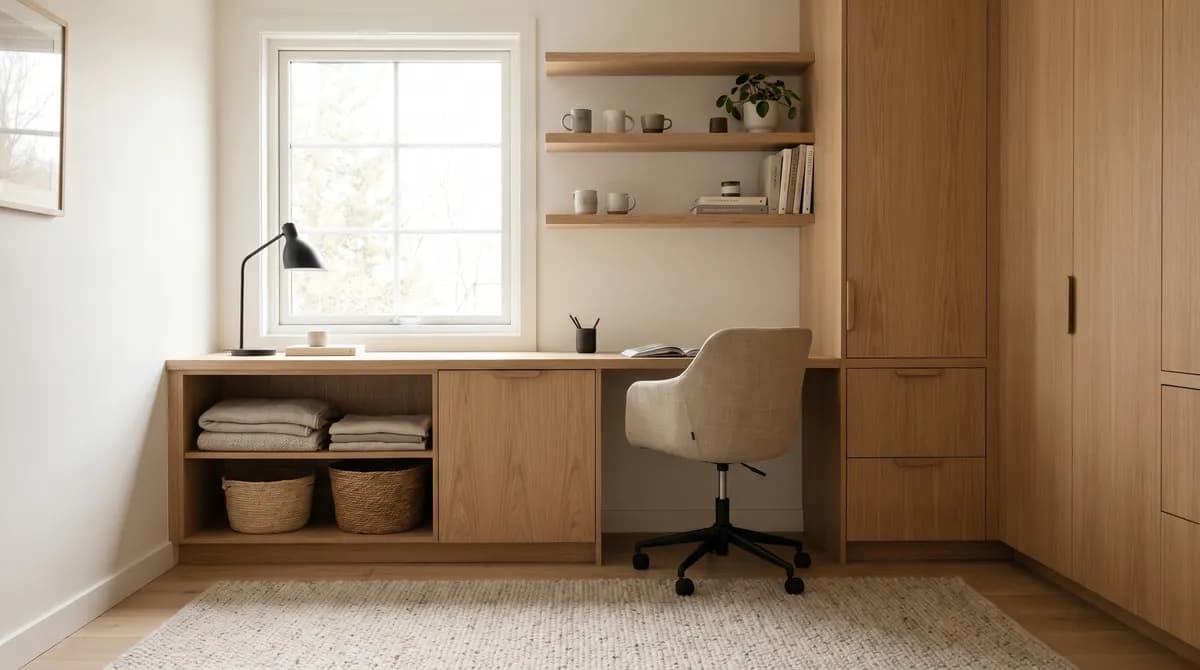
Scandinavian home office design is a regional take on modernism that came out of Denmark, Sweden, Finland and Norway in the mid-20th century. It is defined less by ornament than by what it strips away: bulky furniture, ornate details, dark wood, and visual clutter. What is left is a calm, focused environment built on light — both literal daylight, captured through large windows, and a visual lightness from pale woods, soft whites and uncluttered surfaces.
Three principles run through every authentic Scandinavian home office. First, functionality: every drawer, shelf and cable has a place, and ergonomics are considered before aesthetics. Second, light: surfaces are chosen to bounce daylight around, a key consideration during long, dark Nordic winters. Third, hygge — the untranslatable Danish word for warmth and coziness — which is added back in through textiles, plants, personal objects, and warm lighting.
In 2026 the look has become the global standard for thoughtful remote work environments. From Brooklyn lofts to Berlin apartments, its appeal lies in its inherent calm and photogenic simplicity. It pairs naturally with Japandi and Mid-Century Modern, which is why we treat Scandinavian as the canonical starting point for our Style × Room series.
12 Real Scandinavian Home Office Examples
Each example below is a complete look — not a mood board. Click any image to see it full-size, then hit the generate button to try the same combination on your own room photo.
 1Example
 2Example
 3Example
 4Example
 5Example
 6Example
 7Example
 8Example
 9Example
 10Example
 11Example
 12Example
Key Design Elements
Colors
- Pure white or light grey walls for a bright, airy feel.
- Light beige and warm white for textiles and accessories.
- Natural honey and pale wood tones for the desk and shelving.
- Matte black as a sharp accent for lamp frames, chair legs, and hardware.
- Soft greens from live plants like Pilea or Fiddle Leaf Fig.
Materials
- White oak, ash, or birch for desks, shelves, and chair frames.
- Matte black powder-coated steel for lamp arms and table legs.
- Natural leather for a desktop blotter or a chair detail.
- Wool and felt for acoustic panels, rugs, and desk accessories.
- Linen for curtains and pinboards to add soft texture.
Furniture
- A minimalist desk with clean lines, often in light wood with slender legs.
- An ergonomic yet aesthetically pleasing chair, like a molded plywood or woven cord classic.
- Open, modular wall shelving (e.g., a String System-style unit).
- Integrated, full-height cabinetry with flat-front doors to hide clutter.
- A simple, comfortable armchair with a throw for a reading corner.
Lighting
- An architectural task lamp in matte black or brass for focused light.
- Floor-to-ceiling windows with sheer curtains to maximize natural light.
- A soft, diffused pendant light for general ambient illumination.
- Warm, indirect lighting from a floor lamp in a corner.
- A single beeswax or soy candle for a touch of evening hygge.
Textiles
- A simple wool or jute area rug to define the space and add warmth.
- Sheer linen curtains that filter light without blocking it.
- A sheepskin or wool throw draped over the office chair or a nearby armchair.
- A felt desk mat to soften the work surface and absorb sound.
- A fabric-covered pinboard for a tactile, organized display.
Scandinavian Home Office Color Palette
Six pigments do most of the work — start here, then add one accent of your own.
The base white for walls and storage units. It reflects maximum light and makes the wood tones appear richer.
A creamy off-white for a softer feel, ideal for north-facing rooms to avoid a clinical look. Use on walls or trim.
Used for linen curtains, felt accessories, and ceramics. Adds a quiet, earthy undertone that feels calming.
Found in concrete planters, wool rugs, or as a wall color alternative to white. A grounding mid-tone.
The strict accent — matte black task lamps, chair legs, and picture frames. Used sparingly as visual punctuation.
White oak, ash, or birch — the hero of the palette. Choose one wood and repeat it on the desk, shelving, and floor.
Must-Have Furniture & Fixtures
If you only invest in these seven pieces, you will capture the authentic Scandinavian feel.
A Light Wood Desk
The centerpiece. Choose solid white oak, ash, or birch with simple, slender legs or a trestle base. 120-160 cm wide is typical.
An Iconic Chair
Marry ergonomics with beauty. Think molded plywood, woven paper cord, or a simple upholstered shell on a wooden base.
A Minimalist Task Lamp
Form and function combined. A sleek, adjustable lamp in matte black, white, or brass provides essential focused light.
Open Wall Shelving
A modular, wall-mounted system is canonical. Use it for a curated display of books, plants, and meaningful objects.
Integrated Storage
Floor-to-ceiling cabinets with flat, handleless doors are key to hiding printers, files, and general clutter seamlessly.
A Natural Fiber Rug
A simple jute or low-pile wool rug under the desk and chair defines the workspace and adds a layer of texture and warmth.
A Live Plant
A non-negotiable element. A single, healthy plant in a simple ceramic or terracotta pot adds life and natural color.
Common Mistakes to Avoid
Too much white — an all-white office feels sterile and clinical. Always ground the space with the warmth of a wood tone and the texture of textiles.
A generic 'office' chair — a bulky, black mesh ergonomic chair breaks the aesthetic. Find a design-led chair that still offers support.
Visible cable clutter — messy cables are the enemy of Scandinavian calm. Invest in cable trays, sleeves, and wireless peripherals.
Forgetting hygge — without personal touches like a favorite mug, a candle, a plant, and soft textiles, the space feels like a corporate cubicle.
Cluttered surfaces — Scandinavian design is the discipline of empty space. Keep only your immediate essentials on the desk. Everything else needs a home.
Try Scandinavian Style in Your Own Home Office
Upload a photo of your real workspace. Get a photorealistic Scandinavian redesign in about 30 seconds. 4 free credits, no card.
Generate Your Scandinavian Home Office FreeOther Scandinavian Rooms
Apply the same palette and principles to the rest of the home.


Other Home Office Styles
Same room, different aesthetic — explore the rest of the home office style library.


Scandinavian Home Office — Frequently Asked Questions
What colors define Scandinavian home office design?
How do I make a Scandinavian office feel cozy, not cold?
What is the best desk for a Scandinavian home office?
How do you handle storage and clutter?
How is a Scandinavian home office different from a Minimalist one?
Is this style good for a small office space or corner?
How to Design a Scandinavian Home Office
Five decisions, in this order. Get them right for a calm, productive space.
- 1
Choose your primary wood
Pick one light wood—white oak, ash, or birch—and commit. This is your anchor. Use it for the desk, any shelving, and the legs of your chair. A consistent wood tone is crucial for a cohesive, calming look.
- 2
Set a neutral background
Paint your walls pure white, a very light grey, or a warm off-white. This creates a bright, airy canvas that reflects natural light and allows your wooden furniture to stand out. Keep trim simple and in the same or a slightly different white.
- 3
Select functional, beautiful pieces
Choose your desk and chair first. Prioritize clean lines and quality materials. Then add storage—ideally, a mix of open shelving for display and closed cabinets to hide mess. Solve for cable management from the start.
- 4
Layer in texture and warmth (Hygge)
This is the step that makes the space feel personal. Add a wool or jute rug, a soft throw for your chair, a live plant, and a high-quality task lamp for warm, focused light. Include one or two personal objects, but no more.
- 5
Edit ruthlessly
The final step is to take things away. A Scandinavian workspace is an uncluttered one. Your desk should hold only your computer, lamp, and one or two essential items. Everything else must have a designated, out-of-sight home.
Keep Exploring
Tools and guides that pair with this style.