Mid-Century Modern Home Office Ideas: 12 Real Examples (2026 Guide)
Warm woods, clean lines, and sculptural forms — the look born in post-war optimism that still defines the world's most creative workspaces. We unpack what makes a home office feel authentically MCM, then show 12 photorealistic examples you can replicate.
- 12
- Real examples
- ~30s
- AI render time
- 4 free
- Credits, no card
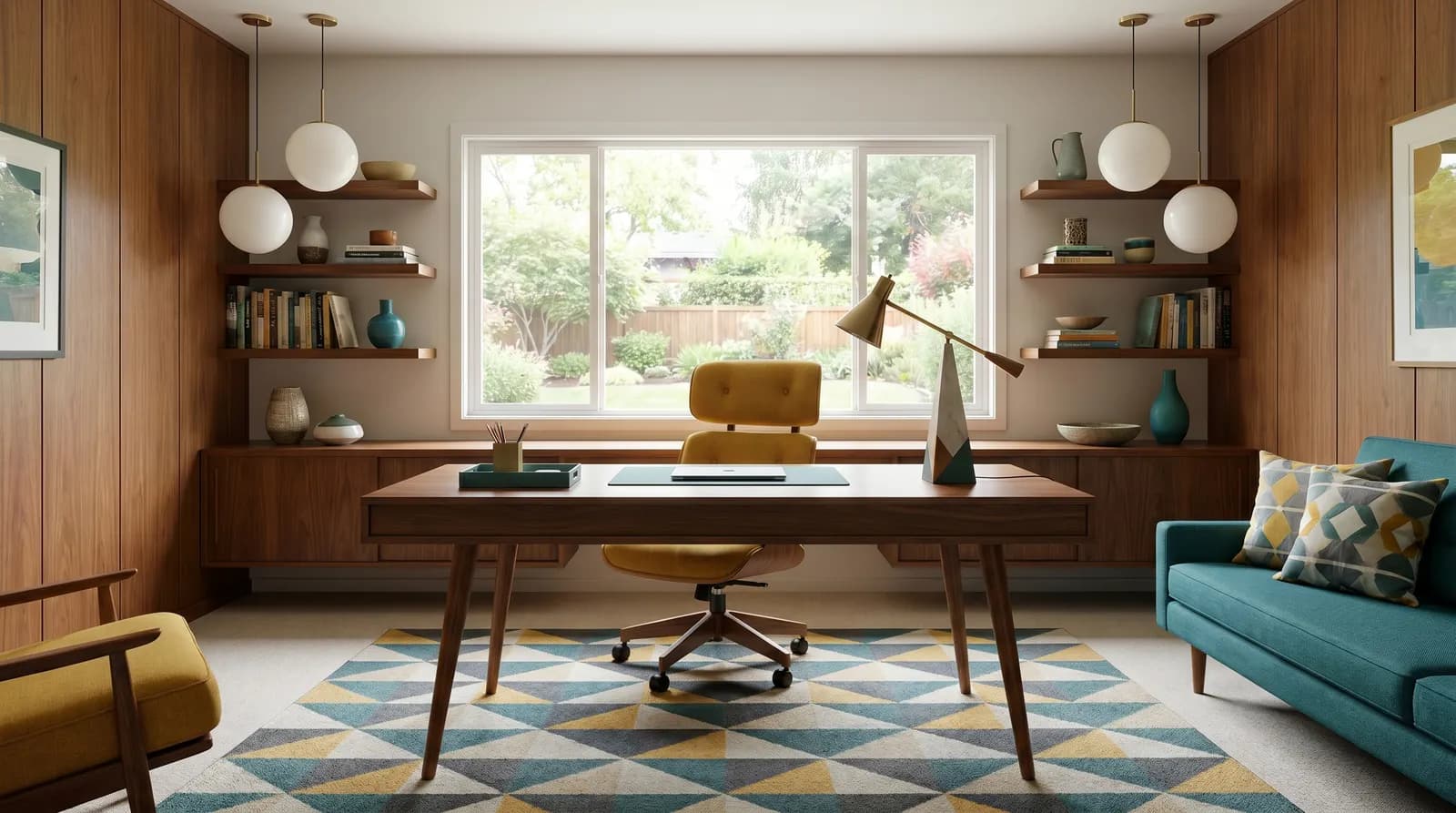
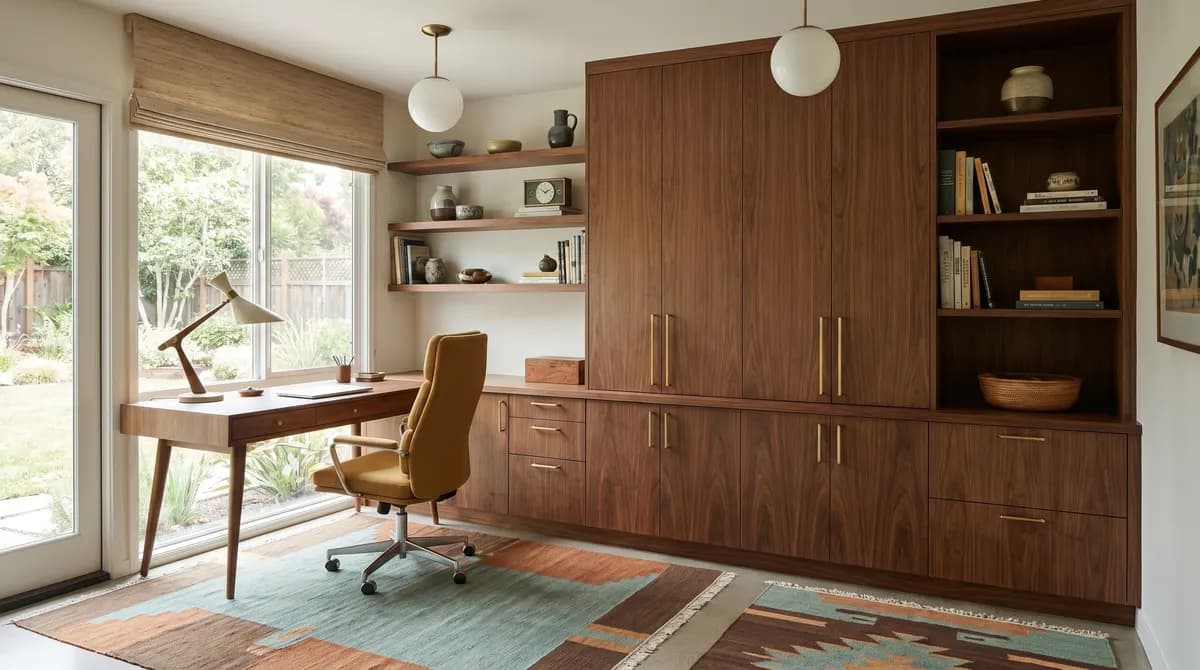
What is Mid-Century Modern Home Office Design?
Mid-Century Modern (MCM) home office design is an American aesthetic that emerged from roughly 1945 to 1969, championed by designers like Charles and Ray Eames, George Nelson, and Eero Saarinen. It rejected pre-war ornamentation in favor of clean lines, gentle organic curves, and an honest expression of materials. The goal was democratic, functional design for a new, optimistic era.
Three principles define an authentic MCM home office. First, form follows function: every piece, from the executive desk to the task lamp, is pared back to its essential purpose, creating an uncluttered and productive environment. Second, a connection to nature: large windows, the prominent use of warm woods like walnut and teak, and an abundance of houseplants blur the line between indoors and out. Third, graphic confidence: bold accent colors, geometric patterns, and sculptural forms in lighting and seating act as functional art.
In 2026, the style endures as the default for design-led startups and creative home offices from Silicon Valley to Stockholm. Its emphasis on quality materials and timeless forms means it ages gracefully and pairs well with contemporary minimalism. An MCM office is more than a workspace; it's a statement about clarity, creativity, and an appreciation for enduring design.
12 Real Mid-Century Modern Home Office Examples
Each example below is a complete look — not a mood board. Click any image to see it full-size, then hit the generate button to try the same combination on your own room photo.
 1Example
 2Example
 3Example
 4Example
 5Example
 6Example
 7Example
 8Example
 9Example
 10Example
 11Example
 12Example
Key Design Elements
Colors
- Warm white or light grey walls as a neutral backdrop.
- Deep, warm wood tones from walnut and teak.
- Earthy accents: mustard yellow, olive green, burnt orange.
- Cool accents: teal, navy blue, and charcoal grey.
- Brushed brass or bronze for a touch of metallic warmth.
Materials
- Walnut — the definitive wood for desks and credenzas.
- Teak and rosewood for vintage or high-end pieces.
- Brushed brass and bronze for lighting and hardware.
- Leather, particularly in black, tan, or cognac, for seating.
- Textured fabrics like boucle, tweed, and felt for upholstery.
Furniture
- Desks with clean lines, tapered legs, and minimal hardware.
- Iconic chairs: Eames Aluminum Group, Eames Lounge, or Saarinen Tulip.
- Low, long credenzas instead of tall filing cabinets.
- Modular, open-concept shelving systems (e.g., a wall system).
- A comfortable side chair or small sofa for reading.
Lighting
- Sculptural ceiling fixtures like sputnik or satellite chandeliers.
- Statement arc floor lamps to illuminate a corner or desk.
- Architectural task lamps with metal shades and adjustable arms.
- Table lamps with ceramic or wood bases and simple drum shades.
- Large windows with minimal dressing to maximize natural light.
Textiles
- Geometric-patterned wool or jute area rugs.
- Upholstery in solid, textured fabrics like boucle or tweed.
- Sheer linen or cotton curtain panels that don't obstruct light.
- Leather or wool cushions on seating.
- Abstract art prints with graphic shapes and bold colors.
Mid-Century Modern Home Office Color Palette
Six pigments do most of the work — start here, then add one accent of your own.
The ideal backdrop for warm woods. A soft, creamy white that prevents the space from feeling clinical and lets the furniture stand out.
The foundational tone. The rich, deep brown of walnut wood provides warmth and gravitas to desks, credenzas, and chair frames.
A classic MCM accent. Used on a single chair, a cushion, or in a rug pattern, it adds a confident, optimistic pop of color.
An earthy, sophisticated tone that connects to nature. Perfect for an accent wall, upholstery, or large ceramic planters.
A vibrant, cool counterpoint to the warm woods and oranges. Use it sparingly in artwork or textiles for a dynamic contrast.
The quintessential warm accent. Evokes the era's energy and optimism. Ideal for a statement piece or a detail in a textile pattern.
Must-Have Furniture & Fixtures
If you only invest in these seven pieces, you will read as authentically Mid-Century Modern.
A Walnut or Teak Desk
The centerpiece. Look for a simple silhouette, tapered legs, and high-quality wood grain. Functionality is key, but form is paramount.
An Iconic Chair
The soul of the office. An Eames Aluminum Group chair for tasks or an Eames Lounge Chair for reading instantly signals authentic MCM style.
A Low Credenza
Elegant, horizontal storage that keeps the room feeling open. Use it for files, a printer, and as a surface for a lamp and objects.
A Sculptural Light Fixture
A sputnik chandelier, an arc floor lamp, or an articulated task lamp. Lighting in MCM is functional art.
A Geometric Area Rug
Grounds the space and adds color, pattern, and texture. Look for abstract shapes or simple geometric repeats.
Open Modular Shelving
A wall system or floating shelves for books and curated objects. It provides storage while maintaining a sense of lightness.
Brass Hardware and Accents
Brushed brass or bronze on drawer pulls, lamp bases, and table legs adds a layer of warm, metallic sophistication.
Common Mistakes to Avoid
Creating a 'replica room' — A space filled only with knock-off icons can feel like a theme park. Mix authentic or high-quality replicas with contemporary pieces.
Ignoring wood tones — Mixing warm walnut with cool, light oak or pine breaks the aesthetic. Commit to one or two complementary warm woods.
Forgetting texture and plants — Without textiles (rugs, boucle) and greenery, the clean lines and wood can feel sterile. Add life and softness.
Using fussy decor — MCM is about confident, simple forms. Avoid small, intricate decorations, and opt for larger, sculptural objects and bold graphic art.
Choosing the wrong scale — MCM furniture is often low-slung. Ensure your desk, chair, and credenza are proportional to each other and the room's ceiling height.
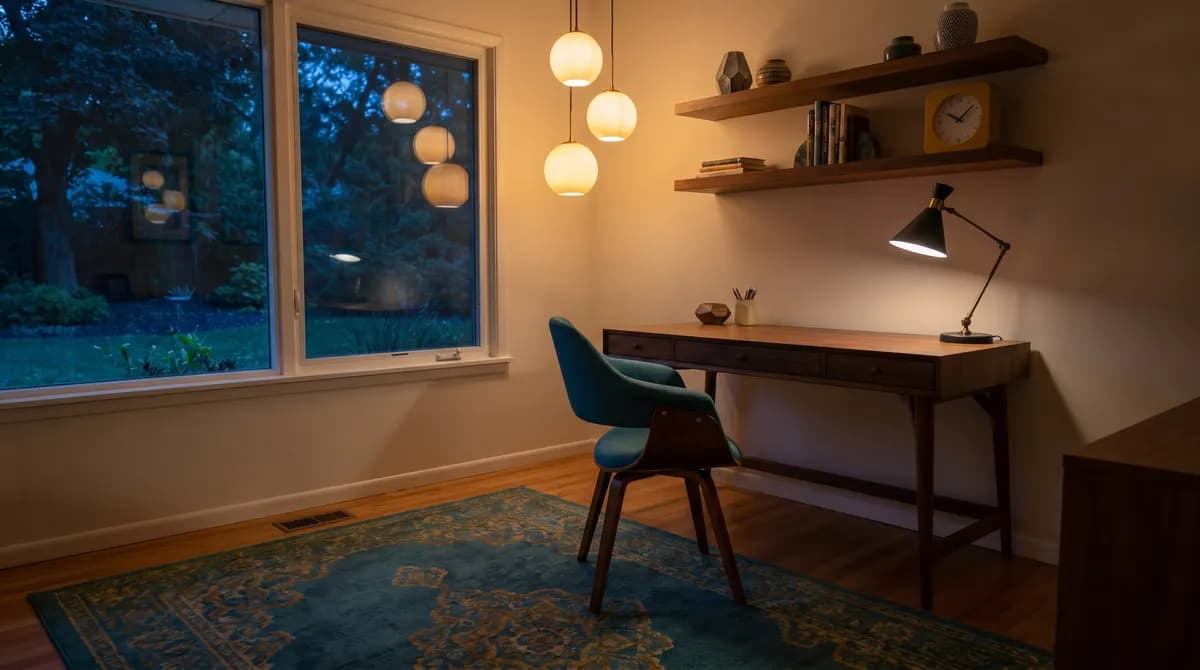
Try Mid-Century Modern in Your Own Home Office
Upload a photo of your real office. Get a photorealistic Mid-Century Modern redesign in about 30 seconds. 4 free credits, no card.
Generate Your Mid-Century Modern Home Office FreeOther Mid-Century Modern Rooms
Apply the same palette and principles to the rest of the home.


Other Home Office Styles
Same room, different aesthetic — explore the rest of the home office style library.


Mid-Century Modern Home Office — Frequently Asked Questions
What defines Mid-Century Modern home office design?
Is Mid-Century Modern design expensive?
How do I make an MCM office comfortable and not like a museum?
What kind of desk should I choose for an MCM office?
How is Mid-Century Modern different from Scandinavian design?
Is Mid-Century Modern good for small home offices?
How to Design a Mid-Century Modern Home Office
Five decisions, in this order. Skip any of them and the look will not land.
- 1
Choose Your Primary Wood
Commit to a warm wood, typically walnut or teak. This will be the foundation for your desk, credenza, and shelving. Consistency in your main wood tone is crucial for an authentic look.
- 2
Set Your Palette
Start with a neutral backdrop like warm white or light grey. Then, select two to three accent colors from the classic MCM palette, such as mustard yellow, olive green, or burnt orange. Use them in your rug, art, and accessories.
- 3
Anchor with a Statement Desk and Chair
These are the two most important pieces. Invest in a well-proportioned desk with clean lines and an ergonomic, iconic chair. This pairing sets the functional and aesthetic tone for the entire room.
- 4
Layer in Sculptural Lighting
Lighting is not an afterthought in MCM; it's a feature. Choose a statement piece—an arc floor lamp, a sputnik chandelier, or an architectural task lamp—to add a sculptural element and create warm, inviting light.
- 5
Accessorize with Confidence
Finish the space with intention. Add a geometric rug, large-leafed plants, abstract art, and a few curated ceramic or brass objects. The goal is curated personality, not clutter.
Keep Exploring
Tools and guides that pair with this style.