Farmhouse Nursery Design Ideas: 12 Real Examples (2026 Guide)
Shiplap walls, vintage cribs and soft neutrals — a warm, hand-crafted look that feels like a hug. We unpack what makes a nursery feel truly farmhouse, then show 12 photorealistic examples you can replicate.
- 12
- Real examples
- ~30s
- AI render time
- 4 free
- Credits, no card
What is Farmhouse Nursery Design?
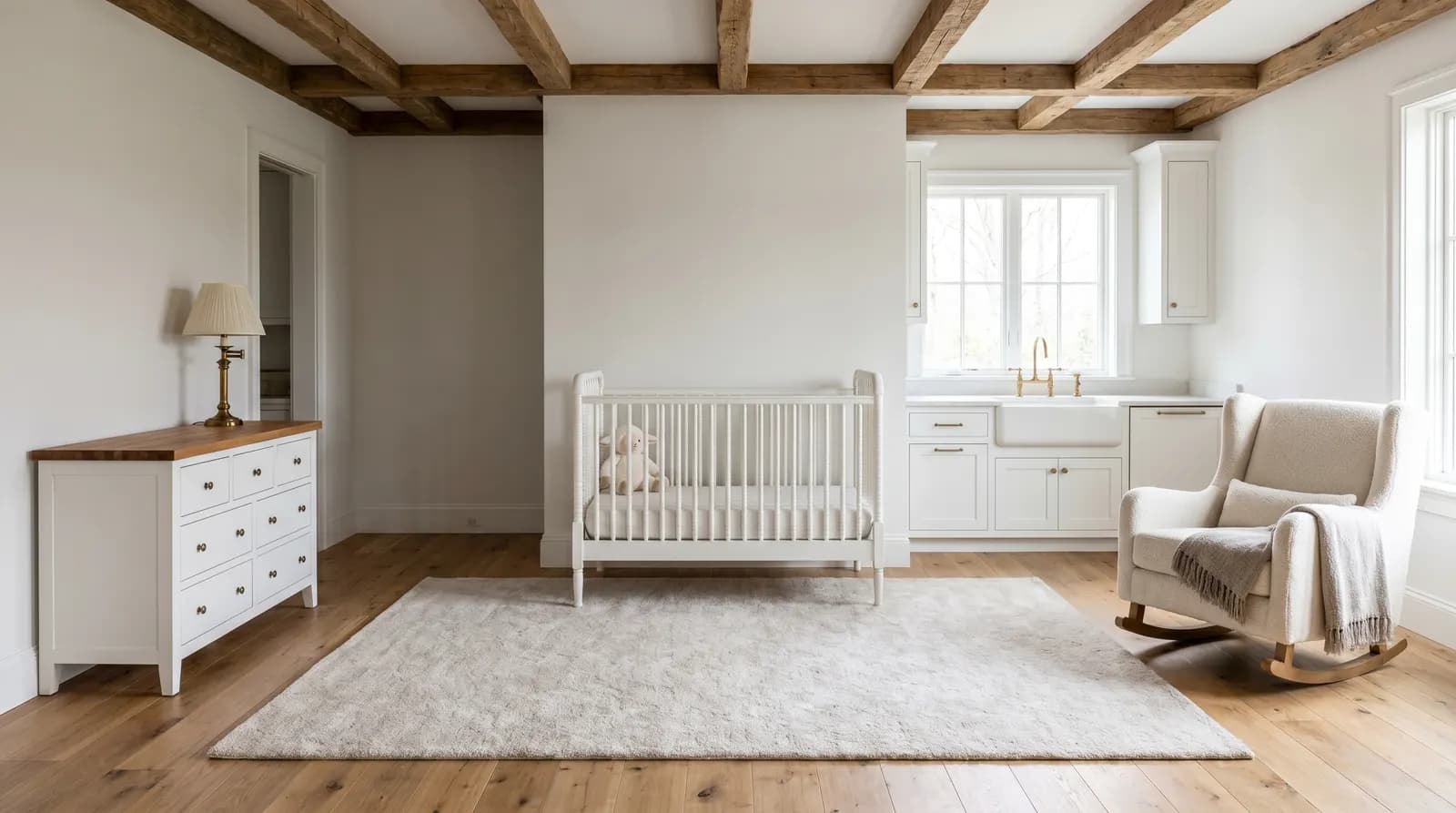
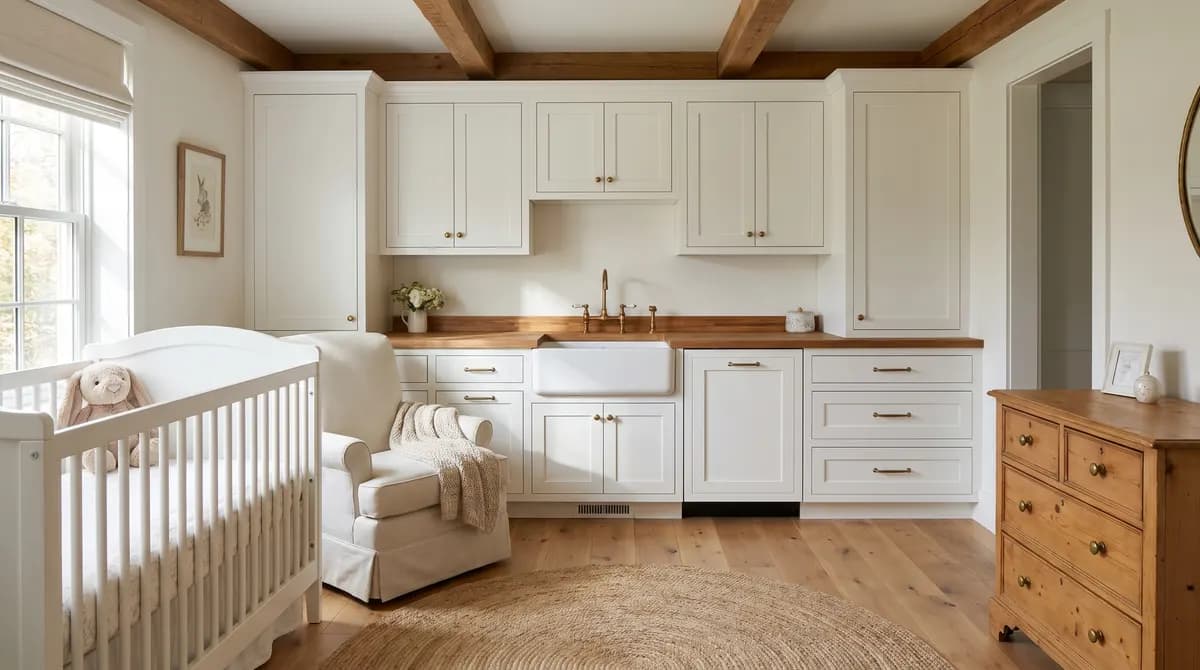
Farmhouse nursery design takes the rural American aesthetic — shiplap walls, reclaimed wood, vintage textiles — and gentles it down for a baby's room. The dominant feeling is softness. Hard edges are replaced with rounded vintage cribs; industrial finishes give way to whitewashed oak; bright primaries surrender to creams, dusty pinks, sage greens and soft tans. It is the most forgiving children's style on the market because it never looks dated.
Three principles run through every authentic farmhouse nursery. First, layered texture: linen, cotton, wool, woven rattan and rough-sawn wood all share the room, never one finish alone. Second, vintage character: at least one piece — usually the dresser or rocker — should look like it was inherited, not bought new. Third, soft neutrals with one earthy accent: think cream-on-cream with a single dusty sage curtain or a faded floral mobile.
In 2026 the farmhouse nursery has matured beyond the Joanna Gaines moment. The current iteration is quieter, more European-pastoral, with hand-thrown ceramics, antique watercolours and natural-dye textiles. It pairs naturally with Scandinavian and Coastal, and is the easiest style to grow with your child — strip the crib for a vintage twin bed and the room transitions into a charming kids' room without a full redesign.
12 Real Farmhouse Nursery Examples
Each example below is a complete look — not a mood board. Click any image to see it full-size, then hit the generate button to try the same combination on your own room photo.
 1Example
 2Example
 3Example
 4Example
 5Example
 6Example
 7Example
 8Example
 9Example
 10Example
 11Example
 12Example
Key Design Elements
Colors
- Creamy whites and warm off-whites on walls
- Soft taupe and oat for cribs and dressers
- Dusty sage or eucalyptus green accent
- Muted blush or terracotta for textiles
- Honey and weathered oak wood tones
Materials
- Shiplap or board-and-batten on at least one wall
- Reclaimed or whitewashed oak furniture
- Rattan and natural cane on cribs and bins
- Linen and washed cotton for all soft goods
- Aged or unlacquered brass hardware
Furniture
- Vintage-style spindle or rattan crib
- Tall solid-wood dresser doubling as changing table
- Upholstered rocker or vintage wooden glider
- Woven storage baskets along low shelf
- Antique-look bookshelf or cubby unit
Lighting
- Ceramic table lamp with linen drum shade
- Wall-mounted reading sconce by the rocker
- Soft string lights along shiplap accent
- Pendant with woven rattan or wicker shade
- Plug-in dimmable nightlight in warm 2200 K
Textiles
- Linen crib sheets and muslin swaddles
- Cotton quilt with hand-stitched detail
- Sheepskin rug under the rocking chair
- Linen curtains in cream or oat
- Hand-woven jute or wool runner on the floor
Farmhouse Nursery Color Palette
Six pigments do most of the work — start here, then add one accent of your own.
The base wall colour for a farmhouse nursery. Warmer than pure white, it makes wood look honey-coloured and never feels clinical at 3 a.m.
Used on trim, shiplap and sheers. A barely-there off-white that adds depth without contrast — exactly what a baby's eye needs.
The earthy accent — curtains, a single watercolour, ceramic lamp base. Soft enough to feel calming, distinct enough to anchor the palette.
Optional warm accent for cushions, knitted blankets and one floral print. Skip if the baby's name signals a different palette story.
The dominant wood tone for crib, dresser and shelves. Look for a slightly grey-undertoned oak rather than orange or red-stained.
Hardware, picture frames and the occasional vintage hook. Used sparingly — three to five brass moments in the whole room.
Must-Have Furniture & Fixtures
If you only buy these seven, you will read as authentically farmhouse.
Vintage spindle or rattan crib
An antique-style crib in whitewashed oak with turned spindles, or a natural rattan crib. Skip glossy lacquered modern shapes — they break the spell instantly.
Shiplap or board-and-batten accent wall
One wall behind the crib in horizontal shiplap or vertical board-and-batten, painted in antique cream. The single biggest move in the room.
Tall solid-wood dresser
Six-drawer, weathered oak or whitewashed pine, used as the changing table on top. Brass cup pulls or simple turned knobs. No MDF, no veneer.
Upholstered rocker or wooden glider
Cream linen or oat boucle upholstery with a wooden base, or an antique wooden rocker with a sheepskin throw. Comfort is non-negotiable — you will live here.
Woven storage baskets
Three to five natural seagrass, rattan or cotton-rope baskets in graduated sizes. Lined up on a low shelf or tucked under the changing table.
Ceramic table lamp with linen shade
Cream stoneware base, drum linen shade, warm dimmable bulb. The single most important light in the room — overheads are too harsh at night.
Cotton or wool floor rug
A washable cotton flat-weave or low-pile wool runner in cream-on-cream stripes or a faded vintage pattern. Soft enough for tummy time, durable enough for years.
Common Mistakes to Avoid
Going too rustic — chicken-wire, mason jars and barn signs read as theme park, not nursery. Farmhouse for a baby is soft and pared back, not cluttered with kitsch.
Using primary colours — fire-engine red, royal blue and bright yellow break the muted neutral palette. Keep everything in dusty, faded tones.
Mixing too many wood tones — pick one oak finish and repeat it across crib, dresser and shelves. Three different woods looks accidental.
Forgetting safety with vintage pieces — antique cribs are illegal in most countries. Buy a new crib with vintage styling, never an actual antique.
Over-decorating walls — one big watercolour or a small framed trio is enough. A wall covered in nursery quotes and growth charts becomes visual noise.
Try Farmhouse Nursery in Your Own Room
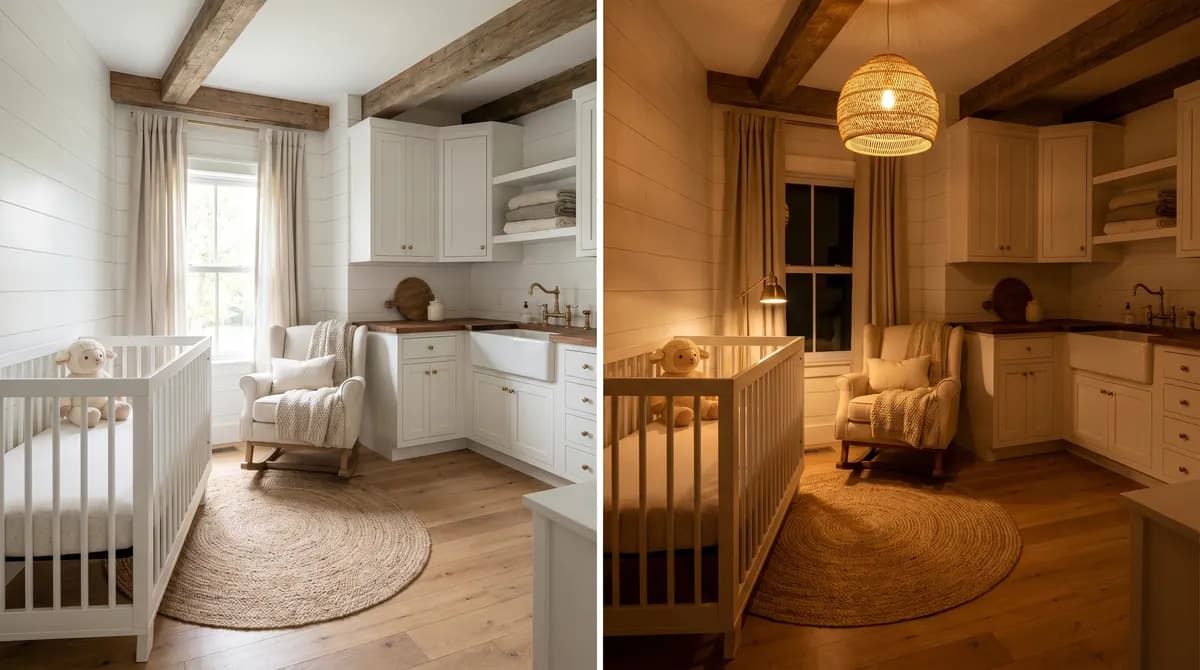
Upload a photo of your real nursery. Get a photorealistic farmhouse redesign in about 30 seconds. 4 free credits, no card.
Generate Your Farmhouse Nursery FreeOther Farmhouse Rooms
Apply the same palette and principles to the rest of the home.


Other Nursery Styles
Same room, different aesthetic — explore the rest of the nursery style library.


Farmhouse Nursery — Frequently Asked Questions
What colors define a farmhouse nursery?
Is farmhouse nursery safe for a baby?
How do I make a small room work as a farmhouse nursery?
What flooring works for a farmhouse nursery?
How is farmhouse different from cottagecore for a nursery?
Can the farmhouse nursery grow with my child?
How to Design a Farmhouse Nursery
Five decisions, in this order. Skip any of them and the look will not land.
- 1
Choose your wall feature
Decide on shiplap horizontal, board-and-batten vertical, or a single painted accent wall in antique cream. This is the most defining decision in the room and dictates the rest of the look. Shiplap reads slightly more rustic American; board-and-batten leans European-pastoral. Pick one wall — typically behind the crib.
- 2
Pick your neutral palette
Settle on three to four colours: a base cream for walls, a soft white for trim, one earthy accent (sage, blush or terracotta) and one wood tone (weathered oak is safest). Resist adding a second accent until the room is fully decorated — most farmhouse nurseries fail because they have five accents instead of one.
- 3
Source the crib + dresser as a pair
These are the two hero pieces. Buy them together in the same oak finish or paired antique-white finishes. A spindle crib + tall six-drawer dresser is the canonical combo. Add a third wood piece only if the room is large enough — otherwise the rocker is your third visual mass.
- 4
Layer textiles and natural baskets
This is where the room earns its warmth. Linen crib sheet, cotton quilt, sheepskin under the rocker, woven jute rug on the floor, three rattan baskets on the bottom shelf for diapers, toys and laundry. Without textiles, even the most expensive crib looks staged.
- 5
Add one piece of soul
One vintage rocker, one framed antique watercolour, or one heirloom quilt draped on the crib rail. Farmhouse nurseries fail when every item looks bought-new from the same shop. One older, slightly imperfect piece signals that this is a real family room, not a showroom.
Keep Exploring
Tools and guides that pair with this style.