Industrial Nursery Design Ideas: 12 Real Examples (2026 Guide)
Exposed brick, raw wood, blackened steel — the loft-inspired aesthetic, refined for a new generation. We unpack the balance of hard materials and soft textures that define a truly sophisticated industrial nursery, then show 12 photorealistic examples you can replicate.
- 12
- Real examples
- ~30s
- AI render time
- 4 free
- Credits, no card
What is Industrial Nursery Design?
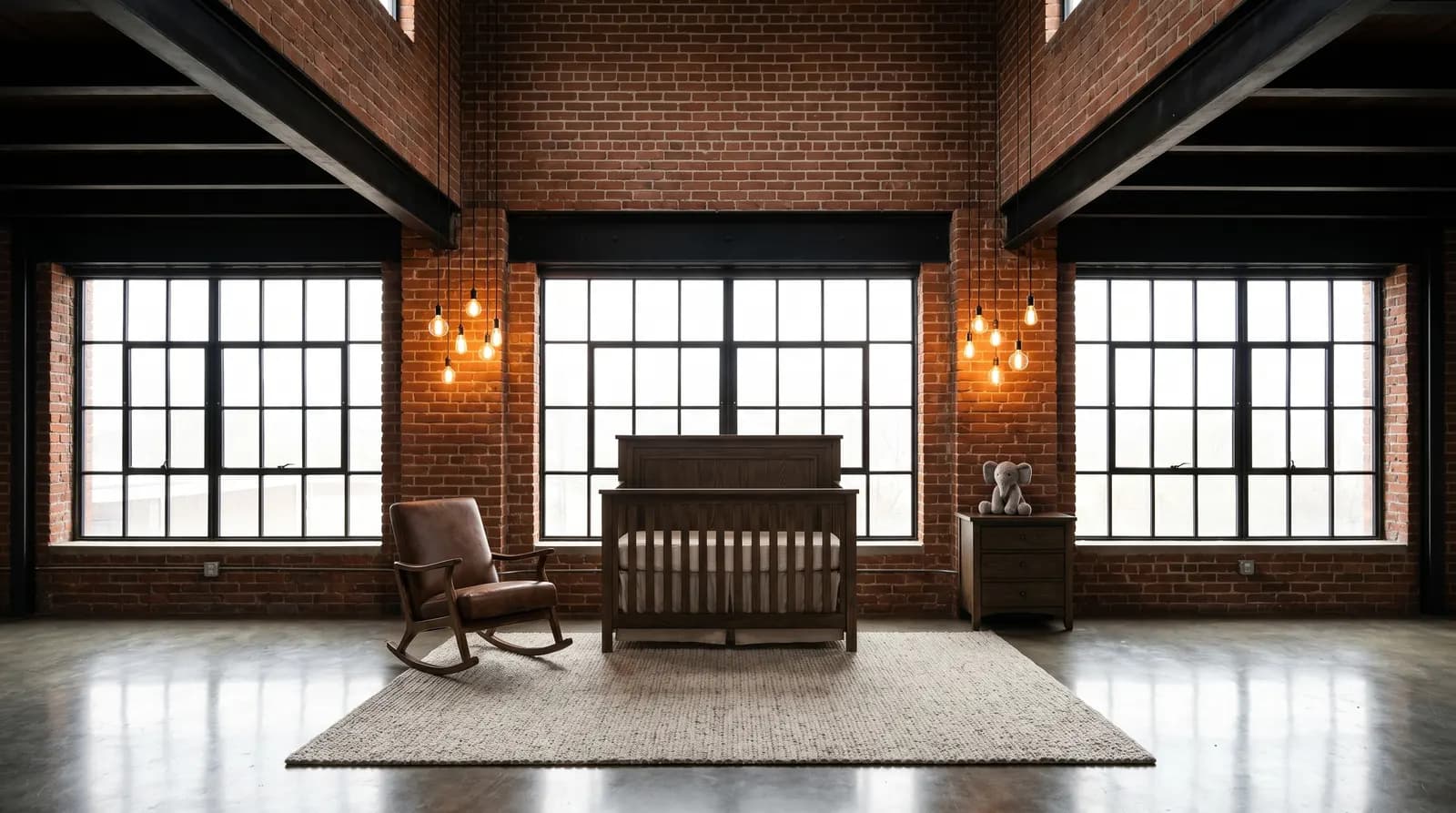
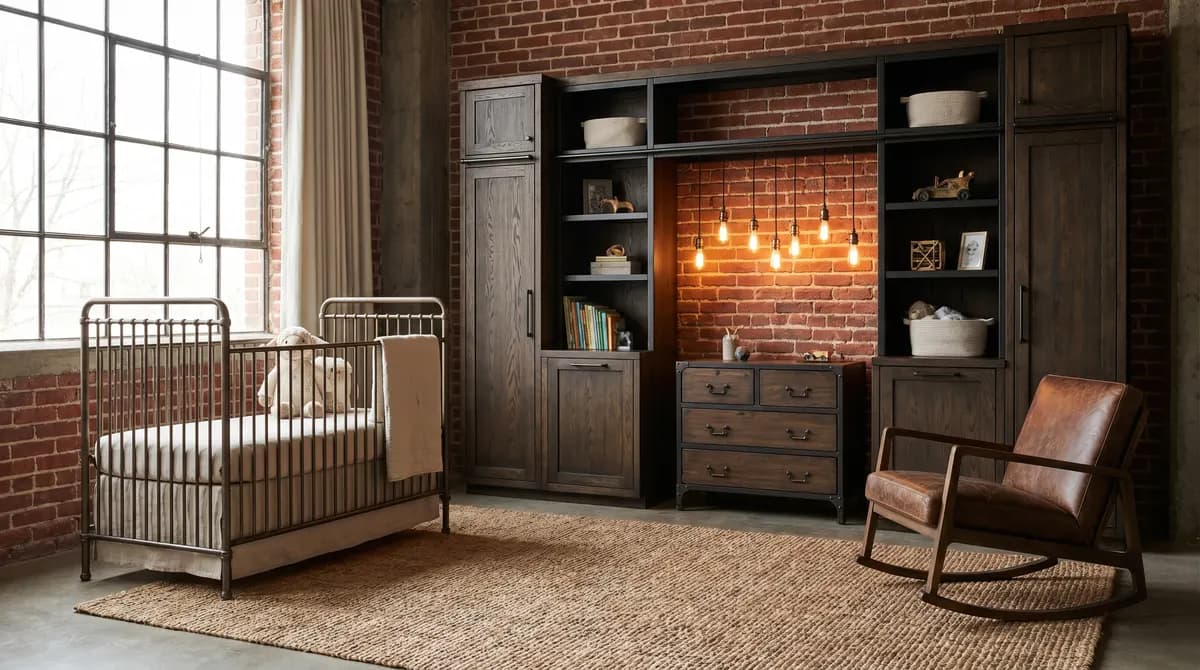
Industrial nursery design translates the raw, functional aesthetic of 20th-century factories and warehouses into a space for a child. Born from loft conversions in cities like New York and London, the style celebrates honesty in materials: exposed brick walls, visible ductwork, raw concrete floors, and steel-framed windows. Rather than concealing a building's structure, it makes a feature of it, creating a backdrop of texture and history.
Three principles guide a successful industrial nursery. First, the juxtaposition of hard and soft: the coldness of metal and brick is deliberately balanced with plush rugs, chunky knit blankets, and soft linen. Second, functionalism: furniture is chosen for its utility and durability, like a solid wood dresser or metal storage lockers. Third, a muted, sophisticated palette: the room avoids primary colors in favor of greys, charcoals, and warm wood tones, creating a calm, enduring space that evolves with the child.
In 2026, the industrial nursery is a statement against disposable, themed decor. It’s a gender-neutral canvas that feels both mature and comforting. The style pairs exceptionally well with rustic and modern elements, allowing for personalization through vintage art, custom metalwork, and heirloom-quality textiles. Its durability and timelessness make it a practical, long-term choice for design-conscious parents.
12 Real Industrial Nursery Examples
Each example below is a complete look — not a mood board. Click any image to see it full-size, then hit the generate button to try the same combination on your own room photo.
 1Example
 2Example
 3Example
 4Example
 5Example
 6Example
 7Example
 8Example
 9Example
 10Example
 11Example
 12Example
Key Design Elements
Colors
- Charcoal and slate greys
- Terracotta and brick reds
- Warm wood tones from reclaimed oak or pine
- Matte black for metal fixtures and furniture
- Soft off-whites to balance the darker tones
Materials
- Exposed brick (natural, painted, or high-quality veneer/wallpaper)
- Raw or polished concrete for floors or accent walls
- Blackened or galvanized steel for furniture frames and lighting
- Reclaimed wood with visible grain, knots, and imperfections
- Distressed leather, typically in cognac or charcoal
Furniture
- A simple, clean-lined metal crib (black, bronze, or brass)
- A solid wood dresser, often with metal hardware
- Open shelving made from wood planks and metal pipes
- A comfortable glider or armchair in leather or dark linen
- Vintage-style metal lockers or wire bins for storage
Lighting
- Exposed Edison-style filament bulbs
- Pendant lights with metal cage shades or simple sockets
- Wall-mounted sconces made from pipe fittings
- Black metal track lighting to highlight specific areas
- A vintage-style floor lamp with an adjustable metal arm
Textiles
- A high-pile wool or faux-fur rug to soften the floor
- Chunky knit or weighted blankets in neutral colors
- Crib bedding in soft, washed linen or organic cotton
- Canvas storage bins for toys and books
- Simple, un-patterned curtains in linen or heavy cotton
Industrial Nursery Color Palette
Six pigments do most of the work — start here, then add one accent of your own.
The necessary balancing neutral. Used on non-accent walls to reflect light and prevent the space from feeling too cavernous or dark.
A true mid-tone grey that mimics the look of poured concrete. Perfect for a feature wall, flooring, or a large furniture piece.
The primary accent for metal. Used on crib frames, window casings, and lighting fixtures to create strong, graphic lines.
The warm, earthy tone of aged brick. It provides the historical texture and warmth that is central to the industrial aesthetic.
The organic counterpoint. Sourced from reclaimed pine or oak, this tone appears on dressers, shelves, and flooring.
A rich, saturated brown that adds a touch of lived-in luxury. Ideal for the glider or armchair, it patinas beautifully over time.
Must-Have Furniture & Fixtures
If you only get these seven pieces, the room will read as authentically Industrial.
Metal Crib
The centerpiece of the room. Choose a simple, linear design in matte black, dark bronze, or even raw steel for a strong silhouette.
Exposed Brick Wall
The quintessential industrial backdrop. If you don't have real brick, use high-quality thin brick veneers or photorealistic wallpaper.
Pipe Shelving
Open shelving made from black iron pipes and reclaimed wood planks. It's functional, visually light, and perfectly on-theme.
Reclaimed Wood Dresser
A solid, substantial piece that serves as a changing station. Look for visible grain, simple construction, and dark metal hardware.
Edison Bulb Lighting
A single pendant with an exposed filament bulb, or a cluster of them, provides warm, ambient light and an iconic industrial look.
Leather Armchair or Glider
A comfortable spot for late-night feedings. A distressed cognac or charcoal leather adds necessary softness, warmth, and sophistication.
Metal Storage Locker
A vintage-style gym or school locker provides excellent, concealed storage for toys and clothes, adding a playful, utilitarian touch.
Common Mistakes to Avoid
Making it too cold — An industrial space without enough soft textiles (plush rugs, chunky blankets, linen curtains) can feel like a warehouse, not a nursery.
Creating a 'theme park' — Avoid cliché construction-zone motifs. The style is about authentic materials, not cartoon trucks and traffic signs.
Ignoring child safety — 'Raw' doesn't mean unsafe. All wood must be sanded and sealed, brick should be sealed to prevent dust, and furniture must be anchored.
Using poor lighting — Industrial spaces can be dark. Layer your lighting with a warm-dimming central fixture, a task lamp, and a soft nightlight.
Forgetting texture variation — A room with only brick and metal will feel flat. Introduce leather, wool, linen, and varied wood grains to create depth.
Try Industrial Nursery in Your Own Room
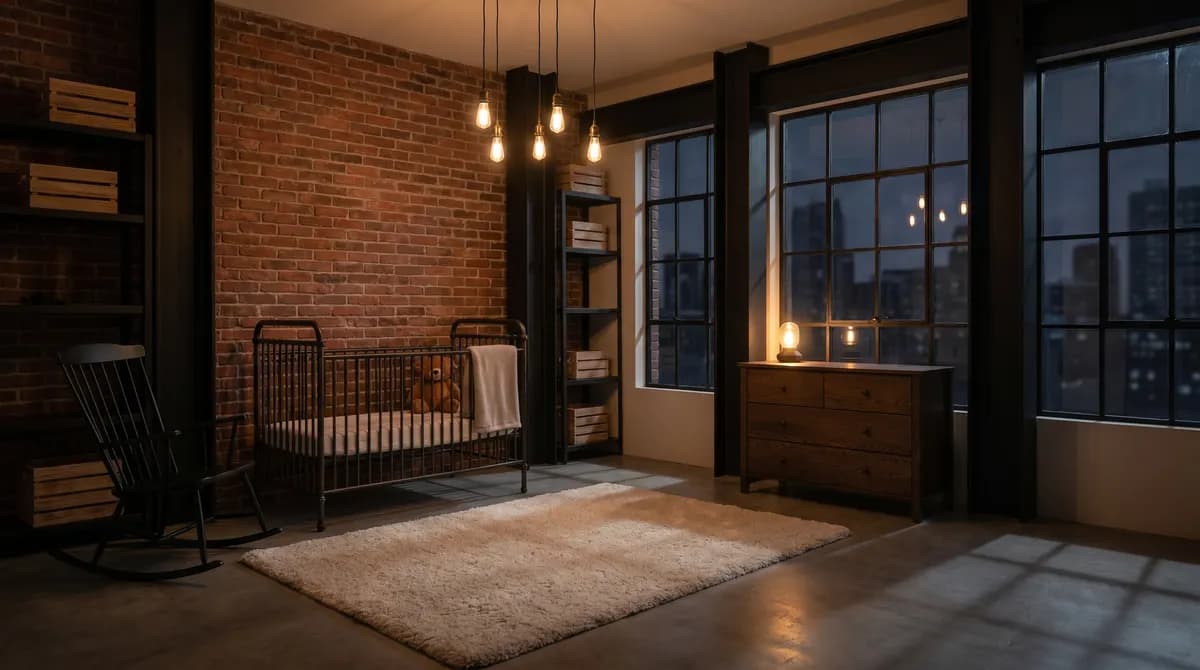
Upload a photo of your real nursery. Get a photorealistic Industrial redesign in about 30 seconds. 4 free credits, no card.
Generate Your Industrial Nursery FreeOther Industrial Rooms
Apply the same palette and principles to the rest of the home.


Other Nursery Styles
Same room, different aesthetic — explore the rest of the nursery style library.


Industrial Nursery — Frequently Asked Questions
What colors are best for an industrial nursery?
How do you make an industrial nursery feel warm and cozy?
Is an industrial nursery safe for a baby?
What if I don't live in a loft with exposed brick?
Is industrial design too masculine for a girl's nursery?
What kind of flooring works best?
How to Design an Industrial Nursery
Five decisions, in this order. Get them right for an authentic, lasting space.
- 1
Establish the architectural shell
Decide on your primary texture. Will it be an exposed brick wall, a concrete-finish accent wall, or whitewashed wood panels? This is your backdrop. If using a veneer or wallpaper, apply it to the wall behind the crib for maximum impact.
- 2
Select the two core furniture pieces
Choose the crib and the dresser/changing table. These anchors define the room. A matte black metal crib and a solid, reclaimed wood dresser are the classic combination. Ensure they are different materials to create contrast.
- 3
Layer in softness with textiles
This is the step that makes it a nursery, not a factory. Choose a large, plush rug first. Then add chunky knit blankets, linen crib sheets, and simple, heavy curtains. Stick to a neutral palette of creams, greys, and charcoals.
- 4
Install industrial-style lighting
Lighting is a key signifier of the style. Hang a pendant with an exposed Edison bulb or a metal cage shade over the center of the room or the changing area (at a safe height). Use warm-white bulbs (around 2700K) to ensure a cozy glow.
- 5
Accessorize with purpose
Finish with functional, on-theme decor. Install pipe-and-plank shelving for books and keepsakes. Use wire baskets or a metal locker for storage. Add vintage-inspired art or a simple, graphic mobile. Every object should feel chosen and durable.
Keep Exploring
Tools and guides that pair with this style.