Japandi Bedroom Design Ideas: 12 Real Examples (2026 Guide)
The serene fusion of Scandinavian function and Japanese minimalism. We unpack what makes a bedroom feel truly Japandi, then show 12 photorealistic examples you can replicate.
- 12
- Real examples
- ~30s
- AI render time
- 4 free
- Credits, no card
What is Japandi Bedroom Design?
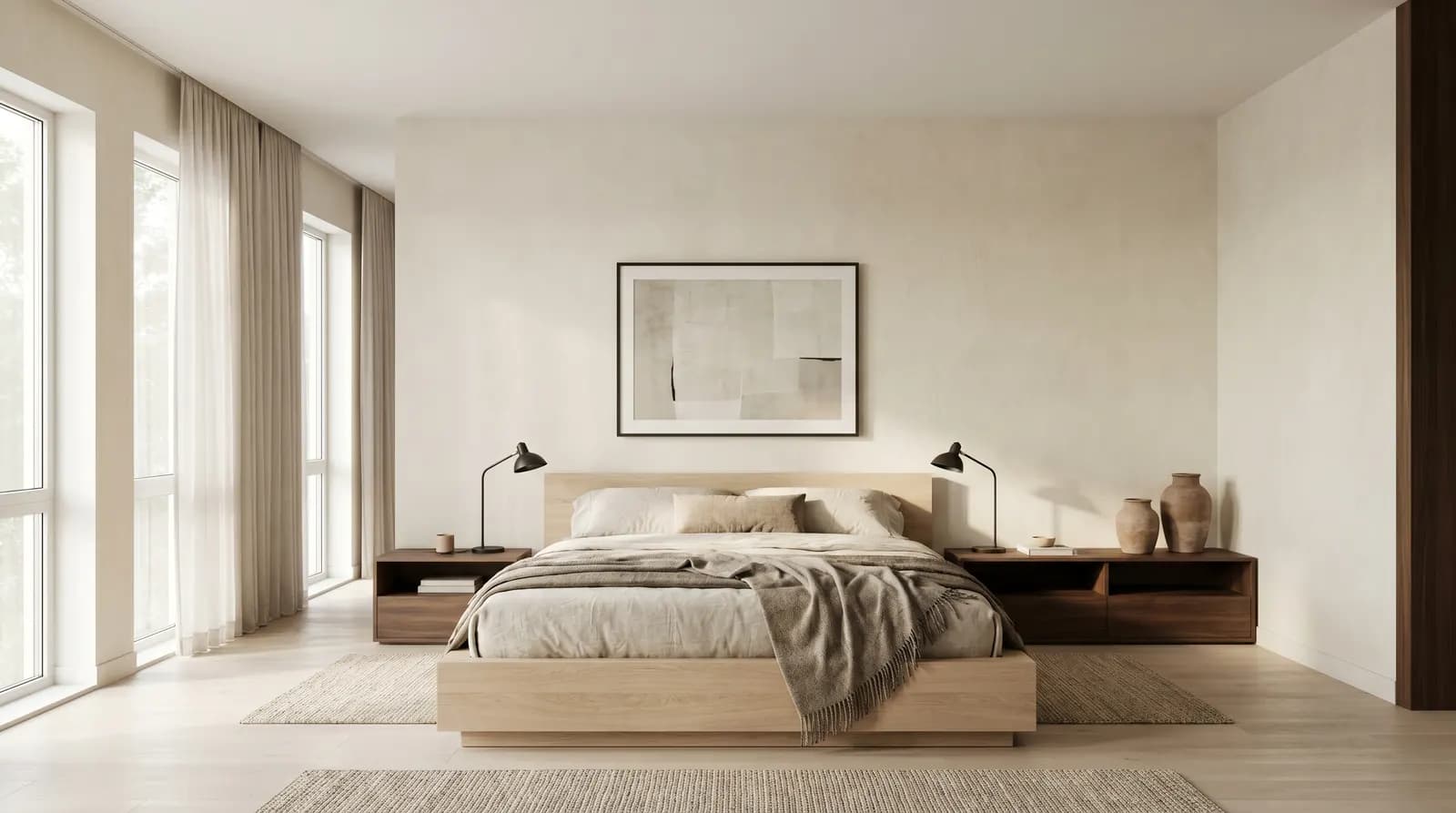
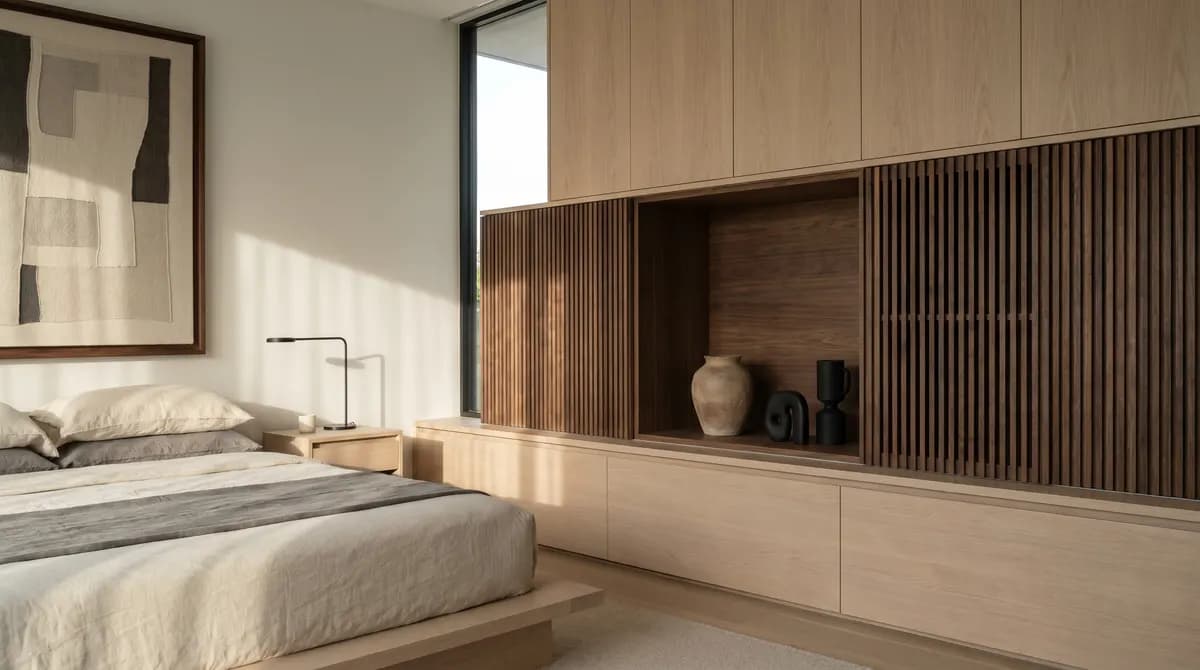
Japandi bedroom design is a hybrid style that merges the functional simplicity of Scandinavian design with the rustic minimalism of Japanese aesthetics. It's defined by a deep respect for craftsmanship, natural materials, and the beauty of imperfection (wabi-sabi). The goal is to create a serene, uncluttered sanctuary that feels both warm and tranquil, stripping away excess to focus on form, texture, and light.
Three principles define an authentic Japandi bedroom. First, natural materials: light and dark woods (oak, walnut, cypress), bamboo, rattan, paper, and stone. Second, low-profile furniture: platform beds, low side tables, and floor cushions that create a grounded feeling. Third, wabi-sabi: the acceptance of transience and imperfection, expressed through handmade ceramics, aged wood, and textured, unbleached linens.
In 2026, Japandi has become the go-to style for creating calming, restorative spaces. Its emphasis on sustainability and mindful consumption resonates deeply. The style's neutral, earthy palette and clean lines make it a timeless choice for bedrooms, pairing well with elements of minimalism, wabi-sabi, and modern organic design.
12 Real Japandi Bedroom Examples
Each example below is a complete look — not a mood board. Click any image to see it full-size, then hit the generate button to try the same combination on your own room photo.
 1Example
 2Example
 3Example
 4Example
 5Example
 6Example
 7Example
 8Example
 9Example
 10Example
 11Example
 12Example
Key Design Elements
Colors
- Warm whites and muted beiges for walls (e.g., lime wash).
- Earthy tones: terracotta, sage green, and soft greys.
- Deep charcoal and black as grounding accents.
- Contrasting wood tones: light oak with dark-stained walnut or ash.
- Natural linen and unbleached cotton textures.
Materials
- Oak, walnut, and ash wood, often with visible grain.
- Rattan, cane, and bamboo for texture and lightness.
- Textured plaster or lime wash for walls.
- Handmade ceramics and stoneware with imperfect finishes.
- Paper (washi) for lampshades and screens.
Furniture
- Low-profile platform beds, often without a headboard.
- Minimalist nightstands, sometimes just a simple wooden stool.
- Low benches and simple, clean-lined armchairs.
- Integrated, seamless storage with natural wood or cane doors.
- Shoji screens or slatted wood partitions.
Lighting
- Large, sculptural paper pendant lights (like Akari).
- Minimalist floor lamps with clean lines and natural shades.
- Low-level ambient lighting for a serene atmosphere.
- Maximizing natural light with sheer, unlined curtains.
- Concealed LED strips behind headboards or under beds.
Textiles
- Rumpled, unbleached linen or cotton bedding.
- Textured wool or jute area rugs.
- Simple, plain throw blankets in natural fibers (wool, cashmere).
- Sheer linen or cotton curtains that diffuse light.
- Cushions with simple, abstract patterns or solid textures.
Japandi Bedroom Color Palette
Six pigments do most of the work — start here, then add one accent of your own.
A soft, warm white for walls, often with a textured finish like lime wash. It provides a serene backdrop without feeling sterile.
A calming, grey-green inspired by nature. Used as a subtle accent wall color or for bedding and textiles.
The perfect blend of grey and beige. Ideal for plaster walls, upholstery, and area rugs, adding warmth and depth.
A warm, earthy red-brown. Used sparingly for accent pillows, ceramics, or a single piece of art to add a touch of wabi-sabi warmth.
A grounding accent for bed frames, window frames, or light fixtures. Provides a strong contrast that defines the space.
The essential light wood tone. Used for platform beds, flooring, and benches, it brings in the Scandinavian element of the style.
Must-Have Furniture & Fixtures
If you only invest in these seven pieces, your room will read as authentically Japandi.
Low-Profile Platform Bed
A simple, solid wood frame (light oak or dark walnut) that sits close to the ground. It's the centerpiece that establishes the room's grounded feel.
Paper Pendant Light
A large, sculptural paper lantern, like a Noguchi Akari lamp, hung low over the bed or in a corner to provide soft, diffused light.
Slatted Wood Details
Used as an accent wall behind the bed, on wardrobe doors, or as a room divider. Adds texture and linear interest.
Minimalist Wooden Bench
A simple, low bench made of solid oak or walnut, placed at the foot of the bed or under a window. Functional and sculptural.
Imperfect Stoneware
A few carefully chosen pieces, like a vase or a water carafe, with a handmade, slightly irregular quality that embodies wabi-sabi.
Sheer Linen Curtains
Simple, floor-length panels in a natural, unbleached color. They soften the light without blocking it, connecting the room to the outdoors.
Integrated, Handleless Storage
Built-in wardrobes or dressers with flat-fronted, handleless doors to maintain an uncluttered, seamless look.
Common Mistakes to Avoid
Too sterile and minimalist — Japandi is warm and textured, not cold. Add natural materials like wood, linen, and wool to avoid a clinical feel.
Over-cluttering with decorative objects — The style is about intentionality. Choose a few meaningful, high-quality pieces rather than many small ones.
Ignoring the 'wabi-sabi' element — Perfectly symmetrical, mass-produced items miss the point. Embrace imperfection with handmade ceramics or aged wood.
Using bright, saturated colors — The palette should be muted and earthy. Stick to whites, beiges, greys, sage, and charcoal, with small, warm accents.
Furniture that is too high — Japandi emphasizes a connection to the earth. Low-profile beds, benches, and tables are key to achieving the look.
Try Japandi in Your Own Bedroom
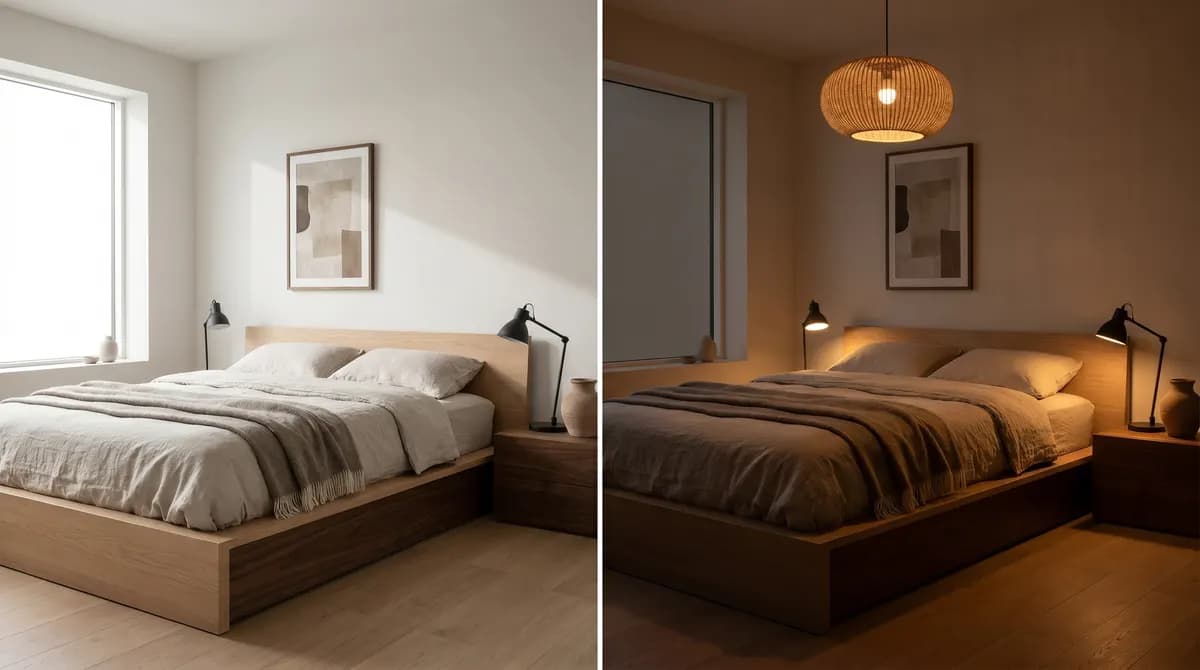
Upload a photo of your real bedroom. Get a photorealistic Japandi redesign in about 30 seconds. 4 free credits, no card.
Generate Your Japandi Bedroom FreeOther Japandi Rooms
Apply the same palette and principles to the rest of the home.


Other Bedroom Styles
Same room, different aesthetic — explore the rest of the bedroom style library.


Japandi Bedroom — Frequently Asked Questions
What colors define Japandi bedroom design?
Is Japandi just a form of minimalism?
How do I make my bedroom feel more 'wabi-sabi'?
What is the best bed for a Japandi bedroom?
How is Japandi different from Scandinavian?
Is Japandi design expensive to achieve?
How to Design a Japandi Bedroom
Five decisions, in this order. Skip any of them and the look will not land.
- 1
Establish a Grounded Foundation
Start with the bed. Choose a low-profile platform frame in a natural wood tone (light oak or dark walnut). This is the anchor of the room and sets the serene, close-to-the-earth tone that defines the style.
- 2
Build a Muted, Earthy Palette
Paint walls in a warm white, greige, or soft beige, perhaps with a lime wash finish for texture. Introduce accents of sage, charcoal, and terracotta through textiles. Contrast light and dark wood tones between furniture and flooring.
- 3
Layer Natural Textures
This is what separates Japandi from cold minimalism. Use rumpled linen bedding, a wool or jute rug, sheer cotton curtains, and rattan or cane details on furniture. The interplay of textures adds warmth and visual interest.
- 4
Incorporate Wabi-Sabi Elements
Introduce items that celebrate imperfection. A single branch in a handmade stoneware vase, a stool made from reclaimed wood, or a piece of abstract art. These objects should feel personal and curated, not cluttered.
- 5
Edit with Intention
Remove anything that doesn't serve a functional or aesthetic purpose. Surfaces should be mostly clear. Storage should be concealed and seamless. The final feeling should be one of calm, uncluttered tranquility. Ask: 'Does this item bring me peace?'
Keep Exploring
Tools and guides that pair with this style.