Industrial Bedroom Design Ideas: 12 Real Examples (2026 Guide)
Exposed brick, raw concrete, black steel, reclaimed wood — the loft aesthetic born in New York and London warehouses. We unpack what makes a bedroom feel truly Industrial, then show 12 photorealistic examples you can replicate.
- 12
- Real examples
- ~30s
- AI render time
- 4 free
- Credits, no card
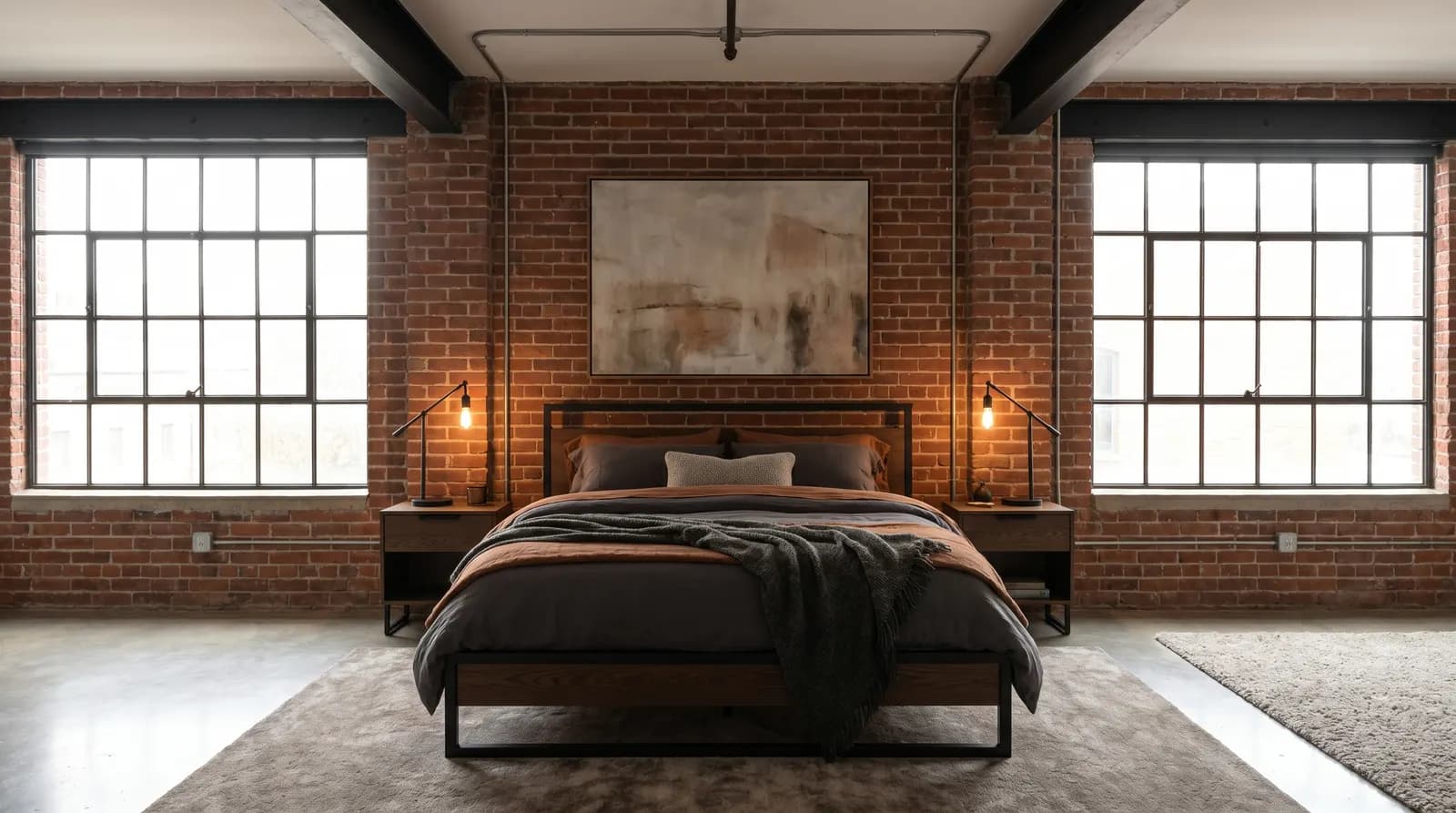
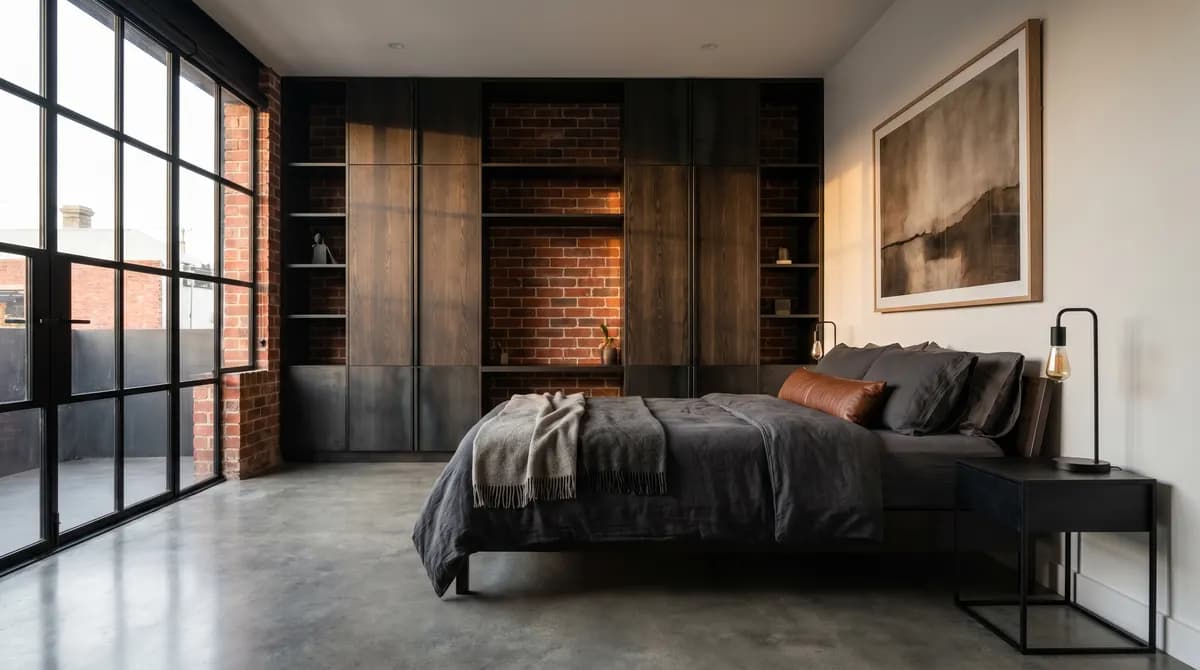
What is Industrial Bedroom Design?
Industrial bedroom design is an aesthetic rooted in the adaptive reuse of factories, warehouses, and other commercial spaces that began in the mid-20th century. It is defined by its honesty of materials: structural elements like brick walls, concrete floors, steel beams, and ventilation ducts are not concealed but celebrated. The look favors raw, weathered surfaces over pristine finishes, creating a space that feels both spacious and grounded.
Three principles guide authentic Industrial design. First, material authenticity: real brick, real concrete, real steel. The style exposes the building's skeleton. Second, a utilitarian ethos: furniture and fixtures are chosen for function and durability, often featuring simple forms and robust construction. Third, a balance of hard and soft: the inherent coldness of concrete and steel is deliberately offset by warm textiles like leather, wool, and linen, making the space livable and comfortable.
In 2026, the Industrial look remains a fixture in urban design, synonymous with loft living from SoHo to Shoreditch. Its appeal lies in its textural depth and timeless materials that age with character. It pairs naturally with Modern and Minimalist styles, borrowing their clean lines while adding a layer of historical grit and texture that feels curated rather than sterile.
12 Real Industrial Bedroom Examples
Each example below is a complete look — not a mood board. Click any image to see it full-size, then hit the generate button to try the same combination on your own room photo.
 1Example
 2Example
 3Example
 4Example
 5Example
 6Example
 7Example
 8Example
 9Example
 10Example
 11Example
 12Example
Key Design Elements
Colors
- Exposed brick tones (terracotta, brown, whitewashed)
- Shades of concrete grey, from light to dark
- Matte black and charcoal for steel, trim, and fixtures
- Deep browns from aged leather and reclaimed wood
- Neutral off-white or plaster for contrasting walls
Materials
- Exposed brick (either structural or thin veneer)
- Raw or polished concrete for floors and accent walls
- Blackened, raw, or galvanized steel for frames, lighting, and hardware
- Reclaimed wood with visible grain, knots, and imperfections
- Distressed leather for headboards, chairs, and benches
Furniture
- Low-profile platform bed (metal or solid wood frame)
- Open-pipe or metal-frame wardrobes and shelving units
- Vintage leather armchairs or a simple reclaimed wood bench
- Minimalist nightstands combining wood and metal
- Large, simple floor mirrors with a thin metal frame or none at all
Lighting
- Edison-style filament bulbs in bare pendants or simple cages
- Black metal track lighting to highlight art or architectural features
- Factory-style pendants with large metal shades
- Articulating metal wall sconces for bedside task lighting
- Large, multi-pane factory or Crittall-style windows
Textiles
- Natural linen or washed cotton bedding in neutral tones (charcoal, grey, olive)
- Distressed leather, cowhide, or high-pile wool area rugs
- Heavy wool or canvas throws and accent pillows
- Simple, unlined linen or canvas curtains, or often, bare windows
- Large-scale abstract or black-and-white photographic art
Industrial Bedroom Color Palette
Six pigments do most of the work — start here, then add one accent of your own.
The warm, earthy and authentic tone of classic reclaimed brick. It provides the primary color and texture in many industrial spaces.
The cool, neutral base for floors and walls. Its shade can range from a pale silver to a deep slate, grounding the entire room.
The essential accent for steel window frames, bed frames, lighting, and hardware. It adds graphic definition and contrast.
The rich, warm cognac brown of an aged leather armchair or headboard. It introduces a necessary organic, soft element.
The deep, complex brown of salvaged wood, used for flooring, furniture, or a feature headboard. Its imperfections are a key feature.
A soft, chalky off-white used on non-brick walls to provide breathing room and prevent the space from feeling overwhelmingly dark.
Must-Have Furniture & Fixtures
If you only invest in these seven, you will capture the authentic Industrial spirit.
Exposed Brick Wall
The quintessential backdrop. If not structural, a high-quality, thin brick veneer is the next best thing.
Metal Bed Frame
A simple, low-slung frame in black steel or cast iron. Minimalist in form to let the room's textures stand out.
Edison Bulb Lighting
Whether a pendant cluster or a single sconce, the visible, warm filament is a hallmark of the style.
Open-Pipe Wardrobe
A freestanding or wall-mounted clothing rack made of industrial metal pipes. It's functional, honest, and sculptural.
Polished Concrete Floor
A seamless, durable, and authentic flooring choice. Use a large area rug to define the sleeping zone and add warmth.
Distressed Leather Seating
A single, well-worn leather armchair or a simple bench at the foot of the bed adds warmth, texture, and a sense of history.
Large Metal-Framed Windows
If structurally possible, Crittall-style or factory windows are iconic. Otherwise, dressing existing windows in simple black frames can evoke the look.
Common Mistakes to Avoid
Creating a theme park — Overdoing it with fake rust, gears, and novelty signs reads as a caricature. The goal is an authentic, livable space, not a movie set.
Ignoring comfort — Raw materials can feel cold. You must consciously add softness through high-quality linen bedding, a plush wool rug, and warm, layered lighting.
Using fake materials — Faux brick wallpaper or wood-look laminate flooring instantly undermines the style's core principle of material honesty. Invest in the real thing.
Forgetting layered lighting — A single overhead fixture will make the space feel like a warehouse. Layer ambient, task (bedside), and accent lighting to create intimacy and highlight textures.
Excessive clutter — While not strictly minimalist, the Industrial style relies on strong architectural forms. Too many small objects create visual noise that competes with the brick and concrete.
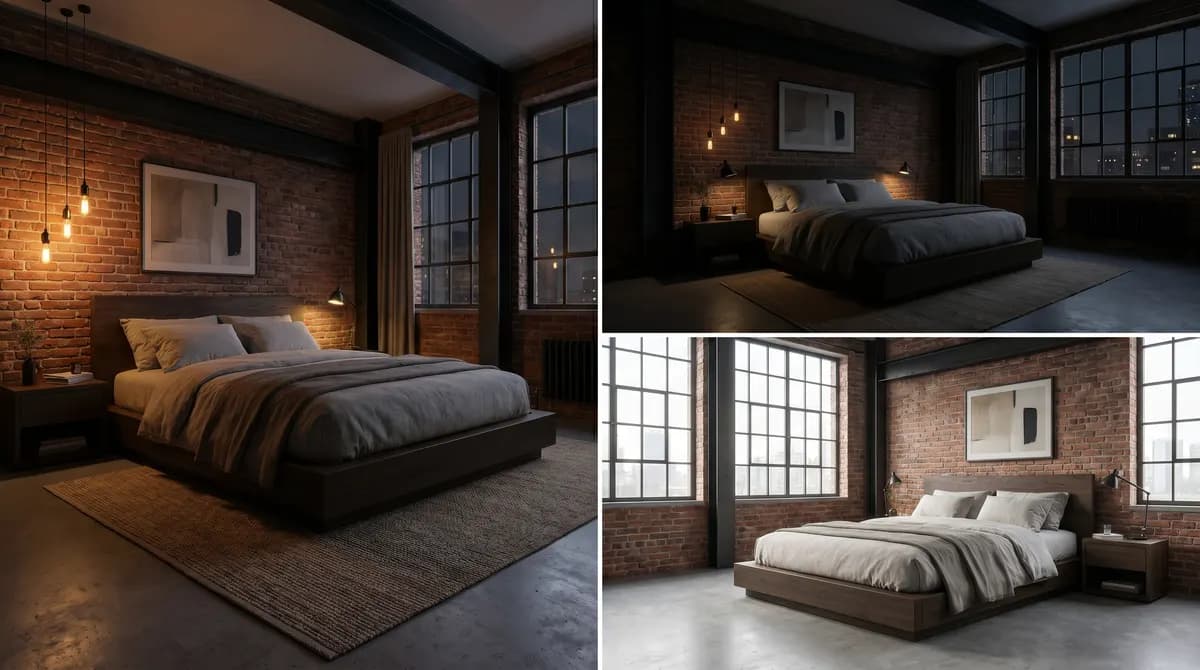
Try Industrial Style in Your Own Bedroom
Upload a photo of your real bedroom. Get a photorealistic Industrial redesign in about 30 seconds. 4 free credits, no card.
Generate Your Industrial Bedroom FreeOther Industrial Rooms
Apply the same palette and principles to the rest of the home.


Other Bedroom Styles
Same room, different aesthetic — explore the rest of the bedroom style library.


Industrial Bedroom — Frequently Asked Questions
What colors define Industrial bedroom design?
How do I make an Industrial bedroom feel cozy?
What is the best flooring for an Industrial bedroom?
Can I achieve an Industrial look without a real loft?
How is Industrial different from Modern design?
Is Industrial design good for small bedrooms?
How to Design an Industrial Bedroom
Five decisions, in this order. Skip any of them and the look will not land.
- 1
Establish the architectural shell
Choose your primary raw surface. This is the anchor of the entire room. Will it be an exposed brick accent wall, a polished concrete floor, or exposed ceiling beams? Commit to one major architectural statement.
- 2
Select a simple, robust bed
The bed should be the functional centerpiece, not an ornamental one. Opt for a low-profile platform bed with a simple frame of black steel or solid reclaimed wood. A simple leather or dark linen headboard also works.
- 3
Layer in metal and wood
Introduce black steel consistently through window frames (or paint), lighting fixtures, and furniture legs. Contrast this coolness with the warmth of reclaimed wood for nightstands, a bench, or open shelving.
- 4
Introduce soft, tactile textures
This step is non-negotiable for comfort. Add a large wool or distressed leather rug, high-quality natural linen bedding, and a heavy wool or canvas throw. These textiles balance the hardness of the architectural materials.
- 5
Light with purpose and warmth
Use functional, factory-inspired lighting as sculptural elements. A mix of Edison bulb pendants, articulating metal sconces for reading, and perhaps a track light system creates warm (2700K) pools of light and avoids a flat, sterile feel.
Keep Exploring
Tools and guides that pair with this style.