Mid-Century Modern Bedroom Design Ideas: 12 Real Examples (2026 Guide)
Warm woods, organic forms, and an optimistic belief in the future — the look that emerged from post-war America and never left. We unpack the principles of Mid-Century Modern design, then show 12 photorealistic examples you can replicate.
- 12
- Real examples
- ~30s
- AI render time
- 4 free
- Credits, no card
What is Mid-Century Modern Bedroom Design?
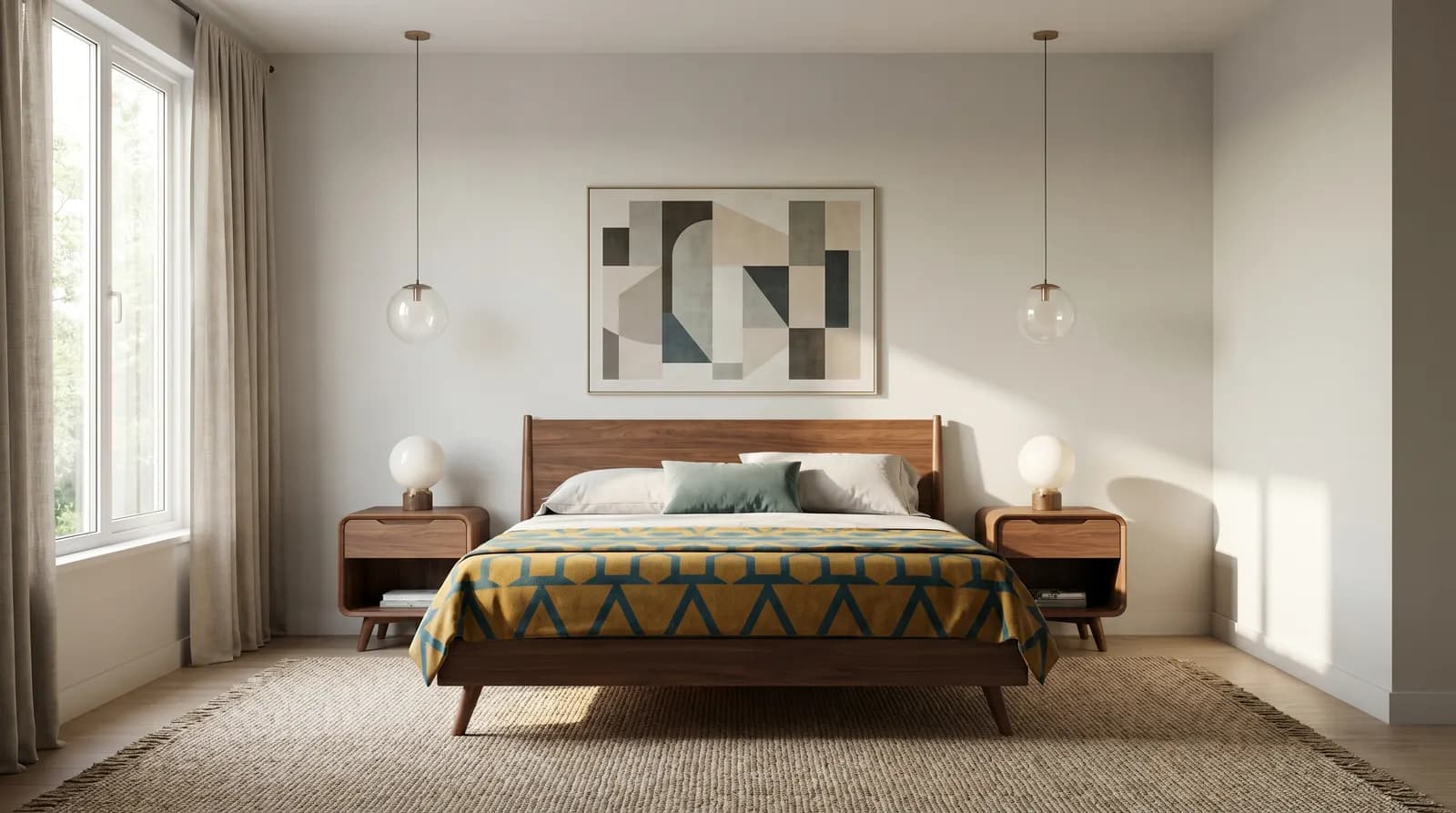
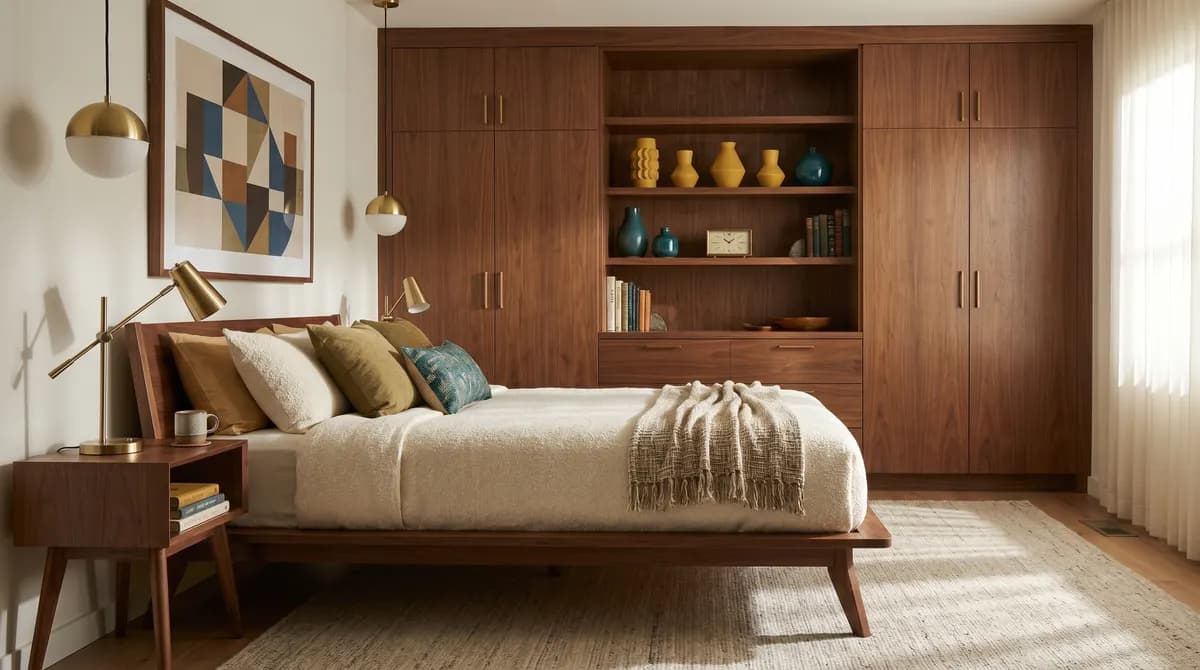
Mid-Century Modern (MCM) bedroom design is a style that emerged between roughly 1945 and 1969, driven by a post-war desire for simplicity, functionality, and a connection to nature. It strips away the ornamentation of previous eras in favor of clean lines, gentle organic curves, and a deep appreciation for unadorned natural materials. What remains is a feeling of functional elegance — furniture with tapered legs that creates a sense of spaciousness, and large windows that blur the line between indoors and out.
Three principles define an authentic Mid-Century Modern bedroom. First, form follows function: every piece, from the platform bed to the credenza, is designed for utility but executed with sculptural grace. Second, a dialogue between geometric and organic: clean, simple lines are paired with soft, natural curves inspired by the human body and the natural world. Third, honesty of materials: wood grain (especially walnut and teak) is celebrated, not hidden, and is often paired with glass, metal, and plastic.
In 2026, the style's endurance is a testament to its timelessness. Its clean aesthetic feels perpetually current, while its emphasis on quality craftsmanship offers a welcome antidote to fast furniture. It integrates seamlessly with contemporary and minimalist interiors and is the foundational aesthetic for global brands like West Elm and Article. MCM isn't just a vintage look; it's a design philosophy that continues to resonate.
12 Real Mid-Century Modern Bedroom Examples
Each example below is a complete look — not a mood board. Click any image to see it full-size, then hit the generate button to try the same combination on your own room photo.
 1Example
 2Example
 3Example
 4Example
 5Example
 6Example
 7Example
 8Example
 9Example
 10Example
 11Example
 12Example
Key Design Elements
Colors
- Earthy tones: olive green, mustard yellow, burnt orange
- Deep blues and teals as accent colors
- Warm neutrals like cream, beige, and warm white
- Rich wood tones of walnut and teak
- Graphic black and white in patterns and art
Materials
- Walnut and teak — the quintessential MCM woods
- Brass and sometimes chrome for hardware and lighting
- Leather, especially on accent chairs and headboards
- Textured fabrics like bouclé, tweed, and linen
- Glass, both clear and smoked, for tabletops and decor
Furniture
- Low-profile platform beds with integrated headboards
- Long, low credenzas and dressers on tapered legs
- Iconic accent chairs (e.g., Eames, Saarinen Womb Chair)
- Simple, peg-leg nightstands with single drawers
- Minimalist benches at the foot of the bed
Lighting
- Sputnik chandeliers or other sculptural ceiling fixtures
- Arc floor lamps for reading corners
- Gourd-shaped or ceramic-base table lamps
- Globe or drum pendants for ambient light
- Natural light maximized through large, unadorned windows
Textiles
- Rugs with bold geometric or abstract patterns
- Linen or cotton bedding in solid, earthy colors
- Textured throw pillows in bouclé or coarse weaves
- Simple, non-pleated curtain panels
- A single wool or cashmere throw blanket
Mid-Century Modern Bedroom Color Palette
This palette is built on a foundation of warm wood, layered with earthy, optimistic accents.
The foundational tone. The deep, warm brown of walnut or teak provides the room's primary character and warmth.
A sophisticated, muted green for accent walls or textiles. It connects the interior to nature, a core MCM principle.
A confident, earthy yellow used for accent chairs, pillows, or art. It adds a touch of optimistic energy without being loud.
A rich, rusty orange that pairs beautifully with teak and walnut. Use it sparingly for a high-impact accent.
A deep, saturated blue-green that acts as a cool counterpoint to the warm woods and oranges. Ideal for a statement piece.
The backdrop that allows the wood and colors to stand out. A creamy, soft white prevents the room from feeling stark.
Must-Have Furniture & Fixtures
Anchor your room with these seven pieces for an authentic Mid-Century Modern feel.
Platform Bed with Tapered Legs
The centerpiece. Look for a low-profile frame in walnut or teak, often with an integrated or simple upholstered headboard.
Low-Slung Credenza
A long, horizontal dresser on delicate legs. It provides storage while keeping the visual center of gravity low.
Sculptural Accent Chair
An iconic piece like an Eames Lounge Chair or a Womb Chair. It serves as functional art and adds an organic shape.
Sputnik Chandelier
The quintessential MCM light fixture. Its explosive, satellite-like form in brass or black metal defines the style's futuristic optimism.
Peg-Leg Nightstands
Simple, matching bedside tables that echo the tapered legs of the bed and credenza, creating a cohesive look.
Geometric Area Rug
Grounds the space with pattern and color. Look for abstract shapes or repeating geometrics in the style's key colors.
Sunburst Mirror
Often placed over the credenza, this iconic decorative piece in brass or wood adds a touch of glamour and reflects light.
Common Mistakes to Avoid
Creating a time capsule — don't make your room a museum of replicas. Mix authentic or high-quality MCM pieces with contemporary art and personal items.
Using the wrong wood tones — MCM relies on the warmth of walnut and teak. Light woods like pine, maple or pale oak belong to other styles like Scandinavian.
Ignoring scale — MCM furniture is often low and visually light. In a room with high ceilings, it can feel lost without a large rug or a statement light fixture to anchor it.
Overdoing the kitsch — the style is about sophisticated design, not lava lamps and shag carpet. Focus on the clean lines and quality materials, not the clichés.
Surface clutter — the 'clean lines' principle applies to surfaces too. Keep dressers and nightstands clear of clutter to let the furniture's form shine.
Try Mid-Century Modern in Your Own Bedroom
Upload a photo of your real bedroom. Get a photorealistic Mid-Century Modern redesign in about 30 seconds. 4 free credits, no card.
Generate Your Mid-Century Modern Bedroom FreeOther Mid-Century Modern Rooms
Apply the same palette and principles to the rest of the home.


Other Bedroom Styles
Same room, different aesthetic — explore the rest of the bedroom style library.


Mid-Century Modern Bedroom — Frequently Asked Questions
What defines a Mid-Century Modern bedroom?
What colors are used in a Mid-Century Modern bedroom?
How is Mid-Century Modern different from Scandinavian design?
What kind of bed frame is best for an MCM bedroom?
Can I mix Mid-Century Modern with other styles?
Is Mid-Century Modern a good style for a small bedroom?
How to Design a Mid-Century Modern Bedroom
Five key decisions that will bring the look together authentically.
- 1
Establish the wood foundation
Choose either walnut or teak as your primary wood. This is the most important decision. Ensure your bed frame, credenza, and nightstands are all in this same wood tone for a cohesive, intentional look.
- 2
Build the color palette
Start with a warm white for the walls. Then, choose two or three accent colors from the classic MCM palette—like olive, mustard, or teal. Apply these through an accent wall, rug, or textiles.
- 3
Select iconic furniture forms
Focus on furniture with characteristic MCM shapes: low profiles, tapered legs, and a mix of straight lines and organic curves. A long, low credenza and a sculptural accent chair are essential pieces.
- 4
Layer sculptural lighting
Lighting in MCM is functional art. Install a statement ceiling fixture like a sputnik chandelier. Add gourd-shaped table lamps on the nightstands and consider an arc floor lamp for a reading nook.
- 5
Accessorize with purpose
Finish the room with intentional accessories. Hang a sunburst mirror, add abstract art, and place a large-leafed plant in a ceramic pot. Keep surfaces clean—let a few beautiful objects make a statement.
Keep Exploring
Tools and guides that pair with this style.