Minimalist Bedroom Design Ideas: 12 Real Examples (2026 Guide)
Clean lines, neutral palettes, and the art of 'less but better'. We unpack the core principles of Minimalist design, then show 12 photorealistic examples you can replicate in your own space for a serene, uncluttered retreat.
- 12
- Real examples
- ~30s
- AI render time
- 4 free
- Credits, no card
What is Minimalist Bedroom Design?
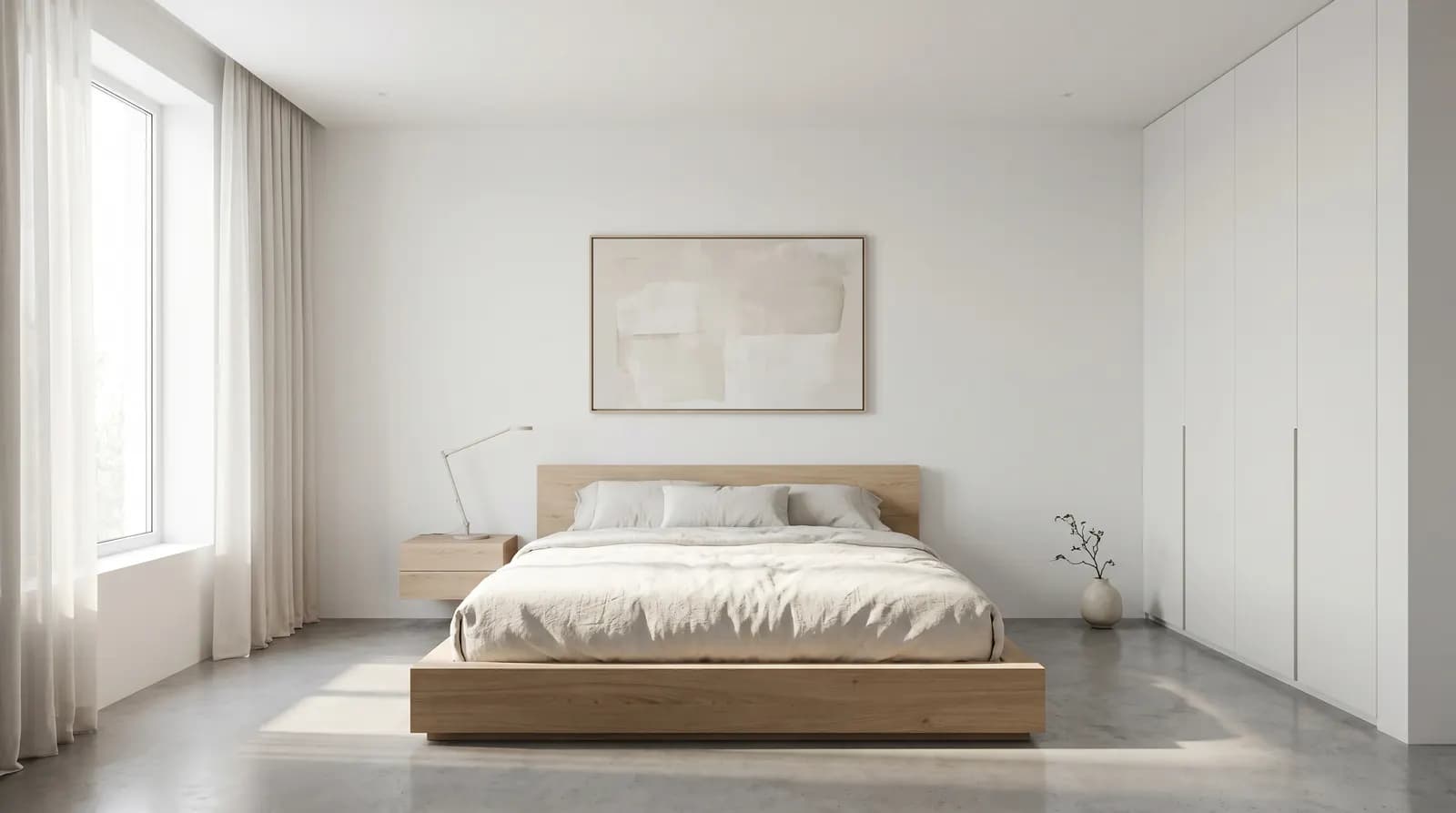
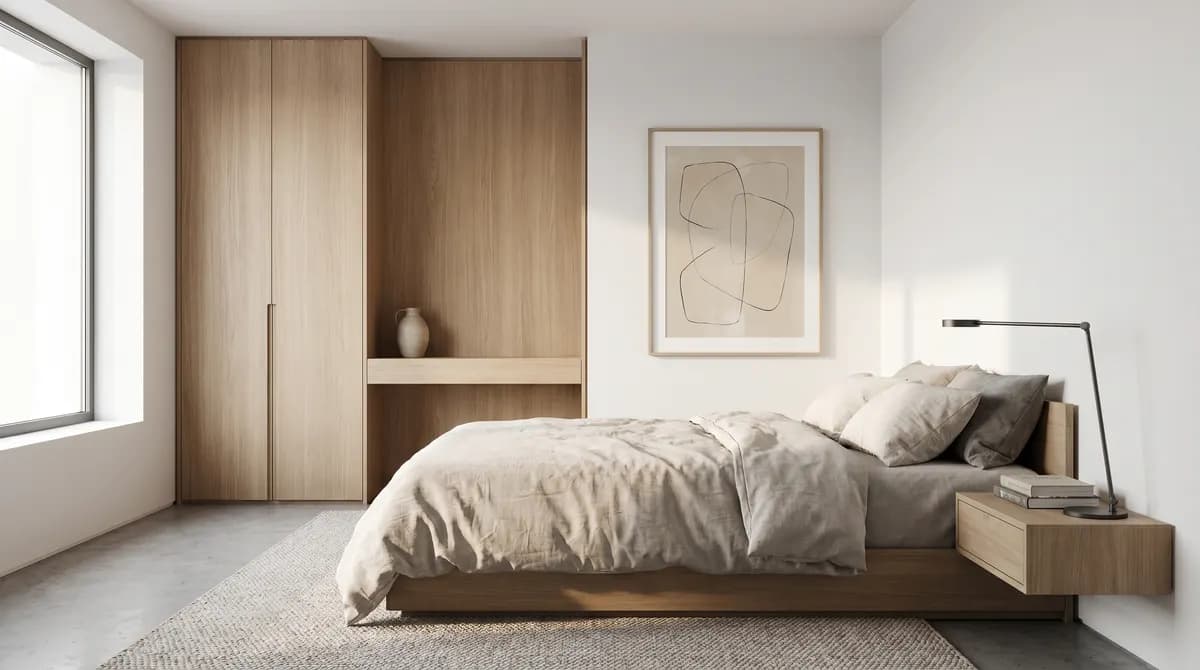
Minimalist bedroom design is an aesthetic philosophy rooted in the Modernist movements of the early 20th century, notably Bauhaus and Japanese design. It is defined by radical simplicity and intentionality. The goal is not emptiness for its own sake, but a serene environment created by removing visual noise: clutter, ornamentation, loud patterns, and superfluous furniture. What remains is a carefully edited composition of form, light, and texture.
Three principles define an authentic Minimalist bedroom. First, intentionality: every item, from the bed frame to a single vase, must have a clear purpose and reason for being there. Second, simplicity of form: furniture features clean, geometric lines, and surfaces are unadorned. Third, a tranquil palette: the color scheme is typically monochromatic or built from a narrow range of soft neutrals, allowing texture and light to become the primary decorative elements. Negative space is treated as a crucial, active component of the design.
In 2026, Minimalism remains a powerful antidote to the digital saturation of modern life. It offers a genuine retreat, a space designed for rest and mental clarity. As a foundational style, it pairs seamlessly with Wabi-Sabi's appreciation for imperfection and Japandi's fusion of natural warmth and sparse elegance, making it a timeless choice for creating a personal sanctuary.
12 Real Minimalist Bedroom Examples
Each example below is a complete look — not a mood board. Click any image to see it full-size, then hit the generate button to try the same combination on your own room photo.
 1Example
 2Example
 3Example
 4Example
 5Example
 6Example
 7Example
 8Example
 9Example
 10Example
 11Example
 12Example
Key Design Elements
Colors
- Warm whites and alabaster for walls
- Soft greys and greige for textiles and concrete
- Earthy tones like taupe and sand for depth
- Matte black as a sharp, graphic accent
- Natural light wood tones (oak, ash)
Materials
- Light woods like white oak or ash for bed frames and flooring
- Natural linen for bedding and curtains
- Polished concrete or microcement for floors or feature walls
- Textured plaster or limewash for wall finishes
- Matte black metal for lighting and window frames
Furniture
- Low-slung platform beds, often with an integrated headboard
- Floating or wall-mounted nightstands to maintain floor space
- Handleless, flush-panel wardrobes for concealed storage
- A single, sculptural accent chair or simple bench
- Furniture with simple, geometric forms and no ornamentation
Lighting
- Recessed architectural lighting (e.g., ceiling coves, wall washes)
- A single, statement pendant light or sculptural floor lamp
- Concealed warm LED strips for indirect, ambient glow
- Minimalist wall sconces for bedside reading
- Large, unadorned windows to maximize natural light
Textiles
- High-quality linen or organic cotton bedding in solid neutrals
- A single, large area rug in wool or jute to anchor the space
- Floor-to-ceiling sheer curtains to soften light without blocking it
- A single wool or cashmere throw for textural contrast
- Upholstery in solid, textured fabrics like bouclé or felt
Minimalist Bedroom Color Palette
Six pigments do most of the work — start here, then edit down to your essential three or four.
A soft, warm white that serves as the perfect canvas for walls and ceilings, reflecting light without feeling sterile.
A calm, mid-tone grey inspired by natural stone and concrete. Ideal for flooring, a feature wall, or bedding.
The perfect fusion of grey and beige, offering warmth and sophistication for textiles, rugs, and upholstery.
The primary element of warmth. A light, natural wood tone used for the bed frame, flooring, or a single piece of furniture.
A sharp, graphic accent used sparingly for lighting fixtures, window frames, or a slim piece of hardware. It defines and punctuates.
A rich, earthy neutral that adds depth and grounding to the palette. Use it for a single throw, cushion, or a piece of art.
Must-Have Furniture & Fixtures
If you only invest in these seven pieces, you will capture the essence of Minimalism.
Low-Profile Platform Bed
The centerpiece of the room. Choose a simple frame in light wood or upholstery with clean lines and no ornate headboard.
Integrated or Floating Nightstands
These keep the floor clear, enhancing the sense of space. They should be simple boxes or shelves, just large enough for a book and a lamp.
Floor-to-Ceiling Concealed Storage
A wall of handleless, push-to-open wardrobes is the key to maintaining a clutter-free space. They should blend into the wall.
A Single, Large-Scale Art Piece
Instead of a gallery wall, choose one impactful piece of abstract art, line drawing, or monochrome photography.
Sheer Linen Curtains
Hung from a concealed track, these run from ceiling to floor, adding softness and diffusing natural light beautifully.
A Sculptural Light Fixture
One piece of lighting—be it a pendant, floor lamp, or wall sconce—should double as a piece of sculpture.
A Large, Simple Area Rug
A solid-colored or subtly textured rug in wool or jute defines the sleeping area and adds essential warmth and texture underfoot.
Common Mistakes to Avoid
Making it cold and clinical — Minimalism isn't sterility. Without rich textures from linen, wool, and wood, the room will feel like a hospital.
Confusing 'empty' with 'minimal' — A minimal room is edited, not empty. Every object is chosen with intention. An empty room just lacks purpose.
Ignoring storage — True minimalism is impossible without excellent, concealed storage. Clutter is the enemy, and it needs a place to hide.
Using harsh, direct lighting — A single, harsh overhead light will ruin the serene atmosphere. Layer soft, indirect light sources instead.
Forgetting the details — Poorly managed cables, low-quality textiles, or a mix of wood tones can quickly undo the calm, cohesive effect.
Try Minimalist Design in Your Own Bedroom
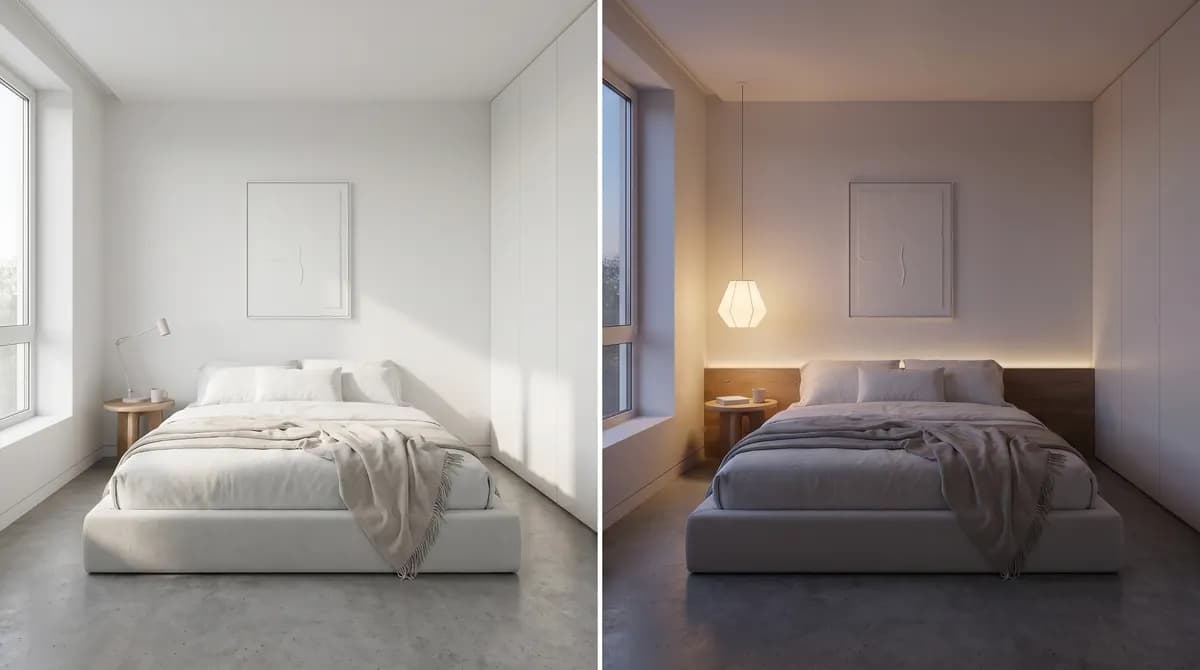
Upload a photo of your real bedroom. Get a photorealistic Minimalist redesign in about 30 seconds. 4 free credits, no card.
Generate Your Minimalist Bedroom FreeOther Minimalist Rooms
Apply the same palette and principles to the rest of the home.


Other Bedroom Styles
Same room, different aesthetic — explore the rest of the bedroom style library.


Minimalist Bedroom — Frequently Asked Questions
What colors define a Minimalist bedroom?
How do I make a Minimalist bedroom feel cozy and not cold?
What is the difference between Minimalist and Modern design?
What kind of art works best in a Minimalist bedroom?
How do I manage storage and clutter?
What is the best bed for a Minimalist bedroom?
How to Design a Minimalist Bedroom
Five decisions, in this order. Get them right for a truly serene space.
- 1
Subtract Before You Add
The first step is always decluttering. Remove everything that isn't essential for sleep and rest. Be ruthless. Minimalism is about what you take away. The goal is to create 'negative space'—room for the mind to breathe.
- 2
Define Your Neutral Palette
Choose a base of warm white or light grey. Then, select two or three complementary neutrals, such as greige, taupe, or sand. Add one natural wood tone (like oak) for warmth and one sharp accent (like matte black) for definition. Stick to this palette.
- 3
Select Core Furniture with Simple Forms
Choose furniture for its function and clean, geometric shape. A low platform bed, integrated or floating nightstands, and concealed, handleless storage are the core pieces. Every item should feel sculptural and intentional.
- 4
Layer Texture and Indirect Light
This is the step that adds soul and prevents sterility. Introduce varied textures through linen bedding, a wool rug, and sheer curtains. Design a lighting scheme with multiple, dimmable, indirect sources like recessed LEDs, a sculptural floor lamp, and bedside sconces.
- 5
Establish a Single Focal Point
A minimalist room should have one clear focal point to draw the eye and prevent it from feeling bland. This could be a large piece of abstract art above the bed, a beautifully designed armchair in a corner, or a large window with an uninterrupted view. Don't compete with it.
Keep Exploring
Tools and guides that pair with this style.