Scandinavian Kitchen Design Ideas: 12 Real Examples (2026 Guide)
Light wood, white walls, functional minimalism — the look that started in Copenhagen and conquered global kitchens. We unpack what makes a kitchen feel truly Scandi, then show 12 photorealistic examples you can replicate.
- 12
- Real examples
- ~30s
- AI render time
- 4 free
- Credits, no card
What is Scandinavian Kitchen Design?
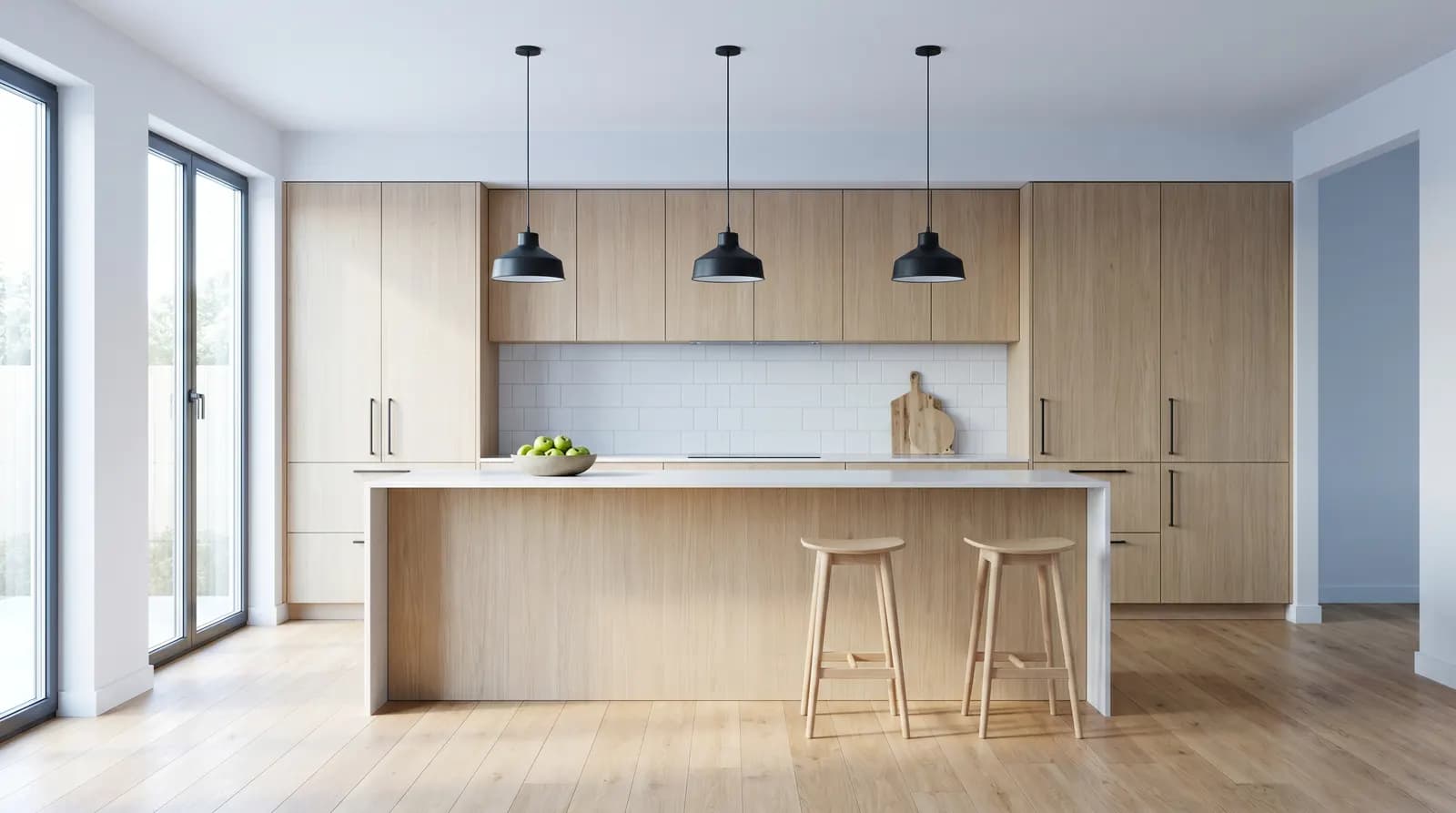
Scandinavian kitchen design is a regional take on modernism that came out of Denmark, Sweden, Finland and Norway in the mid-20th century. It is defined less by ornament than by what it strips away: heavy upper cabinets, ornate moldings, dark wood, sealed-off rooms. What is left is light — both the literal natural kind, captured through huge windows, and a visual lightness from pale woods, soft whites and uncluttered surfaces.
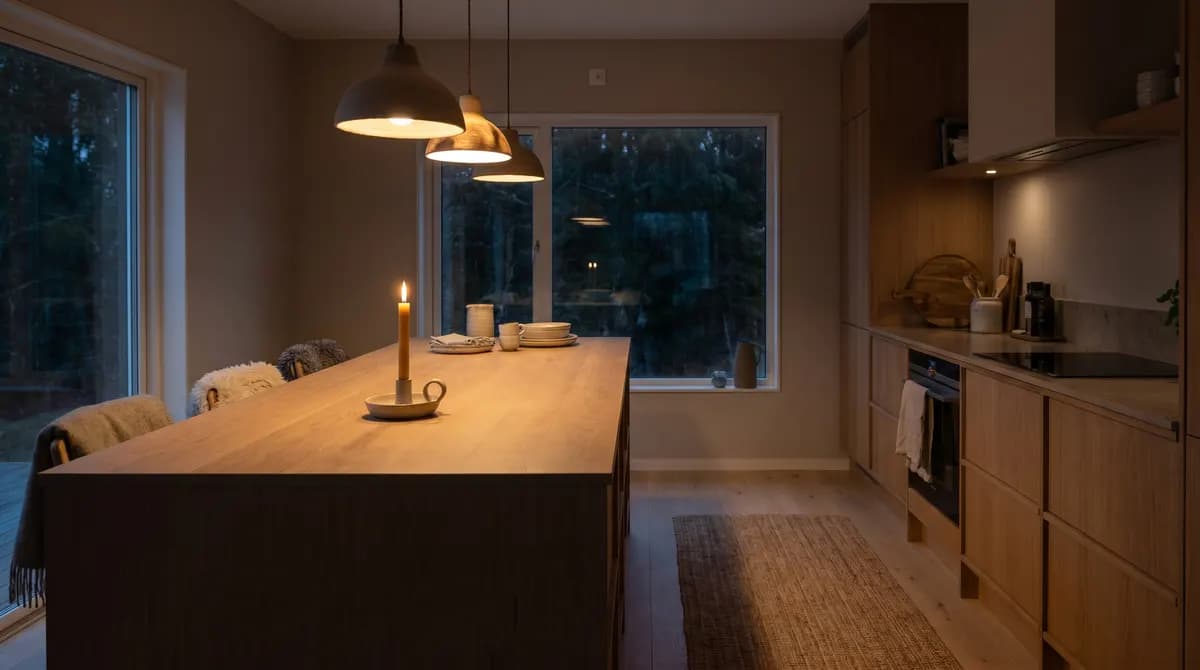
Three principles run through every authentic Scandinavian kitchen. First, functionality: every drawer, hook and bench has a job, and storage is engineered before aesthetics. Second, light: surfaces are chosen to bounce daylight around long, dark Nordic winters. Third, hygge — the untranslatable Danish word for warmth and coziness — which is added back in through textiles, candles, ceramics and a single live plant.
In 2026 the look has gone fully global. Outside of Scandinavia it is the dominant kitchen style in urban renovations from Brooklyn to Berlin to Melbourne, in large part because it photographs beautifully on Instagram and ages slowly. It pairs naturally with Japandi, Modern Farmhouse and Modern Coastal, which is why we treat Scandinavian as the canonical starting point for our Style × Room series.
12 Real Scandinavian Kitchen Examples
Each example below is a complete look — not a mood board. Click any image to see it full-size, then hit the generate button to try the same combination on your own room photo.
 1Example
 2Example
 3Example
 4Example
 5Example
 6Example
 7Example
 8Example
 9Example
 10Example
 11Example
 12Example
Key Design Elements
Colors
- Pure white walls
- Light beige and warm white cabinetry
- Soft greys for stone and concrete
- Matte black accents (handles, faucets, pendants)
- Natural honey wood tone (oak, ash, birch)
Materials
- White oak — the dominant wood
- Ash and birch for lighter, paler tones
- White quartz or honed marble countertops
- Subway tile or full-height slab splashback
- Unlacquered brass for handles and faucets
Furniture
- Open oak shelving in place of upper cabinets
- Sleek slab cabinet doors (no shaker, no panels)
- Simple wooden bar stools with linear legs
- A central island doubling as prep + breakfast bar
- Light oak dining table with matching chairs
Lighting
- Black or brass pendant lamps over the island
- Floor-to-ceiling windows wherever possible
- Under-cabinet warm LED strips, no overheads
- Paper or linen-shade pendants for soft diffusion
- Beeswax candles for evening hygge layer
Textiles
- Linen curtains, tea towels and napkins
- Wool throws over breakfast-nook benches
- Simple jute or wool kitchen runners
- Sheepskin draped on a single stool or bench
- Stoneware ceramics for tactile contrast
Scandinavian Kitchen Color Palette
Six pigments do most of the work — start here, then add one accent of your own.
The base white for walls and tall cabinets. Cleaner than warm whites, it makes oak look honey-coloured rather than yellow.
A creamy off-white for trim, mouldings and a softer cabinet alternative. Avoids the clinical feeling pure white can have in north-facing rooms.
Used on plaster walls, linen curtains and ceramics. Adds a quiet undertone that makes the room feel less like a showroom.
Concrete countertops, honed-stone splashbacks and stoneware. The grounding mid-tone that keeps the palette from floating.
The strict accent — matte black handles, faucet, pendant lamps and a single cast-iron pan. Used sparingly, almost as punctuation.
White oak, ash and birch — the actual hero of the palette. Choose one wood tone and repeat it on cabinets, floor and stools.
Must-Have Furniture & Fixtures
If you only buy these seven, you will read as authentically Scandinavian.
White oak slab cabinets
Flat-front, single-grain, no panel detail. Either floor-standing or wall-hung with a reveal at the floor.
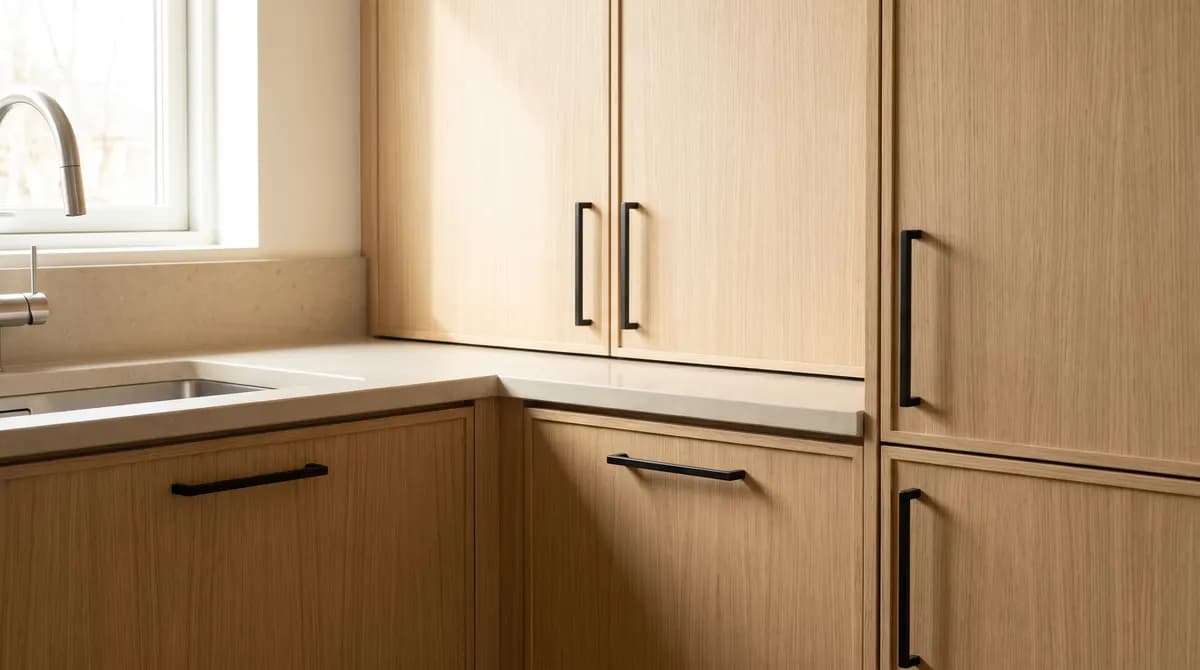
Matte black hardware
Long, slim bar handles or simple round knobs. Keep the finish consistent across every drawer in the room.
Subway tile or full-height splashback
White matte 75×150 mm subway tile, or a single slab of white quartz or honed marble running floor to ceiling behind the range.
Open shelving
One or two runs of solid oak shelving on a white wall, shown bare with ceramics, glass jars and a single plant.
Simple wood bar stools
Three-leg or four-leg, light oak or ash, no upholstery. Hans Wegner CH88 or any honest knock-off.
Pendant lamps over island
Two or three identical pendants in black metal, brass or paper. Hung 75–85 cm above the countertop.
Integrated appliances
Fridge, dishwasher and sometimes microwave hidden behind matching cabinet panels. The eye should never land on a brand badge.
Common Mistakes to Avoid
Too much white — a kitchen with only white surfaces reads sterile, not Scandi. Always add at least one wood tone and one textile.
Defaulting to "IKEA Scandi" — boxy white cabinets with chrome handles is the cliché. The real look uses warmer woods, matte black hardware and an integrated fridge.
Mixing too many wood tones — pick one wood (white oak, ash or birch) and repeat it. Two competing wood tones is the fastest way to break the spell.
Forgetting hygge — without textiles, candles, ceramics and one live plant, the room feels like a showroom. Hygge is the warmth you have to add back.
Cluttered countertops — Scandinavian is the discipline of empty surfaces. Three items maximum on the counter at any time. Everything else gets a drawer.
Try Scandinavian Kitchen in Your Own Room
Upload a photo of your real kitchen. Get a photorealistic Scandinavian redesign in about 30 seconds. 4 free credits, no card.
Generate Your Scandinavian Kitchen FreeOther Scandinavian Rooms
Apply the same palette and principles to the rest of the home.


Other Kitchen Styles
Same room, different aesthetic — explore the rest of the kitchen style library.


Scandinavian Kitchen — Frequently Asked Questions
What colors define Scandinavian kitchen design?
Is Scandinavian kitchen the same as IKEA?
How do I add warmth to a white Scandinavian kitchen?
What flooring works for a Scandinavian kitchen?
How is Scandinavian different from Japandi?
Is Scandinavian kitchen design good for small spaces?
How to Design a Scandinavian Kitchen
Five decisions, in this order. Skip any of them and the look will not land.
- 1
Choose your wood tone
Pick one — white oak, ash or birch — and commit. This is the single most consequential choice in the room. Repeat the same wood across cabinets, floor, stools and any open shelving. Two competing wood tones is the fastest way to look amateur.
- 2
Pick a base white + 1–2 muted accents
Start with a pure or warm white for walls and tall cabinetry. Add at most two accents: typically matte black (handles, faucet, pendants) and a soft grey (countertop or ceramics). Resist the urge to introduce a third accent colour.
- 3
Plan storage — open shelf + slab cabinet mix
Bulk storage goes into floor cabinets with slab doors (no shaker, no panel detail). One or two runs of open oak shelving replace the upper cabinets on a single wall. Everything that is not a curated object — toaster, microwave, blender — has a closed drawer.
- 4
Add warmth — textiles, plants, ceramics
This is the hygge step that separates a real Scandinavian kitchen from a sterile showroom. Linen curtains, a wool throw on the breakfast bench, stoneware ceramics on the shelves, one or two terracotta herb pots on the windowsill, and at least one live plant. Beeswax candles for the evening layer.
- 5
Edit ruthlessly
Scandinavian design is subtraction, not addition. Three items maximum on the countertop at any time. Everything else has to be put away. If you would not photograph it, it does not stay on the counter.
Keep Exploring
Tools and guides that pair with this style.