Scandinavian Nursery Design Ideas: 12 Real Examples (2026 Guide)
A pale oak Sniglar or Sundvik-style crib, linen swaddles in oat, a sheepskin on the floor, a paper mobile overhead, white walls with one piece of original art — the Scandinavian nursery is hygge for newborns. We unpack what makes it work, then show 12 photorealistic examples you can replicate.
- 12
- Real examples
- ~30s
- AI render time
- 4 free
- Credits, no card
What is Scandinavian Nursery Design?
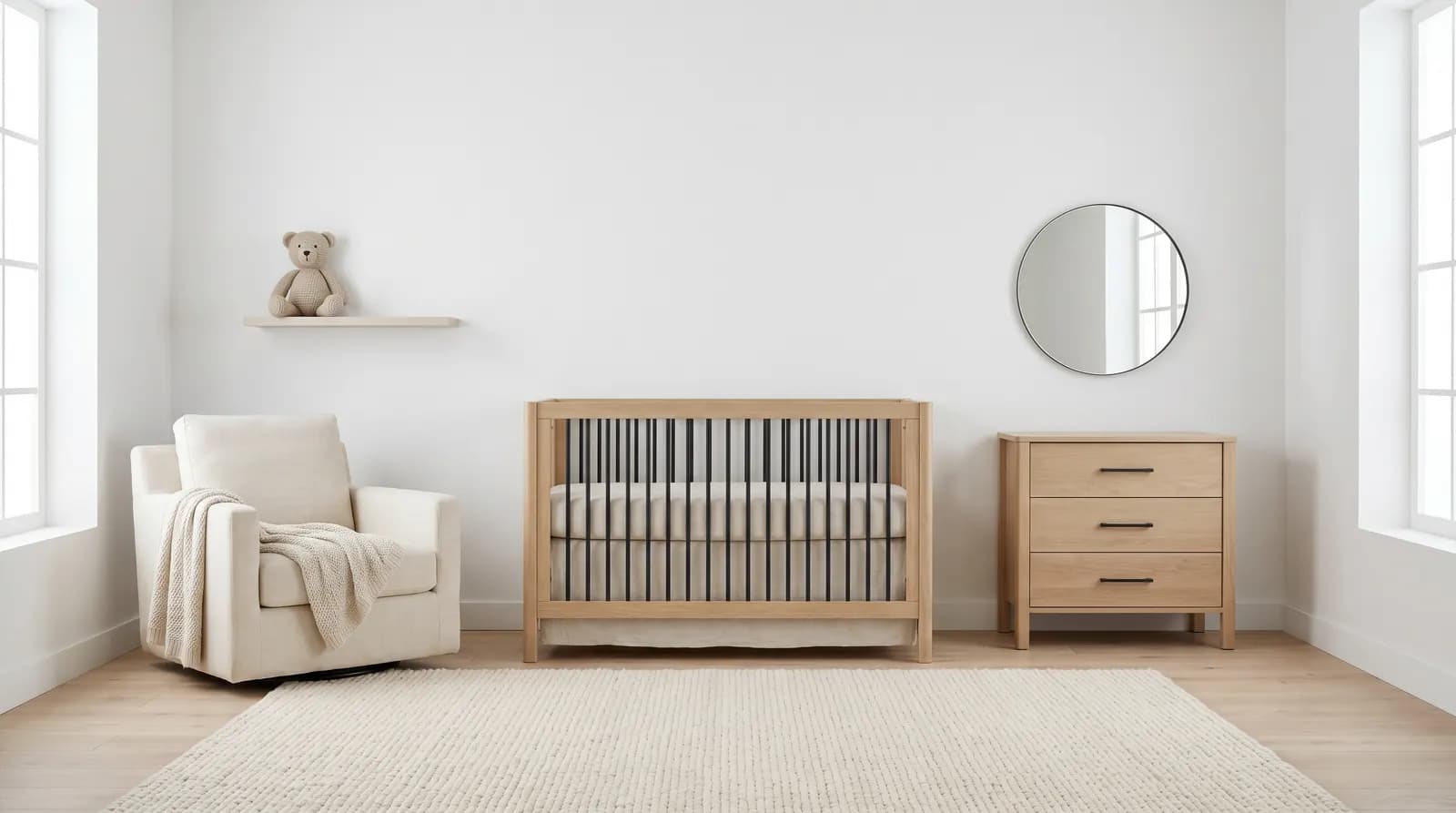
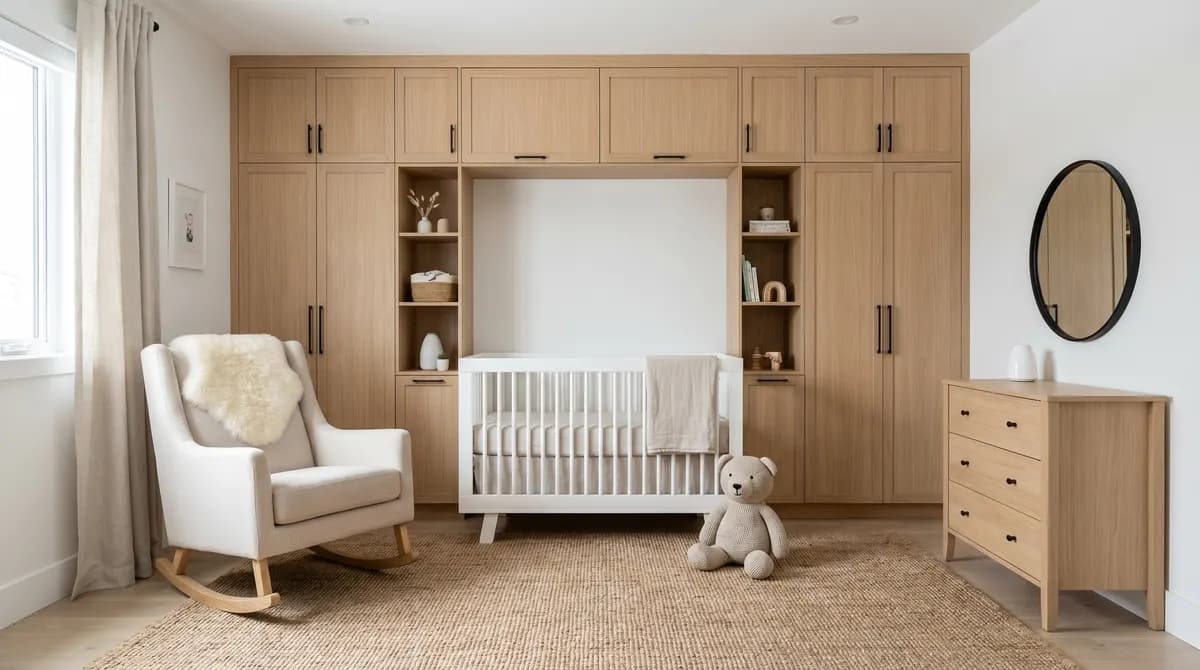
Scandinavian nursery design is the rejection of the themed-nursery industrial complex. There are no jungle wallpaper murals, no plastic toy organisers, no licensed Disney curtains, no neon name signs over the crib. There is one pale oak crib (Sniglar, Sundvik or any honest equivalent), a low oak changing table-dresser combo, a glider or low armchair in oat boucle, a paper mobile, a sheepskin on the floor, and walls in pure white plaster. The room is engineered for sleep, feeding and play in long Nordic winters — and survives the child's first eighteen months without redecoration.
Three principles run through every authentic Scandinavian nursery. First, natural materials only: solid pale oak on every piece of furniture, washed linen on swaddles and curtains, wool felt and sheepskin on the floor, paper for the mobile and the ceiling pendant. Second, calibrated lighting: warm 2700 K sconces, a single paper-shade pendant on a dimmer, and a low warm night light at floor level — never a single bright overhead bulb that disturbs an infant's sleep cycle. Third, the rule of one curated personal object: one stuffed companion in the crib, one piece of original family art on the wall, and rotate everything else through closed storage.
In 2026 the Scandinavian nursery is the dominant aesthetic across modern parenting blogs, Pinterest boards and well-curated apartments. It pairs naturally with Japandi (darker wood for older toddlers), Minimalist (less textile, more wall) and Bohemian (more visible plant life), and is the safest single style to commit to because it grows with the child — the crib becomes a toddler bed in the same oak finish, the changing dresser becomes a regular dresser, the glider stays the glider. We treat it as the canonical reference point for the nursery Style × Room series.
12 Real Scandinavian Nursery Examples
Each example below is a complete look — not a mood board. Click any image to see it full-size, then hit the generate button to try the same combination on your own room photo.
 1Example
 2Example
 3Example
 4Example
 5Example
 6Example
 7Example
 8Example
 9Example
 10Example
 11Example
 12Example
Key Design Elements
Colors
- Pure white plaster walls
- Oat linen on bedding, swaddles and curtains
- Soft greys for ceramics and stoneware
- Matte black or muted brass on hardware
- Pale honey oak across the furniture
Materials
- Solid pale oak — the dominant wood
- Washed 100% linen on bedding and swaddles
- Wool felt baskets and acoustic panels
- Sheepskin on the floor by the glider
- Rice paper for the mobile and pendant
Furniture
- Pale oak slatted crib (Sniglar or equivalent)
- Low oak changing-table dresser combo
- Glider or low armchair in oat boucle
- Floor-to-ceiling handleless wardrobe in oak veneer
- Single low oak stool as side table
Lighting
- One paper-shade pendant centred over the room
- Wall sconce above the glider for night feeds
- Low warm night light at floor level
- Daylight through linen curtains in the daytime
- Every fixture dimmable, 2700 K only
Textiles
- Washed linen bumperless crib sheet in oat
- Small wool blanket folded at foot of the crib
- Sheepskin on the floor beside the glider
- Linen curtain on the window, full length
- Stoneware ceramics for tactile contrast
Scandinavian Nursery Color Palette
Six pigments do most of the work — start here, then add one accent of your own.
The base white for walls and ceiling. Cleaner than warm whites, it makes oak look honey-coloured rather than yellow on baby-monitor cameras.
A creamy off-white for trim and curtains. Avoids the clinical feel pure white can have at 3am during a night feed.
Used on linen swaddles, curtains and the glider upholstery. Adds a quiet undertone that feels warm against the baby's skin.
Stoneware, felt baskets and any concrete or fabric mid-tone. The grounding mid-tone that keeps the palette from floating.
The strict accent — matte black hardware, the wall sconce arm and one framed piece of original art. Used sparingly, almost as punctuation.
Pale honey oak — the dominant warm tone. Repeated on the crib, changing dresser, glider frame and wardrobe doors for visual continuity.
Must-Have Furniture & Fixtures
If you only buy these seven, you will read as authentically Scandinavian.
Pale oak slatted crib
Solid pale oak, simple vertical slats, no decorative cut-outs, no painted finish, no carved feet. IKEA Sniglar, Sundvik or any honest equivalent.
Low oak changing dresser
Solid pale oak dresser with a removable changing tray on top. Doubles as the regular dresser once the child grows out of diapers around age two.
Glider or low armchair
Single low armchair or rocking glider in oat boucle or warm-stone linen. Used for feeding, reading, and the inevitable 3am night-feed wakeups.
Paper pendant or globe
Single rice-paper sphere (Noguchi Akari, Le Klint or IKEA Regolit), 50–60 cm diameter, hung above the centre of the room. Dimmable, 2700 K bulb.
Wall sconce above the glider
Single articulated matte black or brass sconce, dimmable, 2700 K. Lets you do night feeds without turning on the main pendant and waking the child.
Sheepskin on the floor
Single full sheepskin beside the glider, used for tummy time during the day and as a soft landing zone for bare adult feet during night feeds.
Paper mobile over the crib
Single rice-paper or felt mobile in oat, stone and pale oak — geometric shapes or simple animals, no music, no flashing lights. Removed once the child can stand.
Common Mistakes to Avoid
Themed wallpaper or murals — printed jungle scenes, dinosaur stickers, alphabet borders, cartoon character decals. The Scandinavian nursery uses plaster walls with at most one original piece of art the family hangs, framed in matte black.
Plastic toys on display — open shelves stacked with plastic, themed bedding, character bouncers in cobalt and lime. Hide everything plastic in the wardrobe; one stuffed companion in the crib is the visible toy count.
Crib bumpers and pillow piles — paediatricians warn against soft objects in the crib for the first year. Scandinavian aesthetics happen to agree: linen bumperless sheet, one small wool blanket, one stuffed companion, that is everything in the crib.
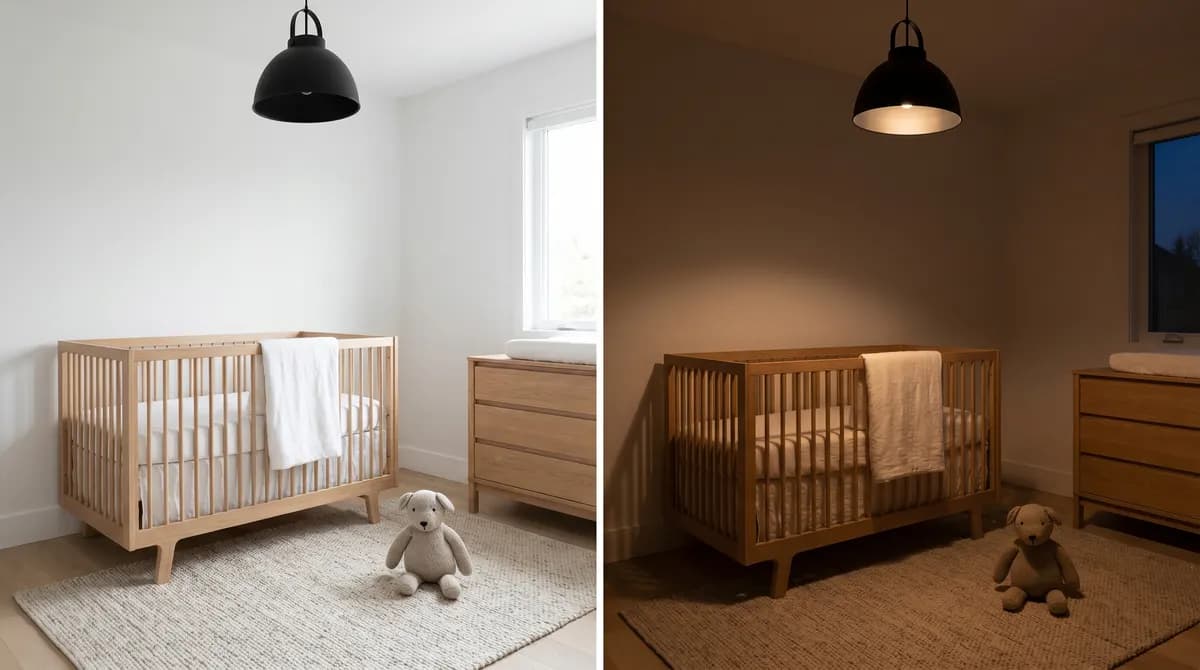
Bright overhead light — a single ceiling pendant in cool white floods the room at 3am and ruins the child's sleep cycle. Use paper pendant on a dimmer, wall sconce above the glider, and a low warm night light at floor level — all 2700 K.
Mismatched wood tones — pale oak crib next to a walnut dresser and a stained pine floor breaks the spell. Pick one wood (white oak or birch) and repeat it on every piece of furniture and any visible shelving.
Try Scandinavian Nursery in Your Own Room
Upload a photo of your real nursery. Get a photorealistic Scandinavian redesign in about 30 seconds. 4 free credits, no card.
Generate Your Scandinavian Nursery FreeOther Scandinavian Rooms
Apply the same palette and principles to the rest of the home.


Other Nursery Styles
Same room, different aesthetic — explore the rest of the nursery style library.


Scandinavian Nursery — Frequently Asked Questions
What colors define a Scandinavian nursery?
Is a Sniglar or Sundvik crib actually Scandinavian enough?
How do I make a Scandinavian nursery feel cosy and not sterile?
What flooring works for a Scandinavian nursery?
Does a Scandinavian nursery grow with the child?
Is a Scandinavian nursery good for small spaces?
How to Design a Scandinavian Nursery
Five decisions, in this order. Skip any of them and the look will not land.
- 1
Set the envelope once
Pure white plaster walls and ceiling, wide-plank pale oak floor, floor-to-ceiling handleless oak veneer wardrobe wall on the long side, linen curtain on the window. This envelope is set once and does not change as the child grows from newborn to toddler to preschooler — it is the architecture, not the décor.
- 2
Choose one wood and repeat it on every piece of furniture
Pick one (white oak, ash or birch) and commit. The crib, the changing dresser, the wardrobe doors, the glider frame, any shelving — all in the same finish. Two competing wood tones is the fastest way to break the Scandinavian envelope. Pale honey oak is the safe default.
- 3
Limit textiles to washed linen, wool and sheepskin
Washed linen bumperless crib sheet in oat, small wool blanket folded at the foot of the crib, linen curtain on the window, sheepskin on the floor by the glider, oat boucle on the glider seat. No polyester anything — synthetic fibres break the Scandinavian texture immediately, and natural fibres are kinder to a newborn's skin.
- 4
Layer four kinds of warm light
One paper-shade pendant centred over the room, one wall sconce above the glider for night feeds, one low warm night light at floor level for crawling-to-the-bathroom safety, and daylight through linen curtains in the daytime. Every fixture on a dimmer, every bulb at 2700 K. Never a bright single ceiling spot — infants sleep better in warm dim light.
- 5
Edit display down to three personal objects
On the wall: one piece of original family art, framed in matte black. In the crib: one stuffed companion. On the dresser: one stoneware ceramic, one small plant, one paper mobile until the child can stand. Everything else lives in the wardrobe or in closed felt baskets — including books that have not been read for two weeks.
Keep Exploring
Tools and guides that pair with this style.