Japandi Nursery Design Ideas: 12 Real Examples (2026 Guide)
A solid walnut crib, an oak rocking chair, a single washi paper pendant overhead and oat linens. We unpack what makes a nursery read as Japandi rather than Scandinavian or Bohemian, then show 12 photorealistic examples.
- 12
- Real examples
- ~30s
- AI render time
- 4 free
- Credits, no card
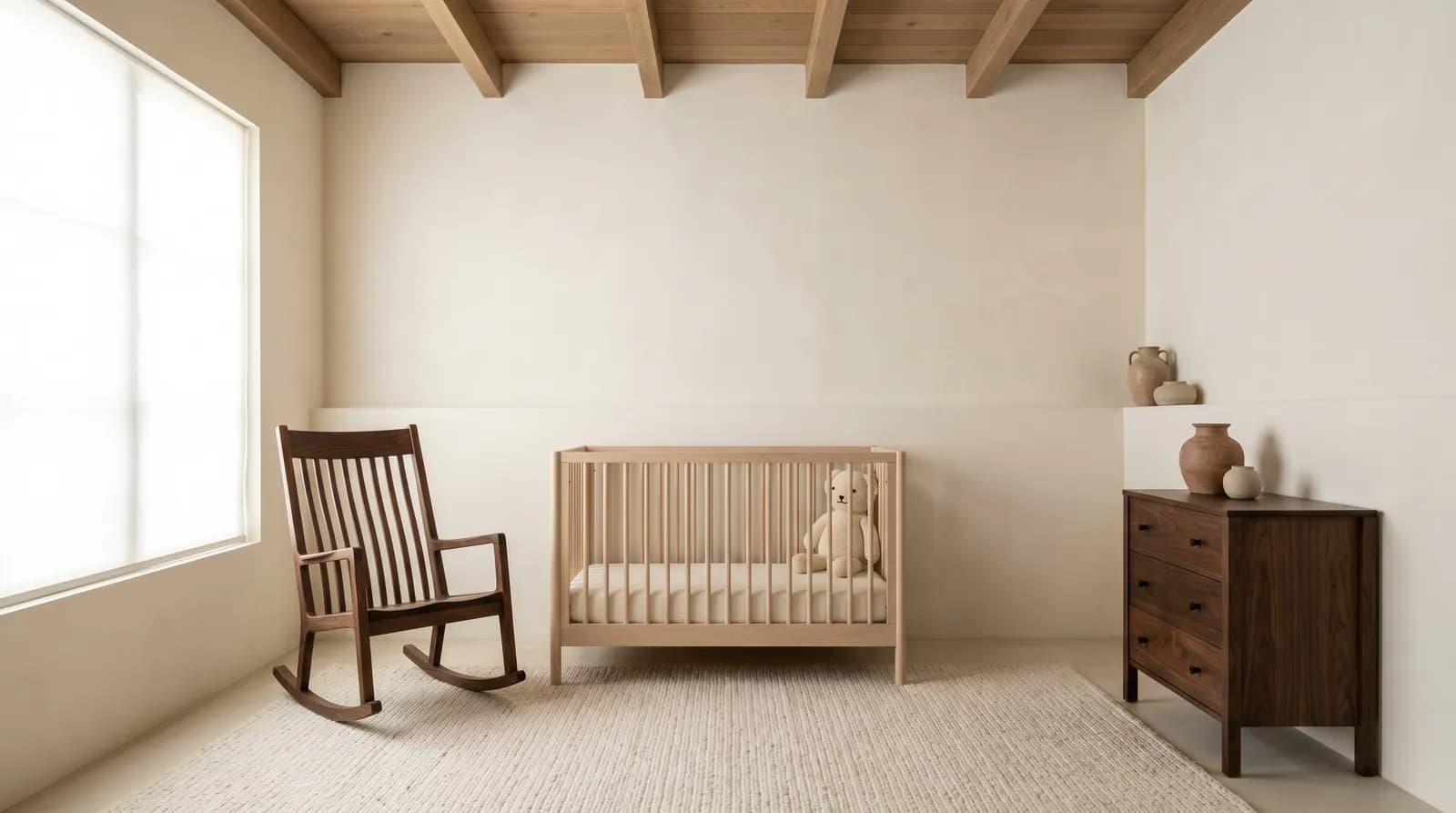
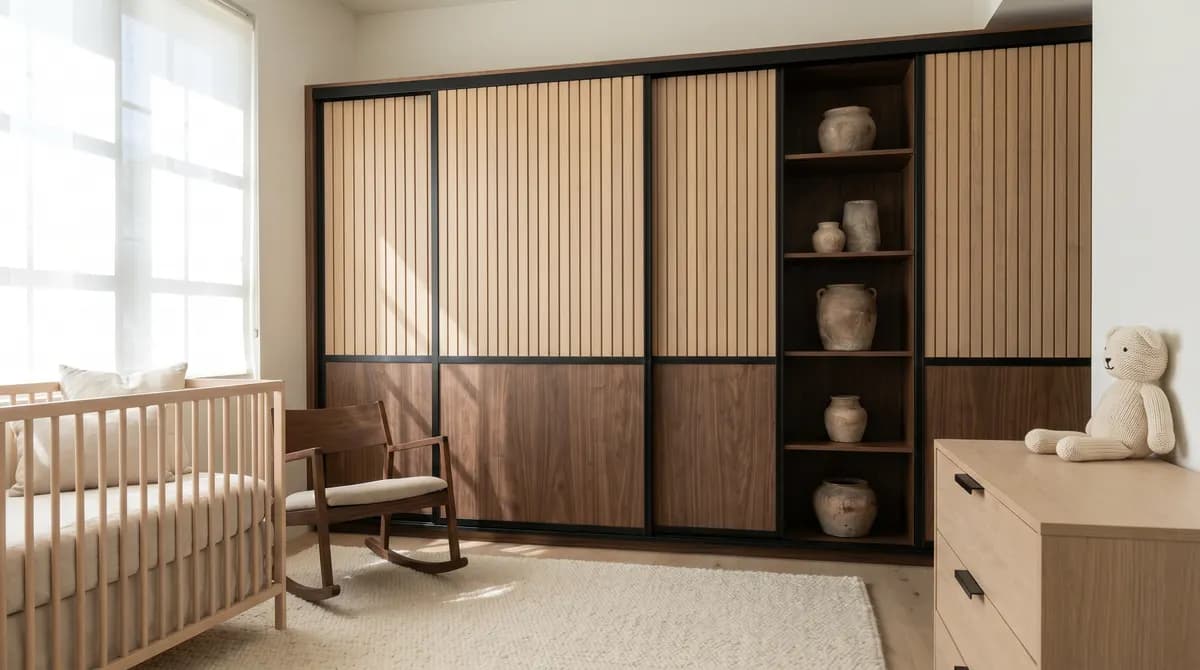
What is Japandi Nursery Design?
Japandi nursery design is the calmest of all baby rooms. It combines Scandinavian respect for safety and natural materials with Japanese restraint and a love of warm low light. The crib is a low solid-wood cot in walnut or oak, the changing surface is a pale oak chest, the rocking chair is a low oak frame with a linen cushion, and the only piece of lighting is a single washi paper pendant. There are no cartoon characters, no primary-colour mobiles, no busy wall stickers.
Three principles run through every authentic Japandi nursery. First, two wood tones in harmony: walnut for one feature piece (often the crib or a single shelf), pale oak for everything else. Second, oat-and-charcoal textiles only: muslin swaddles, linen quilts, wool throws, all in the soft Japandi palette. Third, calm light: warm 2700 K throughout, a washi paper pendant on a dimmer, and a soft amber nightlight by the changing station. The whole room photographs warm and reads visually quiet to a newborn nervous system.
In 2026 Japandi has become the dominant nursery aesthetic in serious parenting and design press. Pediatricians and sleep specialists support it indirectly — the calm palette, low ambient stimulation and warm light all favour easier wind-downs at bedtime. The look also grows beautifully: every piece of furniture in a Japandi nursery (crib, dresser, rocker, credenza) transitions cleanly into a Japandi toddler room and then into a Japandi kids room without redecoration.
12 Real Japandi Nursery Examples
Each example below is a complete look — not a mood board. Click any image to see it full-size, then hit the generate button to try the same combination on your own nursery photo.
 1Example
 2Example
 3Example
 4Example
 5Example
 6Example
 7Example
 8Example
 9Example
 10Example
 11Example
 12Example
Key Design Elements
Colors
- Warm off-white plaster walls
- Oat and soft beige textiles
- Soft charcoal accents and matte black hardware
- Deep walnut crib or feature shelf
- Honey oak for changing chest and shelving
Materials
- Solid walnut for the crib or feature piece
- Pale oak or ash for changing chest and shelves
- Limewash or microcement walls
- Muslin, linen, organic cotton and wool textiles
- Washi paper and stoneware ceramics
Furniture
- Solid walnut convertible crib
- Pale oak changing chest with deep drawers
- Low oak rocking chair with linen cushion
- Slim oak credenza or single open shelf
- Tatami floor cushion for reading sessions
Lighting
- Washi paper pendant centred over the room
- Stoneware bedside lamp with linen shade
- Soft amber plug-in nightlight by the changing chest
- Warm 2700 K LED, dimmable, no cool overheads
- Single beeswax candle on the credenza for evening
Textiles
- Muslin and organic cotton swaddles in oat
- Wool flatweave rug in oat and charcoal
- Linen cushion on the rocking chair
- Sheepskin throw over the reading chair
- Stoneware mug for parent tea, ceramic toy
Japandi Nursery Color Palette
Six pigments do most of the work — start here, then add one accent of your own.
The base for plaster walls and ceiling. Slightly warm so the walnut crib reads rich brown rather than yellow against the wall.
The dominant textile colour — swaddles, rug, curtain, rocking chair cushion. Calm and forgiving on a sleepy newborn nervous system.
The deepest accent — one cushion, the inside of the washi pendant, a feature wall behind the rocker. Used sparingly, always softened.
The crib or single feature shelf — the deeper of the two wood tones. Visible grain, oil-finished. Convertible models extend the life of the piece.
Changing chest, rocking chair, floor — the pale Scandinavian half of the equation. One pale wood, repeated calmly.
A muted earthy brown for the parent tea mug, a small ceramic plant pot, a single hand-thrown toy bowl. The handmade craft note.
Must-Have Furniture & Fixtures
If you only buy these seven, the room will read as authentically Japandi.
Solid walnut convertible crib
A solid walnut crib that converts to a toddler bed and then a daybed — Oeuf Sparrow or similar. Sleek lines, low profile, no carved finials. Buys you ten years of life from one piece of furniture.
Pale oak changing chest
A solid oak chest of drawers, five deep drawers, with a removable changing top in pale oak. Becomes a regular dresser after the changing years end. Matte black or blackened-steel pulls.
Low oak rocking chair
A solid oak rocker with a paper-cord seat or a thin linen cushion. Comfortable enough for hour-long feeds but low enough to maintain the Japandi horizon. Avoid upholstered Western recliner-rockers.
Washi paper pendant
A single small Akari-style washi paper pendant centred over the room, on a dimmer. Throws soft warm light without a sharp source, ideal for night feeds and bedtime routines.
Slim oak credenza
A low credenza along one wall, 40 cm deep with sliding doors. Holds nappies, wipes, spare swaddles and the plastic devices (monitor base, white-noise machine) the eye should not land on.
Wool flatweave rug
A large oat-and-charcoal wool flatweave rug anchoring the centre of the room. Skip synthetic shag and skip cartoon-print rugs; this rug stays for ten years.
Tatami reading cushion
A single tatami or zabuton floor cushion in a corner, with a stoneware floor lamp behind. The visual cue that this is a Japandi room and the parent's favourite reading spot.
Common Mistakes to Avoid
Cartoon-character bedding and wall stickers — caps the room at one age, one franchise and a colour palette that fights the Japandi calm. Use a hand-painted monochrome print or a small woven textile on the wall instead.
Bright primary colour palette — red-blue-yellow toys, neon mobiles and rainbow rugs work against the calm wind-down at bedtime. Soften everything to oat, walnut and soft charcoal.
Cool LED 4000 K ceiling lights — destroy the warmth instantly and read poorly at 2 am during a feed. Specify 2700 K everywhere, dimmable, with the washi pendant as the main source.
Upholstered Western recliner-rocker — breaks the Japandi horizon and reads as Pottery Barn instead. Specify a low oak rocker with a paper-cord seat or thin linen cushion.
Too many open toys on display — Japandi is calm, not stimulating. Three to five curated toys on one open oak shelf is plenty. Hide everything else in the credenza or in two seagrass baskets under the changing chest.
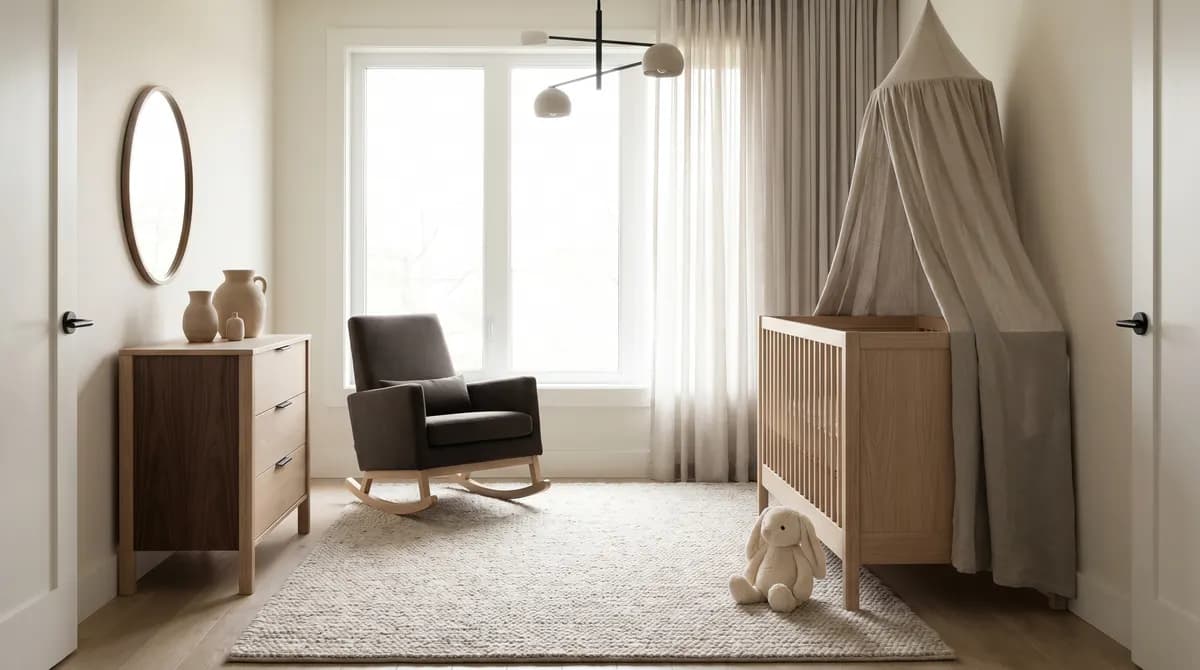
Try Japandi Nursery in Your Own Room
Upload a photo of your real nursery. Get a photorealistic Japandi redesign in about 30 seconds. 4 free credits, no card.
Generate Your Japandi Nursery FreeOther Japandi Rooms
Apply the same palette and principles to the rest of the home.


Other Nursery Styles
Same room, different aesthetic — explore the rest of the nursery style library.


Japandi Nursery — Frequently Asked Questions
Is Japandi safe for a nursery?
Will a Japandi nursery grow with my child?
What lighting works in a Japandi nursery?
How is Japandi different from Scandinavian for a nursery?
Are dark walls really OK for a nursery?
Does Japandi work in a small nursery or shared bedroom?
How to Design a Japandi Nursery
Five decisions, in this order. Skip any of them and the look will not land.
- 1
Choose your convertible walnut crib
The crib is the room — choose it before anything else. A solid walnut convertible crib (Oeuf Sparrow, Babyletto, or similar) that converts to a toddler bed and then a daybed. Visible grain, low profile, no carved finials. This single piece commits you to the Japandi look and serves the next ten years of childhood.
- 2
Pick the pale oak supporting cast
Pale European oak for the changing chest, the rocking chair frame, the credenza and the open shelf. One pale wood tone repeated calmly across every other wooden piece. The walnut crib stands as the single dark wood against this pale family — the same two-wood discipline that defines every Japandi room.
- 3
Layer warm light at three heights
Plan three sources, all 2700 K and all dimmable. A washi paper pendant centred over the room (main source). A stoneware table lamp on the credenza (feeding-time light). A soft amber plug-in nightlight near the changing chest (night-feed light). Skip every cool LED downlight; cool light at 2 am defeats every other choice you have made.
- 4
Keep textiles in the oat-and-charcoal palette
Muslin and organic cotton swaddles in oat. A wool flatweave rug in oat with charcoal stripes. A linen cushion on the rocker. One single charcoal cushion on the reading corner. No pastel pinks, no powder blues, no primary colours, no cartoon prints. The palette is the calm.
- 5
Edit the toys and hide the plastic
Three to five curated wooden toys on one open shelf — a stacking ring, a wooden rattle, a single soft toy. Everything else lives in the credenza or in two large seagrass baskets under the changing chest. The eye should land on walnut, oak, washi paper and oat linen, never on a plastic monitor screen or a branded character toy. Calm is the point.
Keep Exploring
Tools and guides that pair with this style.