Minimalist Nursery Design Ideas: 12 Real Examples (2026 Guide)
Less is more, but warmth is everything. The Minimalist nursery moves beyond trends to create a serene, intentional space for growth. We explore the principles of form, function, and texture, then show 12 photorealistic examples you can replicate.
- 12
- Real examples
- ~30s
- AI render time
- 4 free
- Credits, no card
What is Minimalist Nursery Design?
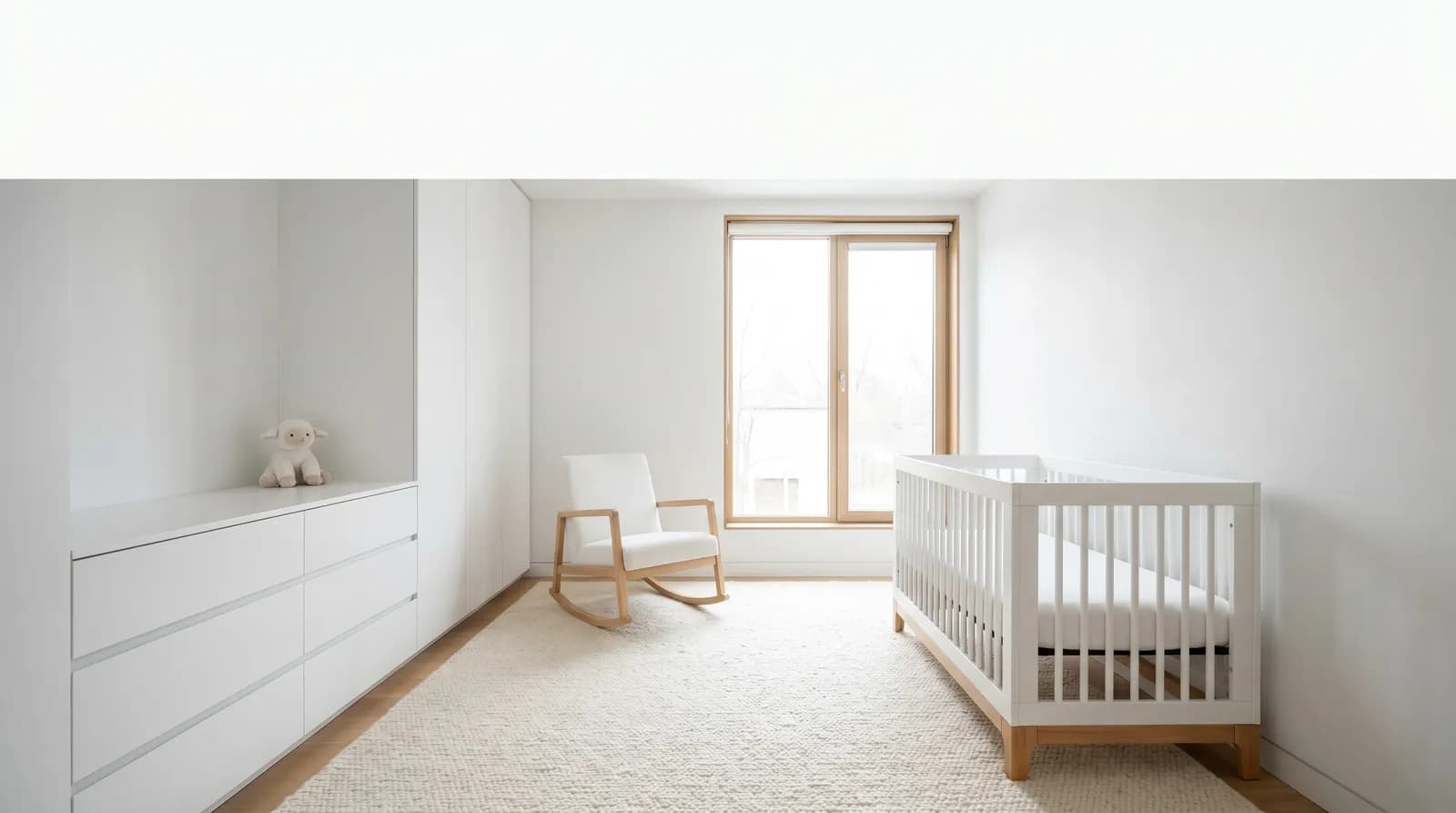
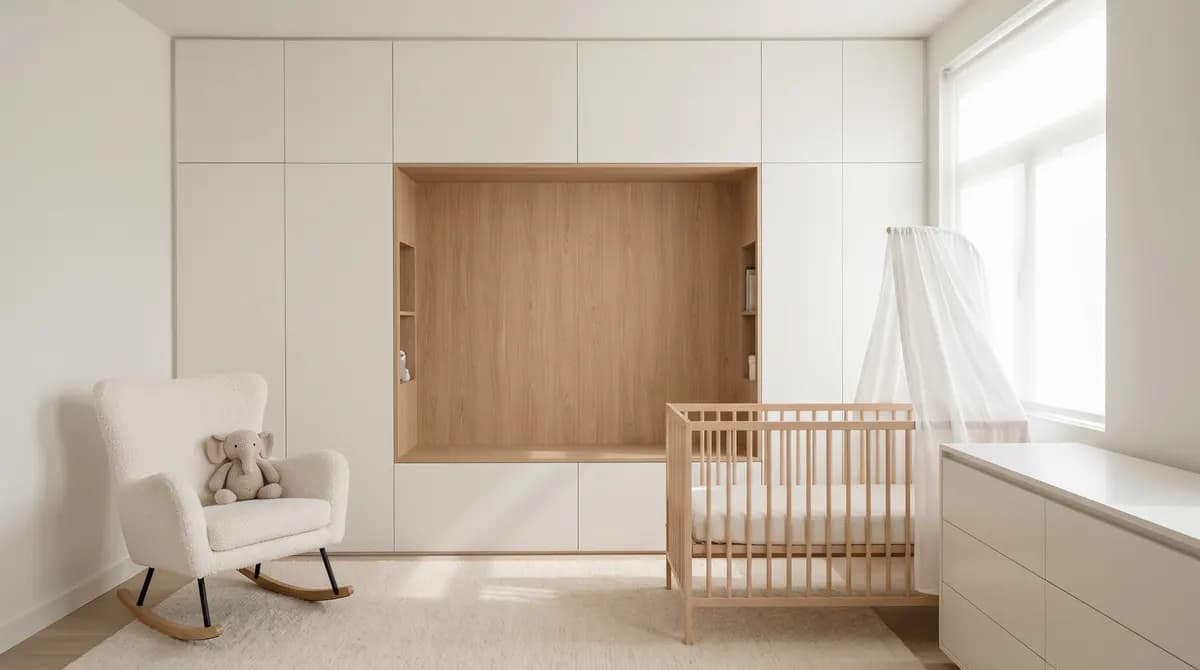
Minimalist nursery design is an approach rooted in the modernist 'less is more' philosophy. It prioritizes simplicity, functionality, and a calm atmosphere by eliminating non-essential clutter. The goal is not emptiness, but intentionality. Every piece of furniture, every textile, and every object serves a purpose and is chosen for its inherent beauty and material honesty.
Three principles define an authentic Minimalist nursery. First, a restrained palette: warm whites, earthy neutrals, and soft, natural tones create a soothing backdrop. Second, a focus on form and material: furniture features clean lines and is crafted from natural materials like light maple, ash, or rattan. Third, layered texture: warmth is introduced not through color but through tactile surfaces like high-pile wool rugs, linen bedding, and bouclé fabrics, preventing the space from feeling sterile.
In 2026, this style resonates with parents seeking a sustainable, gender-neutral, and calming environment that can evolve as the child grows. It rejects the overstimulation of themed nurseries in favor of investment pieces and a quiet aesthetic. It pairs naturally with Japandi and Warm Modernism, making it a sophisticated and enduring choice for a contemporary home.
12 Real Minimalist Nursery Examples
Each example below is a complete look — not a mood board. Click any image to see it full-size, then hit the generate button to try the same combination on your own room photo.
 1Example
 2Example
 3Example
 4Example
 5Example
 6Example
 7Example
 8Example
 9Example
 10Example
 11Example
 12Example
Key Design Elements
Colors
- Warm, chalky whites for walls and ceilings
- Soft, sandy beiges and greiges for textiles and rugs
- Muted earth tones like terracotta, sage, or clay as a single accent
- Matte black or brushed brass for hardware and lighting fixtures
- Natural light wood tones (maple, ash, light oak)
Materials
- Light woods: maple, ash, and white oak for furniture
- Rattan, cane, and woven grasses for baskets and furniture details
- Natural fibers: linen, organic cotton, wool, and bouclé for textiles
- Leather pulls or simple metal hardware in brass or black
- Limewash or matte-finish paint for soft, light-absorbing walls
Furniture
- A convertible crib with clean lines and simple spindles
- A long, low-profile dresser, often doubling as a changing table
- A sculptural rocking chair or glider in a neutral fabric
- Wall-mounted shelving or picture ledges to save floor space
- Integrated, seamless storage to conceal clutter
Lighting
- A single statement pendant, often a paper lantern or simple globe
- A dimmable floor lamp with a simple silhouette for task lighting
- Maximized natural light with sheer or unlined linen curtains
- Warm-toned bulbs (2700K) to create a cozy atmosphere
- No harsh overhead spotlights; focus on diffused, layered light
Textiles
- A high-pile or shag wool rug in a solid neutral color
- Linen or organic cotton crib sheets and blackout curtains
- A chunky knit or cashmere throw blanket draped over the glider
- A simple, soft play mat in a complementary tone
- Bouclé or textured wool upholstery on the seating
Minimalist Nursery Color Palette
Six pigments do most of the work — start here, then add one accent of your own.
The foundational warm white for walls. It has a soft, chalky finish that diffuses light beautifully and avoids a clinical feel.
A versatile, calming neutral for rugs, curtains, and upholstery. It pairs perfectly with light woods and adds quiet warmth.
A warm, earthy terracotta used as a subtle accent on a single wall, a cushion, or in a piece of art. It grounds the space.
A soft, grey-green that connects the room to nature. Ideal for a feature wall, bedding, or a small decorative object.
A deep, soft black used sparingly for punctuation on lamp bases, drawer pulls, or a thin picture frame.
The pale, fine-grained wood tone that defines the furniture. Its creamy color keeps the room feeling light and airy.
Must-Have Furniture & Fixtures
If you only invest in these seven pieces, the room will feel authentically Minimalist.
Convertible Light Wood Crib
Choose a model that converts to a toddler bed, made from solid maple or ash with simple, round spindles and clean lines.
Low, Wide Dresser
A six-drawer dresser in a matching wood or soft white provides ample storage and a surface for a changing pad.
Sculptural Glider
Invest in a comfortable, high-quality glider with a simple form, upholstered in a durable, textured neutral like bouclé or linen.
High-Pile Wool Rug
An undyed, high-pile wool rug (at least 5'x8' or 1.5x2.4m) defines the space and adds essential softness and texture underfoot.
Statement Pendant Light
A single, large-scale pendant, like an Isamu Noguchi paper lantern, serves as a sculptural centerpiece and provides soft, ambient light.
Linen Blackout Curtains
Floor-length curtains in a natural linen fabric with a blackout lining are both functional for sleep and aesthetically soft.
Woven Storage Baskets
Large seagrass or rattan baskets are perfect for holding toys, blankets, or laundry, adding natural texture while concealing clutter.
Common Mistakes to Avoid
Confusing Minimalist with cold — a room without varied textures (wool, linen, bouclé, wood grain) will feel sterile, not serene.
Choosing style over function — ensure the glider is comfortable for late nights and that storage is accessible and practical.
Cluttering with 'baby stuff' — be ruthless. Store most toys out of sight and display only a few beautiful, simple wooden ones.
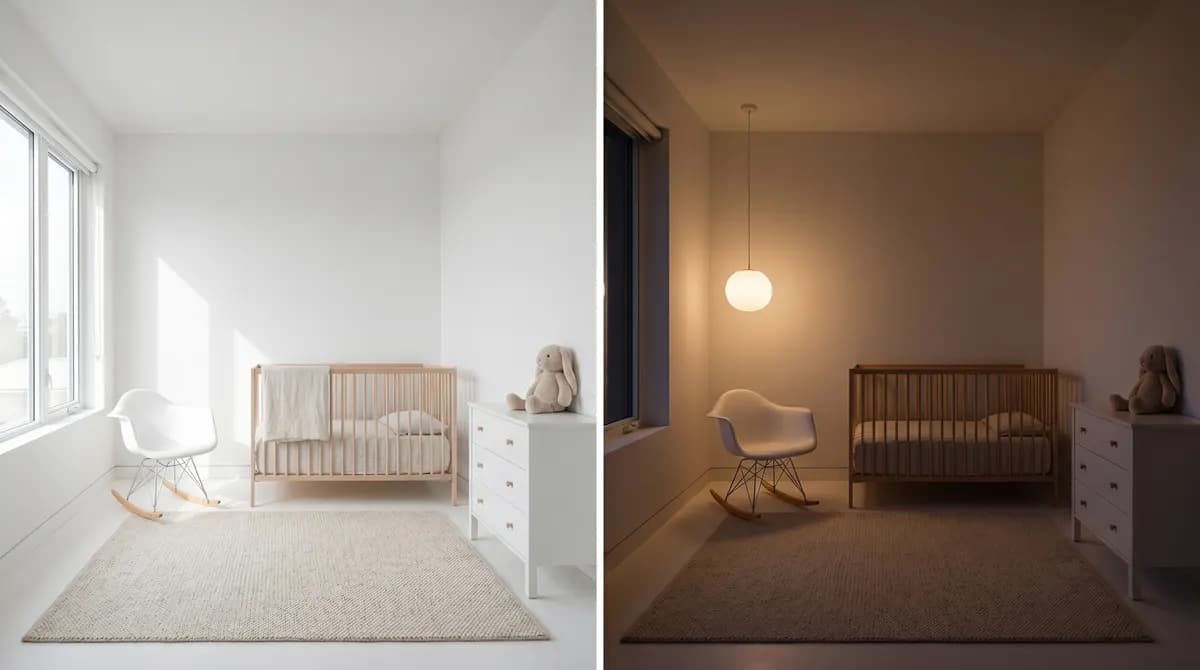
Ignoring lighting — harsh, cool overhead lighting can ruin the calm atmosphere. Layer warm, dimmable light sources.
Forgetting to scale down — use furniture appropriate for a nursery. Wall-mounted shelves and low-profile pieces keep the room feeling open.
Try Minimalist Design in Your Own Nursery
Upload a photo of your real nursery. Get a photorealistic Minimalist redesign in about 30 seconds. 4 free credits, no card.
Generate Your Minimalist Nursery FreeOther Minimalist Rooms
Apply the same palette and principles to the rest of the home.


Other Nursery Styles
Same room, different aesthetic — explore the rest of the nursery style library.


Minimalist Nursery — Frequently Asked Questions
What colors define a Minimalist nursery?
How do I make a Minimalist nursery feel warm and not cold?
Is Minimalist design practical for a nursery?
What kind of furniture should I choose?
How is a Minimalist nursery different from a Scandinavian one?
How can I decorate without adding clutter?
How to Design a Minimalist Nursery
Five decisions, in this order. Skip any of them and the look will not land.
- 1
Establish a Calm Palette
Choose a primary warm white or soft beige for the walls. Then, select two or three complementary neutrals for larger items like the rug and glider. Pick one single, muted accent color (like sage or clay) for small details.
- 2
Select Three Anchor Furniture Pieces
Invest in the crib, dresser, and glider first. These define the room. Choose pieces made from a consistent light wood (like maple or ash) with simple, timeless silhouettes. Functionality is paramount.
- 3
Layer Generous Textures
This is the most critical step for warmth. Add a large, high-pile wool rug. Use soft, natural textiles like linen for curtains and bedding. Drape a chunky knit throw over the glider. The contrast between soft textiles and smooth wood is key.
- 4
Integrate Concealed Storage
Plan for clutter. Use a dresser with deep drawers. Designate large, woven baskets for toys and laundry. Utilize closet organizers. The goal is to have an assigned, hidden spot for everything, keeping surfaces clear.
- 5
Curate and Edit
The final step is subtraction. Place only a few, carefully chosen items on display: a simple mobile, a few wooden toys, a single plant. If an item is not beautiful or essential, store it away. A clear space fosters a calm mind.
Keep Exploring
Tools and guides that pair with this style.