Industrial Home Office Design Ideas: 12 Real Examples (2026 Guide)
Exposed brick, black steel, reclaimed wood — the look that started in New York lofts and conquered global workspaces. We unpack what makes a home office feel truly Industrial, then show 12 photorealistic examples you can replicate.
- 12
- Real examples
- ~30s
- AI render time
- 4 free
- Credits, no card
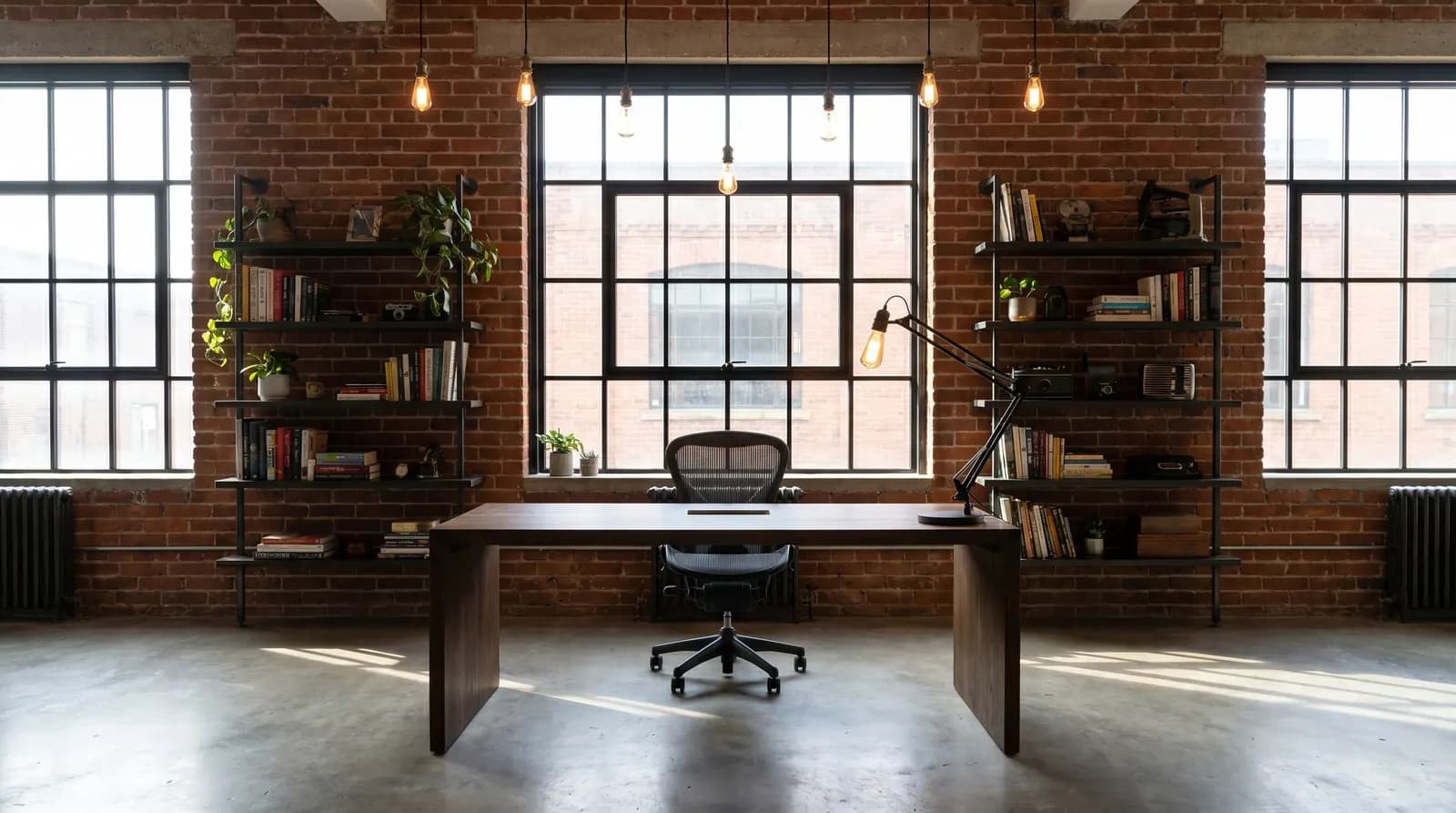
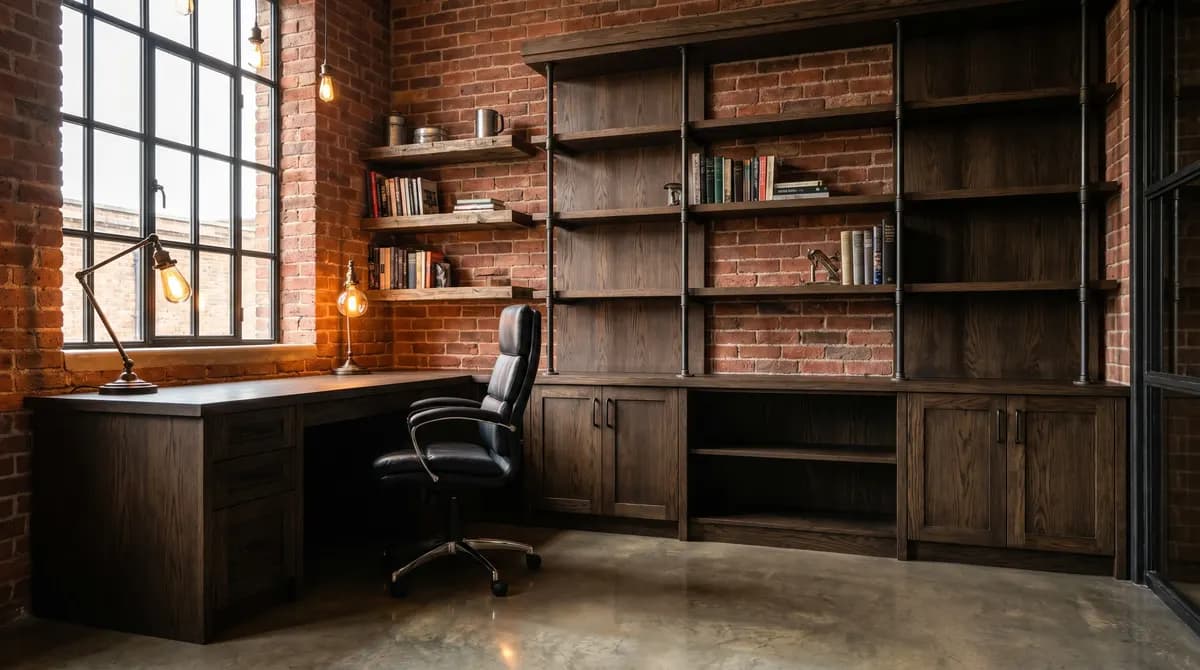
What is Industrial Home Office Design?
Industrial home office design is a style born from the conversion of old factories, warehouses, and commercial buildings into living spaces. It celebrates the building's raw, unfinished history. Rather than concealing structural elements, it exposes them: brick walls, concrete floors, steel columns, and visible ductwork become the primary design features. The aesthetic is defined by its honesty, functionality, and sense of scale.
Three principles define an authentic Industrial office. First, material honesty: surfaces are left in their raw state. Brick is exposed, concrete is polished but not covered, and steel is often blackened or left with its weld marks visible. Second, utilitarian function: furniture and fixtures are chosen for their durability and purpose, often repurposed from actual industrial settings. Think heavy workbenches, metal filing cabinets, and factory lighting. Third, spatial volume: the style thrives in spaces with high ceilings and large, often steel-framed, windows that recall its factory origins.
In 2026, the Industrial look is a permanent fixture in urban design, from Brooklyn lofts to London warehouse conversions. It's prized for its durability, gender-neutral appeal, and ability to handle the wear and tear of a working home. The style pairs naturally with Mid-Century Modern furniture and Minimalist decor, creating a space that feels both historic and contemporary. It's the go-to choice for a workspace that is serious, creative, and built to last.
12 Real Industrial Home Office Examples
Each example below is a complete look — not a mood board. Click any image to see it full-size, then hit the generate button to try the same combination on your own room photo.
 1Example
 2Example
 3Example
 4Example
 5Example
 6Example
 7Example
 8Example
 9Example
 10Example
 11Example
 12Example
Key Design Elements
Colors
- Charcoal grey and concrete tones
- Exposed brick reds and terracottas
- Matte black for steel frames, hardware, and accents
- Deep browns from reclaimed wood and leather
- Muted, tarnished metallics like brass or copper
Materials
- Exposed brick, either raw, painted, or German-schmeared
- Polished or raw concrete for floors and sometimes walls
- Blackened, raw, or galvanized steel for furniture legs, window frames, and partitions
- Reclaimed wood with visible grain, knots, and imperfections
- Distressed leather for seating and desktop accessories
Furniture
- A substantial desk of solid wood and metal
- Vintage leather or metal task chairs (e.g., Eames Aluminum Group, Tolix)
- Open shelving made from iron pipes and wood planks
- Metal storage, such as lockers or vintage filing cabinets
- Repurposed items like factory carts or drafting tables
Lighting
- Pendants with exposed Edison or filament bulbs
- Large, bare, factory-style windows (e.g., Crittall)
- Articulated metal task lamps and floor lamps
- Metal cage sconces or vintage barn lights
- Simple track lighting on high ceilings
Textiles
- Distressed or top-grain leather upholstery
- Low-pile wool or natural jute area rugs to soften floors
- Canvas or raw linen for utility and texture
- Cowhide or sheepskin rugs for a touch of organic warmth
- Minimal use of textiles overall; focus on raw materials
Industrial Home Office Color Palette
Six pigments do most of the work — start here, then add one accent of your own.
The authentic, earthy red of a classic factory wall. It provides the primary warmth and historical texture for the entire space.
The cool, neutral base for floors and walls. It's the modern counterpart to the historic brick, grounding the palette.
The essential accent for all metalwork—window frames, furniture legs, lighting fixtures. It provides sharp, graphic contrast.
The deep, warm brown of aged timber. Found in desks and shelving, it prevents the space from feeling too cold or sterile.
A rich, cognac or dark brown tone for seating. It adds a necessary soft, tactile element and a sense of lived-in comfort.
A muted, non-shiny metallic used sparingly on lamp fittings or hardware. It offers a hint of warmth without being glamorous.
Must-Have Furniture & Fixtures
If you only invest in these seven pieces, your office will read as authentically Industrial.
Reclaimed Wood & Metal Desk
The centerpiece. Look for a thick, solid wood top with visible grain and imperfections, set on a heavy cast iron or steel base.
Vintage-Style Task Chair
A chair that prioritizes function. Think distressed leather, metal frames, or classic designs like the Tolix or an Eames office chair.
Exposed Bulb Lighting
Pendant lights or sconces with visible filament bulbs, metal shades, or wire cages. Functionality is the aesthetic.
Pipe & Plank Shelving
Open, wall-mounted storage built from plumbing pipes and solid wood boards. It's practical, durable, and visually light.
Metal Storage Cabinet
A vintage metal filing cabinet, locker, or apothecary chest for concealed storage. Look for pieces with some patina.
Large Area Rug
Essential for absorbing sound and adding warmth. A low-pile wool, jute, or distressed oriental-style rug works best.
Steel-Framed Glass Partition
If dividing a larger room, black steel-framed (Crittall-style) glass walls define the space without blocking light.
Common Mistakes to Avoid
Making it too cold — without the warmth of wood, leather, and textiles, an Industrial space can feel like a garage. Balance is key.
Faking materials — brick-effect wallpaper, wood-look laminate, and plastic 'metal' fixtures undermine the style's core principle of authenticity.
Creating a theme park — over-styling with too many gears, maps, and faux-vintage props makes the space feel like a caricature, not a functional office.
Ignoring acoustics — hard surfaces like concrete and brick create echo. A large area rug is not optional; it's essential for sound dampening.
Inadequate lighting — Industrial spaces can be dark. Relying on one overhead pendant is not enough. Layer task, ambient, and accent lighting.
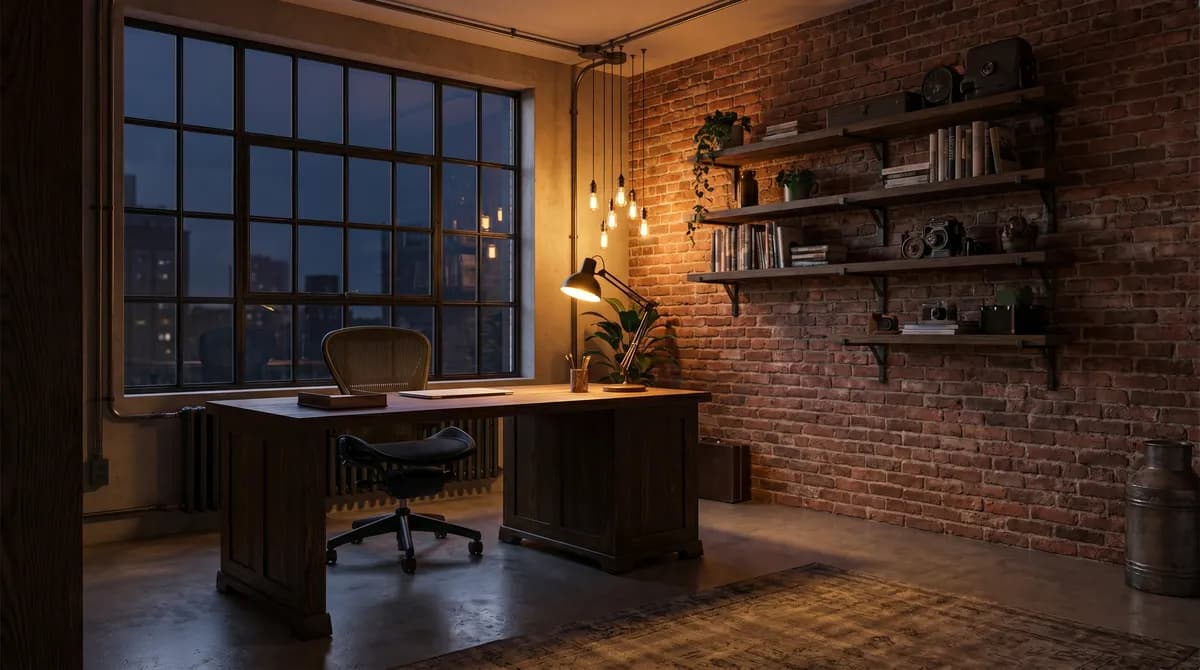
Try Industrial Style in Your Own Home Office
Upload a photo of your real office. Get a photorealistic Industrial redesign in about 30 seconds. 4 free credits, no card.
Generate Your Industrial Home Office FreeOther Industrial Rooms
Apply the same palette and principles to the rest of the home.


Other Home Office Styles
Same room, different aesthetic — explore the rest of the home office style library.


Industrial Home Office — Frequently Asked Questions
What defines Industrial home office design?
How can I make an Industrial office feel warm and cozy?
What is the best flooring for an Industrial home office?
Is Industrial style suitable for a small home office?
What is the difference between Industrial and Rustic style?
What kind of desk should I choose for an Industrial office?
How to Design an Industrial Home Office
Five decisions, in this order. Skip any of them and the look will not land.
- 1
Expose the Structure
Start with the 'bones' of the room. Can you expose a brick wall? Can you pull up carpet to polish a concrete subfloor? This is the authentic foundation. If not, a high-quality limewash or concrete-effect plaster on an accent wall is the next best thing.
- 2
Establish the Material Palette
Commit to a tight palette of 3-4 core materials. A classic combination is brick, steel, and reclaimed wood. Repeat these materials across your furniture and fixtures. Everything should feel solid, durable, and honest.
- 3
Select Anchor Furniture
Choose your two most important pieces first: the desk and the chair. The desk should be substantial and made of wood and metal. The chair should be functional and comfortable, ideally in worn leather or a classic metal design.
- 4
Layer in Utilitarian Lighting
Lighting is critical. Hang one or two statement pendants with exposed bulbs over the desk. Add a metal articulated task lamp on the desk surface. Ensure you have good ambient light, especially if natural light is limited.
- 5
Add Warmth and Edit
This is the final step. Add a large area rug to absorb sound. Place a few personal, meaningful objects on your shelves—not clutter. Add one plant for life. The goal is a functional, personal workshop, not a cluttered antique store.
Keep Exploring
Tools and guides that pair with this style.