Rustic Home Office Design Ideas: 12 Real Examples (2026 Guide)
Reclaimed-wood desk, leather captain's chair, a wall of well-worn books — the rustic home office is the room you choose to start your morning in. We unpack the rules, then show 12 photorealistic examples.
- 12
- Real examples
- ~30s
- AI render time
- 4 free
- Credits, no card
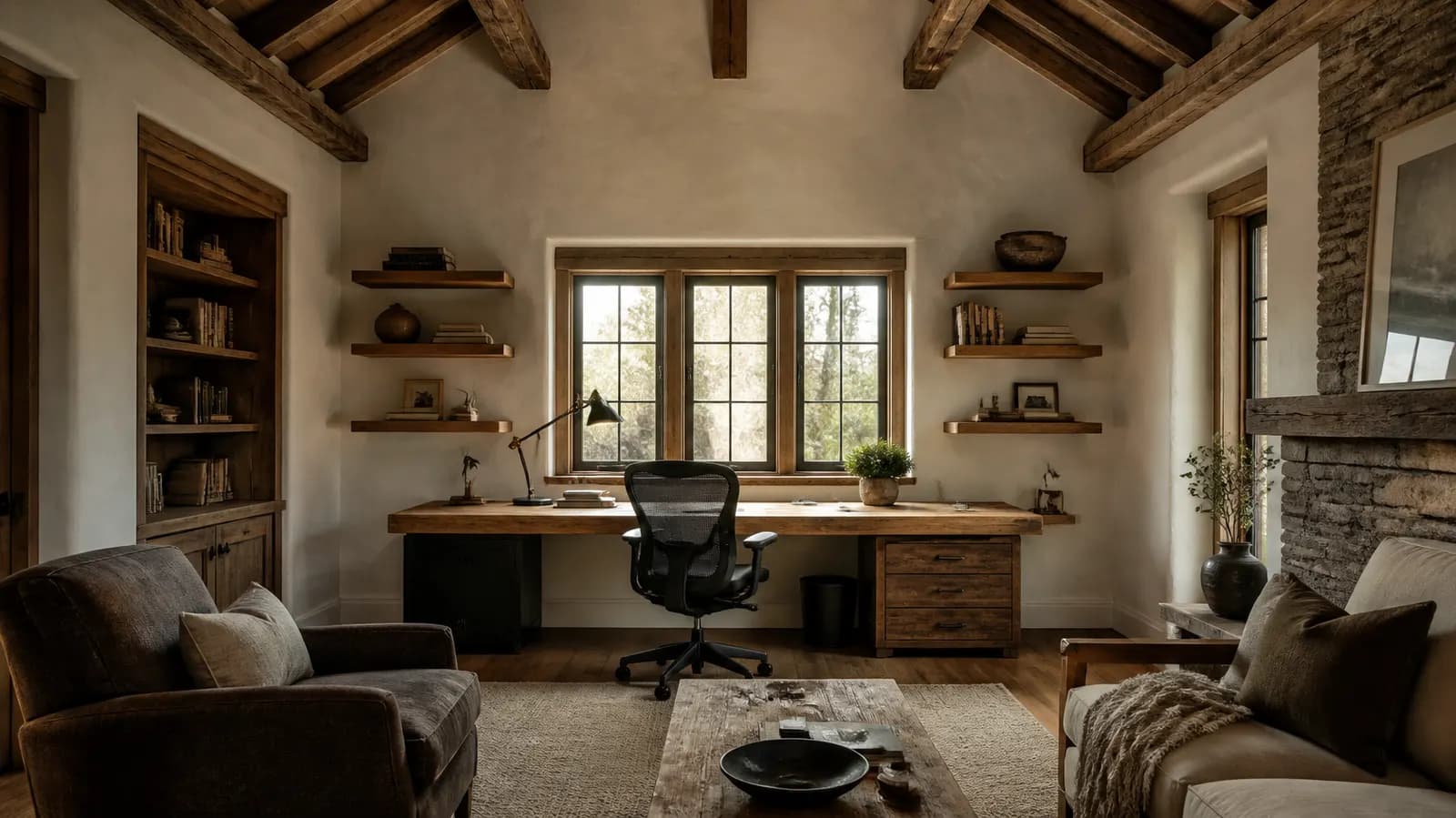
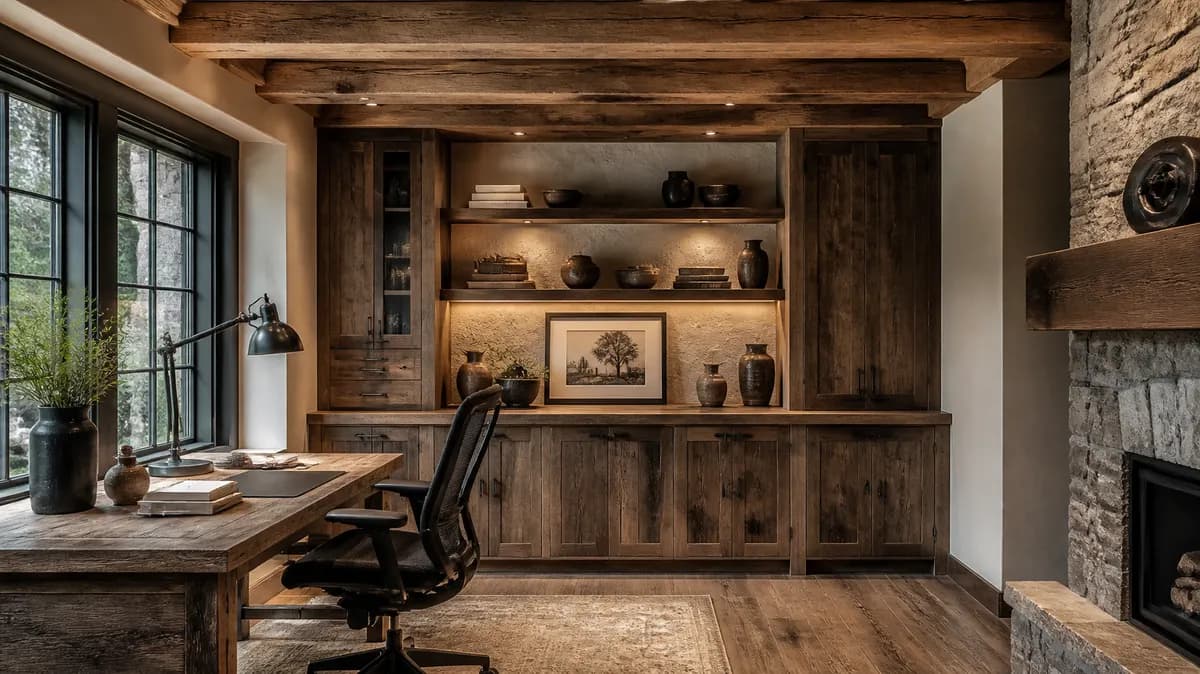
What is Rustic Home Office Design?
The rustic home office descends from the country estate library and the smallholder's farmhouse desk. Both were rooms where work and warmth had to coexist — where a heavy oak writing table sat between a wall of books and a fireplace, where a leather chair softened by twenty years of use was the most-used piece of furniture in the house. The look celebrates that lineage: real wood, real leather, real books and lighting warm enough that an evening session feels like a privilege rather than a sentence.
Three principles guide an authentic rustic home office. First, a hero desk: usually reclaimed wood, often a single thick slab, large enough to spread out paper and laptop and a cup of coffee without conflict. Second, layered warmth: lime-plaster walls, a wool rug underfoot, leather and linen on every seat. Third, evidence of mind: stacked books, a few framed maps, a brass desk lamp, a real notebook on the desk — visible signs that this is a room where thinking happens.
In 2026 the rustic home office has become a quiet status symbol of remote workers who reject the glass-and-chrome co-working aesthetic. It pairs naturally with English country, Modern Farmhouse and Mid-Century Modern (which shares the leather and warm wood). The throughline is always a deep wood desk, an evidently lived-in leather chair and the unspoken sense that the person who works here also reads, walks and pours a glass of something at the end of the day.
12 Real Rustic Home Office Examples
Each example below is a complete look — not a mood board. Click any image to see it full-size, then hit the generate button to try the same combination on your own room photo.
 1Example
 2Example
 3Example
 4Example
 5Example
 6Example
 7Example
 8Example
 9Example
 10Example
 11Example
 12Example
Key Design Elements
Colors
- Warm cream and limewashed plaster walls
- Reclaimed walnut and oak desk tones
- Deep cognac and chestnut leather
- Sage green and dusty olive accents
- Aged brass and wrought-iron hardware
Materials
- Reclaimed barn wood or solid oak for the desk
- Aniline leather for the chair and accessories
- Lime plaster or beadboard on the walls
- Wool kilim or jute rug under the desk
- Aged brass and wrought iron for hardware and lamps
Furniture
- Reclaimed-wood slab desk with iron base
- Leather captain's chair on castors
- Floor-to-ceiling oak or pine bookshelves
- Antique flat-file cabinet or campaign trunk
- Leather wingback reading chair in the corner
Lighting
- Brass desk lamp with adjustable arm
- Aged-brass picture lights over bookshelves
- Wrought-iron pendant or floor lamp by the chair
- Layered warm-white sources at 2700 K
- One pillar candle for late-night sessions
Textiles
- Linen Roman shade or full-length linen drapes
- Wool kilim or jute rug under the desk
- Leather and wool throw on the wingback
- Linen-shade lamp diffusers
- Wool wrap on the back of the desk chair
Rustic Home Office Color Palette
Six pigments do most of the work — start here, then add one accent of your own.
The base white for plaster walls and ceilings. Warmer than pure white, it lets the cognac leather and oak read at their richest.
The hero wood for the desk — deep brown with visible grain and saw marks. Repeat it on the bookshelves but never go three competing browns.
The hero textile colour, carried by the captain's chair, a desk pad and a leather-bound notebook. Warms the entire room from the centre out.
The muted accent — bankers' lamp shade, linen drape, a hand-thrown ceramic jar of pencils. Lifts the brown palette without breaking the warmth.
Limewash plaster, raw linen, a slate-grey blotter. Grounds the palette and gives the eye somewhere quiet to land between tasks.
Strict accent — desk base, picture-light arms, drawer hardware. Used sparingly so the brass lamp always reads warmer than the iron.
Must-Have Furniture & Fixtures
If you only buy these seven, you will read as authentically rustic.
Reclaimed-wood slab desk
Single thick slab in oak, walnut or aged pine, 160–200 cm wide, on hand-forged iron legs or a heavy timber base. Knot marks and dings welcome.
Leather captain's chair
Aniline cognac or chestnut leather, low back, brass nailheads, brass castors. Hardwood frame visible. No mesh, no plastic, no chrome.
Floor-to-ceiling bookshelves
Solid oak or pine, built-in if possible, filled with real books — no Pinterest colour sorting. Add one or two picture lights over the shelves.
Brass desk lamp
Adjustable-arm brass lamp in the tradition of the bankers' lamp or the British library lamp. 2700 K bulb minimum, ideally on a dimmer.
Wool kilim rug
Hand-knotted runner or area rug under the desk, large enough to keep the desk chair on it when rolled back. Earth tones with one sage stripe.
Leather wingback or reading chair
Set in the corner with a small side table, floor lamp and a stack of books. The room should read as a place to read as well as work.
Linen window treatment
Stonewashed linen Roman shade or full-length drapes. Softens the daylight, kills screen glare and adds the third textile layer the room needs.
Common Mistakes to Avoid
Using a glass or metal desk — both kill the wood read instantly. The desk is the hero piece; it must be solid timber, not a steel parsons table.
An ergonomic mesh task chair as the only seating — it shouts cubicle. Keep the mesh chair if you need it for posture, but put a leather captain's chair in shot.
Visible cable spaghetti — modern monitors and lamps create a tangle that breaks the rustic spell. Use a single leather cable wrap, drill a wood grommet through the desk and run wires inside the leg of the iron base.
Cold overhead light — a single 4000 K LED panel destroys the mood. Use one warm overhead, a brass desk lamp, a floor lamp by the reading chair and dimmers everywhere.
Empty shelves — bookshelves styled with three vases and a candle look corporate. Fill them with real books, framed maps, a small leather box and one plant.
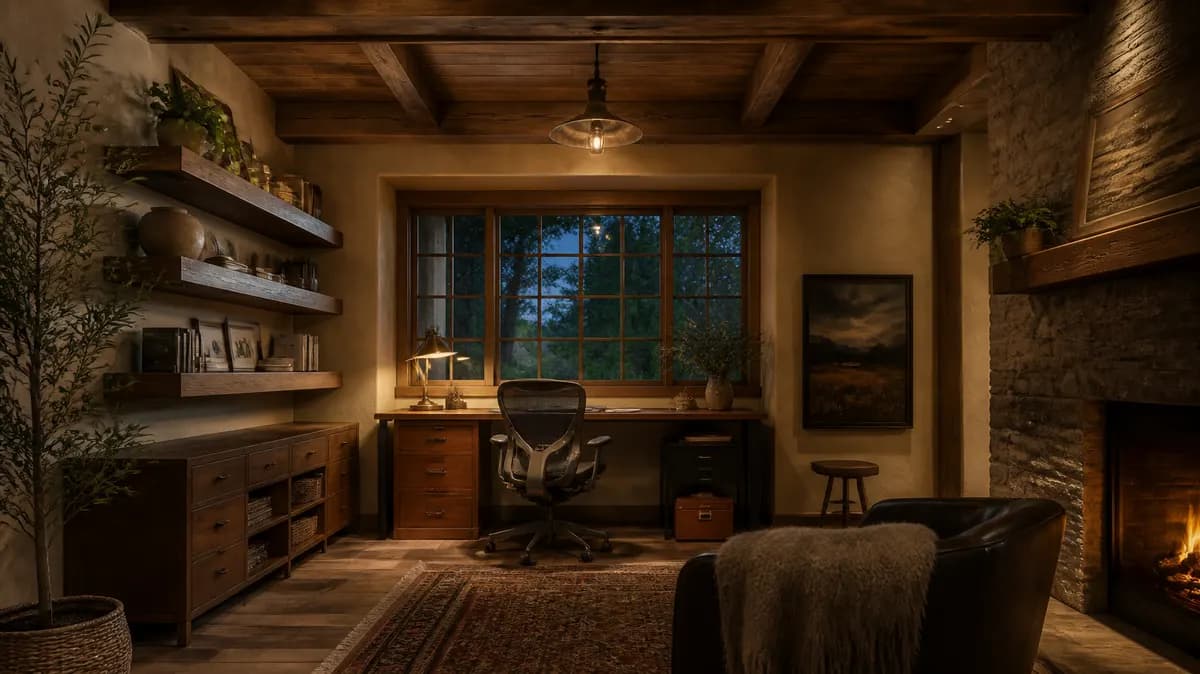
Try Rustic Home Office in Your Own Room
Upload a photo of your real home office. Get a photorealistic rustic redesign in about 30 seconds. 4 free credits, no card.
Generate Your Rustic Home Office FreeOther Rustic Rooms
Apply the same palette and principles to the rest of the home.


Other Home Office Styles
Same room, different aesthetic — explore the rest of the office style library.


Rustic Home Office — Frequently Asked Questions
What colors define rustic home office design?
Is a rustic home office practical for long workdays?
How do I hide cables in a rustic office?
What flooring works for a rustic home office?
Can a rustic home office handle dual monitors?
Is rustic home office good for a small spare room?
How to Design a Rustic Home Office
Five decisions, in this order. Skip any of them and the look will not land.
- 1
Buy the right desk first
Reclaimed-wood slab, 160–200 cm wide, in oak or walnut, on a hand-forged iron base or heavy timber legs. This is the most important purchase in the room. Spend more here than on the chair or the bookshelves — the desk is where your eye and hand land every day.
- 2
Pick the chair — leather, ergonomic, both
A leather captain's chair on brass castors is the photographic hero. If your back needs more support, buy a real ergonomic task chair in dark leather (a few brands now offer aniline-leather versions of high-end office chairs) so the look is preserved. Mesh and plastic kill the rustic read immediately.
- 3
Build the wall of books
Floor-to-ceiling oak or pine shelves on the wall behind or beside the desk, filled with real books — no Pinterest colour sorting. Add one or two aged-brass picture lights over the shelves. The bookcase is the second hero piece; without it the room reads like a workstation, not an office.
- 4
Layer the lighting
Brass desk lamp on the desk. Wrought-iron floor lamp by the reading chair. Two picture lights over the bookshelves. One warm-white overhead for general fill, on a dimmer. Every bulb at 2700 K or warmer. The room should have at least four light sources and zero cool overheads.
- 5
Style the vignettes — books, leather, brass, one plant
On the desk: a leather-bound notebook, a fountain pen, a brass desk clock, one ceramic jar of pencils, a leather desk pad, one mug. On the shelves: real books, two framed maps or botanical prints, a small leather box, a single olive plant. Under the chair: a wool kilim. The room reads like a private library when these vignettes are restrained — three items per surface, never more.
Keep Exploring
Tools and guides that pair with this style.