Rustic Kitchen Design Ideas: 12 Real Examples (2026 Guide)
Reclaimed wood, rough-hewn stone, hammered metals — the look that brings the warmth of the countryside indoors. We unpack what makes a kitchen feel truly Rustic, then show 12 photorealistic examples you can replicate.
- 12
- Real examples
- ~30s
- AI render time
- 4 free
- Credits, no card
What is Rustic Kitchen Design?
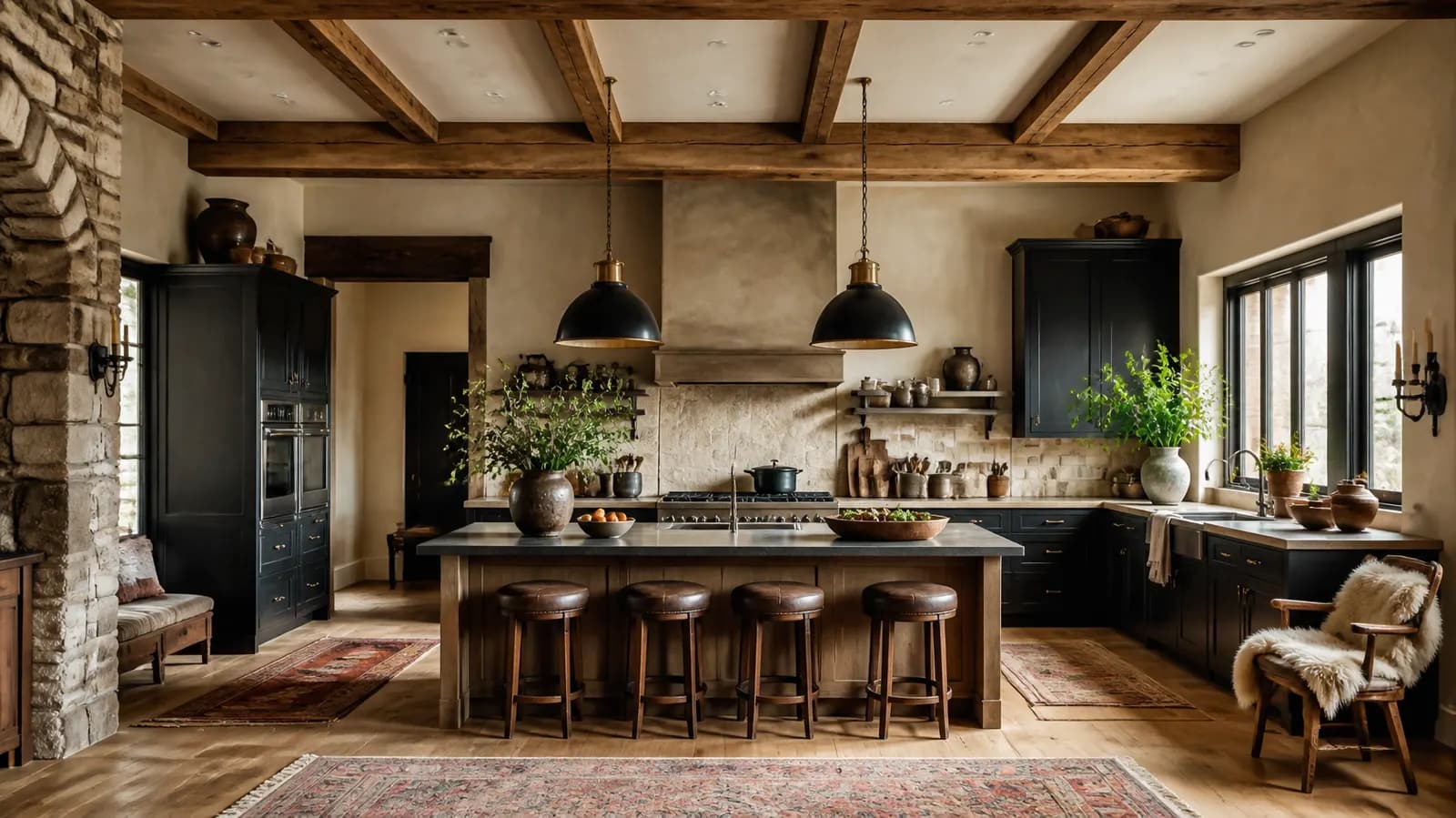
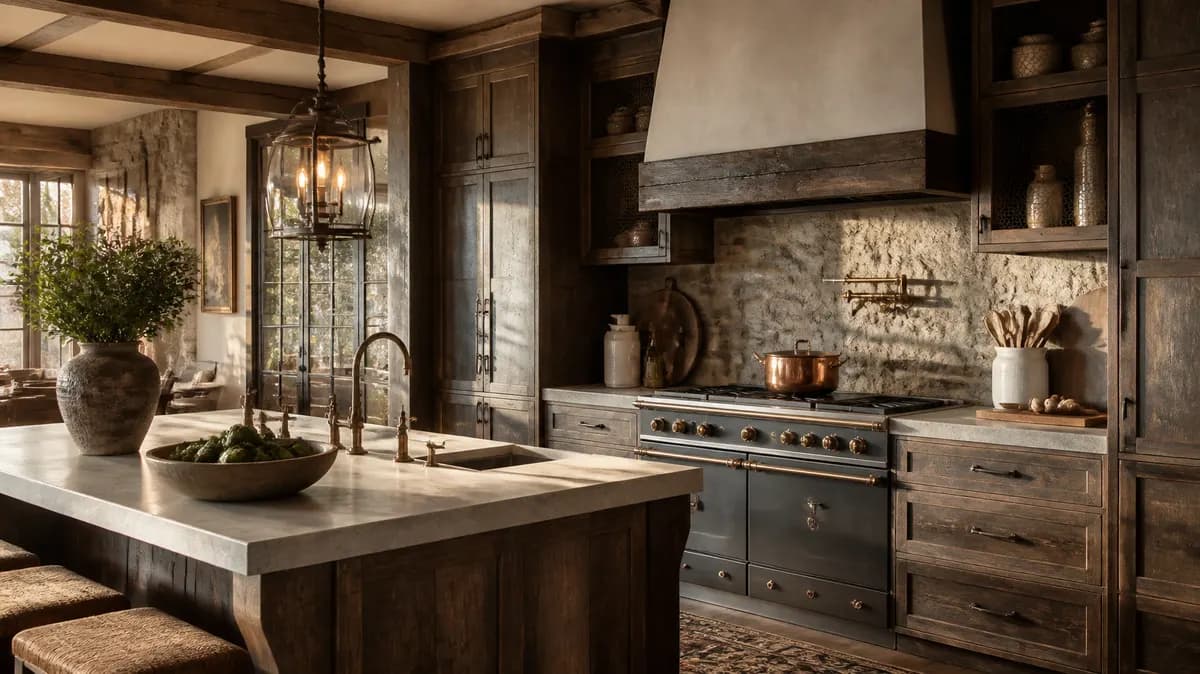
Rustic kitchen design celebrates nature in its rawest form. Born from mountain lodges, farmhouses, and country estates, it prioritizes organic materials, rugged textures, and an unpretentious, lived-in warmth. It is defined by what it embraces: the knot in the wood, the vein in the stone, the patina on the metal. The style strips away the polished veneer of modern design to reveal the honest, sturdy character of the materials underneath.
Three principles guide an authentic Rustic kitchen. First, materiality: surfaces are dominated by reclaimed wood, natural stone, and hand-forged metals like iron and copper. Second, substance: furniture is substantial and handcrafted, from a massive central island to sturdy, timber-framed cabinetry. Third, connection: the design often features large windows framing natural views, exposed ceiling beams, and a general feeling of bringing the outdoors in.
In 2026, the Rustic look is a sought-after antidote to the clinical minimalism of previous decades. It offers a sense of grounding and permanence. It pairs naturally with Industrial elements (exposed brick, metal hardware) and Modern Farmhouse aesthetics (apron-front sinks, shiplap), making it a versatile foundation for a home that feels both timeless and deeply personal.
12 Real Rustic Kitchen Examples
Each example below is a complete look — not a mood board. Click any image to see it full-size, then hit the generate button to try the same combination on your own room photo.
 1Example
 2Example
 3Example
 4Example
 5Example
 6Example
 7Example
 8Example
 9Example
 10Example
Key Design Elements
Colors
- Warm, creamy whites and soft beiges for walls
- Rich, natural wood tones from pine, oak, and hickory
- Deep, earthy accents like barn red, forest green, and navy
- Charcoal grey and black from slate, soapstone, and iron
- Warm metallic tones of copper, brass, and oiled bronze
Materials
- Reclaimed wood for beams, flooring, and cabinetry
- Natural stone: slate or flagstone for floors, fieldstone for walls
- Soapstone, slate, or butcher block for countertops
- Wrought iron for hardware, lighting, and pot racks
- Hammered copper for sinks, range hoods, and cookware
Furniture
- Solid wood cabinets, often in a simple Shaker or panelled style
- A large, freestanding island or a farmhouse table as the centerpiece
- Sturdy wooden bar stools, sometimes with leather seats
- Open shelving made from thick planks of reclaimed wood
- Freestanding hutches or pantry cupboards for storage
Lighting
- Wrought-iron chandeliers or wagon-wheel fixtures
- Lantern-style pendants over the island or sink
- Warm, ambient under-cabinet lighting to highlight countertops
- Metal-caged sconces on stone or wood-panelled walls
- Large windows with minimal dressing to maximize natural light
Textiles
- Durable, natural fabrics like linen, burlap, and canvas
- Woven jute or wool area rugs to add warmth to stone floors
- Simple plaid, check, or grain-sack patterns on towels and cushions
- Leather upholstery on bar stools or bench seating
- Stoneware and cast-iron cookware displayed as functional decor
Rustic Kitchen Color Palette
Six pigments do most of the work — start here, then add one accent of your own.
The foundational wall color. Softer and more inviting than pure white, it provides a warm backdrop for natural wood and stone.
The heart of the palette. The varied, warm brown of aged oak, pine, or hickory, used for cabinets, floors, and beams.
A deep, earthy red used as a powerful accent on an island base, a pantry door, or a freestanding cabinet.
A muted, natural green for cabinets or trim. It connects the kitchen to the outdoors and pairs beautifully with all wood tones.
A dark, matte charcoal that grounds the space. Found in slate floors, soapstone countertops, and wrought-iron details.
The primary metal tone. A deep, warm brown-black for faucets, cabinet hardware, and light fixtures, providing a handcrafted feel.
Must-Have Furniture & Fixtures
If you only invest in these seven, you will read as authentically Rustic.
Apron-Front Sink
A deep, single-basin 'farmhouse' sink, typically in white fireclay, stone, or hammered copper. It's both practical and a visual anchor.
Reclaimed Wood Cabinets
Cabinetry that showcases the history of its material, with visible grain, knots, and imperfections. Avoid a perfect, uniform finish.
Natural Stone Countertops
Honed (matte) surfaces are key. Soapstone, slate, or a dark, leathered granite provide a durable, earthy work surface.
Exposed Beams
Large, structural or decorative timber beams on the ceiling. They instantly add architectural character and a sense of history.
Wrought-Iron Pot Rack
A functional and decorative fixture, typically hung over an island, that displays cast-iron and copper cookware.
Large Farmhouse Table or Island
A substantial, central piece that acts as the heart of the kitchen for both food preparation and casual gatherings.
Statement Range Hood
A prominent hood that serves as a focal point, often crafted from reclaimed wood, hammered copper, or textured plaster.
Common Mistakes to Avoid
Too Polished — Using high-gloss finishes, shiny chrome, or perfectly uniform wood grain erodes the rugged, unrefined character of the style.
Becoming a Theme Park — Piling on too many country clichés like rooster motifs or 'Live, Laugh, Love' signs makes the space feel kitschy, not authentic.
Forgetting Texture — A Rustic kitchen relies on the interplay of rough wood, smooth stone, and hammered metal. A lack of textural variety makes it fall flat.
Inadequate Lighting — With its dark woods and stones, a Rustic kitchen can feel gloomy without a layered lighting plan. Combine a central chandelier, task pendants, and under-cabinet lights.
Mixing Too Many Wood Species — Stick to one or two complementary wood types (e.g., pine floors, oak cabinets). Too many competing grains create a chaotic, mismatched look.
Try Rustic Kitchen in Your Own Room
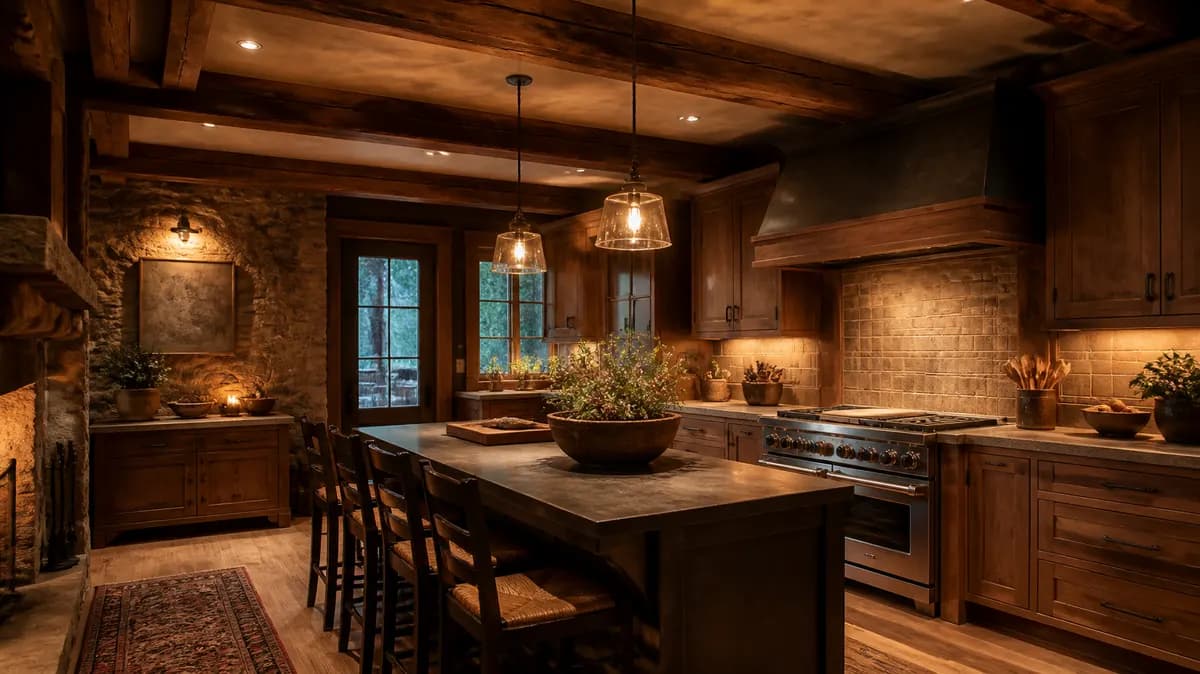
Upload a photo of your real kitchen. Get a photorealistic Rustic redesign in about 30 seconds. 4 free credits, no card.
Generate Your Rustic Kitchen FreeOther Rustic Rooms
Apply the same palette and principles to the rest of the home.


Other Kitchen Styles
Same room, different aesthetic — explore the rest of the kitchen style library.


Rustic Kitchen — Frequently Asked Questions
What colors define Rustic kitchen design?
Is Rustic the same as Farmhouse?
How do I make a Rustic kitchen feel modern?
What flooring is best for a Rustic kitchen?
What kind of cabinets should I use?
How do I keep a Rustic kitchen from feeling too dark?
How to Design a Rustic Kitchen
Five decisions, in this order. Skip any of them and the look will not land.
- 1
Establish the Foundation: Wood & Stone
Choose your primary wood (e.g., reclaimed oak, knotty pine) and stone (e.g., slate floor, fieldstone accent wall). These are the non-negotiable core materials that define the space. Commit to them for flooring, beams, and key features.
- 2
Select a Warm, Earthy Palette
Start with a warm cream or beige for the walls to provide a soft backdrop. Choose one or two deep accent colors, like a barn red for the island or a forest green for the lower cabinets. Keep the overall feel warm and grounded.
- 3
Choose Substantial Fixtures
Rustic design is about substance. Select a large farmhouse-style island, a deep apron-front sink, and a statement range hood in copper or wood. Cabinetry should feel sturdy and well-crafted, with simple, robust hardware.
- 4
Layer with Textured Metals
Integrate metals that have a sense of age and patina. Use oil-rubbed bronze or wrought iron for faucets, cabinet hardware, and light fixtures. A hammered copper sink or a blackened steel pot rack can serve as powerful focal points.
- 5
Add Lived-In Details
This is the final layer that brings the room to life. Use open shelving to display stoneware and cast-iron pans. Add warmth with woven jute rugs, simple linen curtains, and antique pieces like old cutting boards or ceramic crocks.
Keep Exploring
Tools and guides that pair with this style.