Rustic Bathroom Design Ideas: 12 Real Examples (2026 Guide)
Reclaimed-wood vanity, hammered copper basin, lime-plaster walls — the rustic bathroom turns a utility room into the cabin you wish you owned. We unpack what makes the look land, then show 12 photorealistic examples you can replicate.
- 12
- Real examples
- ~30s
- AI render time
- 4 free
- Credits, no card
What is Rustic Bathroom Design?
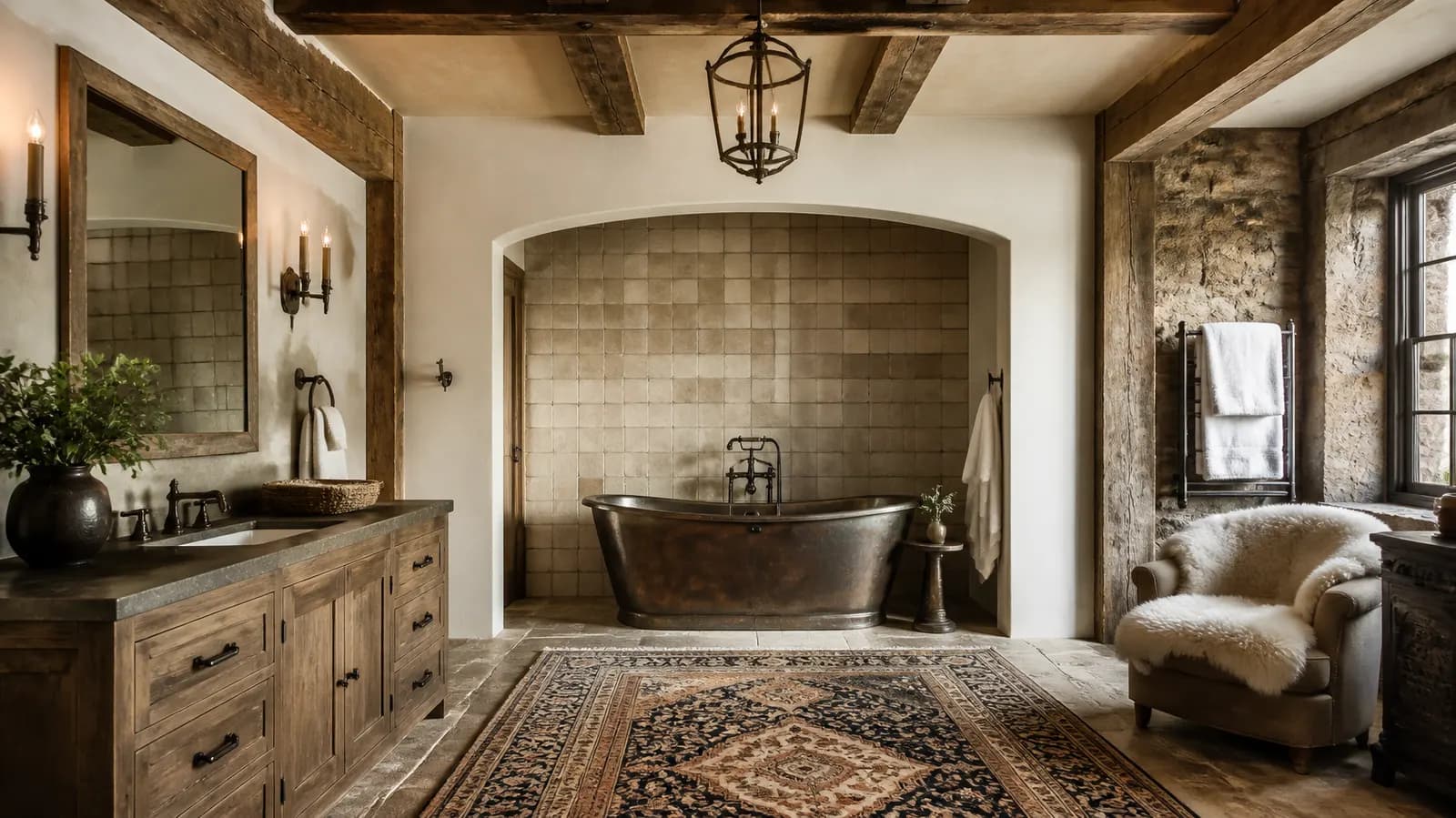
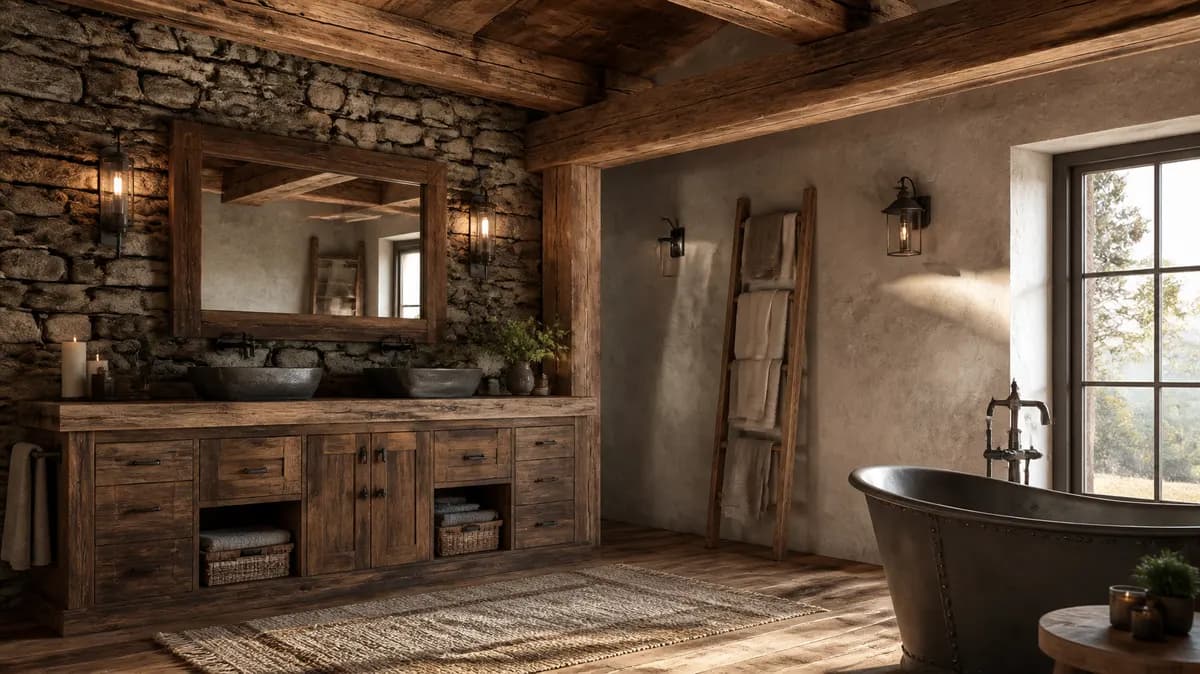
Rustic bathroom design takes the cabin and farmhouse aesthetic and re-engineers it for a wet, ventilated, code-bound space. The look is built on natural materials that age well around water — reclaimed wood treated against humidity, unglazed terracotta, lime plaster, hammered copper, wrought iron — and on a refusal to hide plumbing behind plastic. Pipes are often exposed in aged brass or matte black, and every fixture looks like something a village smith could have made.
Three principles guide an authentic rustic bathroom. First, honesty: nothing pretends to be something else, so no vinyl planks printed to look like wood, no faux beams. Second, warmth: warm cream walls, terracotta floor and a single deep wood vanity make a small wet room feel cocooning rather than clinical. Third, patina: a hammered-copper basin, an oxidised mirror frame and a worn linen towel signal that the bathroom has a history, even when the renovation is new.
In 2026 the rustic bathroom is the most popular antidote to the all-white, all-tile renovation. It works equally well as a tiny European powder room, a guesthouse half-bath or a primary suite built around a stone soaking tub. The look pairs naturally with Modern Farmhouse and Mediterranean, and an English country cottage version with deep-green wainscoting is having a moment on Pinterest. The throughline is always wood you can feel, light you can warm your hands by and metal that gets better with every shower.
12 Real Rustic Bathroom Examples
Each example below is a complete look — not a mood board. Click any image to see it full-size, then hit the generate button to try the same combination on your own room photo.
 1Example
 2Example
 3Example
 4Example
 5Example
 6Example
 7Example
 8Example
 9Example
 10Example
 11Example
 12Example
Key Design Elements
Colors
- Warm cream and limewashed plaster walls
- Reclaimed walnut and oak vanity tones
- Terracotta and burnt sienna floor tile
- Hammered copper and aged brass fixtures
- Stone grey and matte black iron accents
Materials
- Reclaimed barn wood for the vanity, sealed against moisture
- Terracotta or unglazed stone floor tile
- Lime plaster or tadelakt on the walls
- Hammered copper or stone for the basin
- Wrought iron and unlacquered brass for hardware
Furniture
- Reclaimed-wood vanity with exposed apron
- Freestanding stone or cast-iron soaking tub
- Open wooden shelving for towels and apothecary jars
- Weathered teak bench for the shower or beside the tub
- Antique iron towel ladder against the wall
Lighting
- Wrought-iron pendant over the vanity
- Aged-brass sconces flanking the mirror
- Layered warm-white sources at 2700 K
- Edison-bulb wall lights, never bare overhead
- Pillar candles for evening soaks
Textiles
- Stonewashed linen bath towels in oatmeal and sage
- Heavy waffle bath mat in cream or terracotta
- Hand-loomed runner on stone floor
- Linen café curtain in the window
- Wool wrap on a hook by the tub
Rustic Bathroom Color Palette
Six pigments do most of the work — start here, then add one accent of your own.
Limewashed walls and ceiling. Warmer than pure white, it picks up the gold tone of copper and aged wood without going yellow.
The dominant wood tone for the vanity and any wooden shelving. Medium-deep brown with visible grain — sealed against humidity but never glossed.
The floor tone. Unglazed clay tile or burnt-sienna stone that warms the room from the ground up and reads beautiful under bare feet.
Hammered copper basin, sometimes the bathtub. The hero metal — develops a deeper patina with every wash and ties the warm palette together.
Honed limestone slab, slate, raw linen. The grounding mid-tone that keeps the warmth from tipping orange.
Strict accent for hardware, pendant frames and towel ladders. Used sparingly as visual punctuation against the warmer palette.
Must-Have Furniture & Fixtures
If you only buy these seven, you will read as authentically rustic.
Reclaimed-wood vanity
Solid, single-slab top in oak or walnut with visible knots, on hand-forged iron legs or a heavy timber base. Sealed against humidity, never veneered.
Hammered copper vessel basin
Single basin sitting on top of the wood counter. Bronze or unlacquered brass tap mounted directly into the wall behind it.
Freestanding tub
Cast-iron clawfoot, hand-carved stone or rolled-rim copper. Centred against a feature wall with an exposed brass floor-mount faucet beside it.
Terracotta or stone floor
Unglazed terracotta tile, honed limestone or wide-plank reclaimed wood with heavy oil seal. Always with under-floor heating where possible.
Lime-plaster walls
Tadelakt or limewash on three walls plus shiplap or beadboard behind the vanity. Texture is what makes the lighting come alive.
Aged-brass sconces
Two matching wall sconces flanking the mirror in unlacquered brass or aged copper. Edison bulbs at 2700 K or warmer.
Linen and waffle textiles
Stonewashed linen towels in oatmeal or sage, a heavy waffle bath mat and a hand-loomed runner on the stone floor. Three weights minimum.
Common Mistakes to Avoid
Tiling the entire room — rustic bathrooms breathe through plaster walls. Tile only the wet zones (shower, splashback) and leave the rest in lime or limewash.
Using a polyurethane-sealed gloss wood vanity — high gloss kills the rustic read instantly. Use a hardwax oil or a true marine oil finish instead.
Chrome fixtures — chrome belongs to modern and minimalist. For rustic always go aged brass, unlacquered bronze or matte black wrought iron.
Forgetting humidity — reclaimed wood in a wet space without a fan or proper sealing rots fast. Spend on extraction and on hardwax-oiled timber that can take steam.
Cold downlights — a row of 4000 K LED pots in the ceiling kills the mood. Layer warm sconces, a pendant and a single candle for the evening soak.
Try Rustic Bathroom in Your Own Room
Upload a photo of your real bathroom. Get a photorealistic rustic redesign in about 30 seconds. 4 free credits, no card.
Generate Your Rustic Bathroom FreeOther Rustic Rooms
Apply the same palette and principles to the rest of the home.


Other Bathroom Styles
Same room, different aesthetic — explore the rest of the bathroom style library.


Rustic Bathroom — Frequently Asked Questions
What colors define rustic bathroom design?
Can you really use wood in a bathroom?
How do I make a small rustic bathroom feel bigger?
What flooring works best for a rustic bathroom?
How is rustic different from farmhouse in a bathroom?
Is rustic design good for a primary or guest bathroom?
How to Design a Rustic Bathroom
Five decisions, in this order. Skip any of them and the look will not land.
- 1
Choose the vanity wood and metal
Pick one wood (reclaimed oak, walnut or aged pine) and one metal (aged brass, unlacquered bronze or matte black iron). Repeat both on every visible fixture — taps, knobs, towel ladder, sconces. Two woods plus two metals is the most common amateur mistake; one of each reads instantly more deliberate.
- 2
Treat the walls — plaster, tadelakt or shiplap
Tile only the wet zones. Apply limewash or tadelakt on the dry walls or run whitewashed shiplap behind the vanity. The micro-texture on those walls is what makes the warm sconces glow in the evening — it is the single biggest mood lever in the room.
- 3
Pick the basin — copper, stone or porcelain
Hammered copper vessel for the highest impact, hand-carved stone for the calmest, deep porcelain butler basin for the most budget-friendly. Always sitting on top of the wood counter, never undermounted. Pair with a tall, exposed brass tap mounted into the wall behind so the line of water reads clean.
- 4
Layer warm lighting
One wrought-iron or aged-brass pendant over the centre of the room. Two matching sconces flanking the mirror, Edison bulbs at 2700 K. Optional candle wall sconce by the tub. Avoid any cool overhead light — if the developer left a row of 4000 K downlights, swap the bulbs the same day you swap the basin.
- 5
Style the vignettes — soap, linen, plant
Three small still lifes finish the room. On the vanity: a hand-thrown ceramic soap dish, a small brass clock, an apothecary jar of bath salts and a folded linen towel. On the open shelf: rolled towels, a stack of vintage books, a glass jar of dried lavender. By the window: one live plant — a sage sprig, a small olive branch or a potted herb. Without these vignettes the room reads like a showroom; with them it reads like a home.
Keep Exploring
Tools and guides that pair with this style.