Mid-Century Modern Kids' Room Ideas: 12 Real Examples (2026 Guide)
Warm woods, organic shapes, and playful yet sophisticated color. The look that defined post-war optimism is perfect for a child's space that feels both timeless and fun. We unpack what makes a kids' room feel authentically MCM, then show 12 photorealistic examples you can replicate.
- 12
- Real examples
- ~30s
- AI render time
- 4 free
- Credits, no card
What is Mid-Century Modern Kids' Room Design?
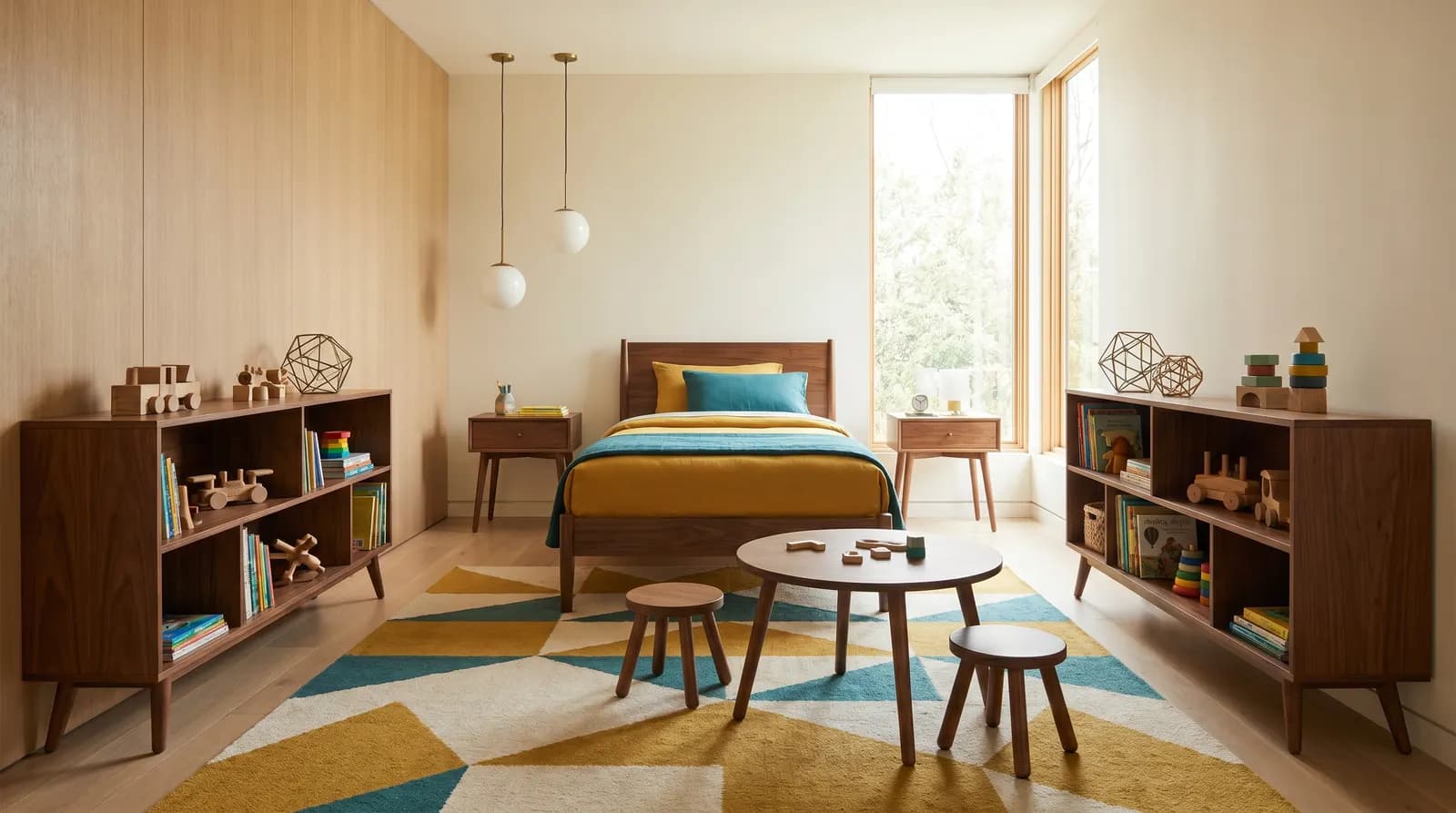
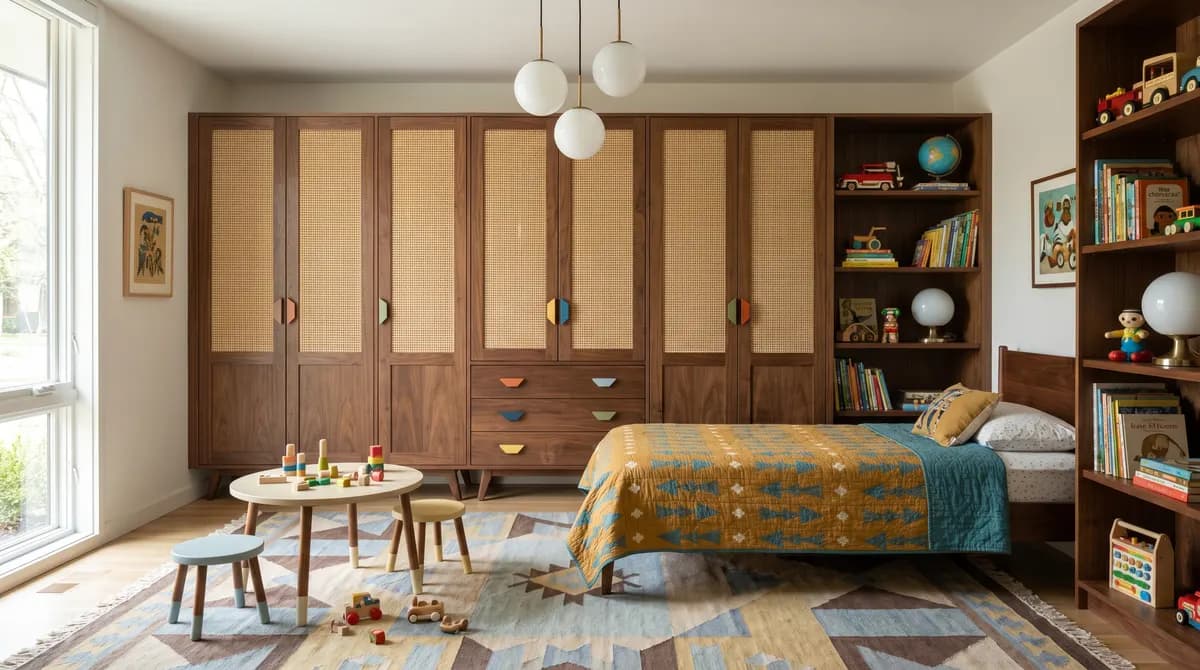
Mid-Century Modern (MCM) kids' room design applies the principles of the iconic 1945–1969 movement to a child's space. It is defined by clean lines, gentle organic curves, a love for natural materials like teak and walnut, and an honest expression of function. For a child's room, this translates to durable, beautifully crafted furniture with tapered legs, low-slung profiles, and a distinct lack of fussy ornamentation.
Three principles guide an authentic MCM kids' room. First, functionality: furniture is practical and scaled for use, like a low credenza for toy storage or a simple platform bed. Second, a connection to nature: warm wood tones are dominant, and large windows are often left minimally dressed. Third, a sense of playfulness: the era's optimistic spirit is captured through pops of saturated color (mustard, teal, orange) and geometric or abstract patterns in textiles and art.
In 2026, the style endures because it grows with the child. A classic Eames-style molded chair or a simple walnut dresser works just as well for a toddler as it does for a teenager. It avoids overtly 'childish' themes, instead creating a sophisticated yet warm backdrop for play. It pairs well with Bohemian and Scandinavian elements, but its signature use of dark woods, sculptural forms, and bold color accents makes it a distinct and timeless choice.
12 Real Mid-Century Modern Kids' Room Examples
Each example below is a complete look — not a mood board. Click any image to see it full-size, then hit the generate button to try the same combination on your own room photo.
 1Example
 2Example
 3Example
 4Example
 5Example
 6Example
 7Example
 8Example
 9Example
 10Example
 11Example
 12Example
Key Design Elements
Colors
- Warm white or light grey base for walls
- Deep, saturated accent colors: teal, burnt orange, mustard yellow
- Earthy tones like olive green and deep brown
- Small, sharp accents of black in lighting and frames
- Natural warm wood tones (walnut and teak)
Materials
- Walnut and teak — the signature woods of the era
- Bent plywood for sculptural chair forms
- Molded plastic for seating (in vibrant colors)
- Brass or bronze for drawer pulls and lamp bases
- Natural fibers like wool, felt, and linen
Furniture
- Low-profile platform beds and dressers with tapered legs
- Iconic chair shapes (e.g., Eames molded plastic, Jacobsen's Egg)
- Simple, open-faced bookshelves or wall-mounted units
- Credenzas and sideboards repurposed for toy and book storage
- Furniture with organic, curved edges for a softer look
Lighting
- Sputnik chandeliers or multi-arm ceiling fixtures
- Globe-shaped pendants, either single or in clusters
- Tripod floor lamps or arc lamps for reading nooks
- Ceramic or wood table lamps with simple drum shades
- Statement fixtures that act as functional sculpture
Textiles
- High-pile or shag area rugs in solid colors or simple geometrics
- Cushions and blankets with abstract or geometric patterns
- Wool, felt, and boucle fabrics for texture and warmth
- Simple linen or cotton curtains that don't obscure light
- Wall hangings or tapestries with graphic designs
Mid-Century Modern Kids' Room Color Palette
Six pigments form the foundation of the MCM look. Start with these, then layer in your child's favorite hues.
The perfect neutral backdrop that allows the wood tones and accent colors to stand out. Softer and more inviting than stark white.
The essential wood tone. Represents the rich, warm finish of walnut and teak furniture that defines the style.
An optimistic, energetic accent for a chair, a cushion, or a piece of art. It's playful without being childish.
A sophisticated, calming color for an accent wall or a statement piece of furniture. Pairs beautifully with warm woods.
A sunny, retro hue that brings a cheerful energy. Works well in textiles, rugs, and smaller decorative objects.
A grounding, earthy tone that connects the room to nature, a core principle of MCM design. Use it for bedding or a cozy rug.
Must-Have Furniture & Fixtures
If you only invest in these seven pieces, the room will feel authentically Mid-Century Modern.
A bed with tapered legs
Whether a crib or a platform bed, the legs should be slender, angled, and made of a warm wood like walnut or teak.
Low-slung credenza
The perfect multi-functional piece for storing toys, clothes, and books, while keeping the room's profile low and open.
Molded plastic chair
An Eames-style shell chair is the quintessential MCM piece. Choose a bright color like teal or orange for a playful touch.
Sputnik-style light fixture
This iconic, sculptural chandelier instantly sets the tone and acts as the room's centerpiece.
Geometric area rug
A rug with a simple geometric or abstract pattern grounds the space and adds a layer of texture and color.
Abstract mobile
A Calder-inspired mobile adds a touch of art and whimsy, engaging a child's imagination with its gentle movement.
Open-faced bookshelf
A simple bookshelf, often in walnut with staggered shelves, encourages reading by displaying books as objects of art.
Common Mistakes to Avoid
Creating a museum — The room should feel livable and playful, not like a showroom. Ensure there are soft textures and durable surfaces for play.
Using the wrong wood tones — Light oak or pine reads as Scandinavian or Farmhouse. Stick to the signature warm, darker tones of walnut and teak.
Overdoing the 'retro' kitsch — Avoid avocado green appliances or lava lamps. Focus on timeless shapes and quality materials, not a 70s TV set caricature.
Ignoring texture — A room with only wood and plastic feels cold. Add warmth and softness with shag rugs, wool blankets, and felt accessories.
Cluttering surfaces — MCM design celebrates clean lines. Use the ample storage in credenzas to keep surfaces clear of clutter, showcasing only a few select toys or books.
Try Mid-Century Modern in Your Own Kids' Room
Upload a photo of your real kids' room. Get a photorealistic Mid-Century Modern redesign in about 30 seconds. 4 free credits, no card.
Generate Your Mid-Century Modern Kids' Room FreeOther Mid-Century Modern Rooms
Apply the same palette and principles to the rest of the home.


Other Kids' Room Styles
Same room, different aesthetic — explore the rest of the kids' room style library.


Mid-Century Modern Kids' Room — Frequently Asked Questions
What are the key features of an MCM kids' room?
How do you make an MCM kids' room feel playful, not sterile?
Is Mid-Century Modern a safe style for children?
What kind of storage works best in an MCM kids' room?
How is MCM different from a 'Modern' kids' room?
Can I mix MCM with other styles in a kids' room?
How to Design a Mid-Century Modern Kids' Room
Five decisions, in this order. Get these right and the look will feel timeless.
- 1
Establish the wood tone
Choose walnut or teak as your primary wood and repeat it. The bed, the dresser, the bookshelf legs — consistency here is what creates the authentic MCM foundation. Avoid mixing in light woods like oak or pine.
- 2
Define your color palette
Start with a warm white or light grey on the walls. Then, choose two to three accent colors from the classic MCM palette: burnt orange, deep teal, mustard yellow, or olive green. Use these for an accent wall, a chair, or textiles.
- 3
Select furniture with iconic shapes
Look for the signatures: tapered legs, low profiles, and organic curves. A simple platform bed, a long credenza, and a molded plastic chair are the essential building blocks. Functionality is key; every piece should be useful.
- 4
Layer in texture and pattern
This step brings the warmth. Add a high-pile or shag rug to soften the floor. Introduce textiles—cushions, blankets—with simple geometric or abstract patterns. Materials like wool, felt, and boucle add tactile interest.
- 5
Install a statement light fixture
The final, transformative touch. A sculptural ceiling light, like a Sputnik chandelier or a globe pendant cluster, acts as the room's focal point and solidifies the Mid-Century Modern aesthetic. It's functional art.
Keep Exploring
Tools and guides that pair with this style.