Modern Kids' Room Design Ideas: 12 Real Examples (2026 Guide)
Clean lines, bold shapes, and playful sophistication — the look that balances childhood wonder with timeless design. We unpack what makes a kids' room feel truly Modern, then show 12 photorealistic examples you can replicate.
- 12
- Real examples
- ~30s
- AI render time
- 4 free
- Credits, no card
What is Modern Kids' Room Design?
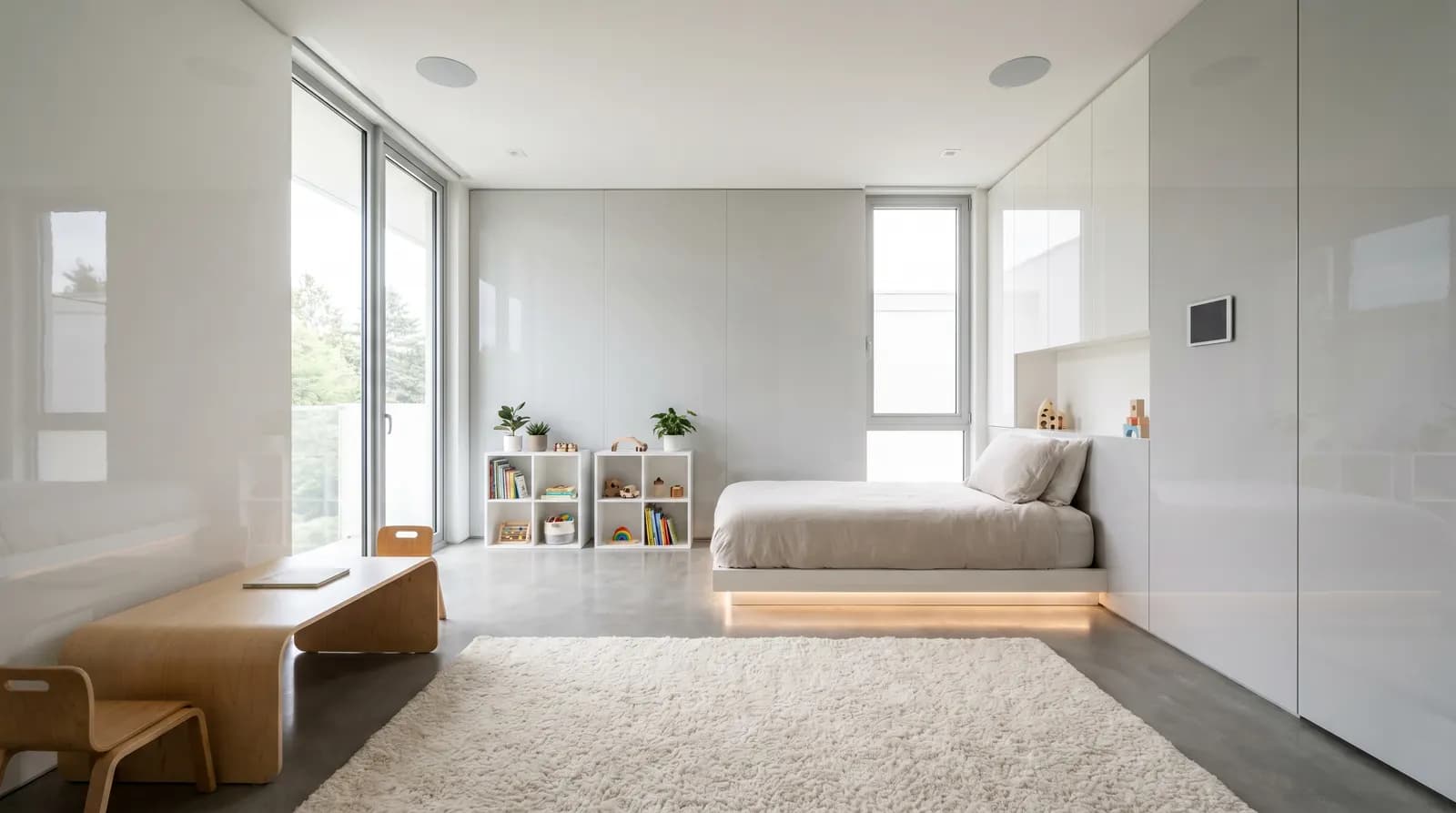
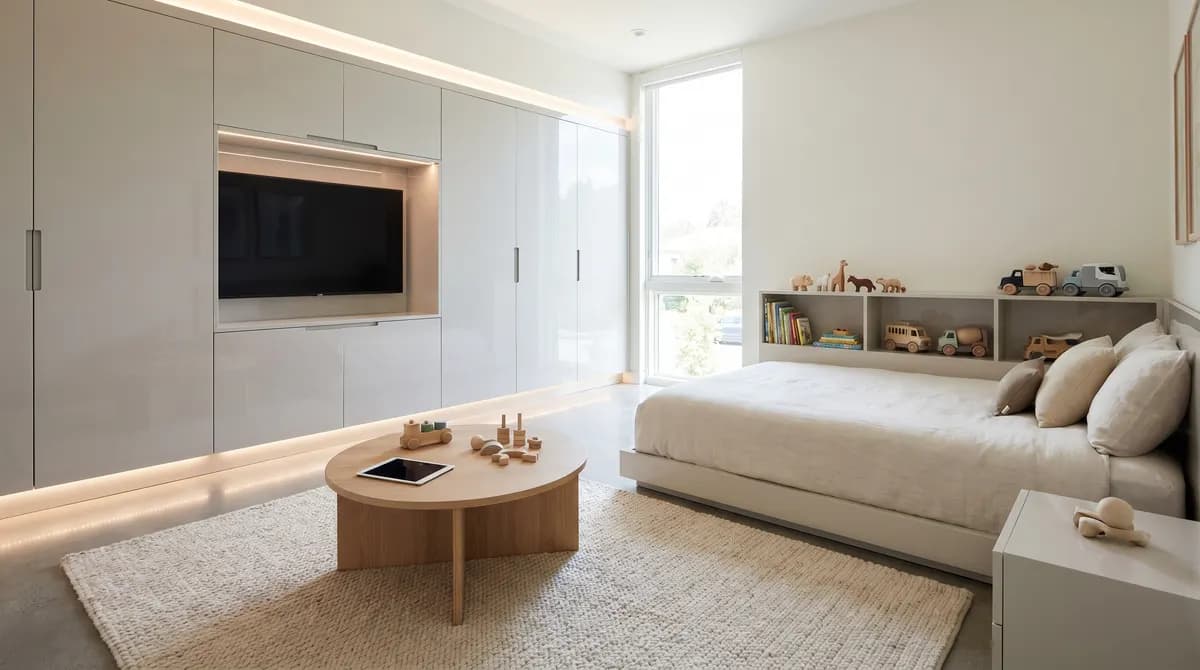
Modern kids' room design applies the principles of mid-20th century modernism — form follows function, clean lines, geometric shapes — to a space for play and growth. It strips away fussy themes and heavy ornamentation in favor of a clear, uncluttered aesthetic. The goal is not a sterile museum but a functional, beautiful backdrop for childhood that can evolve as the child does, from toddlerhood to their teen years.
Three principles define the Modern kids' room. First, longevity: furniture is chosen for its timeless form and ability to adapt, like a changing table that becomes a dresser. Second, functionality: storage is integrated and intelligent, with distinct zones for sleep, play, and study. Third, personality through curation: individuality is expressed not through clutter, but through bold graphic art, a statement rug, or a wall-sized geometric mural, creating a space that feels both personal and composed.
In 2026, the style is a clear favorite for parents seeking an alternative to disposable, character-themed decor. It's a look that feels intentional and design-led, photographing beautifully while standing up to the rigors of daily life. It pairs naturally with Scandinavian simplicity or the organic textures of Japandi, making it a versatile foundation for any contemporary family home.
12 Real Modern Kids' Room Examples
Each example below is a complete look — not a mood board. Click any image to see it full-size, then hit the generate button to try the same combination on your own room photo.
 1Example
 2Example
 3Example
 4Example
 5Example
 6Example
 7Example
 8Example
 9Example
 10Example
 11Example
 12Example
Key Design Elements
Colors
- A neutral base of soft white or light grey walls.
- Deep, saturated accent colors like navy blue or forest green.
- Warm, earthy tones like terracotta, mustard, and rust.
- Black or charcoal for graphic contrast on furniture legs or lighting.
- Natural light wood tones from maple, birch, or white oak.
Materials
- Light woods like maple and birch, often as plywood.
- Powder-coated metal for bed frames, lighting, and chair legs.
- Durable, low-pile wool for area rugs.
- Felt and canvas for soft storage bins and wall organizers.
- Acrylic or perspex for floating bookshelves and accessories.
Furniture
- Low-profile platform beds, often with integrated storage.
- Modular shelving systems that can be reconfigured over time.
- Simple, wall-mounted desks that save floor space.
- Iconic mid-century pieces in miniature (e.g., Panton or Eames chairs).
- Handleless, flat-panel wardrobes and dressers for a clean look.
Lighting
- A single, large geometric or spherical pendant light.
- Articulated wall sconces as task lighting for desks or beds.
- Simple, cylindrical track lighting for flexible illumination.
- Minimalist table lamps with sculptural bases for ambient light.
- Dimmable recessed ceiling lights for overall brightness.
Textiles
- A high-pile wool rug with a bold geometric or abstract pattern.
- Linen or organic cotton bedding in solid, muted colors.
- Textured wool or boucle throws and cushions.
- Felt storage bins for a soft, tactile contrast to wood and metal.
- Minimalist blackout roller blinds or simple linen curtains.
Modern Kids' Room Color Palette
Six pigments do most of the work — start here, then add one accent of your own.
A clean, gallery-like off-white for walls that makes accent colors and wood tones pop. The perfect neutral canvas.
A warm, light grey that adds depth without feeling cold. Use it on an accent wall or for larger furniture pieces.
A sophisticated, saturated navy blue. Ideal for a feature wall, a rug, or bedding to ground the space.
A warm, earthy terracotta that feels both playful and mature. Use it for textiles, planters, or a painted arch.
A calm, grounding green that connects the room to nature. Works beautifully on cabinetry or as a wall color.
A confident mustard yellow accent. A single chair, cushion, or piece of art in this color adds a joyful, energetic spark.
Must-Have Furniture & Fixtures
If you only invest in these seven pieces, the room will read as authentically Modern.
A Low Platform Bed
Choose a simple frame in light wood or metal. Models with built-in drawers underneath are a functional bonus.
Modular Shelving
Systems like Vitsoe or String (or their equivalents) can be adapted from toy storage to a teen's library.
A Statement Rug
A large, high-quality wool rug with a bold geometric or abstract design anchors the room and defines the play area.
An Iconic Chair
A child-sized version of a design classic, like a Panton S-Chair or an Eames Molded Plastic Chair, adds instant design credibility.
A Geometric Pendant Light
A single, sculptural light fixture acts as the room's centerpiece. Think spheres, articulating arms, or abstract shapes.
Integrated Storage
Floor-to-ceiling, handleless closets with flat-panel doors conceal clutter and maintain clean lines.
A Wall-Mounted Desk
A floating desk in birch plywood or a simple laminate creates a dedicated homework zone without visual bulk.
Common Mistakes to Avoid
Going too thematic — a room full of cartoon characters or a single theme dates quickly. Instead, nod to interests with art and objects.
Buying 'kids' furniture' — cheap, undersized furniture won't last. Invest in quality, full-sized pieces that a child can grow into.
Ignoring texture — a room with only flat, smooth surfaces feels sterile. Add warmth with wool rugs, linen bedding, and felt bins.
Using only bright primary colors — this can feel chaotic and unsophisticated. Use a mature palette with 1-2 bright pops.
Forgetting display space — kids need to see their creations. Use picture ledges or cork boards to display art, preventing clutter.
Try Modern Kids' Room in Your Own Room
Upload a photo of your real kids' room. Get a photorealistic Modern redesign in about 30 seconds. 4 free credits, no card.
Generate Your Modern Kids' Room FreeOther Modern Rooms
Apply the same palette and principles to the rest of the home.


Other Kids' Room Styles
Same room, different aesthetic — explore the rest of the kids' room style library.


Modern Kids' Room — Frequently Asked Questions
What makes a kids' room 'Modern'?
How can I add personality to a Modern room without it getting cluttered?
What's the best furniture for a Modern kids' room?
What are good colors for a Modern kids' room?
How is Modern different from Scandinavian for a kids' room?
Is Modern design too 'cold' or sterile for a child's room?
How to Design a Modern Kids' Room
Five decisions, in this order. Skip any of them and the look will not land.
- 1
Establish a Grown-Up Color Palette
Choose a neutral base (soft white, light grey) and two or three sophisticated accent colors (navy, terracotta, sage). This creates a timeless foundation that won't feel dated in a few years. Apply color with intent on a feature wall or through textiles.
- 2
Choose 'Forever Furniture'
Select high-quality, simply designed pieces that can adapt as your child grows. A low platform bed, a modular shelving unit, and a classic chair are investments that will outlast trends and changing needs.
- 3
Zone the Space
Use furniture and rugs to clearly define areas for sleep, play, and work. A large rug can anchor the play zone, a wall-mounted desk creates a compact study nook, and a cozy chair establishes a reading corner. This brings order to a multi-purpose room.
- 4
Layer with Texture and Pattern
This is the step that prevents the room from feeling cold. Add a high-pile wool rug, linen bedding, a chunky knit throw, and felt bins. Choose one bold, graphic pattern for the rug or a mural to act as a focal point.
- 5
Curate and Contain
Modern design is about editing. Use smart, closed storage to hide the majority of toys and clutter. Then, use open shelving or picture ledges to display a curated selection of beautiful books, wooden toys, and the child's own artwork.
Keep Exploring
Tools and guides that pair with this style.