Traditional Bathroom Design Ideas: 12 Real Examples (2026 Guide)
Clawfoot tub, panelled walls, polished nickel fixtures — the traditional bathroom is the look that solved the bathroom problem in 1890 and has been quietly winning ever since. We unpack the rules, then show 12 photorealistic examples.
- 12
- Real examples
- ~30s
- AI render time
- 4 free
- Credits, no card
What is Traditional Bathroom Design?
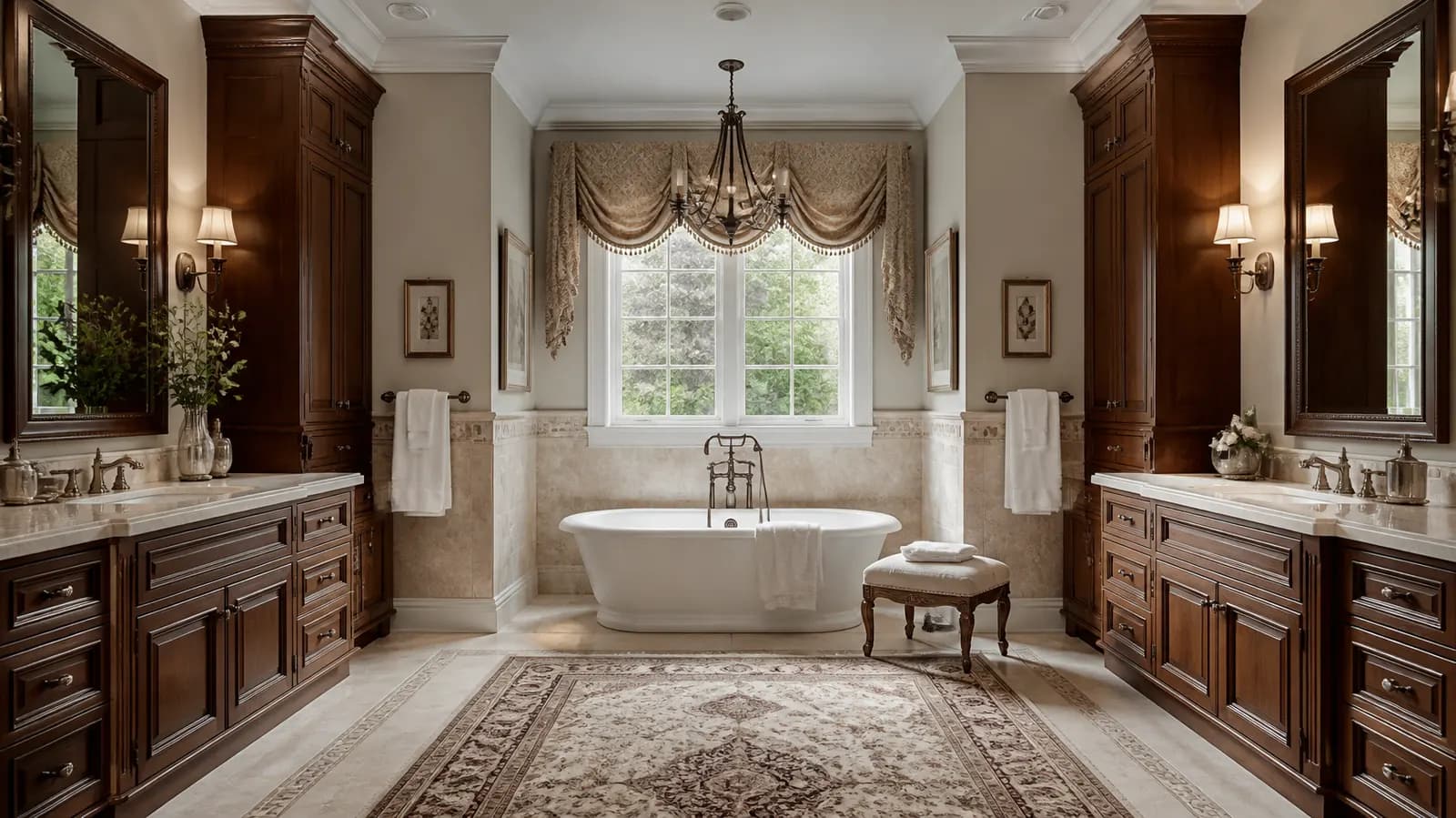
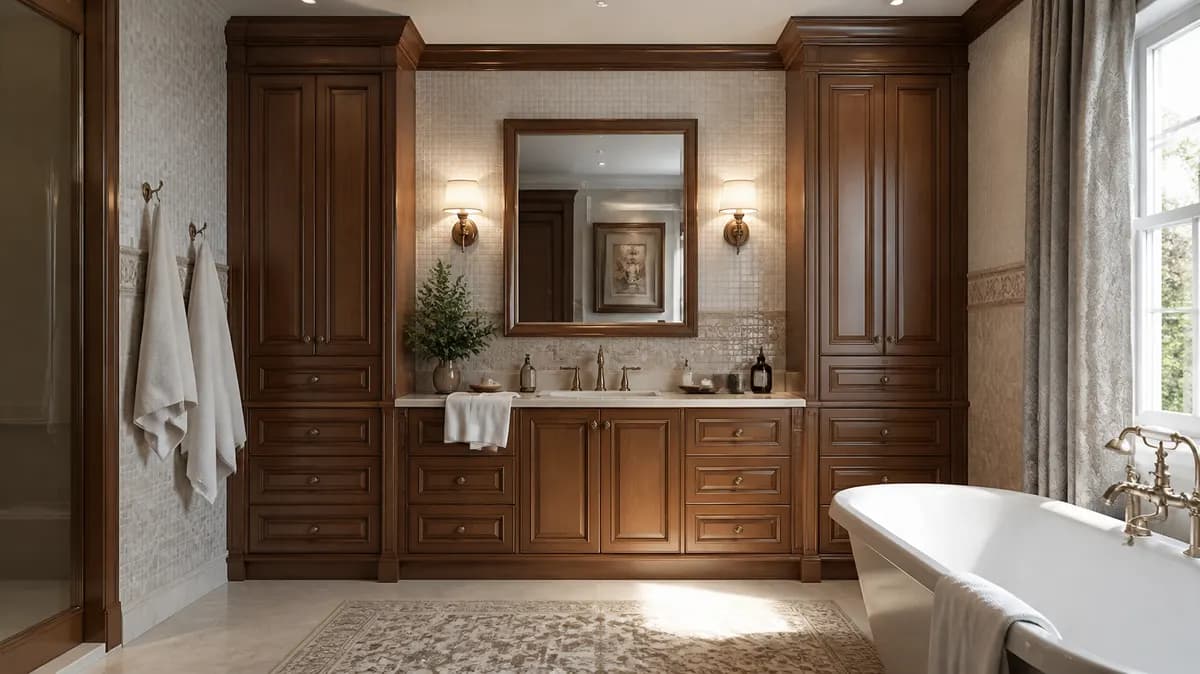
Traditional bathroom design is the look that emerged in the late Victorian and Edwardian eras when plumbing first moved indoors and the smartest houses had to make peace with it. The aesthetic blended classical proportion with new sanitary materials — white marble or porcelain tile up to waist height, painted plaster above, panelled wainscoting around the tub, a heavy cast-iron bath on lion's-paw feet and polished nickel or chrome fixtures that signalled modernity in 1895. A hundred and thirty years later that same vocabulary still reads as the most timeless take on the bathroom problem.
Three principles guide an authentic traditional bathroom. First, classical proportion: tall ceilings, panelled walls, properly framed mirrors, drapery on the windows rather than bare blinds. Second, period materials: marble or honed-stone counters, hex or subway tile in white, beadboard wainscoting, cast-iron bath, porcelain vanity sinks. Third, a disciplined palette of cream, soft navy or sage, polished nickel and dark hardwood — used in the same proportions across every visible surface.
In 2026 traditional bathroom design is having a quiet renaissance against the all-grey-tile renovation. It pairs naturally with English country, Modern Farmhouse and (when softened) with transitional. The throughline is always a clawfoot or pedestal bathtub, panelled walls or beadboard, marble or honed stone underfoot and polished nickel that ages gracefully rather than the chrome that goes pitted in a year.
12 Real Traditional Bathroom Examples
Each example below is a complete look — not a mood board. Click any image to see it full-size, then hit the generate button to try the same combination on your own room photo.
 1Example
 2Example
 3Example
 4Example
 5Example
 6Example
 7Example
 8Example
 9Example
 10Example
 11Example
 12Example
Key Design Elements
Colors
- Antique cream and soft white walls
- Honed Carrara and honed white marble
- Deep navy or sage on wainscoting and vanity
- Burgundy and sage on linen and porcelain accents
- Polished nickel and antiqued bronze fixtures
Materials
- Honed Carrara or Calacatta marble on floor and counters
- White subway, hex or mosaic tile
- Painted beadboard or panelled wainscoting
- Cast iron or vitreous porcelain bath
- Polished nickel and unlacquered brass fixtures
Furniture
- Cast-iron clawfoot or pedestal tub
- Furniture-style mahogany or painted vanity
- Polished-nickel exposed shower fittings
- Wood etagere or built-in linen press
- Cane- or rush-seat slipper chair in a corner
Lighting
- Pair of polished-nickel sconces beside the mirror
- Period-style pendant or small crystal chandelier
- Picture light over a single framed botanical
- Layered warm-white sources at 2700 K
- Pillar candle for evening bath
Textiles
- Cream linen Roman shade or simple café curtain
- Plush waffle bath mat in cream
- Linen bath towels with stitched borders
- Hand-loomed runner on marble floor
- Linen-shade lamp diffusers
Traditional Bathroom Color Palette
Six pigments do most of the work — start here, then add one accent of your own.
The base white for walls, ceilings and wainscoting. Warmer than pure white, it lets polished nickel and brass read at their richest.
Honed Carrara or Calacatta on floor, counter and shower. The dominant cool note that keeps the room reading hygienic and bright.
The hero accent — used on the vanity or full panelling. Reads richer in evening sconce light and grounds the otherwise pale palette.
The warm pop — a single small wool runner, a porcelain dish, the spine of a stacked book by the tub. Used sparingly to add period warmth.
The hero metal — taps, towel bar, hardware, exposed shower. Cooler than brass, ages with a soft patina rather than going dull.
The wood accent — vanity carcase, mirror frame, etagere. Used in small to medium doses, never as cladding on the walls.
Must-Have Furniture & Fixtures
If you only buy these seven, you will read as authentically traditional.
Clawfoot or pedestal tub
Cast-iron bath on lion's-paw or ball-and-claw feet, with a polished-nickel exposed bath-shower mixer mounted at one end. Centred against the longest wall.
Furniture-style vanity
Painted in navy or sage, or mahogany with raised-panel doors, on bun feet rather than a fixed plinth. Honed-marble top with under-mounted porcelain sinks.
Marble or hex-tile floor
Honed Carrara hex tile with a small black mosaic border, or a 600 mm marble slab. Always with underfloor heating where possible.
Beadboard or panel wainscoting
Full-height panelling on at least one wall — behind the vanity or around the tub — painted in the wall colour or two shades darker.
Polished-nickel fixtures
Lever taps with porcelain inserts, matching towel bar, robe hook, toilet-roll holder and shower set. Pair of wall sconces beside the mirror.
Framed period mirror
Arched or rectangular wood-framed mirror, sized to match the vanity. Hung at eye height with a small picture light or paired with two sconces.
Linen textiles and rug
Cream linen Roman shade, plush waffle bath mat, hand-loomed runner on the marble. Three weights minimum — the room must read soft, not clinical.
Common Mistakes to Avoid
Using black industrial fittings — matte black plumbing reads modern, not traditional. Stay in polished nickel, unlacquered brass or antiqued bronze.
All-marble everything — when every wall, counter and floor is marble, the room reads like a hotel lobby. Use marble on floor and counter, paint and beadboard on walls.
Forgetting the wainscoting — flat painted drywall cannot carry the traditional read. Beadboard or raised panelling on at least one wall is the cheapest upgrade.
Cool downlights — a row of 4000 K LED pots in the ceiling kills the entire mood. Use a pair of warm sconces, one warm overhead and a candle for the evening soak.
Plastic shower screens — frameless tempered-glass screens are acceptable but plastic curtains break the look immediately. Use a period-style nickel rod with a heavy cotton liner if you must.
Try Traditional Bathroom in Your Own Room
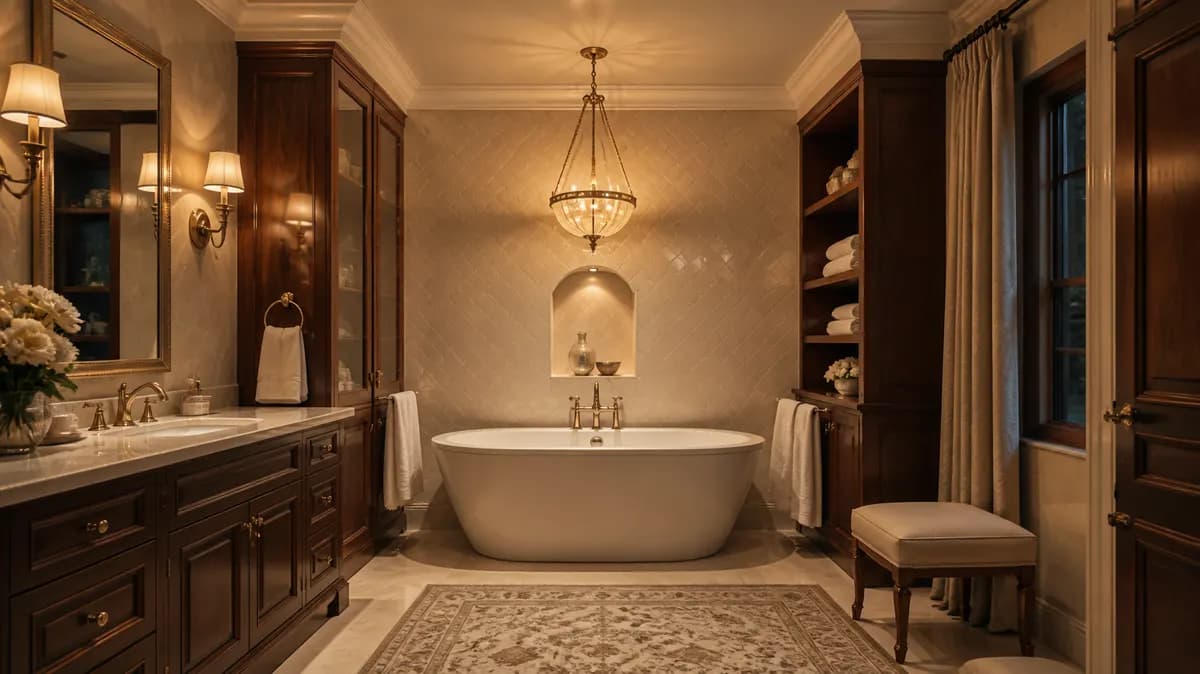
Upload a photo of your real bathroom. Get a photorealistic traditional redesign in about 30 seconds. 4 free credits, no card.
Generate Your Traditional Bathroom FreeOther Traditional Rooms
Apply the same palette and principles to the rest of the home.


Other Bathroom Styles
Same room, different aesthetic — explore the rest of the bathroom style library.


Traditional Bathroom — Frequently Asked Questions
What colors define traditional bathroom design?
Is a clawfoot bathtub practical in a real home?
Should bathroom fixtures be polished nickel or chrome?
What flooring works best for a traditional bathroom?
How is traditional different from transitional in a bathroom?
Is traditional design good for a small bathroom or powder room?
How to Design a Traditional Bathroom
Five decisions, in this order. Skip any of them and the look will not land.
- 1
Pick the bath — clawfoot or pedestal
Cast-iron clawfoot tub on lion's-paw feet, centred against the longest wall, with polished-nickel exposed plumbing. If a clawfoot is impractical (weight, drainage), a deep porcelain pedestal-style drop-in bath in a panelled surround is the second choice. Either way, the bath is the visual anchor of the room.
- 2
Specify marble or hex tile underfoot
Honed Carrara hex tile with a small black mosaic border, large-format honed marble slab or wide-plank reclaimed hardwood. Always honed, never high-gloss polished — gloss reads contemporary and is dangerously slippery wet. Always with underfloor heating where stone is used.
- 3
Wrap the walls — beadboard, panel, paint
Full-height beadboard or raised-panel wainscoting on at least one wall, painted in the wall colour or two shades darker. Tile only the wet zones (shower and bath splashback). Plaster and painted above the wainscoting on the remaining walls. This is the single biggest architectural lever in the room.
- 4
Choose the metal and stick to it
Polished nickel for the entire room — taps, shower set, towel bars, robe hooks, toilet-roll holder, mirror frame and sconce bodies. Cross-handle taps with porcelain inserts read most period-correct. Pair of sconces flanks the mirror, period-style pendant or small chandelier overhead, all bulbs at 2700 K on a dimmer.
- 5
Style the soft layers — linen, mirror, art, plant
Cream linen Roman shade on the window. Plush waffle bath mat and matching linen towels. One framed botanical or small oil portrait. A silver tray on the vanity with a glass jar of bath salts and a porcelain hand-soap dish. One small orchid or ivy on the windowsill — the only thing in the room that is obviously alive.
Keep Exploring
Tools and guides that pair with this style.