Traditional Dining Room Design Ideas: 12 Real Examples (2026 Guide)
Rich mahogany, intricate millwork, and timeless elegance — the look rooted in 18th-century European decor that defines formal dining. We unpack what makes a dining room feel truly Traditional, then show 12 photorealistic examples you can replicate.
- 12
- Real examples
- ~30s
- AI render time
- 4 free
- Credits, no card
What is Traditional Dining Room Design?
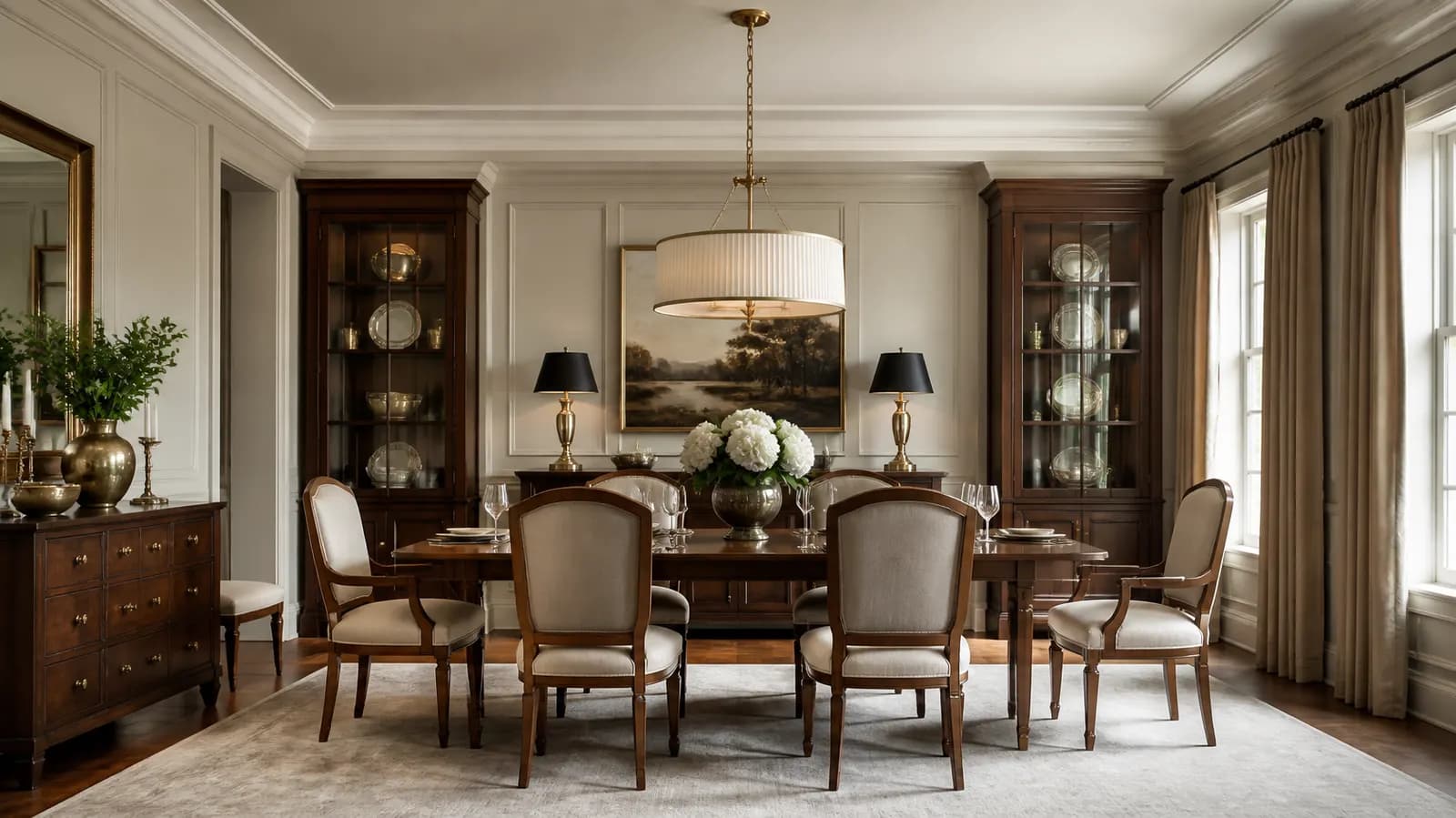
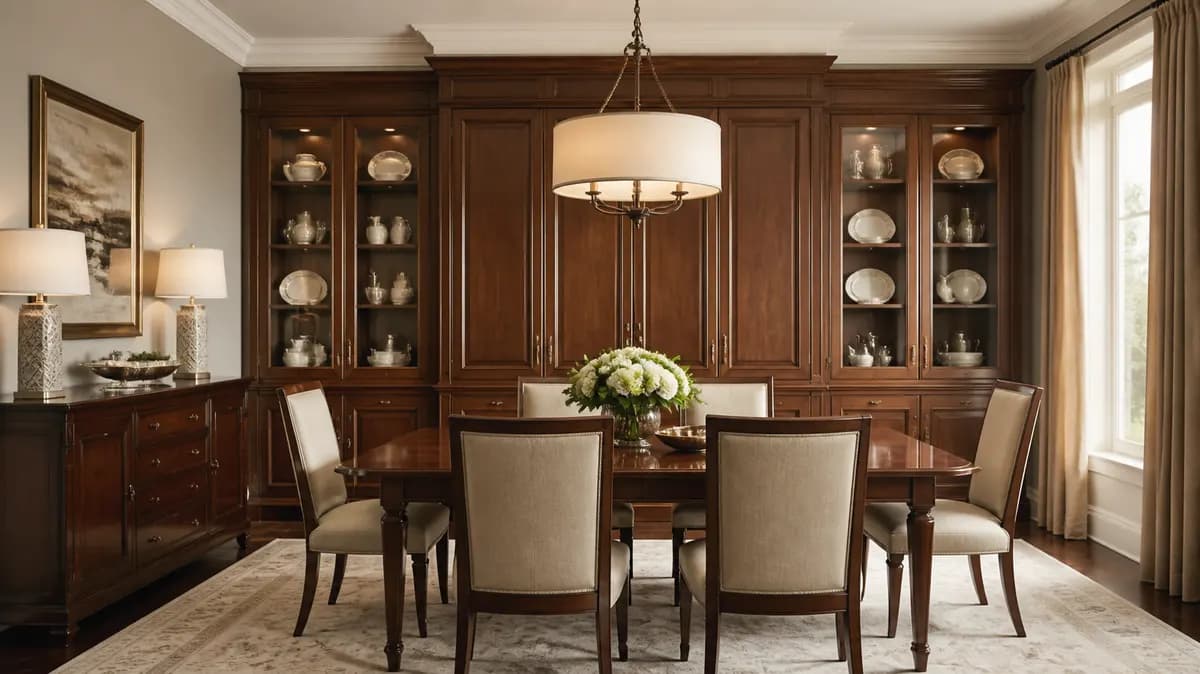
Traditional dining room design draws its principles from 18th and 19th-century European decor, particularly Neoclassical, Regency, and Victorian styles. It is a language of order, symmetry, and enduring elegance, defined by craftsmanship rather than fleeting trends. Key features include rich, dark woods like mahogany and walnut, ornate details such as carved furniture legs and intricate mouldings, and a formal, centered layout that emphasizes sophistication and occasion.
Three principles guide an authentic Traditional dining room. First, formality and symmetry: the dining table is the undisputed center, flanked by a matching set of chairs, with a sideboard or buffet centered on the main wall. Second, layers of texture and material: think polished wood, crystal, silk, velvet, and brass, all working in harmony. Third, a sense of permanence and history, conveyed through antique or heirloom-quality pieces, classic art, and curated collections of china and silver.
In 2026, the style is experiencing a revival as an antidote to years of stark minimalism. The new Traditionalism, sometimes called 'New Classic', might feature a slightly lighter palette or incorporate transitional lighting to feel more current. It pairs well with Grandmillennial and Classic Revival aesthetics, offering a foundation of timeless structure that can be personalized with contemporary fabrics or art, ensuring it feels collected and personal, not like a period-piece museum.
12 Real Traditional Dining Room Examples
Each example below is a complete look — not a mood board. Click any image to see it full-size, then hit the generate button to try the same combination on your own room photo.
 1Example
 2Example
 3Example
 4Example
 5Example
 6Example
 7Example
 8Example
 9Example
 10Example
 11Example
 12Example
Key Design Elements
Colors
- Deep jewel tones like burgundy, navy, and forest green for walls.
- Creamy, warm whites for trim, wainscoting, and ceilings.
- Rich wood tones from dark mahogany, walnut, and cherry.
- Polished brass or gold for hardware, lighting, and mirror frames.
- Soft, muted tones from upholstery and rugs to balance the deep colors.
Materials
- Dark, polished woods: mahogany, walnut, cherry are the cornerstones.
- Crystal for chandeliers and stemware.
- Polished brass for hardware, sconces, and decorative accents.
- Fine fabrics like silk, velvet, damask, and brocade for curtains and upholstery.
- Marble or polished stone for sideboard tops or fireplace surrounds.
Furniture
- A substantial wood dining table, often a double-pedestal or four-legged style.
- Classic chair styles: Queen Anne, Chippendale, or Hepplewhite, often with upholstered seats.
- A sideboard or buffet for serving and storage, often with ornate carving.
- A glass-fronted china cabinet or breakfront to display porcelain and crystal.
- Upholstered host and hostess chairs at the heads of the table for added comfort.
Lighting
- A crystal or brass chandelier as the central focal point over the table.
- Symmetrical pairs of wall sconces on either side of a mirror or doorway.
- Buffet lamps with fabric shades to provide soft accent lighting.
- Dimmer switches on all light sources to control mood and ambiance.
- Taper candles in silver or brass candelabras for special occasions.
Textiles
- Floor-to-ceiling curtains in heavy fabrics like silk, velvet, or brocade.
- A large, hand-knotted Oriental or Persian rug under the table and chairs.
- Upholstery in classic patterns like damask, stripes, or florals.
- A crisp linen or damask tablecloth for formal dinners.
- High-quality linen or cotton napkins, sometimes monogrammed.
Traditional Dining Room Color Palette
Six pigments form the foundation of this timeless aesthetic. Use them to build a layered, sophisticated space.
A warm, creamy white for all millwork—wainscoting, crown molding, and trim. It provides a crisp yet soft contrast to richer wall colors.
A deep, commanding burgundy or crimson. Used on walls, it creates a dramatic, historic, and appetite-stimulating atmosphere.
A dark, forest green that evokes the libraries and studies of classic estates. A sophisticated and calming choice for walls or upholstery.
The foundational color of the furniture. This deep, warm brown provides the visual weight and sense of permanence central to the style.
The primary accent. A polished, warm gold tone for the chandelier, mirror frames, hardware, and curtain rods, adding a layer of luxury.
A timeless, deep blue that serves as a stately alternative to red or green, pairing beautifully with both brass accents and dark woods.
Must-Have Furniture & Fixtures
Acquire these seven pieces, and you will capture the essence of a true Traditional dining room.
Dark Wood Dining Table
The centerpiece. A substantial pedestal or leg-style table in mahogany, walnut, or cherry, capable of seating at least six.
Crystal Chandelier
The room's jewelry. A multi-tiered fixture with crystal drops that refract light, hung directly over the center of the dining table.
Sideboard or Buffet
An elegant, functional piece for serving food and storing linens and silverware. Look for carved details and quality hardware.
Classic Dining Chairs
A set of matching chairs in a recognized style like Chippendale or Queen Anne, with details like cabriole legs or splat backs.
Detailed Millwork
Non-negotiable architectural details like crown molding, chair rails, and wainscoting that give the room structure and a finished feel.
Ornate Area Rug
A large Persian or Oriental rug that is sized correctly for the room—it should extend at least 60cm (24in) beyond the table on all sides.
Large Gilt-Framed Mirror
Hung above the sideboard, a large mirror with an ornate gold or brass frame reflects the chandelier's light and makes the room feel larger.
Common Mistakes to Avoid
Incorrect Proportions — Using furniture that is too small for a grand room, or too large for a modest one. The scale of the table, chairs, and chandelier must be in harmony.
Creating a Museum — A room that is too stiff, formal, and devoid of personal touches feels unwelcoming. Add family photos or collected objects to make it yours.
Clashing Lighting — Installing modern, recessed, or minimalist lighting fixtures. Traditional rooms require layered, warm light from chandeliers, sconces, and lamps.
Forgetting Window Treatments — Bare windows look stark and unfinished. Heavy, high-quality curtains are essential for adding softness, color, and a sense of luxury.
The Undersized Rug — A rug that is too small makes the room feel cramped. The back legs of the chairs should remain on the rug even when pulled out from the table.
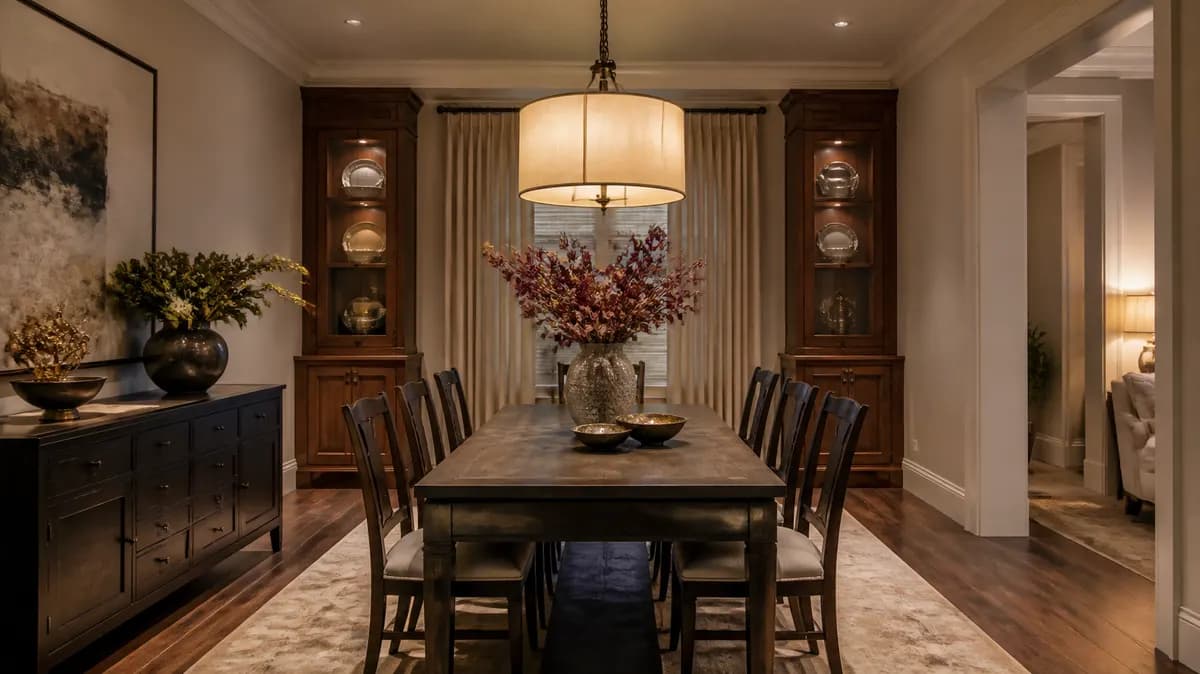
Try Traditional Dining Room in Your Own Room
Upload a photo of your real dining room. Get a photorealistic Traditional redesign in about 30 seconds. 4 free credits, no card.
Generate Your Traditional Dining Room FreeOther Traditional Rooms
Apply the same principles of elegance and order to the rest of the home.


Other Dining Room Styles
Same room, different aesthetic — explore the rest of the dining room style library.


Traditional Dining Room — Frequently Asked Questions
What are the defining features of a Traditional dining room?
What kind of lighting is best for a Traditional dining room?
How can I make a Traditional dining room feel current, not dated?
What are the best woods for Traditional furniture?
How is Traditional design different from Farmhouse?
What size rug do I need for my dining room?
How to Design a Traditional Dining Room
Five decisions in the proper sequence are key to achieving a timeless, elegant look.
- 1
Establish the Foundation: Millwork & Color
Begin with the room's architecture. Install crown molding, a chair rail, and wainscoting. Choose a classic color palette—a deep hue for the walls and a creamy white for the trim—to create a sophisticated canvas.
- 2
Select the Anchors: Table & Rug
Choose your dining table and area rug together. The table is the room's functional center, and the rug defines the dining space. Ensure the rug is large enough to comfortably contain the table and all chairs when pulled out.
- 3
Layer in Seating & Storage
Select a set of classic dining chairs (e.g., Chippendale, Queen Anne) that complement the table. Then, add a sideboard or buffet on the longest wall for storage and a serving surface. Ensure all wood tones are harmonious.
- 4
Add Drama: Lighting & Window Treatments
Hang a statement crystal chandelier directly above the center of the table. Frame the windows with floor-length, high-quality curtains. Add wall sconces or buffet lamps for layered, ambient light.
- 5
Personalize with Art & Accessories
This is the final layer. Hang a large, gilt-framed mirror or a piece of classic art above the sideboard. Accessorize with silver candelabras, fine china in a display cabinet, and a floral centerpiece to bring the room to life.
Keep Exploring
Tools and guides that pair with this style.