Traditional Kitchen Design Ideas: 12 Real Examples (2026 Guide)
Rich woods, ornate details, and timeless elegance — the look that draws from centuries of European and American design. We unpack what makes a kitchen feel truly Traditional, then show 12 photorealistic examples you can replicate.
- 12
- Real examples
- ~30s
- AI render time
- 4 free
- Credits, no card
What is Traditional Kitchen Design?
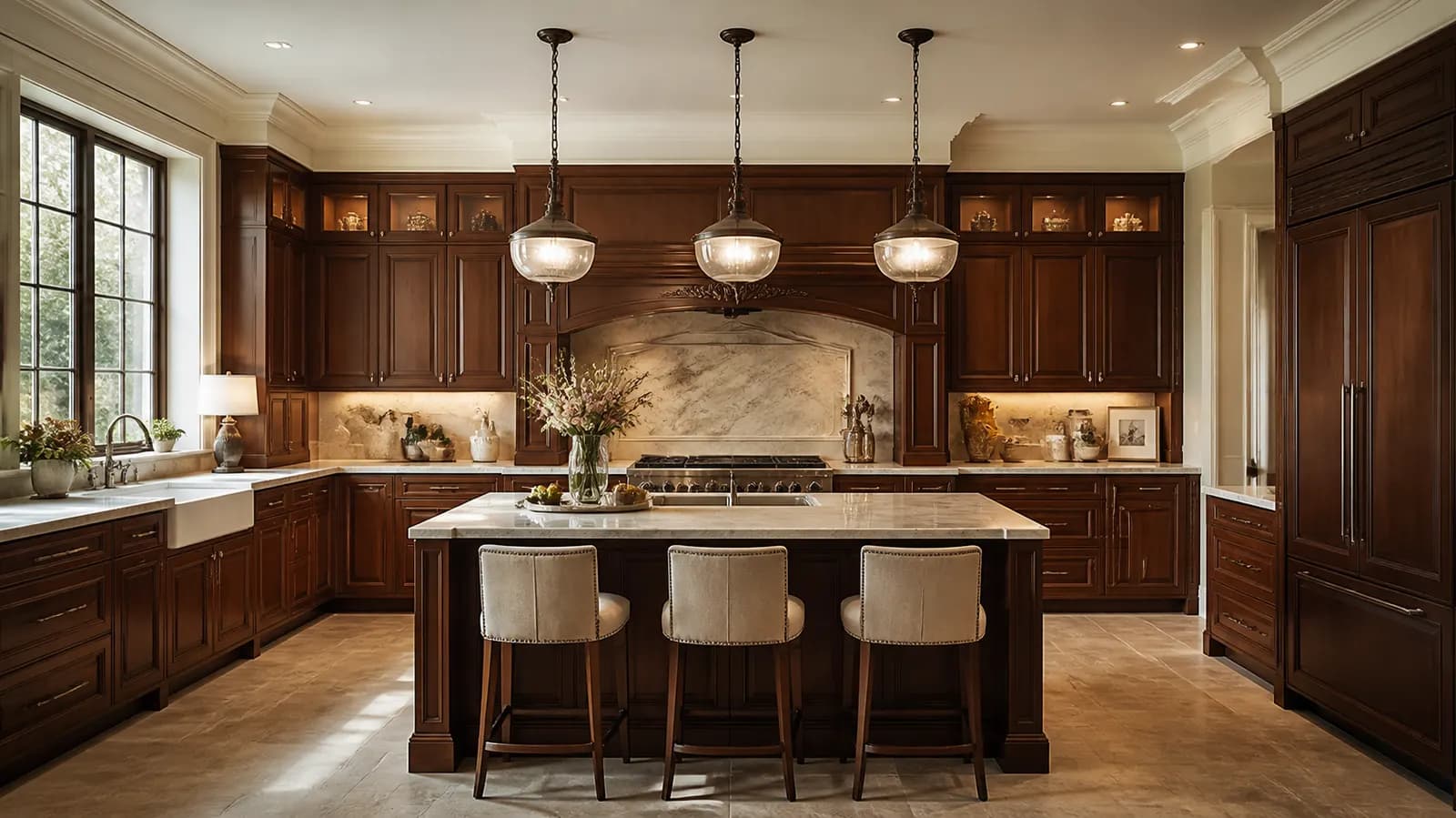
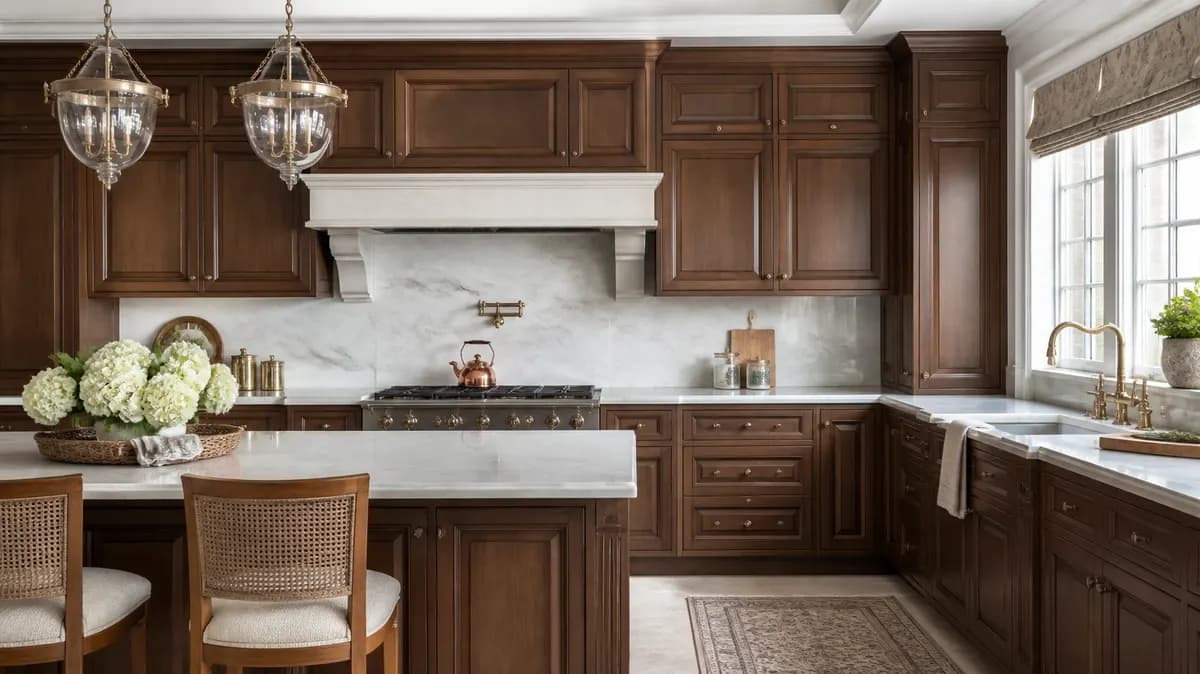
Traditional kitchen design is an enduring style rooted in 18th and 19th-century European and American cabinetry. It is defined by its attention to detail and ornamentation: raised-panel cabinet doors, decorative moldings like crown and light rail, and architectural elements like corbels and turned legs. Unlike minimalist styles, Traditional design embraces depth, texture, and a sense of history. The result is a space that feels formal, elegant, and permanent.
Three principles guide authentic Traditional kitchens. First, craftsmanship: the focus is on quality materials like cherry, walnut, and oak, often with intricate carvings or inlays. Second, symmetry: layouts are often balanced around a central feature, such as a grand island or an ornate range hood. Third, warmth: the style creates a welcoming, established feeling through rich color palettes, layered lighting, and classic textiles. It's a design language of comfort and heritage.
In 2026, the look remains a cornerstone of high-end residential design. While the core principles are historic, contemporary interpretations often lighten the palette with creamy whites and incorporate modern conveniences like high-performance appliances hidden behind custom panels. It pairs naturally with Transitional and French Country styles, offering a timeless foundation that resists fleeting trends, making it a sound long-term investment for any home.
12 Real Traditional Kitchen Examples
Each example below is a complete look — not a mood board. Click any image to see it full-size, then hit the generate button to try the same combination on your own room photo.
 1Example
 2Example
 3Example
 4Example
 5Example
 6Example
 7Example
 8Example
 9Example
 10Example
 11Example
 12Example
Key Design Elements
Colors
- Creamy whites and warm off-whites (e.g., Alabaster, Swiss Coffee)
- Rich wood stains (cherry, walnut, dark oak)
- Deep, historic accent colors (forest green, navy blue, burgundy)
- Warm neutrals (beige, taupe, greige) for walls
- Metallic accents in brass, bronze, or polished nickel
Materials
- Hardwoods like cherry, walnut, maple, and oak for cabinetry
- Natural stone countertops (granite, marble, quartzite)
- Ceramic, porcelain, or natural stone tile for backsplashes
- Polished or antiqued metals (brass, bronze, nickel, copper)
- Hardwood flooring, often in medium to dark stains
Furniture
- Raised-panel, inset, or detailed shaker cabinet doors
- A large central island, often with decorative legs or paneling
- Upholstered bar stools with fabric or leather seats and turned legs
- Glass-front or mullion cabinets for display
- Extensive use of molding: crown, light rail, and baseboards
Lighting
- Statement chandeliers (crystal, wrought iron) over the island
- Classic pendant lights, such as bell jars or lanterns
- Under-cabinet lighting to highlight countertops and backsplashes
- Wall sconces with fabric shades to add soft, ambient layers
- Integrated cabinet lighting inside glass-front display units
Textiles
- Fabric window treatments like Roman shades, valances, or drapery
- Classic patterns: damask, toile, plaid, or florals
- High-quality natural fibers like linen, cotton, and wool
- Persian or Oriental-style runners on hardwood floors
- Upholstery on bar stools or a built-in banquette
Traditional Kitchen Color Palette
Six pigments do most of the work — start here, then add one accent of your own.
The quintessential base for cabinets and trim. Warmer than pure white, it provides a soft, historic glow and pairs beautifully with dark woods.
A sophisticated neutral for walls. It bridges the gap between beige and grey, providing a versatile backdrop for both wood and painted cabinetry.
A classic, moody accent color often used on an island or lower cabinets. It evokes a sense of heritage and pairs perfectly with brass hardware.
The definitive wood tone for classic Traditional kitchens. Its deep, reddish-brown hue adds warmth, formality, and a sense of permanence.
The go-to metal for hardware, faucets, and lighting. Its warm, unlacquered finish develops a patina over time, adding to the room's character.
A grounding element for countertops or floors. Its dark, natural tone provides a handsome contrast to creamy cabinets and rich woods.
Must-Have Furniture & Fixtures
If you only invest in these seven, you will capture the essence of Traditional design.
Raised-Panel Cabinetry
The hallmark of the style. The raised center panel and detailed frame create shadows and depth that minimalist cabinets lack.
Ornate Range Hood
A decorative, furniture-style hood serves as the kitchen's focal point. Often made of wood or plaster with corbels and intricate moldings.
Natural Stone Countertops
Granite or marble with detailed edge profiles (like ogee or bullnose) are classic choices, lending weight and luxury to the space.
Decorative Moldings
Crown molding at the ceiling, light rail molding under upper cabinets, and detailed baseboards are essential architectural finishes.
Apron-Front or Undermount Sink
A deep, single-basin apron-front sink in fireclay or a classic stainless undermount sink paired with a bridge or gooseneck faucet.
Classic Hardware
Substantial, detailed hardware is key. Think oil-rubbed bronze cup pulls, polished nickel knobs, or antiqued brass latches.
A Statement Island
More than just a workspace, the island is a piece of furniture, often featuring turned legs, decorative paneling, and its own contrasting finish.
Common Mistakes to Avoid
Too dark and heavy — A room full of dark wood and heavy patterns can feel dated. Balance dark cabinets with light countertops and walls.
Overly ornate details — Too many corbels, carvings, and glazes can make a kitchen look fussy. Choose a few key elements to be the star.
Using modern fixtures — Sleek, minimalist faucets or bar pulls will clash. Stick to classic shapes and finishes for hardware and lighting.
Ignoring the lighting plan — Traditional kitchens need layered lighting (ambient, task, accent) to feel warm and functional, not like a museum.
Visible modern appliances — The look is broken by a stainless steel microwave or a smart fridge with a large screen. Use integrated, panel-ready appliances.
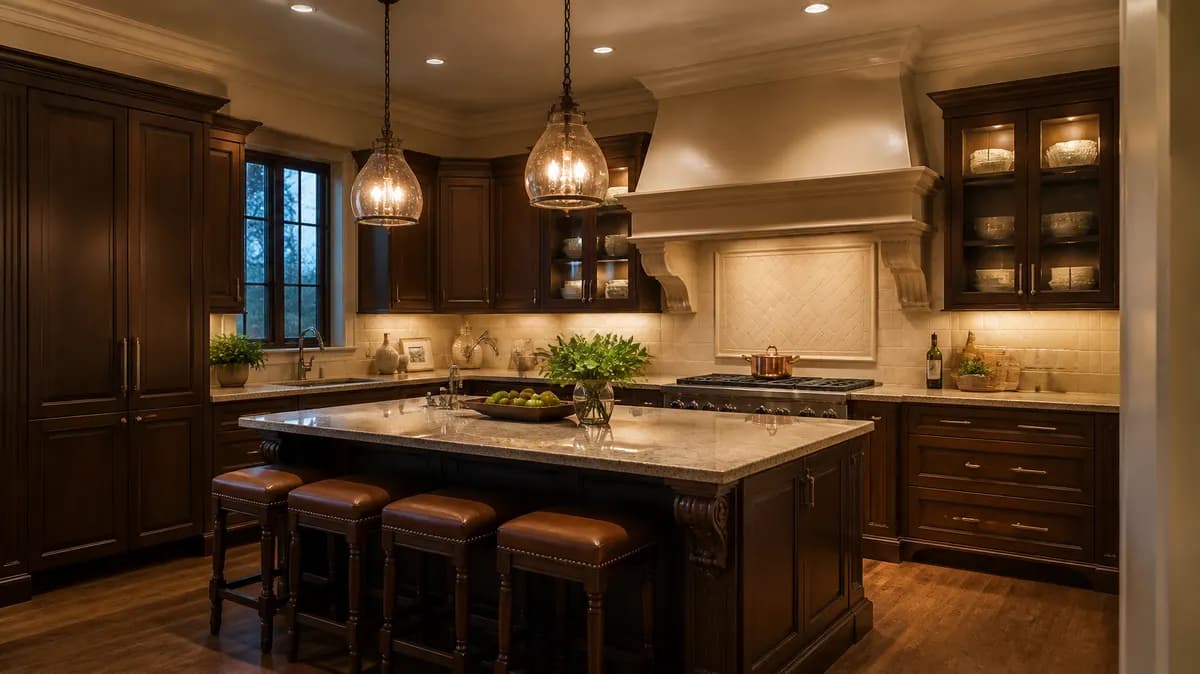
Try Traditional Kitchen in Your Own Room
Upload a photo of your real kitchen. Get a photorealistic Traditional redesign in about 30 seconds. 4 free credits, no card.
Generate Your Traditional Kitchen FreeOther Traditional Rooms
Apply the same palette and principles to the rest of the home.


Other Kitchen Styles
Same room, different aesthetic — explore the rest of the kitchen style library.


Traditional Kitchen — Frequently Asked Questions
What defines a Traditional kitchen?
What are the best cabinet styles for a Traditional kitchen?
How can I make a Traditional kitchen feel current, not dated?
What countertops work best in a Traditional kitchen?
How is Traditional design different from Farmhouse?
Is a Traditional kitchen an expensive style?
How to Design a Traditional Kitchen
Five decisions, in this order. Skip any of them and the look will not land.
- 1
Establish the Foundation: Cabinetry & Layout
Choose your cabinet style—raised-panel is the classic choice. Plan a symmetrical layout, often centered on a range or sink. This is the architectural backbone of the room, so get it right first. Decide between stained wood or a painted finish.
- 2
Select a Rich Material Palette
Select your core materials. Choose a natural stone countertop (granite, marble) with a decorative edge profile. Pick a classic hardware finish (oil-rubbed bronze, polished nickel, aged brass) and repeat it across all pulls, knobs, and faucets.
- 3
Layer in Architectural Details
This is what makes a kitchen truly Traditional. Add crown molding, a decorative range hood, light rail trim under upper cabinets, and perhaps corbels under an island overhang. These details create depth and a custom, built-in look.
- 4
Choose Classic Lighting and Fixtures
Lighting is crucial for warmth. Hang a statement chandelier or classic pendants over the island. Select a faucet with a traditional shape, like a bridge or gooseneck style. Add under-cabinet and in-cabinet lighting for task and accent layers.
- 5
Accessorize with Timeless Pieces
The final layer adds personality. Add fabric Roman shades or a valance. Lay down a vintage-style runner. Display classic pottery, copper pots, or porcelain on open shelves or behind glass doors. Avoid clutter; choose a few high-quality pieces.
Keep Exploring
Tools and guides that pair with this style.