Traditional Nursery Design Ideas: 12 Real Examples (2026 Guide)
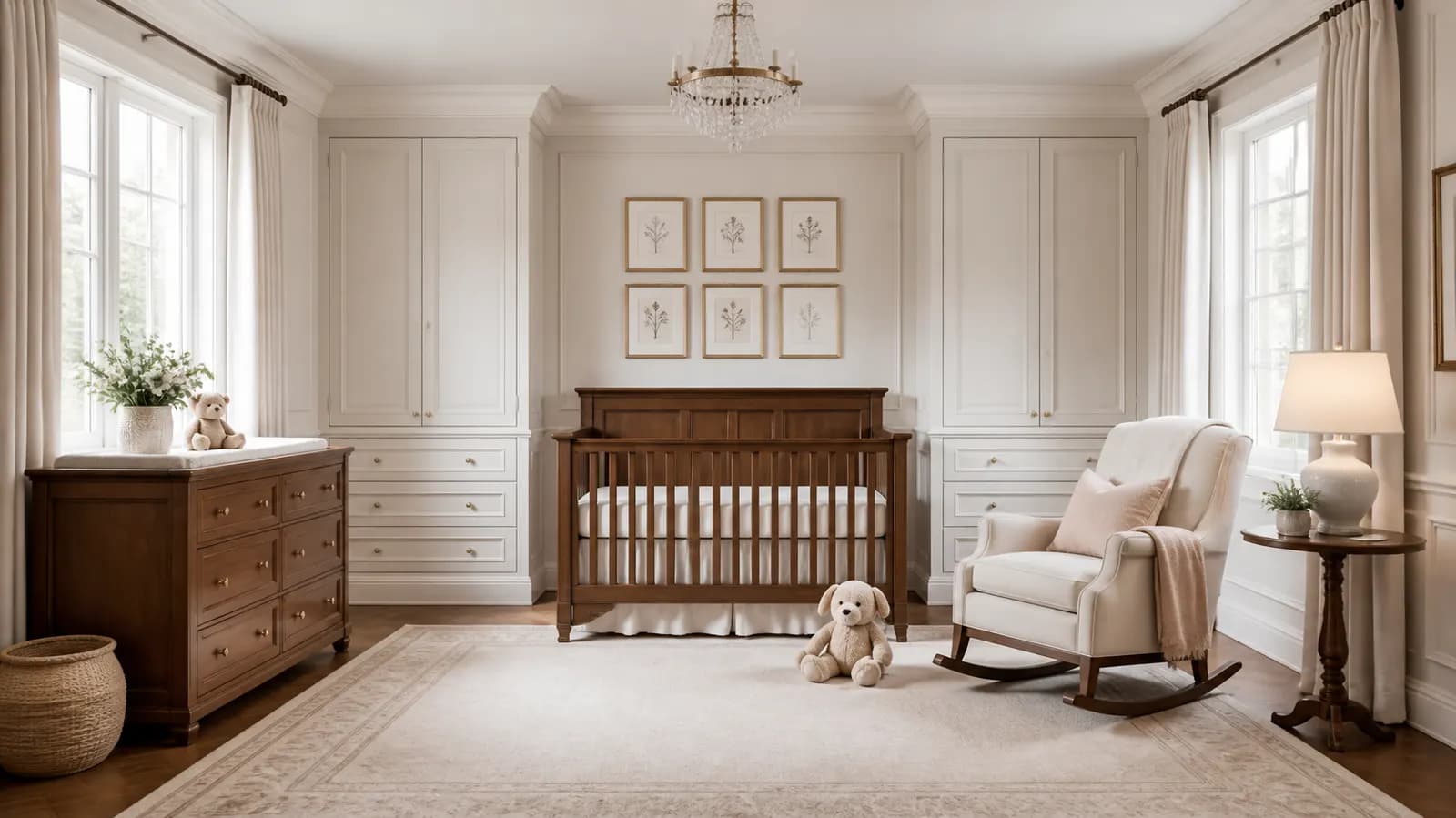
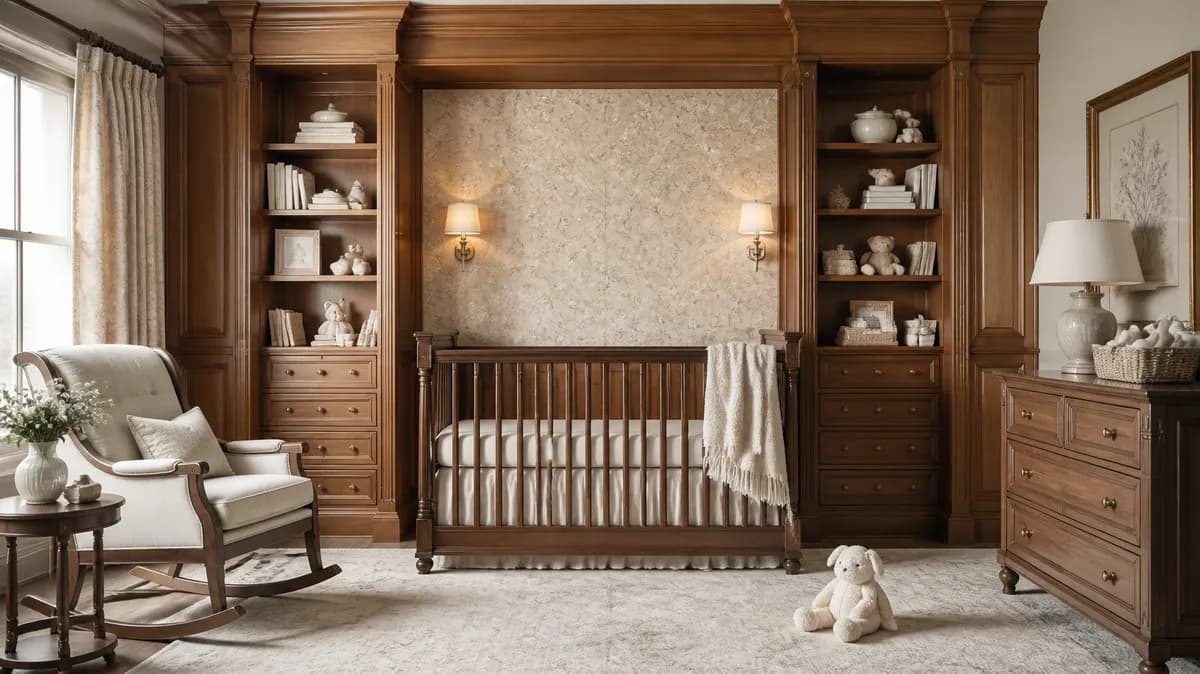
Mahogany cot, toile wallpaper, panelled walls and a rocking chair by the window — the traditional nursery is the room that becomes a child's bedroom and then a guest room without changing the bones. We unpack the rules, then show 12 photorealistic examples.
- 12
- Real examples
- ~30s
- AI render time
- 4 free
- Credits, no card
What is Traditional Nursery Design?
Traditional nursery design comes from the 18th- and 19th-century English country house, where the nursery wing was treated with the same care as any other formal room in the house. Walls had chair rail and wainscoting, windows were dressed with full-length drapes, art was framed in gilt, and the cot was a real piece of furniture in mahogany or painted hardwood. The aesthetic survived because it solved a real problem: a nursery designed in the same vocabulary as the rest of the house ages into a child's bedroom, then a guest room, without ever needing to be ripped out.
Three principles guide an authentic traditional nursery. First, architectural envelope: chair rail, wainscoting and crown moulding done before any furniture goes in. Second, period-correct furniture: a mahogany or painted hardwood slatted cot, a glider or rocking chair in classic upholstery, a chest of drawers serving as the changing table. Third, a soft formal palette of cream, dusty blue or rose, sage and burgundy on a single Oriental rug, with toile or pin-stripe wallpaper as the visual focal point.
In 2026 traditional nursery design has come back into favour as parents reject the printed-character bedding and primary-colour aesthetic of the 2010s. It pairs naturally with English country (looser pattern, dustier palette) and grandmillennial (the same materials with a more saturated colour mix). The throughline is always a real wood cot, a properly upholstered rocker, framed period art and lighting warm enough that night feeds feel calm rather than clinical.
12 Real Traditional Nursery Examples
Each example below is a complete look — not a mood board. Click any image to see it full-size, then hit the generate button to try the same combination on your own room photo.
 1Example
 2Example
 3Example
 4Example
 5Example
 6Example
 7Example
 8Example
 9Example
 10Example
 11Example
 12Example
Key Design Elements
Colors
- Antique cream walls and wainscoting
- Dusty blue or soft sage on wallpaper or accent walls
- Mahogany and painted hardwood furniture
- Burgundy and rose on Oriental rug and small textiles
- Polished brass and antique silver accents
Materials
- Solid mahogany or painted hardwood for the cot
- Toile, pin-stripe or damask wallpaper
- Hand-knotted Oriental rug in soft tones
- Linen, cotton lawn and silk for bedding and drapes
- Polished brass and antique silver for hardware
Furniture
- Mahogany or painted hardwood slatted cot
- Painted chest of drawers doubling as changing table
- Upholstered rocking chair or glider in damask
- Antique-style bookcase or ladder shelf for books
- Wingback or slipper chair in a reading corner
Lighting
- Single brass or porcelain chandelier on a dimmer
- Brass wall sconce beside the cot for night feeds
- Porcelain table lamp with linen shade on the dresser
- Layered warm-white sources at 2700 K
- Antique-style porcelain nightlight
Textiles
- Full-length linen drapes with tiebacks
- Hand-knotted Oriental rug under the cot and rocker
- Monogrammed cotton-lawn cot sheets and crib skirt
- Damask cushion on the rocking chair
- Wool throw folded over the chair arm
Traditional Nursery Color Palette
Six pigments do most of the work — start here, then add one accent of your own.
The base white for walls, wainscoting and ceiling. Slightly warm and never cold, it lets the rest of the palette read soft rather than washed out.
Classic nursery accent — wallpaper above the wainscoting, rocker upholstery, drape lining. Soothing and historically accurate for either gender.
Quieter green for damask cushions, the cot bumper or a single armchair. Lifts the cream-and-blue scheme without breaking its formality.
The warm pop — Oriental rug, monogrammed cot linen, small framed botanicals. Used sparingly in single small doses, never as a wall colour.
The wood accent — cot frame, ladder shelf, picture frames. Deep red-brown that grounds the otherwise soft palette and lasts through ages.
The strict metal accent — chandelier arms, sconce, drawer hardware, picture lights. Used sparingly so the room reads softly traditional, not heavy.
Must-Have Furniture & Fixtures
If you only buy these seven, you will read as authentically traditional.
Mahogany or painted hardwood cot
Solid wood slatted cot with raised end panels, on bun feet, with a water-based safe finish. Convertible to a toddler bed is a strong plus.
Painted chest of drawers
Six-drawer chest in cream-painted hardwood with polished-brass pulls, doubling as a changing table with a strapped mat on top.
Upholstered rocking chair
Wood-framed rocker or modern glider upholstered in damask or pin-stripe in dusty blue or sage. With a matching ottoman for night feeds.
Hand-knotted Oriental rug
Persian or Aubusson pattern in dusty rose, sage and cream — soft underfoot but historically correct. Large enough to extend under cot and rocker.
Toile or pin-stripe wallpaper
Single-pattern wallpaper above the wainscoting on three walls, in dusty blue or sage. Plain paint above the wallpaper if ceilings are tall.
Wainscoting and chair rail
Painted raised-panel wainscoting at 90 cm height on every wall — the architectural commitment that lets this nursery age into a child's bedroom.
Linen window treatment
Full-length linen drapes hung close to the ceiling with tasselled tiebacks, plus a blackout sheer behind for daytime sleeping.
Common Mistakes to Avoid
Defaulting to printed-character bedding — cartoon prints kill the traditional read instantly and date the room within months. Stick to monogrammed cotton or linen.
Plastic plug-in nightlights — colour-changing plastic gadgets break the look. Use a porcelain night light or a brass-bodied bedside lamp on a dimmer.
Skipping the wainscoting — a traditional nursery without architectural trim reads like a builder room with toile slapped on. Always add chair rail and panelling.
Mixing too many patterns — pick one wallpaper, one damask, one Oriental rug. Three patterns is the maximum the eye can hold without going chaotic.
Cool overhead light — a single 4000 K LED panel destroys the soft mood. Use a dimmed brass chandelier, a sconce by the cot and a lamp on the dresser.
Try Traditional Nursery in Your Own Room
Upload a photo of your real nursery. Get a photorealistic traditional redesign in about 30 seconds. 4 free credits, no card.
Generate Your Traditional Nursery FreeOther Traditional Rooms
Apply the same palette and principles to the rest of the home.


Other Nursery Styles
Same room, different aesthetic — explore the rest of the nursery style library.


Traditional Nursery — Frequently Asked Questions
What colors define traditional nursery design?
Is toile wallpaper safe in a nursery?
How long does a traditional nursery last before it has to change?
What flooring works best for a traditional nursery?
How is traditional different from grandmillennial in a nursery?
Is traditional nursery design good for a small room?
How to Design a Traditional Nursery
Five decisions, in this order. Skip any of them and the look will not land.
- 1
Treat the architecture first — wainscoting, chair rail
Add painted raised-panel wainscoting at 90 cm on every wall plus chair rail and crown moulding. This is the single most important step. A traditional nursery without architectural trim reads like a builder bedroom with toile slapped on — and you cannot rescue it with furniture choices later.
- 2
Choose one wallpaper and one wall colour
Toile or pin-stripe wallpaper in dusty blue or sage above the chair rail. Antique cream paint below the wainscoting and on the ceiling. Resist a second pattern on the walls. The discipline at this step is what reads as historical confidence rather than scrapbook nursery.
- 3
Buy the cot, dresser and rocker
Mahogany or cream-painted hardwood slatted cot, convertible to a toddler bed. Painted six-drawer chest of drawers doubling as changing table. Upholstered rocking chair in damask or pin-stripe with matching ottoman. Three pieces — never more.
- 4
Layer the lighting
Single brass or porcelain chandelier on a dimmer. Brass wall sconce beside the cot for night feeds. Porcelain table lamp with a linen shade on the dresser. Optional porcelain night light. Every bulb at 2700 K. The room should dim from playtime bright to ember-soft without ever exposing a cool LED.
- 5
Style the soft layers — rug, drapes, art, one plant
Hand-knotted Oriental rug under the cot and rocker. Full-length linen drapes with tiebacks plus a blackout sheer. Three small framed botanicals or a single oil portrait of a child or animal above the dresser. A silver tray and a single small porcelain figurine on the chest of drawers. One small live plant on a high shelf (an English ivy or trailing fern out of reach). The vignettes are what separate a real traditional nursery from a furniture-store mock-up.
Keep Exploring
Tools and guides that pair with this style.