Art Deco Kitchen Design Ideas: 12 Real Examples (2026 Guide)
Symmetry, bold geometry, and lavish materials — the glamorous style born in 1920s Paris is making a dramatic return. We unpack the rules of Art Deco design, then show 12 photorealistic examples you can replicate.
- 12
- Real examples
- ~30s
- AI render time
- 4 free
- Credits, no card
What is Art Deco Kitchen Design?
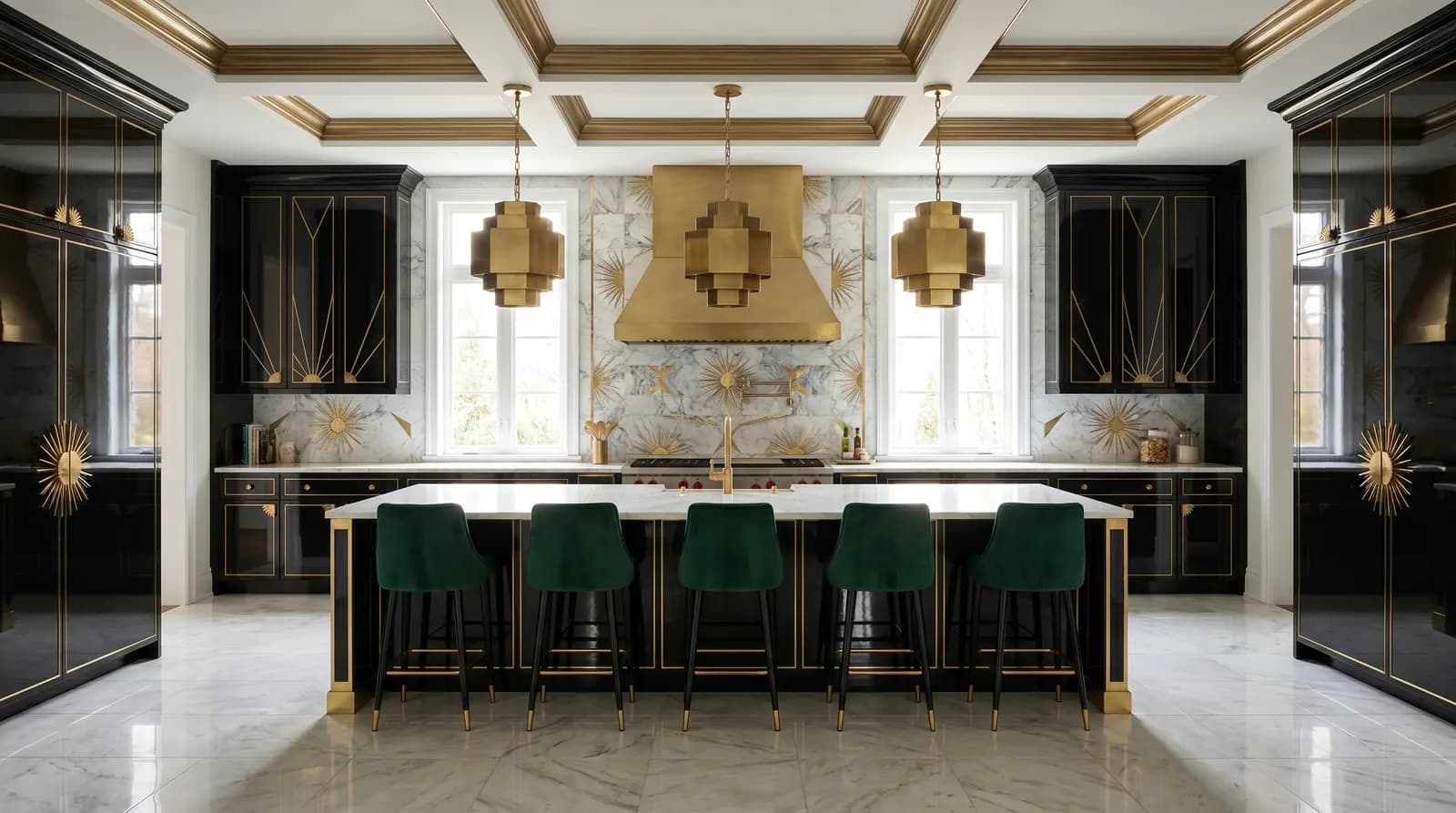
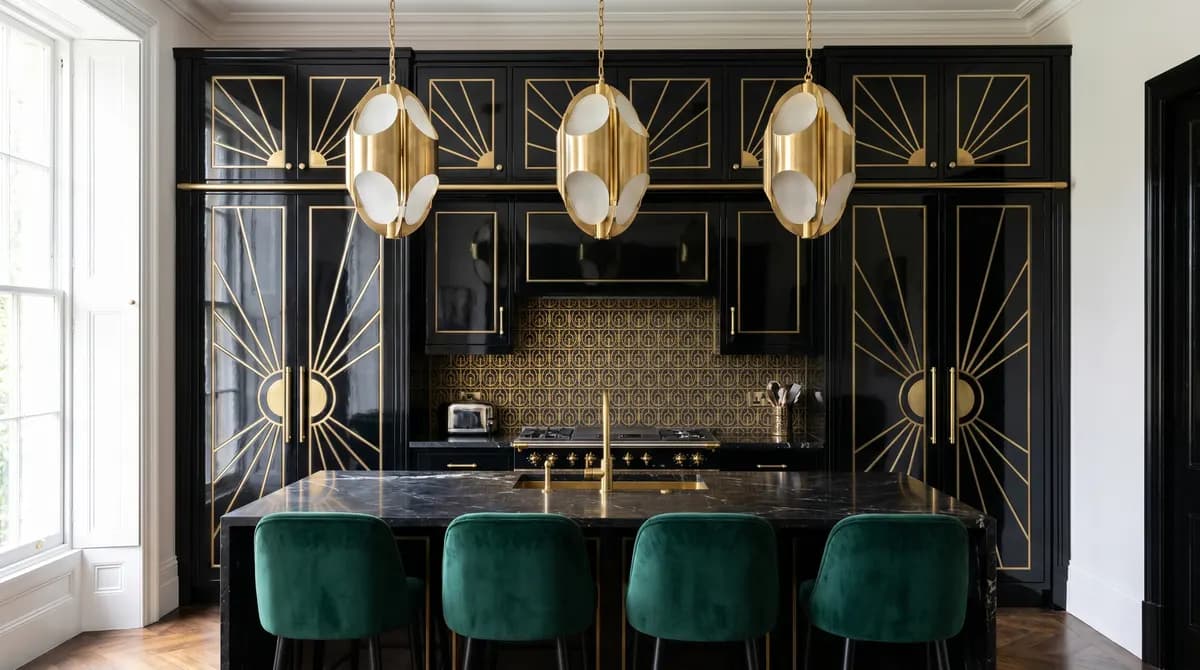
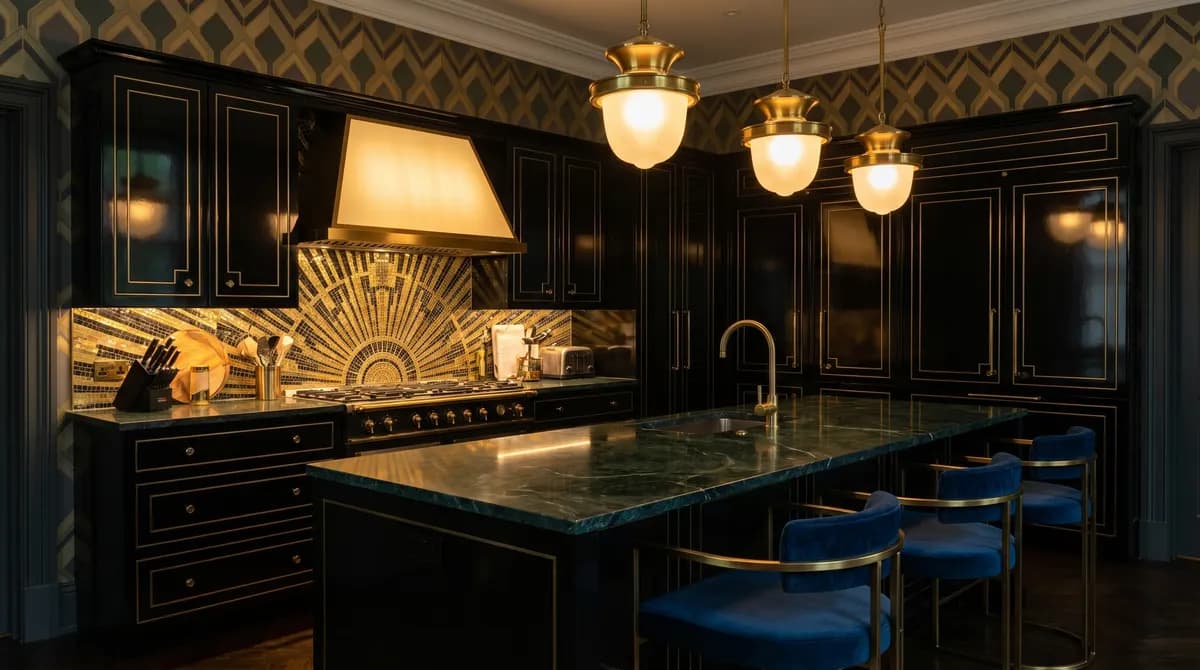
Art Deco kitchen design is a style of opulence, glamour, and modernity that originated in Paris in the 1920s. It is defined by bold geometric patterns, strong symmetry, and lavish materials. Unlike minimalist styles, Art Deco is about addition and embellishment: high-gloss lacquer, polished metals like brass and chrome, richly veined marble, and exotic woods. It celebrates the machine age with streamlined forms, stepped profiles, and repeating motifs like sunbursts, chevrons, and zigzags.
Three principles define an authentic Art Deco kitchen. First, symmetry: layouts are often centered on a statement range hood or island, creating a sense of formal balance. Second, high contrast: think black and white checkerboard floors, dark lacquered cabinets with gleaming brass hardware, or deep jewel tones against crisp white marble. Third, luxurious materiality: surfaces are chosen for their reflective, polished qualities to create a sense of drama and sophistication.
In 2026, the look is experiencing a major revival, often called 'Deco Revival' or 'Modern Deco.' It appeals to homeowners seeking a bold alternative to prevailing minimalism. It pairs naturally with Maximalist and Hollywood Regency interiors, offering a more structured, geometric take on glamour. For those looking to make a statement, the Art Deco kitchen is the ultimate expression of confident, curated design.
12 Real Art Deco Kitchen Examples
Each example below is a complete look — not a mood board. Click any image to see it full-size, then hit the generate button to try the same combination on your own room photo.
 1Example
 2Example
 3Example
 4Example
 5Example
 6Example
 7Example
 8Example
 9Example
 10Example
 11Example
 12Example
Key Design Elements
Colors
- High-contrast black and white
- Deep jewel tones: emerald green, sapphire blue, burgundy
- Polished metallics: brass and chrome
- Rich cream and alabaster as a softer base
- Dark wood tones like walnut and ebony
Materials
- Polished marble with dramatic veining (black, white, green)
- High-gloss or satin lacquer for cabinetry
- Brass and chrome (unlacquered or polished)
- Mirrored, beveled, or geometric tile for splashbacks
- Exotic woods like ebony and dark-stained walnut, often with inlay
Furniture
- Streamlined cabinets with inset or flat-panel doors
- Bar stools upholstered in velvet or leather with metal legs
- Islands with stepped profiles or waterfall edges
- Glass-front cabinets with fluted or reeded glass
- Integrated appliances hidden behind custom panels
Lighting
- Tiered chandeliers in glass, brass, or chrome
- Geometric pendants (globes, hexagons, drums)
- Sleek wall sconces flanking windows or doorways
- Frosted or milk glass shades for soft, glamorous diffusion
- Under-cabinet lighting to highlight polished surfaces
Patterns & Motifs
- Geometric patterns: chevron, herringbone, Greek key
- Sunburst and fan motifs in hardware, glass, and inlay
- Stepped and zigzag forms for profiles and details
- Strong vertical lines (fluting, reeding) on cabinets
- Symmetry and repetition in tile layouts and cabinet arrangements
Art Deco Kitchen Color Palette
Six pigments form the foundation of the style — start here for dramatic effect.
The dramatic anchor. Use for high-gloss lower cabinets or a statement island to ground the space in pure Deco drama.
The essential contrast. A clean, soft white for walls or marble countertops that makes metals and jewel tones pop.
The signature metal. The warm, gleaming accent for hardware, faucets, lighting, and inlay. Use consistently.
The opulent jewel tone. Perfect for a velvet banquette, a tile splashback, or daringly, for all the cabinetry.
A sophisticated, cool jewel tone. A powerful alternative to black for cabinetry, especially when paired with chrome.
The cooler, machine-age metallic. A sleek alternative to brass, often used for plumbing fixtures and appliance trim.
Must-Have Furniture & Fixtures
If you only invest in these seven, you will capture the authentic Art Deco spirit.
Geometric Hardware
Sunburst pulls, hexagonal knobs, or long, linear handles in polished brass or chrome. Hardware is the jewelry of the room.
High-Gloss Lacquer Cabinets
Deep black, emerald, or crisp white cabinets with a reflective, piano-like finish are quintessentially Deco.
Statement Marble Countertops
Choose a marble with bold, dramatic veining, like Calacatta Viola or Nero Marquina, and use it generously.
Geometric or Mirrored Splashback
A full-height splashback in beveled mirror tiles or ceramic tiles laid in a chevron or fan pattern.
Tiered or Globe Pendant Lighting
A central, sculptural light fixture in brass or chrome with glass elements. It should be a focal point.
Upholstered Bar Stools
Curved-back stools in jewel-toned velvet or rich leather with sleek metal legs add necessary softness and glamour.
Waterfall Island
An island where the countertop material flows down the sides to the floor. A modern take on Deco's streamlined forms.
Common Mistakes to Avoid
Overusing motifs — One too many sunbursts, chevrons, or zigzags can make the space feel like a theme-park reproduction. Choose one or two and repeat them thoughtfully.
Ignoring scale — Art Deco is about confidence and grandeur. Timid fixtures, small patterns, or undersized hardware will get lost and fail to make an impact.
Using matte finishes — The style demands reflection and polish. Matte black, brushed metals, or honed stone can deaden the look. Opt for high-gloss and polished surfaces.
Fearing high contrast — A muted, low-contrast palette will feel flat. The drama of Art Deco comes from the tension between light and dark, slick and plush.
Forgetting symmetry — Asymmetrical layouts or random placement of fixtures can feel chaotic. Art Deco thrives on formal balance and ordered, repeating elements.
Try Art Deco in Your Own Kitchen
Upload a photo of your real kitchen. Get a photorealistic Art Deco redesign in about 30 seconds. 4 free credits, no card.
Generate Your Art Deco Kitchen FreeOther Art Deco Rooms
Apply the same palette and principles to the rest of the home.


Other Kitchen Styles
Same room, different aesthetic — explore the rest of the kitchen style library.


Art Deco Kitchen — Frequently Asked Questions
What defines Art Deco kitchen design?
Is Art Deco too old-fashioned for a modern home?
How can I add Art Deco elements without a full remodel?
What materials are essential for an Art Deco kitchen?
How is Art Deco different from Hollywood Regency?
Is Art Deco suitable for small kitchens?
How to Design an Art Deco Kitchen
Five decisions, in this order, to achieve a glamorous and authentic look.
- 1
Establish Symmetry
Start with a focal point—typically the range and hood—and build your design symmetrically around it. Balance elements on either side to create the formal, ordered look that is central to the Art Deco style. This applies to cabinetry, lighting, and even window placement.
- 2
Choose a High-Contrast Palette
Decide on your core contrast. The classic is black and white. Alternatively, pick a deep jewel tone (emerald, sapphire) for cabinets and pair it with a light marble and a single, dominant metallic (brass or chrome). This creates instant drama.
- 3
Layer in Geometric Patterns
Introduce one or two repeating geometric motifs. This could be a chevron or checkerboard pattern on the floor, a sunburst in the cabinet hardware, or a stepped profile on the island. Don't use them all—pick a hero pattern and repeat it.
- 4
Select Lavish, Reflective Materials
Combine at least three signature materials: something polished (marble), something glossy (lacquer), and something metallic (brass or chrome). The interplay of light on these different surfaces is what gives the style its signature glamour.
- 5
Add Statement Lighting
The lighting is not just functional; it's a centerpiece. Choose a sculptural, tiered chandelier or a series of bold geometric pendants. This is the final layer that solidifies the room's luxurious, theatrical feel. Don't be timid here.
Keep Exploring
Tools and guides that pair with this style.