Art Deco Bathroom Design Ideas: 12 Real Examples (2026 Guide)
Bold geometry, lavish materials, high-octane glamour — the look that roared out of 1920s Paris and defined an era of optimism. We unpack the rules of Art Deco symmetry and materiality, then show 12 photorealistic examples you can replicate.
- 12
- Real examples
- ~30s
- AI render time
- 4 free
- Credits, no card
What is Art Deco Bathroom Design?
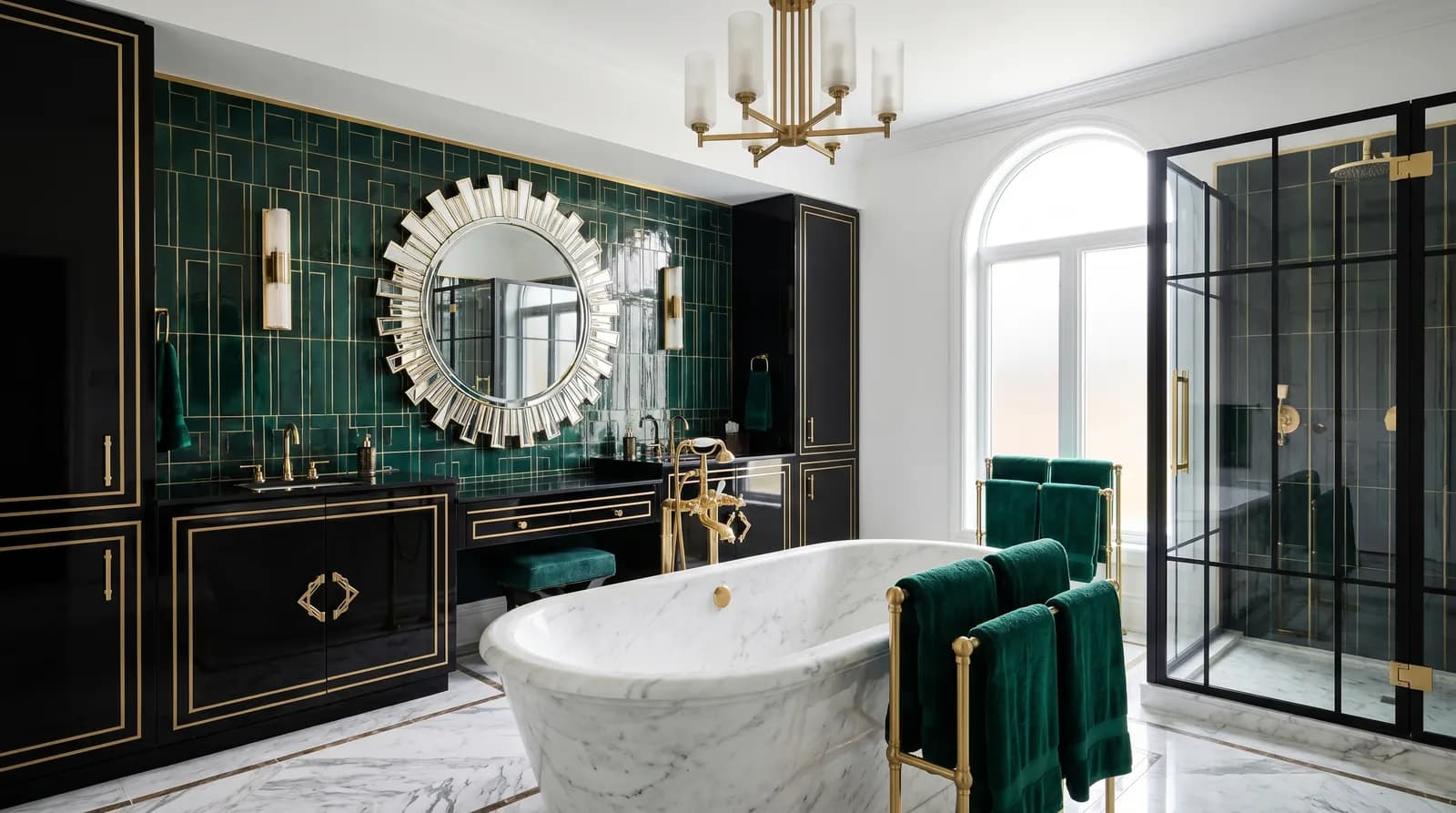
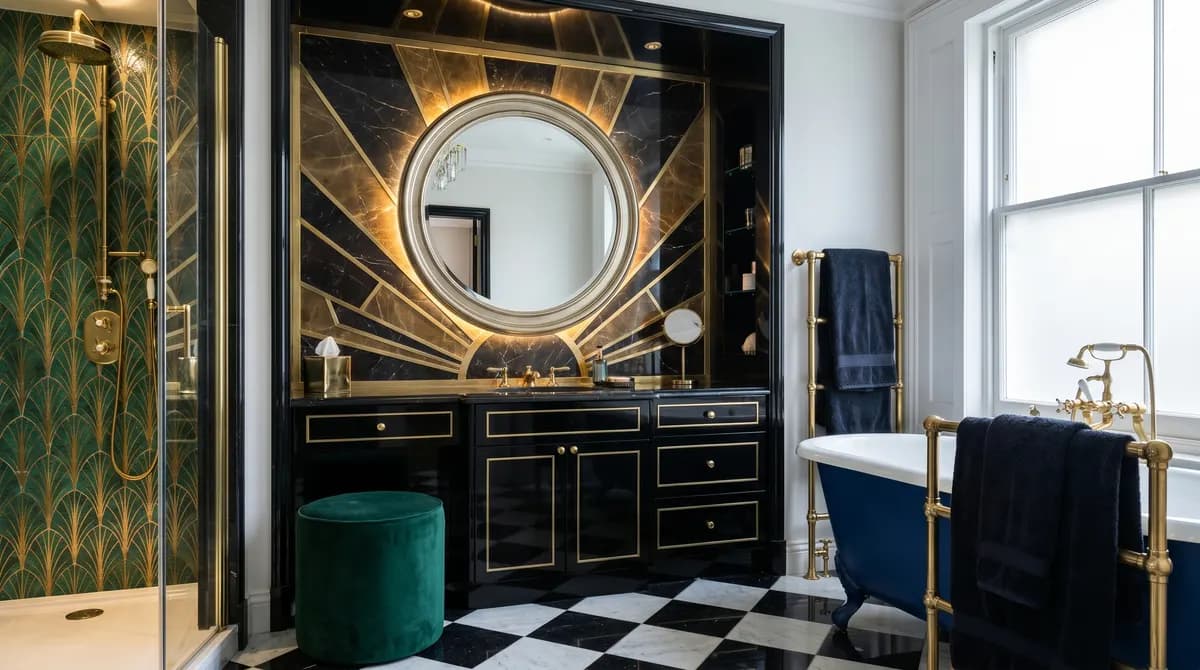
Art Deco bathroom design is a style of high glamour and technological optimism that emerged from the 1925 Paris Exposition Internationale des Arts Décoratifs et Industriels Modernes. It is defined by symmetry, bold geometric patterns (chevrons, sunbursts, ziggurats), and lavish, high-contrast materials: polished marble, gleaming chrome and brass, high-gloss lacquer, and exotic woods. It celebrates the machine age with streamlined forms and man-made opulence.
Three principles drive every authentic Art Deco bathroom. First, bold geometry: strong, clean lines, stepped forms, and repeating motifs create a sense of order and drama. Second, luxurious materiality: surfaces are chosen for their polish, reflectivity, and richness, from Nero Marquina marble floors to gleaming chrome faucets. Third, strict symmetry: vanities are centered, flanked by identical sconces, and layouts are balanced to create a feeling of formal elegance and permanence.
In 2026, the look is experiencing a major revival in boutique hotels and high-end residential projects. Its inherent drama and photogenic qualities make it a statement choice. It can be interpreted in a classic black-and-white palette or with jewel tones like emerald and sapphire. While it stands alone, it shares DNA with Hollywood Regency glamour and the streamlined aspects of Mid-Century Modernism, making it a powerful anchor for a historically-inspired home.
12 Real Art Deco Bathroom Examples
Each example below is a complete look — not a mood board. Click any image to see it full-size, then hit the generate button to try the same combination on your own room photo.
 1Example
 2Example
 3Example
 4Example
 5Example
 6Example
 7Example
 8Example
 9Example
 10Example
 11Example
 12Example
Key Design Elements
Colors
- High-contrast black and white as the primary base.
- Deep jewel tones: emerald green, sapphire blue, ruby red.
- Polished metallics: gold, brass, and chrome as accents.
- Soft pastels like mint green or dusty rose for a softer take.
- Creamy whites and ivories to soften the black-and-white contrast.
Materials
- Polished marble, especially high-contrast Nero Marquina or Carrara.
- High-gloss lacquer for vanities and cabinetry.
- Polished metals: brass, chrome, and gold are non-negotiable.
- Beveled or etched mirrors and frosted glass.
- Glazed ceramic tiles in geometric shapes or bold colors.
Furniture & Fixtures
- Pedestal sinks with strong, angular lines.
- Console vanities with polished chrome or brass legs.
- Geometric mirrors: stepped, fan-shaped, or sunburst designs.
- Freestanding bathtubs with clean, streamlined forms.
- A plush velvet or leather stool for a touch of softness.
Lighting
- Symmetrical wall sconces flanking the mirror.
- Tiered 'skyscraper' or ziggurat-shaped fixtures.
- Frosted glass shades in globe, fan, or shell shapes.
- A central pendant or small chandelier for ambient light.
- Polished chrome or brass bases and arms.
Textiles
- Plush, high-pile bath mats in solid jewel tones.
- Towels with geometric borders or an Art Deco monogram.
- Velvet upholstery for a vanity stool or bench.
- Towels in strong, contrasting colors like black or deep green.
- A silk tassel on a cabinet key for a final flourish.
Art Deco Bathroom Color Palette
Six pigments form the foundation — build your scheme from this high-contrast, luxurious base.
The essential grounding color for marble floors, lacquered vanities, and sharp details. Use it to create drama and contrast.
The crisp, clean counterpoint to black. Used for porcelain fixtures, marble, and walls to maximize light and graphic impact.
The primary warm metallic. For faucets, mirror frames, and lighting to bring a necessary layer of opulence and warmth.
The signature jewel tone. Perfect for a tiled feature wall or lacquered vanity, it pairs beautifully with both gold and chrome.
A softer accent used in more feminine interpretations of Art Deco. Works well for wall color, towels, or upholstery.
The cooler, sleeker metallic choice. Reflects the machine-age influence and offers a sharper, more industrial feel than brass.
Must-Have Furniture & Fixtures
If you only invest in these seven pieces, your bathroom will read as authentically Art Deco.
A Geometric Mirror
The focal point above the vanity. Choose a stepped, fan-shaped, or sunburst design, often with a beveled edge or metallic frame.
A Pedestal Sink or Console Vanity
Look for strong, octagonal or square shapes in porcelain, or a console table with polished chrome or brass legs supporting a marble top.
Symmetrical Wall Sconces
Always installed in pairs, flanking the mirror. Look for frosted glass shades in geometric forms on polished metal bases.
Black and White Floor Tile
The foundation of the look. Classic checkerboard, octagonal tiles with black inserts, or intricate marble mosaics are all canonical choices.
Cross-Handle or Waterfall Faucets
The jewelry of the bathroom. Choose polished chrome or unlacquered brass in designs that feel substantial and mechanical.
A High-Gloss Vanity
If not using a pedestal sink, a lacquered vanity in black, white, or a deep jewel tone adds a layer of sleek, reflective glamour.
A Freestanding Bathtub
A classic roll-top or a more angular, streamlined tub serves as a sculptural centerpiece. Position for maximum impact.
Common Mistakes to Avoid
Forgetting symmetry — placing sconces asymmetrically or having an off-center vanity instantly breaks the formal, balanced feel of the style.
Using matte finishes — Art Deco is about glamour and reflection. Matte tiles, brushed metals, or flat paint will dull the intended effect.
Timid execution — small patterns, undersized fixtures, or subtle contrasts get lost. Art Deco is a bold style that requires confidence.
Mixing too many patterns — stick to one dominant geometric motif for the floor or a wall. Adding a second or third creates visual chaos.
Chaotically mixing metals — choose one dominant metal finish (polished chrome, brass, or gold) and use it consistently for all fixtures and hardware.
Try Art Deco in Your Own Bathroom
Upload a photo of your real bathroom. Get a photorealistic Art Deco redesign in about 30 seconds. 4 free credits, no card.
Generate Your Art Deco Bathroom FreeOther Art Deco Rooms
Apply the same palette and principles to the rest of the home.


Other Bathroom Styles
Same room, different aesthetic — explore the rest of the bathroom style library.


Art Deco Bathroom — Frequently Asked Questions
What defines Art Deco bathroom design?
Is Art Deco design too old-fashioned for a modern home?
How can I achieve an Art Deco look in a small bathroom?
What are the best tiles for an Art Deco bathroom?
What's the difference between Art Deco and Hollywood Regency?
Is Art Deco good for a family bathroom?
How to Design an Art Deco Bathroom
Five decisions, in this order. Get them right for a look of timeless glamour.
- 1
Establish an Axis of Symmetry
This is the non-negotiable first step. Center your vanity on the main wall. Everything else—the mirror, the lighting, the faucet—will be placed in balanced harmony around this central line. If you have space, twin sinks are the ultimate expression of Deco symmetry.
- 2
Choose a High-Contrast Palette
Start with a base of black and white. Then, choose ONE metallic (polished brass for warmth, or polished chrome for sleekness) and use it for all hardware. Finally, consider ONE jewel tone (like emerald green) for a single statement element like a vanity or tile.
- 3
Select a Geometric Pattern
Pick one strong geometric motif to be your hero. This could be the checkerboard pattern of the floor tile, the sunburst shape of the mirror, or the fan pattern of a wallpaper. Don't use more than two distinct patterns, or the room will feel chaotic.
- 4
Layer Polished, Luxurious Materials
Art Deco is a tactile, reflective style. Combine polished marble countertops with a high-gloss lacquered vanity. Use beveled mirrors and frosted glass light shades. The interplay of shiny surfaces is essential to achieving the look.
- 5
Add Dramatic, Symmetrical Lighting
Lighting is the jewelry of an Art Deco bathroom. Flank your geometric mirror with a pair of identical vertical sconces. If you have high ceilings, a central pendant or small crystal chandelier adds a final layer of period-appropriate drama.
Keep Exploring
Tools and guides that pair with this style.