Blacktec Facade Design
Guide to facade design in Blacktec Facade style: materials, colors, architectural solutions, and examples
Blacktec facade design is the dark contemporary exterior style that took off globally between 2015 and 2022, popularized by Scandinavian and Japanese architects who paired black-stained wood (charred shou sugi ban in Japan, tar-treated pine in Norway) with modernist geometry. The style appears in projects by architects like Jonathan Tuckey in the UK and Lake|Flato in the US, and it has become a default vocabulary for contemporary residential design from Sydney to Stockholm.
Materials and palette
The dominant material is black-stained or charred wood cladding — vertical shiplap, board-and-batten or rainscreen panels. Other facade elements include black-painted metal panels, dark anodized aluminum windows and matte black standing-seam metal roofing. Accents include unlacquered brass (door hardware, address numbers), warm cedar or oak around the entrance and one or two punched windows of large dimension. The palette is essentially: black, brass, warm wood, with no white trim.
Facade features
Expect simple geometric massing — gable, shed or flat-roof forms with clean edges — full-height windows or sliding glass doors on the most private elevation, and minimal eave overhangs. Entrances are often recessed and clad in contrasting warm wood. Roofs are dark metal (standing-seam or flat) with no shingles. Gutters and downspouts are matte black, integrated into the facade plane.
Common mistakes
The biggest pitfall is paint over wrong cladding — flat black paint on vinyl siding or cement board reads cheap. Use real charred wood, dark-stained shiplap or quality fiber-cement rainscreen. Don't combine black with white trim; the contrast cheapens the look. Don't add traditional shutters or gable trim.
Budget tips
Charred shou sugi ban cedar runs $12-25 per sq ft installed. Pre-stained black shiplap pine is much cheaper at $5-10 per sq ft. Black fiber-cement rainscreen panels run $15-25 per sq ft. The total cost premium over a standard facade is around 20-40%, often offset by minimal maintenance (charred wood needs little upkeep). Upload a photo of your house and our AI redraws it in blacktec facade style in seconds — free to try.
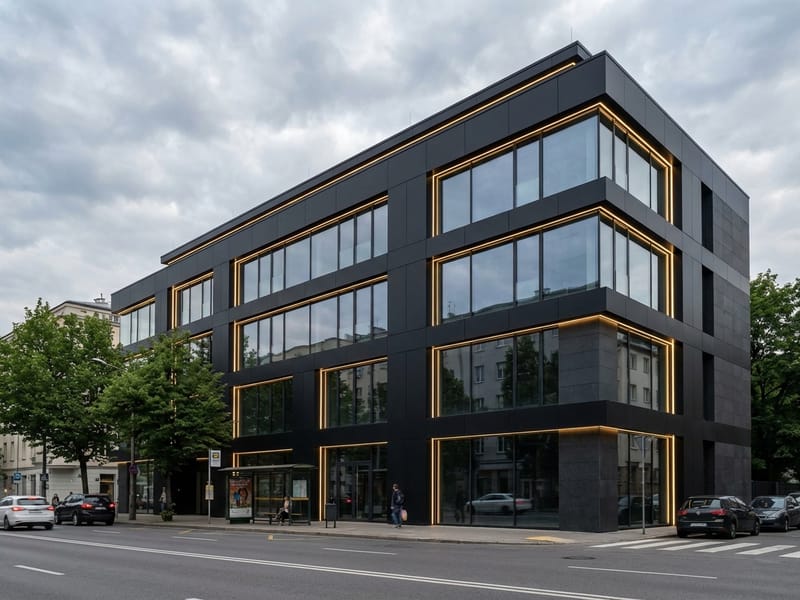
Key elements of Blacktec Facade style
Charred or Black Wood Cladding
Vertical black-stained or shou sugi ban (charred) wood siding as the dominant facade material — natural, durable and rich in texture.
Dark Metal Roofing
Matte black standing-seam metal or flat dark-membrane roofing, with no traditional shingles or contrasting trim.
Brass Accents
Unlacquered brass door hardware, address numbers and house numbers, providing one warm contrast point against the black field.
Geometric Massing
Simple gable, shed or flat-roof forms with clean edges, minimal eave overhangs and no decorative trim or fascia detail.
Cedar Entrance Frame
A recessed entrance clad in warm cedar or oak — the single warm-wood accent against the black field.
Black Aluminum Windows
Large dark-anodized aluminum windows flush-set with the cladding plane, often full-height or floor-to-ceiling.
Try creating your own design
Upload a photo of your house and get a professional facade design in 30 seconds. First 2 designs are free.
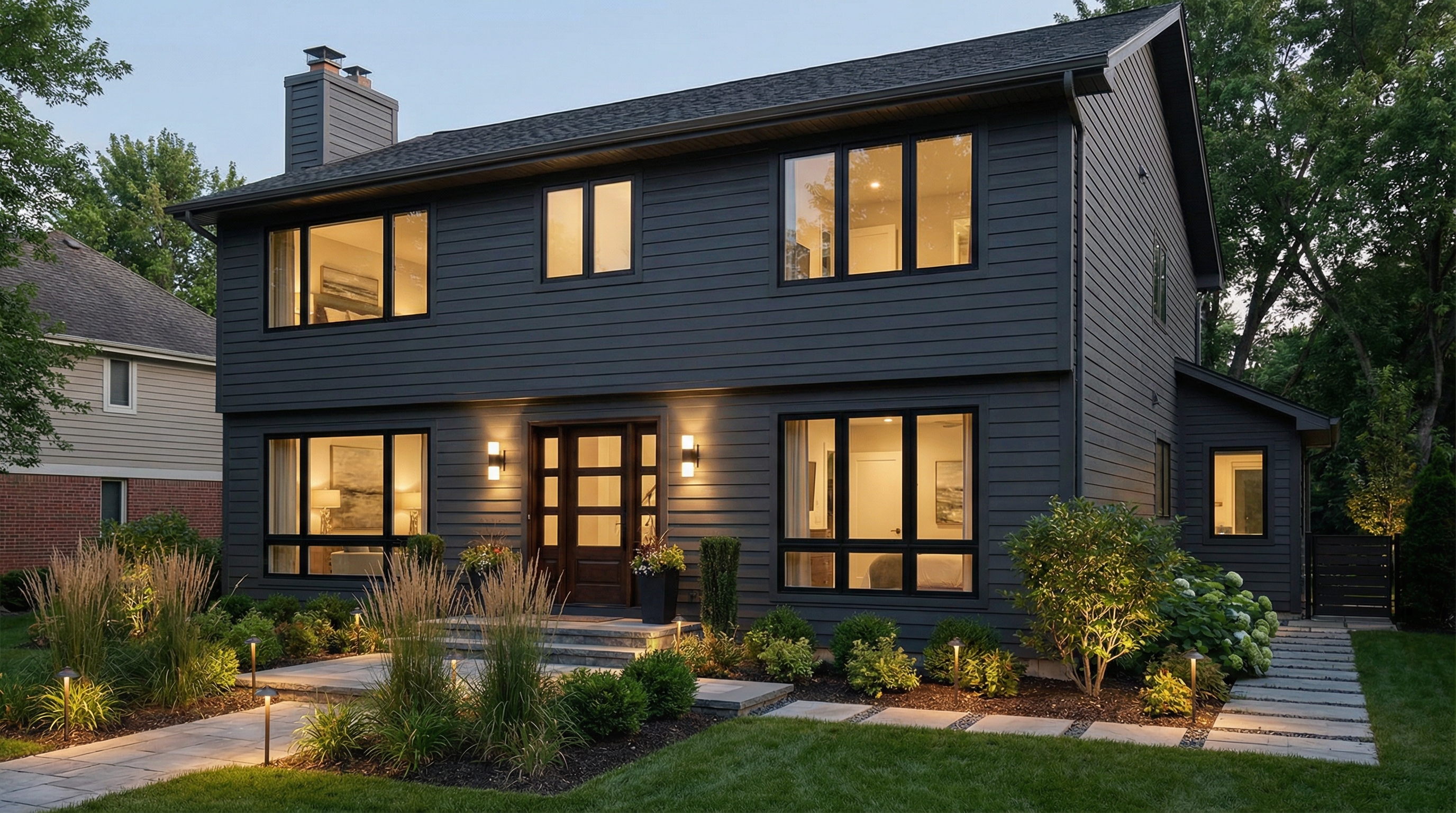
Blacktec Facade: facade design
See more examples in the Blacktec Facade style gallery or the full design gallery.
FAQ: facade design in Blacktec Facade style
- A dark contemporary exterior style with black-stained or charred wood cladding, matte black metal roofing, brass accents and one warm wood entrance frame.
- A Japanese technique of charring cedar to produce a durable black finish that resists rot, insects and fire. It dates back centuries and has had a strong global revival since 2015.
- Yes, somewhat — a black facade can run 10-15C hotter in summer sun than a white one. This is usually offset by good wall insulation and ventilation behind rainscreen cladding.
- Charred wood fades to a warm dark gray over 10-15 years, which most consider an improvement. Painted black requires repainting every 7-10 years.
- One warm wood accent (cedar or oak entrance), unlacquered brass hardware, matte black windows and standing-seam metal roof. Avoid white trim.
- The peak was 2018-2022. Black continues but is broadening — designers now mix it with more wood and less aggressive geometry.
- About 20-40% premium over a standard facade in initial cost, often offset by lower maintenance for charred wood. Pre-stained shiplap pine at $5-10 per sq ft is the budget option.