Exterior Home Makeover: Transform Your House from Dated to Stunning

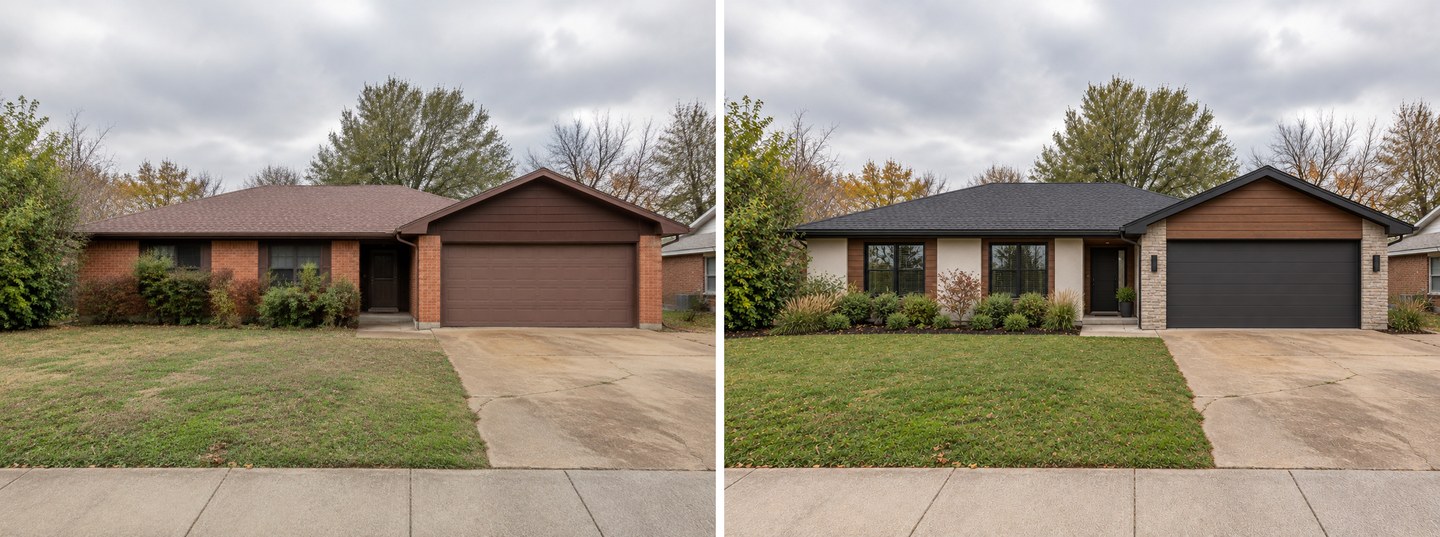
You do not need to demolish and rebuild. You do not need a six-figure budget. A strategic exterior makeover — targeting the updates that deliver the most visual impact and the highest return on investment — can transform any dated house into something you are proud to pull into the driveway of every evening.
The data backs this up. According to the National Association of Realtors' 2024 Remodeling Impact Report, exterior projects consistently outperform interior projects in both homeowner satisfaction (a "Joy Score" of 9.4/10 for new roofing, 9.8/10 for a new front door) and cost recovery at resale. A $4,000 garage door replacement can return $7,500+ in added home value. A $2,000 exterior paint job can be the difference between a house that sits on the market for 90 days and one that sells in a weekend.
This guide ranks the seven highest-impact exterior updates, shows real before-and-after transformations with analysis, walks through the planning process step by step, provides complete cost tables, compares DIY and professional approaches, and catalogs the most common mistakes — so you avoid them.
What Makes an Exterior Makeover Worth It?
An exterior makeover is worth it when the cost of the improvement is less than the value it creates — in daily enjoyment, energy savings, reduced maintenance, and resale price. Here is the math.
Property value. Remodeling Magazine's 2024 Cost vs. Value report tracks actual resale data across 150 US markets. Exterior projects dominate the top-ROI list:
| Project | Average Cost | Resale Value Added | ROI |
|---|---|---|---|
| Garage door replacement | $4,302 | $8,751 | 194% |
| Manufactured stone veneer | $10,925 | $16,647 | 153% |
| Steel entry door replacement | $2,214 | $4,430 | 188% |
| Siding replacement (fiber cement) | $19,626 | $17,008 | 88% |
| Window replacement (vinyl) | $19,343 | $13,766 | 67% |
The top three exterior projects all return more than you spend. That is rare in home improvement.
Curb appeal. A 2023 University of Texas at Arlington study found that homes with high curb appeal sell 7% faster and for 7% more than comparable homes with average exteriors. In a $400,000 market, that is $28,000.
Energy savings. New windows reduce heating/cooling costs by 12–33% (ENERGY STAR data). Insulated siding adds R-2 to R-5 to wall assemblies. A new roof with proper ventilation and reflective shingles can cut attic temperatures by 20–30°F, reducing cooling loads significantly.
Maintenance reduction. Replacing 30-year-old wood siding with fiber cement eliminates the cycle of scraping, priming, and repainting every 5–7 years. New windows eliminate the morning routine of propping up sashes that will not stay open. A new roof means no more patching leaks after every storm.
The 7 Highest-Impact Exterior Updates
Not all exterior updates are equal. These seven deliver the most visual transformation per dollar spent, ranked from highest impact to lowest.
1. Exterior Paint

Paint is the single highest-impact, lowest-cost exterior update. A full repaint changes the entire character of a house — from dated beige to modern charcoal, from faded yellow to crisp white, from forgettable to striking.
Cost: $3,000–8,000 professional (1,500–3,000 sq ft house). $800–1,500 DIY (paint, primer, supplies, equipment rental).
Timeline: 3–7 days professional; 2–4 weekends DIY.
What makes the biggest difference:
- Choosing a modern color palette. In 2026, the strongest exterior palettes use high contrast: dark body + light trim, or light body + dark windows and accents. See our facade design guide for specific color palettes with HEX codes.
- Painting the front door a bold accent color. A charcoal or navy front door on a white house is the fastest single-element upgrade you can make.
- Not forgetting the trim. Faded, peeling trim undermines fresh siding paint. Budget an extra $500–1,000 for trim paint.
Pro tip: Pressure wash the entire exterior ($200–400 rental, or $300–600 professional) before deciding to paint. Some houses just need a good cleaning to look 80% better.
2. Siding Replacement or Overlay

If paint is a haircut, new siding is a facelift. It changes the material, texture, and profile of the house — not just the color. And modern siding options (fiber cement, engineered wood, insulated vinyl) outperform what was available 20 years ago in every dimension: durability, appearance, thermal performance, and maintenance.
Cost: $8,000–25,000 for fiber cement (James Hardie) on a typical 2,000 sq ft home. $12,000–35,000 for engineered wood (LP SmartSide). $5,000–12,000 for premium vinyl.
Timeline: 1–3 weeks professional.
Best material choices in 2026:
- James Hardie HardiePlank ($4–9/sq ft installed): The industry standard. Cement-and-cellulose composition resists rot, insects, fire, and hail. 50+ year lifespan. Available in smooth or cedar-grain texture, and in 20+ factory-applied ColorPlus colors that carry a 15-year fade warranty.
- LP SmartSide ($3–7/sq ft installed): Engineered wood with a natural cedar texture. Lighter than fiber cement, easier to cut and install, excellent impact resistance. 5/50 year warranty. Best for homeowners who want a wood look without wood maintenance.
- Board-and-batten profile: Whether in fiber cement or engineered wood, vertical board-and-batten siding is the defining material of the modern farmhouse look. It adds height and visual interest to any facade.
Siding overlay vs. tear-off: Overlaying new siding over old saves $1,000–3,000 in labor, but you lose the chance to inspect and repair sheathing, housewrap, and insulation. On houses built before 1980, tear-off is recommended to address potential moisture damage and upgrade the building envelope.
3. Window Upgrades
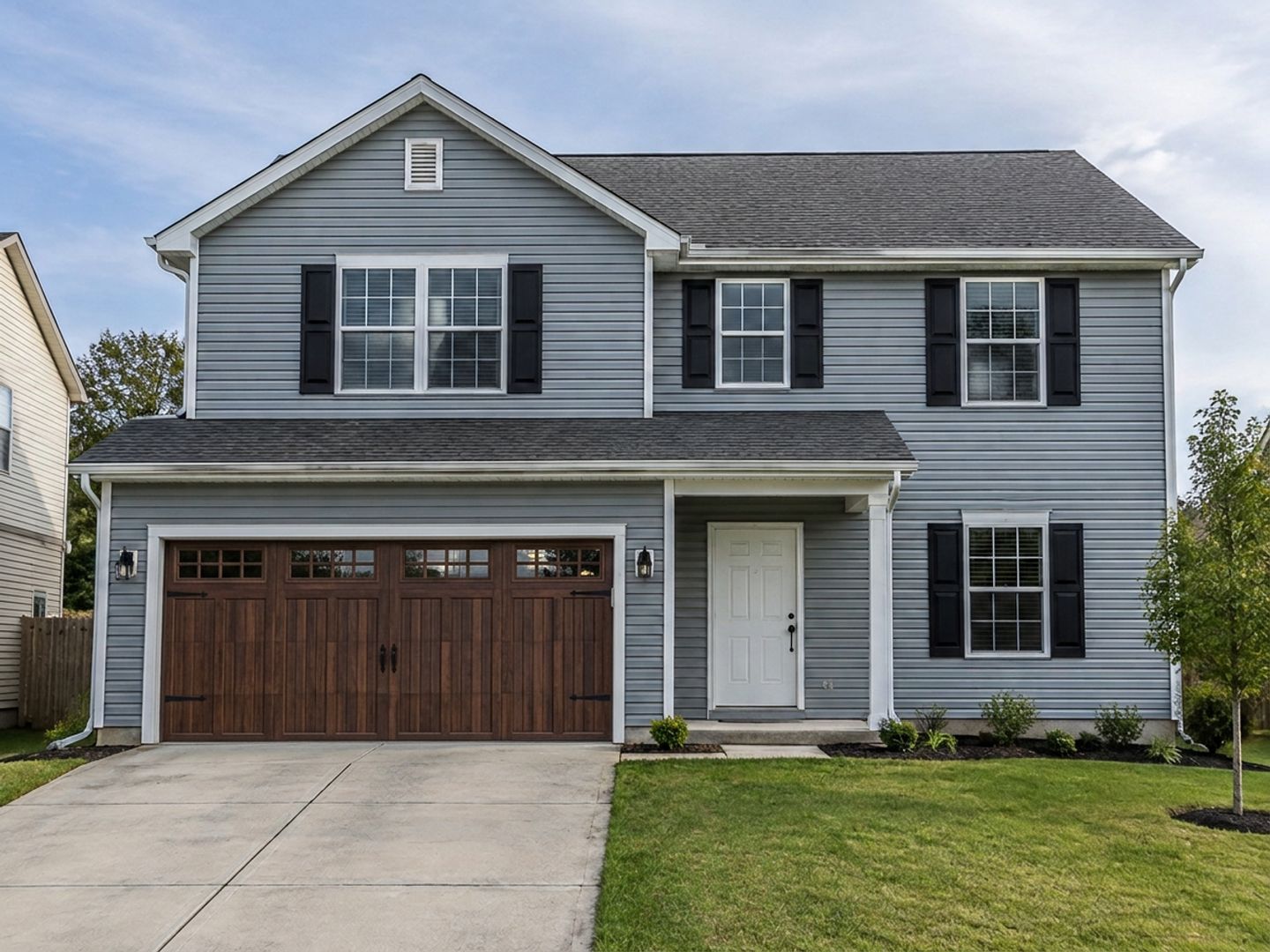
Windows are the eyes of a house. Dated windows — small, aluminum-framed, single-pane, with visible grid patterns — instantly age a facade. Modern windows — larger, with slimmer frames, better glass, and cleaner profiles — modernize it.
Cost: $500–1,500 per window installed (vinyl or fiberglass). $800–2,500 per window for wood-clad or aluminum-clad. A typical 8-window project: $8,000–20,000.
Timeline: 1–3 days for 8–12 windows (professional).
What to prioritize:
- Frame color. Black exterior frames (Andersen 100 Series, Pella 250 Series, Marvin Essential) are the single most transformative window upgrade. They add definition and contrast to any facade style.
- Larger units. If budget allows, enlarging window openings adds natural light and modernizes proportions. A structural header modification costs $500–1,500 per opening on top of the window cost.
- Eliminate dated grids. Unless your house is a true Colonial or Tudor where divided-light windows are architecturally correct, removing window grids instantly modernizes the look.
- Energy performance. Specify low-E, argon-filled, double-pane glass (U-factor 0.25 or lower). This is now standard on quality windows and pays for itself in 5–8 years through energy savings.
4. Front Door Statement

The front door is the highest-ROI single element on any facade. Remodeling Magazine consistently ranks it at 100–188% cost recovery. It is also the element every visitor interacts with physically — they see it, touch it, and form their first close-up impression of your home.
Cost: $200–800 for a quality steel or fiberglass door. $1,500–5,000 for a premium wood or custom door. Installation: $300–800.
Timeline: 4–8 hours for a same-size replacement.
Best upgrades:
- Bold color. A front door in SW 6244 Naval (#283849), BM 2132-10 Black, or a saturated red/green/teal creates a focal point on any facade. It costs $30 in paint and 2 hours of work.
- Oversized door. Replacing a standard 36×80-inch door with a 42-inch-wide or 8-foot-tall door dramatically upgrades the entry. Requires header modification ($500–1,500) but the visual impact is substantial.
- Glass panels. A door with sidelights or a half-glass panel admits light into the foyer and breaks up large expanses of solid wall. For privacy, use frosted, reeded, or textured glass.
- Hardware. A $100 lockset upgrade (Schlage Encode, Emtek Lausanne, Baldwin Prestige) transforms the tactile and visual quality of the entry. Black, brass, and nickel are the finishes of 2025.
5. Landscaping

Landscaping is the frame around the facade painting. Without it, even a beautifully renovated house looks unfinished. With it, even a modest house looks polished and intentional.
Cost: $1,000–5,000 DIY for foundation plantings, mulch, path edging, and a few accent plants. $3,000–15,000 professional for a complete front-yard landscape design.
Timeline: 1–3 weekends DIY; 1–2 weeks professional.
Highest-impact landscaping moves:
- Define beds with clean edges. A crisp edge between lawn and planting bed — cut with a half-moon edger or lined with steel edging (Corten steel: $4–8/linear foot) — is the simplest landscaping upgrade.
- Layer in three heights. Ground cover (creeping thyme, mondo grass) in front, mid-height shrubs (boxwood, hydrangea, lavender) in the middle, and tall accent plants (ornamental grasses, small trees) at the back or corners.
- Mulch everything. 3 inches of hardwood mulch in all beds costs $200–500 for a typical front yard and instantly makes landscaping look maintained.
- Path to the front door. A defined path — flagstone, pavers, or poured concrete — creates a clear visual line from the street to the entry. Width matters: 4 feet minimum for a primary path. Anything narrower feels like an afterthought.
- Outdoor planters. Two matching planters flanking the front door ($50–200 each, plus plants) add symmetry and life to the entry.
6. Exterior Lighting Upgrade

Most houses have inadequate exterior lighting: one builder-grade fixture by the front door and a floodlight above the garage. A proper lighting upgrade makes the house look like a different property at night — and improves security, safety, and energy efficiency.
Cost: $500–2,000 DIY (fixtures + low-voltage landscape lighting kit). $2,000–5,000 professional (fixtures, wiring, landscape lighting, smart controls).
Timeline: 1–2 weekends DIY; 2–5 days professional.
What to install:
- Wall sconces at the entry. Replace the single builder-grade light with a pair of wall sconces flanking the door. Budget: $100–300 per fixture. Brands: Hinkley, Troy Lighting, Visual Comfort.
- Under-eave downlights. Recessed LED downlights (WAC Lighting, $30–50 each) under the eaves wash the facade with light from above. Space 6–8 feet apart.
- Path lighting. Low-voltage LED path lights ($30–80 each, plus transformer) along the front walk. Space 6–8 feet apart, alternating sides.
- Accent uplights. Ground-mounted LED spotlights ($50–150 each) aimed at architectural features, trees, or textured walls.
- Smart controls. A Lutron Caseta switch ($60–80) or Philips Hue outdoor kit ($150–250) for automated schedules — on at dusk, dim at 10 PM, off at dawn.
7. Garage Door Replacement
The garage door is often the single largest element on a facade — 30–40% of the visible front. A dated, dented, or faded garage door drags down every other improvement you have made. Replacing it is the highest-ROI exterior project in America (194% according to Remodeling Magazine's 2024 report).
Cost: $1,500–4,000 for a quality insulated steel door with windows (Clopay, Amarr, Wayne Dalton). $3,000–6,000 for a carriage-house style or custom wood door. Installation: $300–500.
Timeline: 4–8 hours professional installation.
Best choices:
- Flush panel, black or charcoal: For modern and contemporary homes. Clean, simple, high-contrast against light siding.
- Carriage-house style with windows: For farmhouse and traditional homes. The windows let in light and break up the solid expanse. Clopay Canyon Ridge and Coachman series are the best-selling options.
- Match the siding. If the garage faces the street prominently, paint or order the door in the same color as the siding so it recedes visually. This works especially well on small houses where the garage would otherwise dominate.
Before & After: Real Exterior Transformations
Theory is useful. Seeing real transformations is better. Here are two common house types and the specific changes that transformed them.
Ranch Makeover
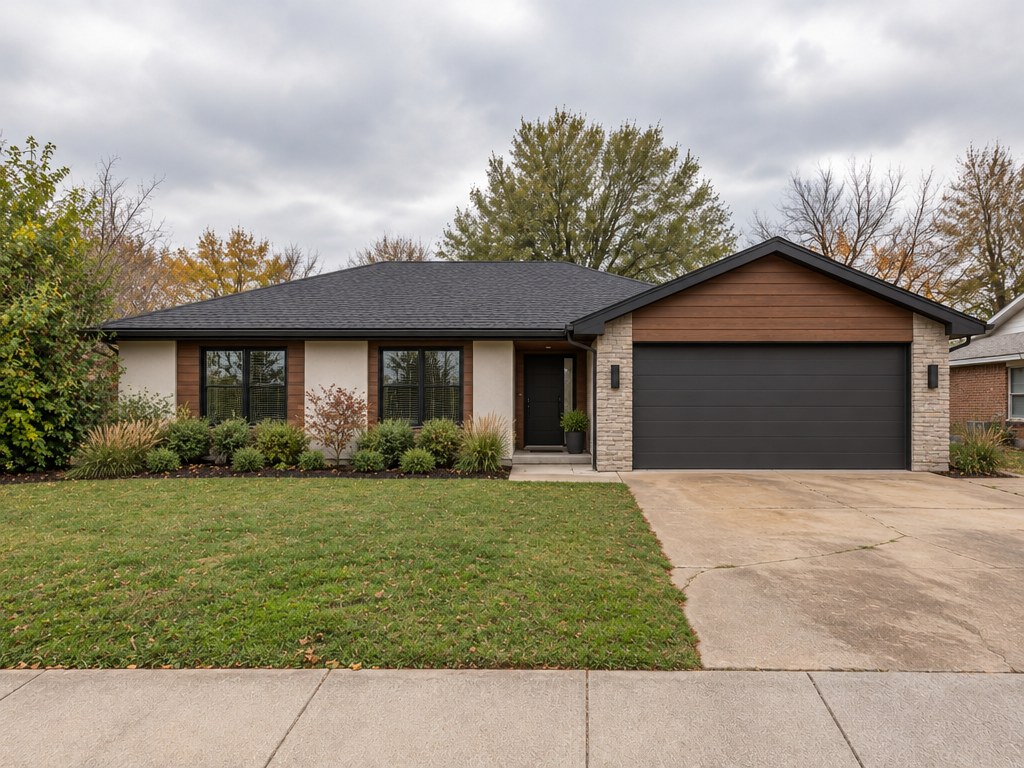
The "before": A 1970s ranch with faded beige vinyl siding, small aluminum-frame windows, a flat concrete stoop, a white aluminum storm door, and overgrown foundation shrubs. The house is structurally solid — roof replaced 10 years ago, foundation in good shape — but it looks 50 years old.
The changes:
- Siding: Replaced vinyl with James Hardie HardiePlank in SW 7069 Iron Ore (charcoal). Fiber cement board-and-batten on the front gable for texture. Total: $18,000.
- Windows: Replaced 6 front-facing windows with Andersen 100 Series in black exterior. Enlarged the living room window to a 6-foot picture window. Total: $9,500.
- Front door: Installed a 42-inch Therma-Tru fiberglass door in Matte Black with sidelights. New Emtek hardware in satin brass. Total: $2,800.
- Porch: Poured a new 8×12-foot concrete porch with a cedar pergola overhead. Added cedar posts. Total: $6,500.
- Landscaping: Removed overgrown shrubs. Installed boxwood hedge, ornamental grasses, and a flagstone path. Mulched all beds. Total: $3,200.
- Lighting: Installed two Hinkley wall sconces, six path lights, and three up-lights on the facade. Total: $1,200.
Total cost: $41,200 Estimated value added: $35,000–45,000 (based on comparable sales in the neighborhood)
Why it works: The dark siding creates a dramatic backdrop that makes the landscaping pop. The enlarged window and new porch add dimension to what was a flat, one-plane facade. The board-and-batten gable adds vertical interest. The warm brass hardware and cedar elements prevent the dark palette from feeling cold.
Colonial Makeover
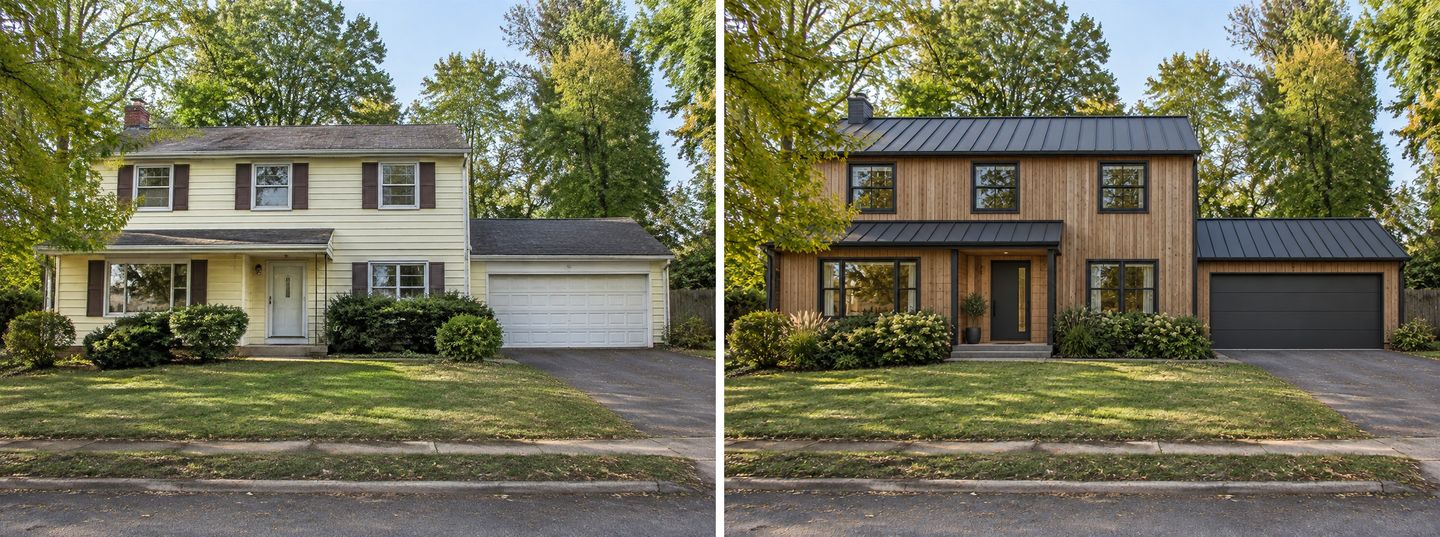
The "before": A 1990s colonial with faded yellow vinyl siding, white vinyl shutters that are too small for the windows, a six-panel white front door, a concrete stoop with wrought iron railings, and sparse landscaping. The bones are good — symmetrical facade, generous windows, decent proportions — but every finish element is builder-grade and outdated.
The changes:
- Paint: Full repaint in BM HC-172 Revere Pewter (warm greige body), BM 2132-10 Black (shutters and front door), BM OC-17 White Dove (trim). Total: $5,500.
- Shutters: Replaced undersized vinyl shutters with correctly proportioned Timberlane composite shutters in black. Total: $2,400 (8 shutters).
- Front door: Painted existing solid-wood door in BM 2132-10 Black. Added new Baldwin Prestige hardware in satin nickel. Total: $350.
- Porch: Replaced wrought iron railings with square white PVC columns. Added a curved bluestone step and landing. Total: $4,800.
- Landscaping: Added symmetrical boxwood hedges, white hydrangeas, and a brick-bordered path. Large black planters flanking the door. Total: $2,800.
- Lighting: Replaced single porch light with pair of Visual Comfort lanterns. Added path lights. Total: $900.
Total cost: $16,750 Estimated value added: $20,000–30,000
Why it works: The warm greige body color replaces the cold yellow with a current, sophisticated neutral. Correctly sized black shutters add depth and define the windows. The upgraded porch columns and bluestone landing transform the entry from an afterthought into a destination. The symmetrical landscaping reinforces the colonial proportions. And the total cost is under $17,000 — less than half the ranch makeover — because paint, shutters, and landscaping did most of the heavy lifting.
How to Plan Your Exterior Makeover
A successful exterior makeover follows a clear sequence. Skip steps and you risk choosing a siding color that clashes with your roof, or installing a front door that is too small for the new porch proportions.
Step 1: Document the current state. Photograph your house from the street (straight-on, both sides, and at 45-degree angles). Photograph it in morning light, afternoon light, and at dusk. Note every element: siding material and condition, window type and size, front door, porch, roofline, gutters, garage door, lighting, landscaping.
Step 2: Identify what bothers you. Rank every element from "keep" to "must change." Most homeowners have 2–3 elements that bother them most — usually siding color, the front door, and the landscaping. Start there.
Step 3: Choose a style direction. Decide if you want to preserve the existing architectural style (a colonial should probably remain a colonial) or transform it (a bland ranch can become a modern farmhouse). Look at completed houses in your target style — not just Pinterest renderings, but real houses in real neighborhoods.
Step 4: Visualize with AI.
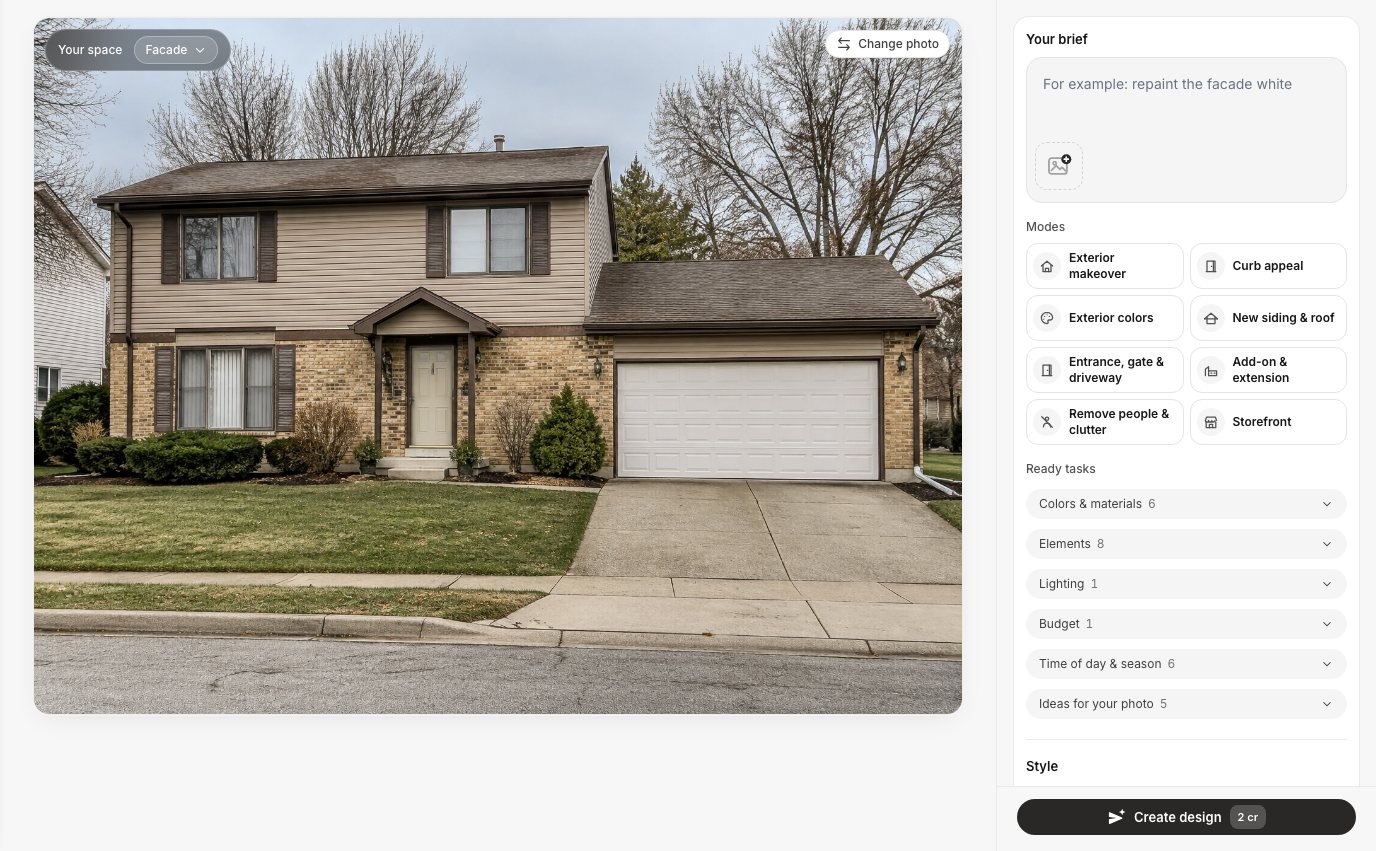
This is where the process has changed dramatically. Instead of guessing what your house would look like in a new style, you can see it. Upload your front-facade photo to GenRoom, pick a ready-made mode (curb appeal, siding & roof) or up to three styles — modern, farmhouse, Mediterranean, contemporary, minimalist — and click "Create design." In seconds, you see your actual house transformed, and you can refine any detail with words or a brush.
This is not a replacement for an architect's plans, but it solves the hardest early-stage problem: agreeing on a direction. Show the AI visualizations to your spouse, your family, your contractor. "I want it to look like this" is a far more effective brief than "I want something modern but warm."
Step 5: Create a scope and budget. Based on the visualization, list every change needed to achieve the look. Get 3 quotes from contractors for each trade (siding, windows, painting, landscaping). Add 15–20% contingency for surprises — exterior renovations always uncover something unexpected behind the old siding.
Step 6: Sequence the work. Structural changes first (roofline, window openings, porch foundation). Then siding and windows. Then paint and finish details. Then landscaping and lighting — always last, because heavy equipment and foot traffic will destroy landscaping installed too early.
Step 7: Execute and document. Take progress photos. They are motivating, useful for contractor accountability, and valuable if you ever sell (buyers love seeing before-and-after documentation of well-executed renovations).
Create facade design with AI
Upload a photo of your home and get a new facade in the chosen style in 30 seconds. First generation is free.
Exterior Makeover Cost Guide
Real costs for a 2,000 sq ft home (approximately 1,200 sq ft of facade area), based on 2024–2025 national averages.
| Update | DIY Cost | Professional Cost | ROI at Resale |
|---|---|---|---|
| Exterior paint (full house) | $800–1,500 | $3,000–8,000 | 55–60% |
| Siding (fiber cement) | N/A — pro only | $12,000–25,000 | 69–88% |
| Siding (engineered wood) | N/A — pro only | $10,000–22,000 | 65–80% |
| Windows (8 units, vinyl) | N/A — pro recommended | $8,000–15,000 | 67–73% |
| Windows (8 units, fiberglass/wood-clad) | N/A — pro only | $12,000–24,000 | 70–75% |
| Front door (steel/fiberglass) | $500–1,200 | $1,500–3,500 | 100–188% |
| Front door (custom wood) | N/A | $3,000–8,000 | 60–80% |
| Garage door | N/A — pro only | $2,500–6,000 | 93–194% |
| Landscaping (front yard) | $1,000–3,000 | $3,000–15,000 | 100–150% |
| Exterior lighting | $500–1,500 | $2,000–5,000 | 50–60% |
| Porch/portico addition | $2,000–5,000 | $5,000–20,000 | 65–75% |
| Shutters (8 units) | $400–1,200 | $1,500–4,000 | 50–60% |
Total budget scenarios:
| Scope | Budget Range | What It Includes |
|---|---|---|
| Cosmetic refresh | $3,000–8,000 | Paint, front door, hardware, lighting, landscaping cleanup |
| Targeted upgrade | $10,000–25,000 | Paint, front door, lighting, landscaping, shutters + 1 major item (garage door OR windows OR siding accent) |
| Full makeover | $25,000–50,000 | New siding, windows, front door, garage door, lighting, landscaping |
| Premium transformation | $50,000–100,000+ | Premium siding, custom windows, porch addition, hardscape, landscape architecture, smart lighting |
DIY vs Professional: What You Can Do Yourself
Some exterior projects are excellent DIY candidates. Others require licensed professionals for safety, warranty, and code compliance.
| Project | DIY Feasible? | Notes |
|---|---|---|
| Exterior painting | Yes — with prep work | Requires pressure washer, scaffolding/ladders, scraping tools, quality sprayer. Budget 3–4 weekends. The main risk: poor surface prep leads to peeling within 1–2 years. |
| Front door replacement (same size) | Yes | Pre-hung doors drop into existing frames. You need a drill, shims, foam sealant, and 4–6 hours. Watch a manufacturer's installation video first. |
| Front door painting | Yes | Sand, prime, 2 coats. 2 hours. Use exterior acrylic-alkyd (Benjamin Moore Aura Exterior or Sherwin-Williams Emerald). |
| Landscaping | Yes | Design-build is the most rewarding DIY exterior project. Rent a sod cutter if removing lawn. Buy plants at end-of-season sales for 50% off. |
| Path lighting (low-voltage) | Yes | Plug-and-play kits from WAC, Hinkley, or Kichler. Bury cable 6 inches deep. Half-day project. |
| Exterior hardware upgrade | Yes | New house numbers, mailbox, door hardware, porch light fixtures. 2–4 hours total. Immediate visual impact. |
| Siding replacement | No | Requires knowledge of building envelope, flashing, and weather-resistant barriers. Incorrect installation voids warranties and causes moisture damage. |
| Window replacement | No (most cases) | Structural headers, flashing, and proper shimming are critical. A poorly installed window leaks air and water for years. Insert replacements (no frame change) are borderline DIY. |
| Garage door | No | Spring tension is lethal. Professional installation is $300–500 and not worth the risk. |
| Electrical (new circuits) | No | Code requires licensed electricians for new circuits. Low-voltage landscape lighting is DIY; line-voltage wall sconces on new circuits are not. |
Common Exterior Makeover Mistakes
These mistakes waste money, create maintenance headaches, or undermine the visual result. Every one of them is avoidable.
Mistake 1: Ignoring the roof color. Your roof is a permanent (or semi-permanent) color that covers 40%+ of the visible exterior. Choosing siding or paint colors without considering the roof creates clashes. A warm brown roof does not pair with cool gray siding. A green asphalt roof limits your palette significantly. Fix: Start with the roof color and work down. If you are planning a roof replacement within 5 years, choose your new roof and siding colors together.
Mistake 2: Skipping the mock-up. Choosing colors from a 2×2-inch paint chip is a recipe for disappointment. Colors look radically different on a large surface, in direct sunlight, next to landscaping, and against your roof. Fix: Paint a 4×4-foot sample on the actual wall and live with it for 48 hours — observe it in morning light, direct sun, shade, and at dusk. Better yet, generate an AI visualization with GenRoom to see the whole-house effect before buying a gallon of paint.
Mistake 3: Over-updating (or under-updating). Replacing the siding but keeping the dated windows and 1990s front door creates an awkward mismatch. Conversely, replacing every element simultaneously often blows the budget and delays the project indefinitely. Fix: Identify the 2–3 highest-impact changes and do them well. A complete siding-and-paint job with the old windows will look better than new windows in old siding.
Mistake 4: Wrong shutter proportions. Shutters should be exactly half the width of the window they flank. A 30-inch-wide window needs 15-inch shutters. Too-small shutters (a common builder-grade shortcut) look fake. Too-large shutters overwhelm the window. Also, shutters on windows that are too close together, or on windows where shutters were never historically used (picture windows, sliding doors), look wrong. Fix: Measure first. If shutters do not work proportionally, skip them entirely — many modern and contemporary homes look better without them.
Mistake 5: Forgetting the fifth elevation. The "fifth elevation" is what you see when you are standing at the front door looking out — the porch ceiling, the door frame, the sidelights, the house numbers, the mailbox, the welcome mat. This is the close-up experience. Grand siding and landscaping mean nothing if the visitor encounters peeling paint, a rusted doorbell, and a faded welcome mat at the threshold. Fix: Budget $200–500 for threshold details: new doorbell ($30–200), house numbers ($20–100), porch light ($100–300), door hardware ($50–200), and a quality doormat ($30–60).
Mistake 6: Doing landscaping first. Landscaping is the most visible and satisfying project, so homeowners often start there. But if siding replacement, painting, or construction is coming next, heavy equipment and contractors will destroy new plantings. Fix: Always landscape last. Install hardscape (paths, walls, edging) after construction, and plant after all heavy work is complete.
FAQ
How much does a full exterior makeover cost? A cosmetic refresh (paint, door, lighting, landscaping) costs $3,000–8,000. A targeted upgrade adding one major element (siding accent, new windows, or garage door) costs $10,000–25,000. A full exterior makeover with new siding, windows, door, garage door, lighting, and landscaping runs $25,000–50,000. Premium transformations with custom materials, porch additions, and landscape architecture can exceed $100,000.
What is the highest-ROI exterior improvement? Garage door replacement returns 194% of cost at resale (Remodeling Magazine 2024). A $4,302 investment adds $8,751 in home value. Steel entry door replacement is second at 188% ROI. Manufactured stone veneer is third at 153% ROI. All three are relatively low-cost projects with outsized returns.
Can I do an exterior makeover in stages? Yes, and staging is often the smartest approach. Phase 1: Paint + front door + hardware + lighting ($3,000–6,000). Phase 2: Landscaping ($2,000–5,000). Phase 3: Windows or siding ($8,000–25,000). Phase 4: Garage door + porch ($5,000–15,000). This spreads cost over 1–3 years while delivering visible improvement at each stage.
How long does an exterior makeover take? A cosmetic refresh (paint, door, lighting) takes 1–2 weeks. A full makeover with siding, windows, and landscaping takes 4–8 weeks. A premium transformation with structural changes takes 2–4 months. Weather is the biggest variable — schedule exterior work during dry, mild seasons.
What exterior updates add the most curb appeal? In order of visual impact per dollar: (1) Paint — completely changes the character for $3,000–8,000. (2) Front door — the focal point, $500–3,500. (3) Landscaping — frames the entire facade, $1,000–5,000. (4) Lighting — transforms the house at night, $500–2,000. (5) Garage door — eliminates the largest dated element, $2,500–6,000.
Should I paint or replace my siding? If the siding is structurally sound (no rot, no moisture damage, no warping), paint it. A $5,000 repaint delivers 80% of the visual transformation of a $20,000 siding replacement. Replace siding when: (1) it is rotting or moisture-damaged; (2) it is vinyl that has faded beyond paint adhesion; (3) you want to change the profile (e.g., horizontal lap to board-and-batten); or (4) you want to upgrade the building envelope (add insulation, update housewrap).
What are the best exterior colors right now? The 2025 palette favors high contrast and natural tones. Top body colors: warm white (SW 7008 Alabaster), charcoal (SW 7069 Iron Ore), sage green (SW 9130 Evergreen Fog), warm greige (BM HC-172 Revere Pewter). Top trim/accent colors: black (BM 2132-10), warm white, natural cedar. Top front door colors: black, navy (SW 6244 Naval), dark green.
How do I visualize my exterior makeover before starting? Upload a front-facade photo of your house to GenRoom and generate AI-powered visualizations in different styles. You will see your actual house — not a generic model — transformed into modern, farmhouse, Mediterranean, or contemporary styles in seconds. This replaces guesswork with visual evidence and helps you align with family members and contractors before spending money.
Do I need a permit for an exterior makeover? Permits vary by municipality. Generally: painting, landscaping, lighting, and door/window replacements (same-size openings) do not require permits. Siding replacement may or may not require a permit depending on your jurisdiction. Structural changes (new window openings, porch additions, roofline modifications) always require permits. Check with your local building department before starting work — unpermitted work can complicate resale.
Your Makeover Starts with a Vision
Every great exterior makeover begins the same way: someone looks at their house and says, "This could be so much better." The gap between that feeling and a finished transformation is not talent or unlimited money — it is a plan.
Start by seeing the possibilities. Upload a photo of your house to GenRoom and generate exterior visualizations in multiple styles. Compare a modern farmhouse version against a contemporary one. See your ranch in dark charcoal. See your colonial in sage green with black shutters. Share the results with your family and pick a direction.
Then work through the priority list: paint first for the biggest visual bang, then the front door and lighting, then landscaping, then bigger investments like siding, windows, and the garage door. Stage the work if budget is a constraint. Each phase delivers visible results.
Your house has good bones. It just needs the right exterior to show them off.