Mediterranean Dining Room Ideas: 12 Real Examples (2026 Guide)
Terracotta floors, plaster walls, rustic wood — the look born on the coasts of Spain, Italy, and Greece. We unpack what makes a dining room feel truly Mediterranean, then show 12 photorealistic examples you can replicate.
- 12
- Real examples
- ~30s
- AI render time
- 4 free
- Credits, no card
What is Mediterranean Dining Room Design?
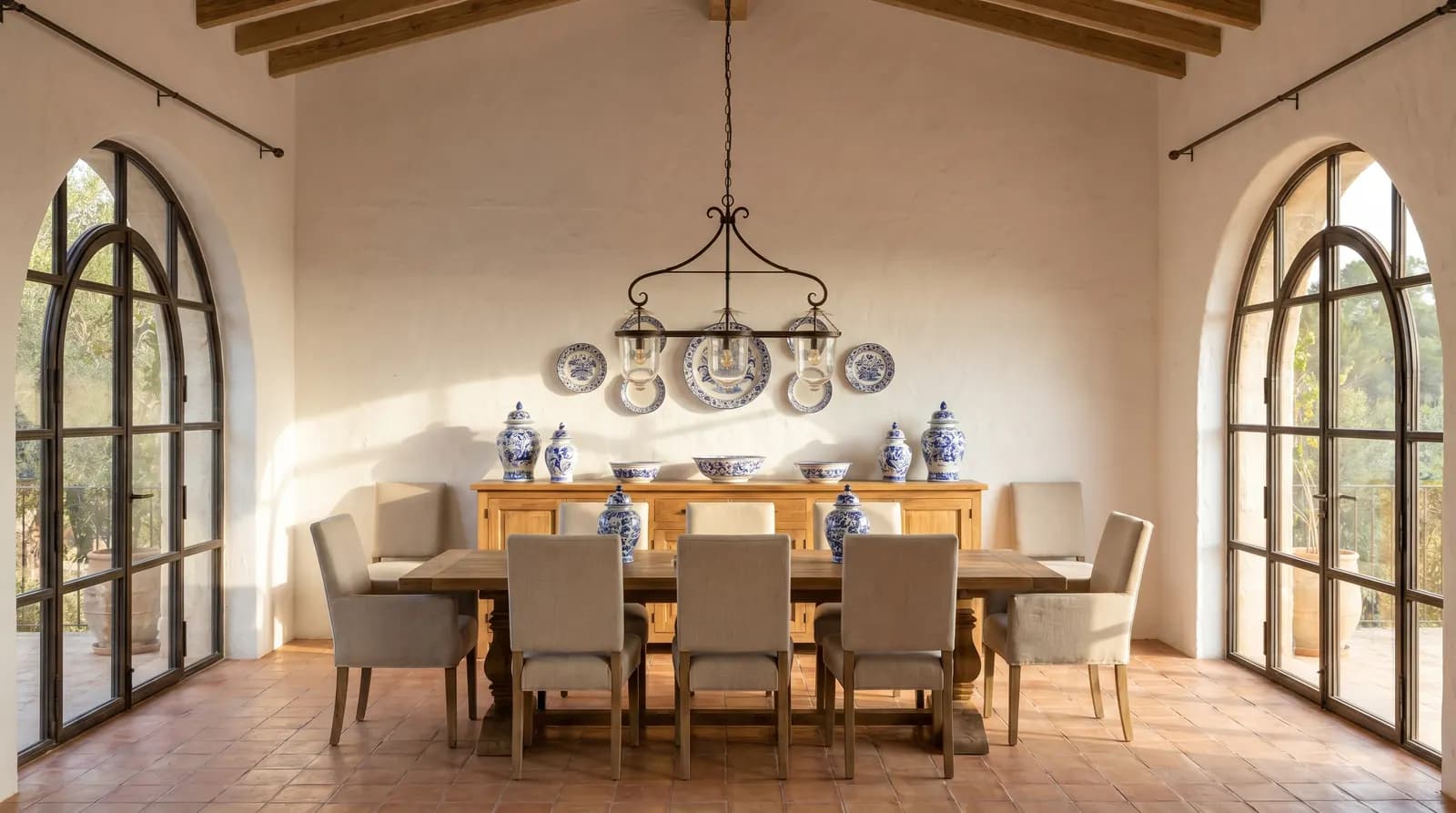
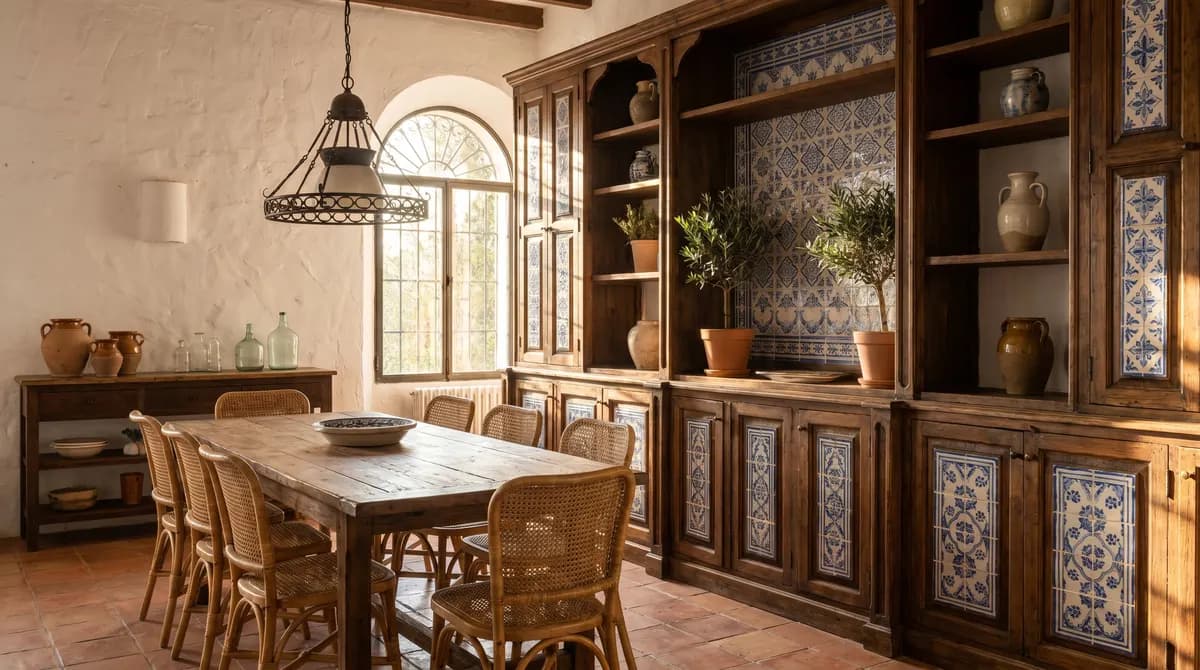
Mediterranean design is an aesthetic of simplicity and romance rooted in the coastal regions of Spain, Italy, and Greece. It's defined by a deep connection to the landscape, favoring natural, sun-bleached materials and an effortless flow between indoors and out. Key elements include textured plaster or limewash walls, earthy terracotta or stone floors, and the heavy presence of rustic, weathered wood in ceiling beams and furniture. It celebrates imperfection and the patina of age.
Three principles guide the Mediterranean dining room. First, texture over ornament: visual interest comes from the tactile quality of plaster walls, the grain of wood, and the weave of linen, not from intricate patterns or moldings. Second, connection to nature: large, often unadorned windows and doors open onto gardens or courtyards, and interiors feature natural materials and colors drawn from the sea, sky, and earth. Third, conviviality: the dining room is the heart of the home, centered around a large, welcoming table built for long, shared meals.
In 2026, the style resonates as a warm, human-centric alternative to cool minimalism. Its emphasis on natural materials and indoor-outdoor living aligns perfectly with the biophilic design movement. It's a forgiving, livable style that feels collected over time rather than designed in a single moment. It pairs well with Rustic, Wabi-Sabi, and Coastal aesthetics, offering a timeless foundation for a home that feels both grounded and soulful.
12 Real Mediterranean Dining Room Examples
Each example below is a complete look — not a mood board. Click any image to see it full-size, then hit the generate button to try the same combination on your own room photo.
 1Example
 2Example
 3Example
 4Example
 5Example
 6Example
 7Example
 8Example
 9Example
 10Example
 11Example
 12Example
Key Design Elements
Colors
- Warm, chalky whites and soft creams for walls
- Earthy tones of terracotta, ochre, and sienna
- Deep blues (Aegean, cobalt) as accents on doors or tiles
- Olive and sage greens drawn from the landscape
- Natural, sun-bleached wood tones
Materials
- Terracotta, saltillo, or natural stone floor tiles
- Textured wall finishes like plaster, limewash, or stucco
- Reclaimed or rustic woods like oak, walnut, and olivewood
- Wrought iron for lighting fixtures and hardware
- Ceramics — glazed and unglazed — for pottery and tiles
Furniture
- A large, substantial dining table made of solid, rustic wood
- Simple, ladder-back or woven-seat (rattan, rush) chairs
- A heavy wooden sideboard or console for storage
- Built-in plaster or stucco banquettes and niches
- Exposed ceiling beams in a dark, contrasting wood or whitewashed finish
Lighting
- A large, central wrought-iron or beaded chandelier
- Woven rattan or seagrass pendant lights for a softer look
- Simple wall sconces to create pools of warm, ambient light
- Abundant natural light from large, unadorned windows and doors
- Candlelight as a key element for evening atmosphere
Textiles
- Sheer, airy linen curtains that billow in the breeze
- Natural fiber rugs, such as jute or sisal, to add texture
- Simple cotton or linen tablecloths and napkins
- Upholstery in neutral, durable fabrics like canvas or linen
- Woven tapestries or wall hangings for a touch of softness
Mediterranean Dining Room Color Palette
Six pigments do most of the work — start here, then add one accent of your own.
The quintessential sun-bleached white for plaster walls. It has a soft, chalky warmth that prevents it from feeling clinical.
The color of baked earth. Used for floor tiles and pottery, it provides a grounding, essential warmth to the entire space.
A dusty, sun-faded blue reminiscent of coastal doors and shutters. Use it sparingly for a vibrant, authentic accent.
A deep, muted green that connects the interior to the landscape. Perfect for textiles, ceramics, or a painted cabinet.
The golden-yellow of sandstone and sunflower fields. A beautiful choice for a feature wall to mimic constant sunshine.
The deep, warm brown of weathered oak or olive wood. This is the color of the main furniture pieces and ceiling beams.
Must-Have Furniture & Fixtures
If you only invest in these seven pieces, your room will feel authentically Mediterranean.
Solid Wood Dining Table
The anchor of the room. Look for reclaimed wood, a trestle base, and an imperfect, rustic finish. It should be large enough to feel generous.
Terracotta Floor Tiles
Nothing says Mediterranean more directly. Choose handmade or unglazed tiles for their natural color variation and patina.
Textured Plaster Walls
The essential backdrop. Achieved with limewash, Roman clay, or a skim coat of plaster, the subtle texture catches light beautifully.
Wrought-Iron Chandelier
A bold, sculptural statement piece that provides a focal point and contrasts with the soft texture of the walls.
Woven or Simple Wood Chairs
Lightness to balance the heavy table. Rattan, caned, or simple ladder-back chairs prevent the room from feeling too heavy.
Sheer Linen Curtains
Hung on a simple iron rod, they should be long enough to pool slightly on the floor, diffusing sunlight without blocking the view.
Large Ceramic Vessels
Oversized urns or pots, placed on the floor or a sideboard. Can be left empty or filled with olive or eucalyptus branches.
Common Mistakes to Avoid
Making it too perfect. The style's charm is in its imperfections — weathered wood, uneven plaster, aged tiles. Avoid glossy finishes and flawless surfaces.
Creating a theme park. Resist clichés like fishing nets, seashells in jars, or fake grapes. Focus on authentic materials and a genuine sense of place.
Forgetting texture. Smooth, painted drywall will never feel right. The depth comes from the tactile quality of plaster walls and natural fibers.
Using cool or harsh lighting. Mediterranean light is warm and golden. Use 2700K bulbs, dimmers, and multiple sources like sconces and candles.
Overcrowding the space. The look is simple and uncluttered. It relies on a few well-chosen, substantial pieces and plenty of negative space.
Try Mediterranean Style in Your Own Dining Room
Upload a photo of your real dining room. Get a photorealistic Mediterranean redesign in about 30 seconds. 4 free credits, no card.
Generate Your Mediterranean Dining Room FreeOther Mediterranean Rooms
Apply the same palette and principles to the rest of the home.


Other Dining Room Styles
Same room, different aesthetic — explore the rest of the dining room style library.


Mediterranean Dining Room — Frequently Asked Questions
What defines Mediterranean interior design?
What kind of dining table is best for a Mediterranean look?
How can I get the textured wall effect?
How is Mediterranean different from Coastal style?
What flooring is best for a Mediterranean dining room?
Can I have a Mediterranean dining room in a modern home?
How to Design a Mediterranean Dining Room
Five decisions, in this order. Skip any of them and the look will not land.
- 1
Build the Foundation
Start with the surfaces. Choose an earthy floor like terracotta, stone, or rustic wood. For walls, commit to a textured finish like limewash or plaster in a warm, chalky white. This creates the essential canvas.
- 2
Anchor with a Table
Select a large, substantial dining table made from solid, imperfect wood. This is the heart of the room and should feel generous and welcoming. Its rustic character will ground the entire space.
- 3
Layer in Natural Materials
Contrast the heavy table with lighter seating, like woven rattan or simple wooden chairs. Add a natural fiber rug (jute, sisal) for texture and hang sheer linen curtains to soften the light.
- 4
Install Authentic Lighting
Hang a statement fixture over the table — a wrought-iron chandelier is classic, while a large woven pendant offers a softer feel. Supplement with wall sconces and candlelight for warm, layered illumination.
- 5
Accessorize with Restraint
Finish with a few, well-chosen objects. A large ceramic vase with olive branches, a collection of handmade bowls on a sideboard, or simple, rustic tableware. The goal is to feel collected, not cluttered.
Keep Exploring
Tools and guides that pair with this style.