Mediterranean Kitchen Design Ideas: 12 Real Examples (2026 Guide)
Terracotta floors, plaster walls, rustic wood beams — the look that evokes life on the coast from Santorini to Sicily. We unpack the elements of a true Mediterranean kitchen, then show 12 photorealistic examples you can replicate.
- 12
- Real examples
- ~30s
- AI render time
- 4 free
- Credits, no card
What is Mediterranean Kitchen Design?
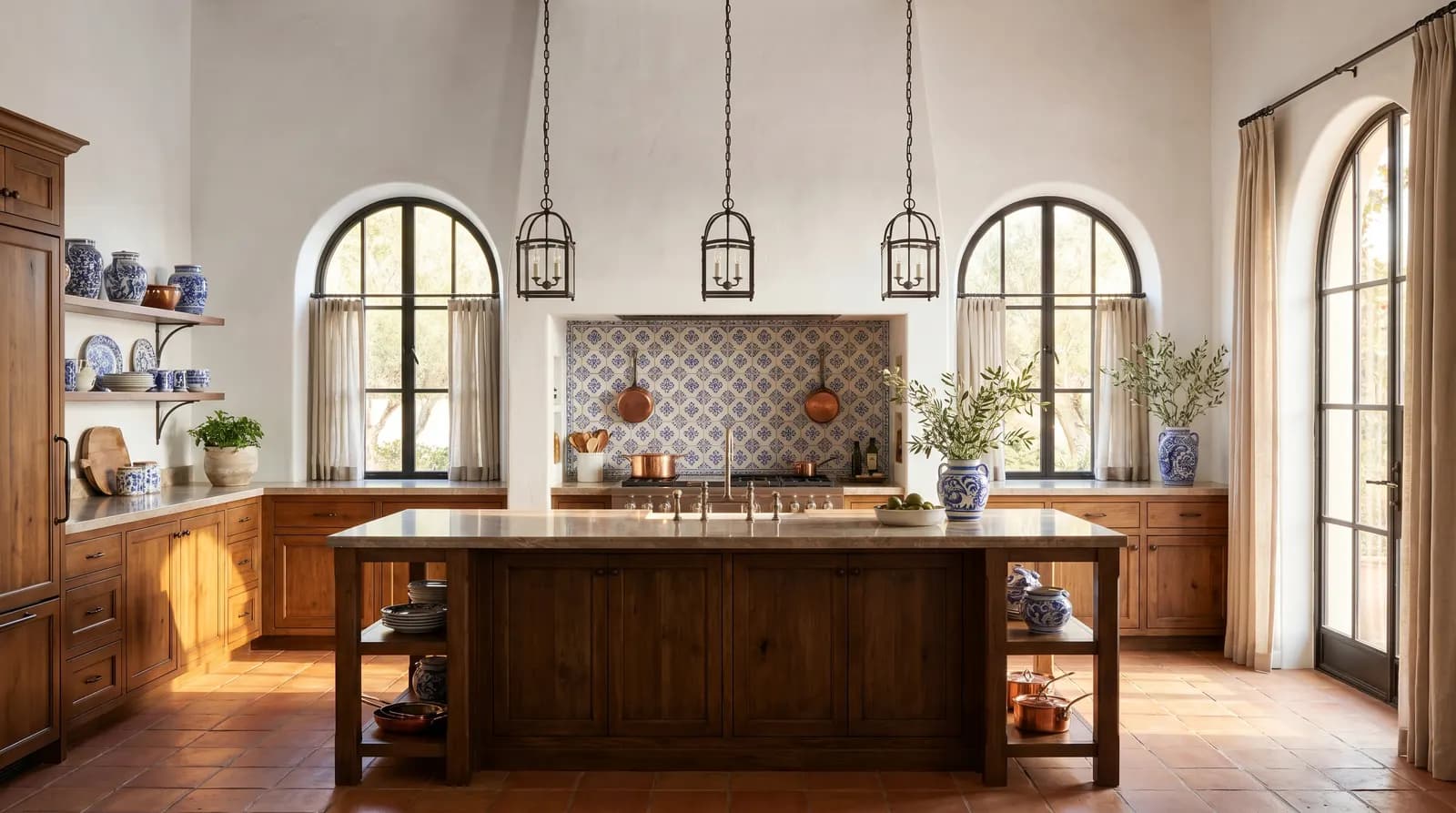
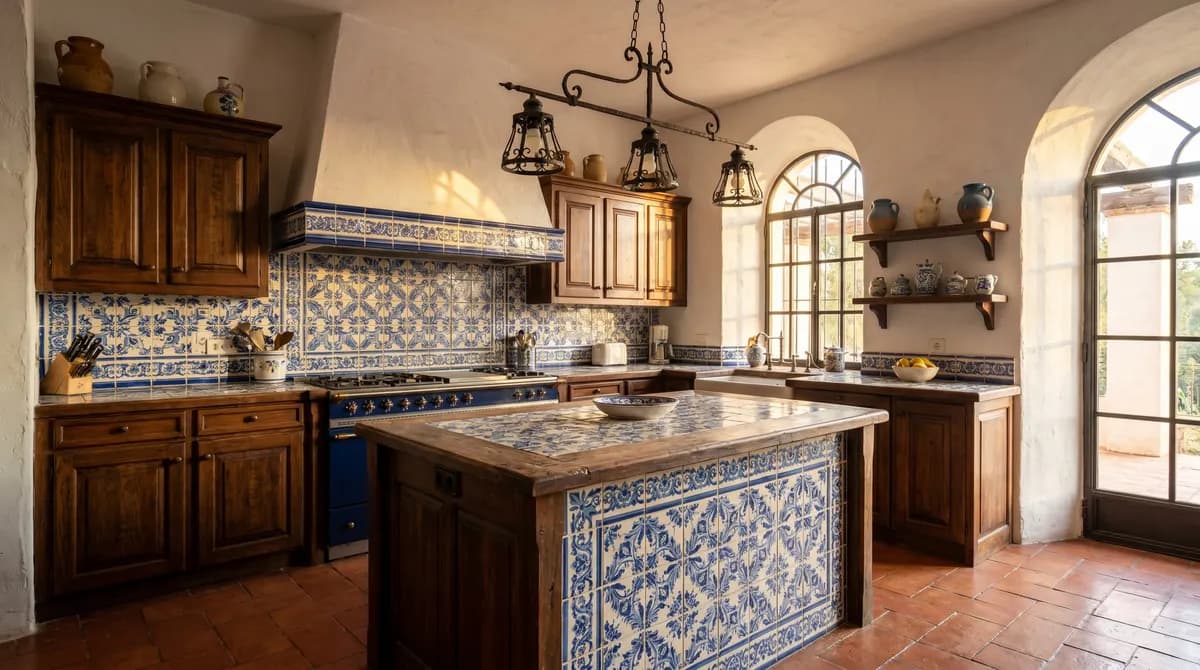
Mediterranean kitchen design channels the warm, sun-baked aesthetic of coastal life in countries like Greece, Italy, and Spain. It is a style built on natural materials and a deep connection to the landscape. Key elements include terracotta floor tiles, thick plaster or stucco walls with soft, rounded edges, and heavy, rustic wood beams. The layout is often open and airy, designed to accommodate large family gatherings and blur the line between indoor cooking and outdoor living.
Three principles define an authentic Mediterranean kitchen. First, texture: surfaces are never flat or sterile, from the hand-applied plaster on the walls to the uneven glaze of a Zellige tile backsplash. Second, warmth: a palette of sun-drenched earth tones, warm woods, and aged metals creates an atmosphere of effortless hospitality. Third, artisanship: the style celebrates handmade objects, from hand-painted ceramic pottery and woven baskets to forged iron hardware, valuing imperfection and patina over mass-produced polish.
In 2026, the Mediterranean look is finding new life far from the coast. Its emphasis on natural, durable materials and a timeless, relaxed atmosphere resonates with a desire for authenticity and permanence. It offers a warm, soulful alternative to cooler minimalist styles and pairs beautifully with Rustic, Farmhouse, and even some Bohemian elements. Its inherent connection to food, family, and sunlight makes it an enduring choice for the heart of the home.
12 Real Mediterranean Kitchen Examples
Each example below is a complete look — not a mood board. Click any image to see it full-size, then hit the generate button to try the same combination on your own room photo.
 1Example
 2Example
 3Example
 4Example
 5Example
 6Example
 7Example
 8Example
 9Example
 10Example
 11Example
 12Example
Key Design Elements
Colors
- Warm, chalky whites and creams for walls
- Earthy terracotta, ochre, and sienna tones
- Deep cobalt and Aegean blues as accents
- Soft sage and olive greens from the landscape
- Natural, weathered wood tones
Materials
- Terracotta or Saltillo tile for flooring
- Plaster, stucco, or limewash for wall texture
- Reclaimed wood for ceiling beams, doors, and islands
- Travertine, limestone, or marble countertops
- Wrought iron and aged brass for hardware and lighting
Furniture
- A large, rustic wood island or prep table
- Freestanding wooden cabinets or a large hutch
- Simple wooden chairs, often with rush seats
- A long, heavy farmhouse-style dining table
- Built-in plaster or masonry bench seating
Lighting
- Large wrought-iron chandeliers or pendants
- Ceramic or terracotta pendant lights
- Abundant natural light from large, unadorned windows
- Simple wall sconces with an aged metal finish
- Candlelight for evening ambience
Textiles
- Natural linen or cotton for simple curtains and tea towels
- Woven jute or sisal rugs on the floor
- Patterned cushions in block prints or simple stripes
- Display of colorful, hand-painted ceramics
- Woven baskets for storing produce or textiles
Mediterranean Kitchen Color Palette
Six pigments form the foundation of this sun-drenched style. Start here.
A soft, chalky white for walls that reflects light beautifully and provides a clean backdrop for rustic textures.
The quintessential color of Mediterranean floors, pots, and tiles. It provides an immediate sense of warmth and history.
A deep, vibrant blue used as an accent on tiles, doors, or window shutters, evoking the sea and sky.
A warm, golden yellow that brings the feeling of sunshine indoors, often seen in plaster finishes or textiles.
A muted, earthy green that connects the kitchen to the landscape. Perfect for cabinetry or painted furniture.
The deep, warm tone of sun-bleached and time-worn wood beams, doors, and furniture. The essential grounding element.
Must-Have Furniture & Fixtures
Incorporate these seven elements for an authentic Mediterranean feel.
Terracotta Floor Tiles
Hexagonal, square, or rectangular tiles in natural, unglazed terracotta are the definitive flooring choice, adding instant warmth and patina.
Plaster Range Hood
A custom-built, curved range hood finished in the same plaster or limewash as the walls creates a seamless, sculptural focal point.
Large Farmhouse Sink
A deep, single-basin sink in fireclay or stone is both practical and stylistically appropriate for a hardworking kitchen.
Rustic Wood Beams
Exposed, rough-hewn wooden beams on the ceiling add architectural character and a sense of history, even in a new build.
Patterned Tile Backsplash
Hand-painted Zellige, Talavera, or encaustic cement tiles behind the range introduce color, pattern, and artisanal craft.
Wrought-Iron Hardware
Simple, hand-forged iron or aged brass for cabinet pulls, latches, and faucets provides a tactile, historic detail.
Freestanding Hutch or Armoire
Instead of wall-to-wall fitted cabinets, a large, rustic wooden piece for storing dishes adds character and a collected-over-time feel.
Common Mistakes to Avoid
Making it too polished — Mediterranean style is about texture and patina. Shiny lacquered cabinets and perfectly smooth walls miss the point.
Falling for clichés — Avoid generic 'Tuscan' art, fake grapevines, and an overabundance of roosters. Focus on authentic materials instead of themed decor.
Using the wrong tile — Glossy, mass-produced subway tile looks out of place. Opt for matte, handmade-style tiles like Zellige or terracotta.
Forgetting texture — Smooth drywall painted a warm color isn't enough. The soul of the style lies in the texture of limewash or plaster walls.
Overdoing dark wood — While rustic wood is key, balance heavy beams and dark furniture with bright, light-reflecting walls to keep the space from feeling heavy.
Try Mediterranean Kitchen in Your Own Room
Upload a photo of your real kitchen. Get a photorealistic Mediterranean redesign in about 30 seconds. 4 free credits, no card.
Generate Your Mediterranean Kitchen FreeOther Mediterranean Rooms
Extend the sun-drenched, rustic feel to the rest of your home.


Other Kitchen Styles
Same room, different aesthetic — explore the rest of the kitchen style library.


Mediterranean Kitchen — Frequently Asked Questions
What are the main colors of a Mediterranean kitchen?
What kind of flooring is best for a Mediterranean kitchen?
How do I make my modern kitchen feel more Mediterranean?
What's the difference between Tuscan and Greek Mediterranean styles?
Is Mediterranean style expensive to achieve?
Can a Mediterranean kitchen work in a small space?
How to Design a Mediterranean Kitchen
Five core decisions will bring this warm, rustic style to life.
- 1
Build a Textural Base
Start with the largest surfaces. Choose terracotta or stone for the floor and a textured finish like limewash, plaster, or Roman clay for the walls. This foundation of authentic texture is non-negotiable.
- 2
Choose a Warm, Natural Palette
Select a chalky white or cream for the primary wall color. Layer in earthy tones like terracotta, ochre, and olive green. Use a vibrant Aegean blue as a deliberate, sparing accent on a door or in a tile pattern.
- 3
Incorporate Rustic Wood Elements
Wood brings essential warmth and history. Add exposed ceiling beams if possible. If not, focus on a weathered wood island, a rustic freestanding cabinet, or simple open shelving made from reclaimed timber.
- 4
Select Artisanal, Handmade Features
This is where the soul of the room comes from. Choose a hand-painted or Zellige tile for the backsplash. Opt for aged brass or hand-forged iron hardware. Display ceramic pottery that shows the hand of the maker.
- 5
Accessorize with Natural Life
Finish the space with elements that connect it to the outdoors. Use simple linen textiles, woven baskets, and display fresh produce like lemons, artichokes, or garlic. A potted olive tree or herb pots in a window are perfect final touches.
Keep Exploring
Tools and guides that pair with this style.