Mediterranean Nursery Design Ideas: 12 Real Examples (2026 Guide)
Whitewashed walls, terracotta floors, rustic woods — the look that brings the sun-drenched calm of the European coast to your baby's first room. We unpack what makes a nursery feel truly Mediterranean, then show 12 photorealistic examples you can replicate.
- 12
- Real examples
- ~30s
- AI render time
- 4 free
- Credits, no card
What is Mediterranean Nursery Design?
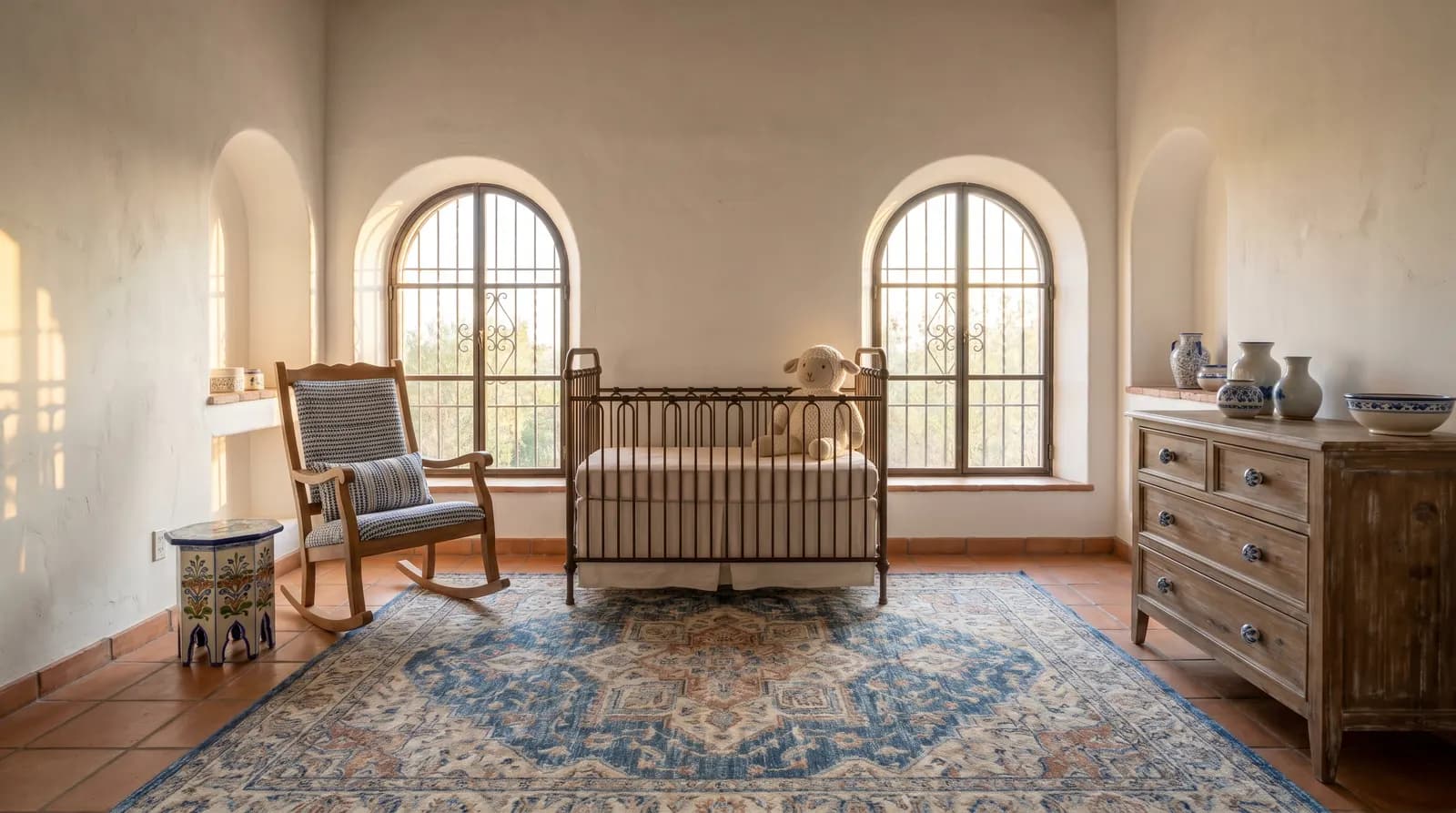
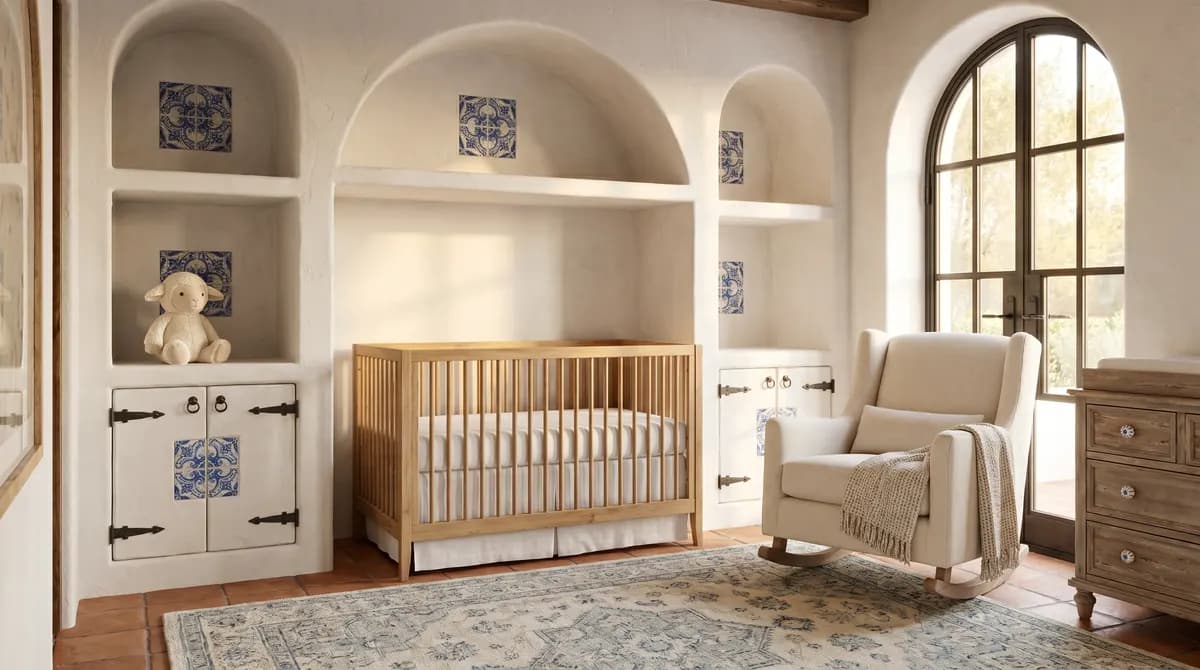
Mediterranean nursery design is a style rooted in the coastal regions of Spain, Italy, and Greece. It is defined by its connection to nature, featuring earthy materials, warm, sun-faded colors, and an emphasis on texture. The aesthetic strips away the synthetic and ornate, favoring instead rustic simplicity: lime-washed walls, terracotta floor tiles, exposed wooden beams, and arched doorways. The goal is to create a serene, light-filled sanctuary that feels both timeless and deeply calming.
Three principles guide an authentic Mediterranean nursery. First, natural materials: everything from the olive wood crib to the jute rug and linen curtains should feel organic and tactile. Second, abundant light: large windows with gauzy drapes are essential to capture the signature sun-drenched atmosphere. Third, rustic simplicity: the beauty lies in imperfection—the texture of plaster, the grain of aged wood, and the hand-thrown quality of ceramic decor. It's a style that values tranquility over stimulation.
In 2026, the style is a popular alternative to minimalist or character-themed nurseries. Its focus on natural, non-toxic materials and calming palettes appeals to modern parents. The look pairs well with Bohemian and Rustic styles but is distinguished by its specific color palette (terracotta, olive, sea blue) and architectural elements like arches. It offers a sophisticated yet gentle environment that can evolve with the child, making it a sustainable design choice.
12 Real Mediterranean Nursery Examples
Each example below is a complete look — not a mood board. Click any image to see it full-size, then hit the generate button to try the same combination on your own room photo.
 1Example
 2Example
 3Example
 4Example
 5Example
 6Example
 7Example
 8Example
 9Example
 10Example
 11Example
 12Example
Key Design Elements
Colors
- Warm whitewash or creamy off-white for walls
- Earthy terracotta tones for floors and pots
- Muted olive and sage greens as accent walls
- Dusty sea blues reminiscent of coastal waters
- Sandy beiges and natural wood tones
Materials
- Textured plaster or limewash for walls
- Rustic, light-toned woods like olive, cypress, or reclaimed pine
- Terracotta or Saltillo tiles for flooring
- Natural fibers: jute, rattan, linen, and raw cotton
- Wrought iron for hardware, curtain rods, and light fixtures
Furniture
- A simple, rustic wood crib with clean lines
- A vintage or antique wooden dresser as a changing table
- A comfortable rocking chair in rattan or upholstered linen
- Open shelving, often set into an arched wall niche
- Woven storage baskets for toys and blankets
Lighting
- A large, central pendant light made of rattan, wicker, or fabric
- Large, uncovered windows with sheer linen curtains
- Wrought-iron or ceramic-base wall sconces for ambient light
- Dimmers on all lights to create a soft, calming glow
- Emphasis on maximizing natural, sun-drenched light
Textiles
- Gauzy, unbleached linen or cotton curtains
- A hand-woven jute or wool area rug with a simple pattern
- Bedding made from natural materials like organic cotton or linen
- Macrame or woven wall hangings for texture
- Embroidered or tasseled throw pillows in muted, earthy colors
Mediterranean Nursery Color Palette
Six pigments do most of the work — start here, then add one accent of your own.
A warm, chalky white for walls that mimics sun-bleached plaster. It reflects light beautifully and provides a serene, clean backdrop.
A soft, sandy beige used for textiles, rugs, and upholstery. It adds warmth and prevents the white from feeling stark.
The quintessential Mediterranean earth tone. Use it on floor tiles, plant pots, or as a muted accent wall for grounded warmth.
A dusty, muted green that connects the room to nature. Perfect for a feature wall, a painted dresser, or soft furnishings.
A faded, grey-toned blue that evokes the sea. Use sparingly on textiles, artwork, or a small piece of furniture for a calming accent.
The warm, natural tone of aged pine, olive wood, or cypress. This is the primary material for the crib, dresser, and shelving.
Must-Have Furniture & Fixtures
If you only get these seven pieces, you will read as authentically Mediterranean.
Rustic Wood Crib
Choose a crib made from a light, rustic wood like pine, cypress, or olive wood. Simple, clean lines are key; avoid ornate carvings.
Textured Walls
Achieve the look with limewash, Roman clay, or a subtle plaster finish. The slight imperfection and texture are central to the style.
Jute Area Rug
A large, hand-woven jute or sisal rug grounds the space, adds essential texture, and feels soft underfoot.
Woven Pendant Light
A single, oversized pendant light made from rattan, wicker, or seagrass serves as a natural, organic focal point.
Sheer Linen Curtains
Hang long, gauzy linen curtains to soften the windows and diffuse natural light, creating a dreamy, sun-drenched glow.
Arched Niche or Mirror
Incorporate an arch, a defining feature of Mediterranean architecture. This can be a built-in shelf, a decal, or a large, arched floor mirror.
Terracotta Planter
A classic terracotta pot with a live olive tree or ficus instantly connects the room to its Mediterranean roots.
Common Mistakes to Avoid
Making it too thematic — avoid clichés like anchors, seashells, or overt Greek patterns. The style should be an subtle evocation, not a literal interpretation.
Using bright, primary colors — authentic Mediterranean colors are sun-faded and muted. Swap bright blue for dusty Aegean, and vibrant red for earthy terracotta.
Ignoring texture — smooth, flat walls and synthetic fabrics will break the spell. The soul of this style is in the texture of plaster, wood grain, and woven fibers.
Choosing sleek, modern furniture — sharp-angled, lacquered furniture clashes with the rustic, organic feel. Opt for natural wood with a matte or oiled finish.
Over-cluttering the space — Mediterranean design values simplicity and open, airy rooms. Keep decor minimal and purposeful.
Try Mediterranean Style in Your Own Nursery
Upload a photo of your real nursery. Get a photorealistic Mediterranean redesign in about 30 seconds. 4 free credits, no card.
Generate Your Mediterranean Nursery FreeOther Mediterranean Rooms
Apply the same palette and principles to the rest of the home.


Other Nursery Styles
Same room, different aesthetic — explore the rest of the nursery style library.


Mediterranean Nursery — Frequently Asked Questions
What colors define Mediterranean nursery design?
How can I make a Mediterranean nursery feel authentic, not like a theme?
What are the best materials for a Mediterranean nursery?
Is Mediterranean design suitable for a small nursery?
How is Mediterranean different from a Bohemian nursery?
What kind of flooring is best for a Mediterranean nursery?
How to Design a Mediterranean Nursery
Five decisions, in this order. Skip any of them and the look will not land.
- 1
Create a Textured, Light Base
Start with the walls and floors. Choose a warm, off-white and apply it with a textural finish like limewash or Roman clay. For flooring, opt for terracotta tiles or light, rustic wood. This creates the authentic, sun-bleached canvas.
- 2
Choose Natural Wood Furniture
Select a crib, dresser, and shelving made from rustic, natural wood. Look for simple forms and matte finishes. The warmth and grain of the wood are central to the style. Avoid matching sets to create a more collected, timeless feel.
- 3
Layer in Earthy Textiles
Soften the space with natural fabrics. Use sheer linen curtains to diffuse light, a large jute rug to ground the room, and organic cotton or linen bedding. Add throw pillows with subtle embroidery or tassels for a touch of craft.
- 4
Incorporate an Architectural Element
Introduce a signature Mediterranean shape, most commonly an arch. This can be a built-in wall niche for books, a large arched floor mirror, or even a painted arch on a wall to create a focal point behind the crib.
- 5
Add Natural and Wrought-Iron Accents
Finish with carefully chosen details. A woven rattan pendant light, a live olive tree in a terracotta pot, ceramic vases, and matte black or bronze wrought-iron hardware and curtain rods. These final touches complete the authentic, rustic look.
Keep Exploring
Tools and guides that pair with this style.