Mediterranean Living Room Design Ideas: 12 Real Examples (2026 Guide)
Plaster walls, terracotta tile, exposed wood beams and arched openings — a sun-baked Tuscan-and-Provence living room that feels like a holiday villa. We unpack the look and show 12 photorealistic examples.
- 12
- Real examples
- ~30s
- AI render time
- 4 free
- Credits, no card
What is Mediterranean Living Room Design?
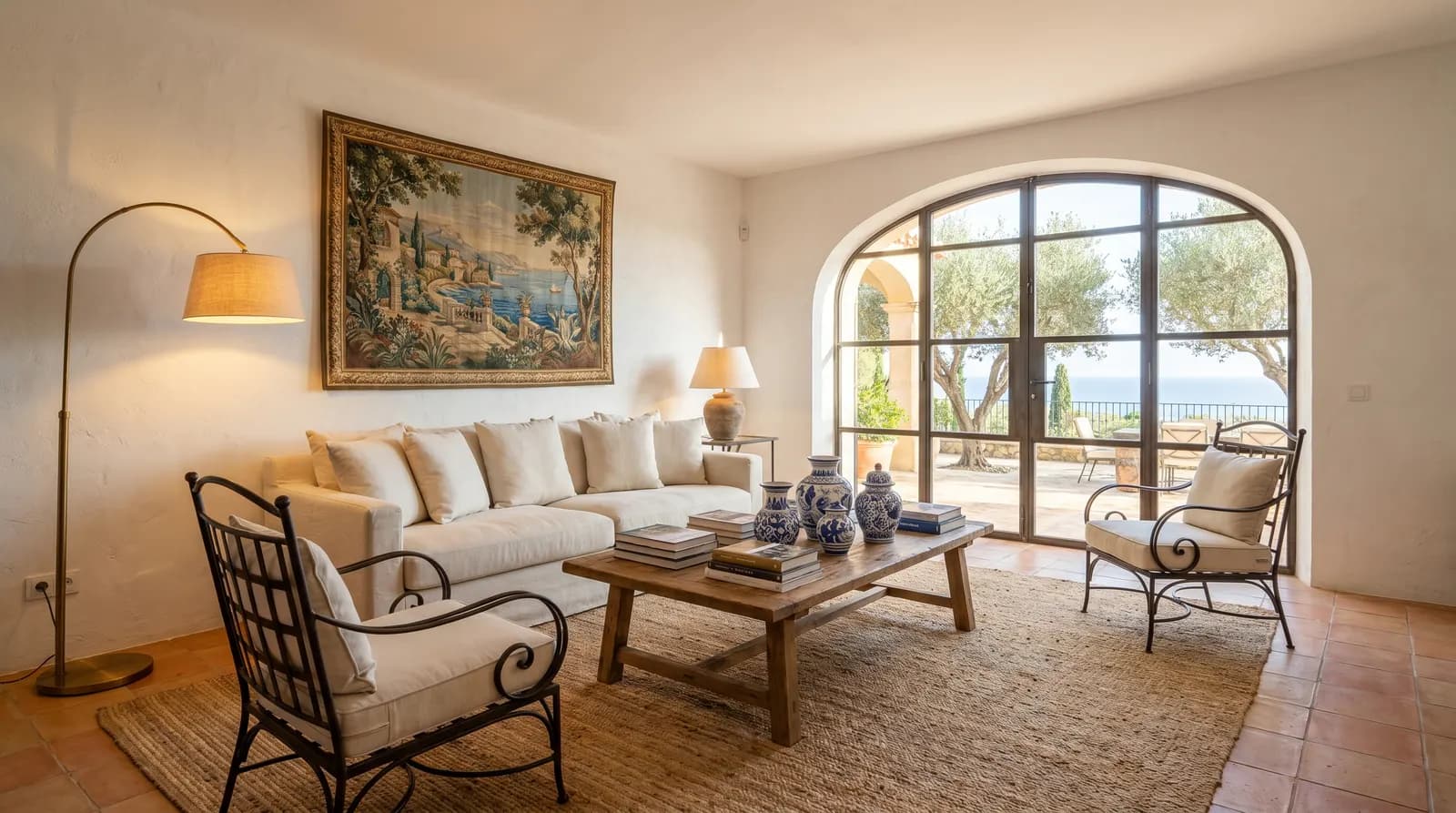
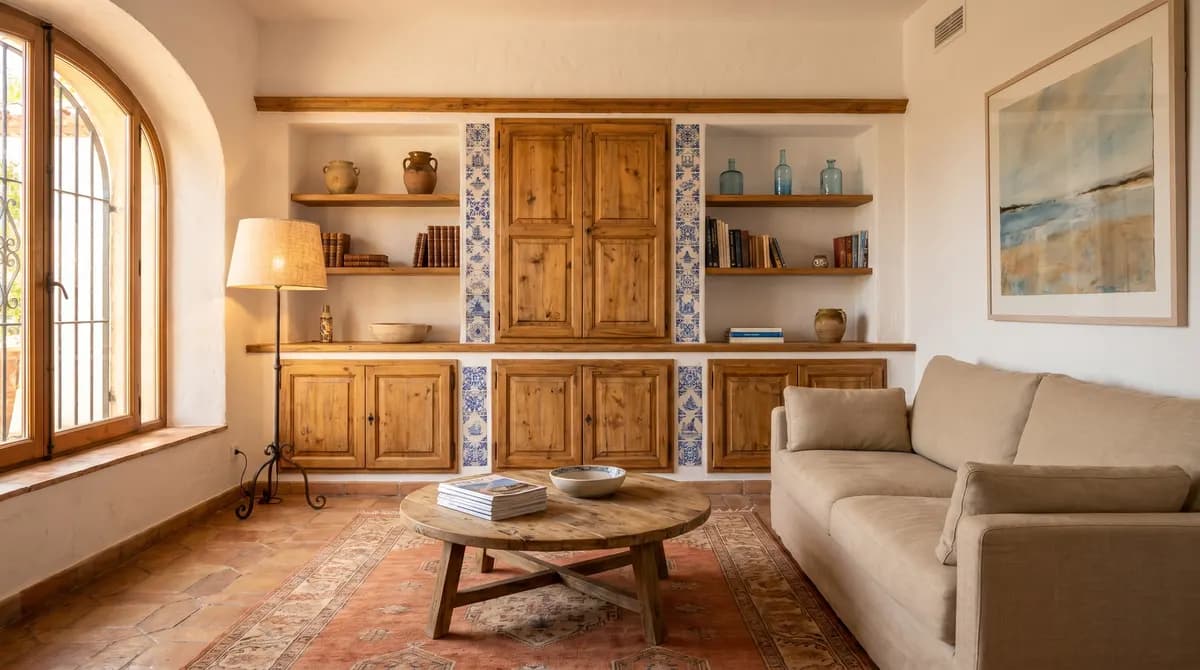
Mediterranean living room design draws on a thousand years of Tuscan, Provence, Andalusian and Greek-island vernacular architecture. The look is defined by its architecture first: hand-troweled plaster walls in warm cream or oat, exposed wood beams overhead, arched cased openings between rooms, and terracotta tile or wide-plank oak underfoot. The furniture is secondary — a large linen-slipcovered sofa, one or two leather armchairs, a heavy wood coffee table, hand-thrown ceramics on open shelves. The result is a room that reads as old, slightly imperfect and sun-baked.
Three principles run through every authentic Mediterranean living room. First, the architecture leads — plaster walls, exposed beams and one arched opening do more than 50 percent of the styling work; the furniture only fills in. Second, a warm sun-baked palette — cream, terracotta, olive and the slightly desaturated blue of the Mediterranean sea. Third, the patina is the point — old leather armchairs, hand-thrown ceramics with visible thumbprints, a 100-year-old Berber rug, a wood beam with a hairline crack. Anything too perfect breaks the spell.
In 2026 Mediterranean has split into two distinct variants: rustic Tuscan (heavy wood, deep ochre, slightly more cluttered) and modern Mediterranean (paler plaster, more architectural, fewer objects, almost Greek-island minimalist). Modern Mediterranean is winning the design conversation; rustic Tuscan retains a loyal following in renovation markets. Mediterranean pairs naturally with Bohemian and Coastal, and remains one of the few styles that can absorb genuinely old objects without looking like a museum.
12 Real Mediterranean Living Room Examples
Each example below is a complete look — not a mood board. Click any image to see it full-size, then hit the generate button to try the same combination on your own room photo.
 1Example
 2Example
 3Example
 4Example
 5Example
 6Example
 7Example
 8Example
 9Example
 10Example
 11Example
 12Example
Key Design Elements
Colors
- Warm cream and oat plaster walls
- Terracotta and rust on floors and pottery
- Olive and sage green
- Desaturated Aegean blue accent
- Dark olive-wood and walnut beams
Materials
- Hand-troweled lime or Venetian plaster
- Terracotta hex tile, travertine or limestone
- Aged leather and washed linen upholstery
- Olive wood and walnut on heavy furniture
- Forged iron on hardware and lighting
Furniture
- Large linen-slipcovered sofa with rolled arms
- Pair of aged-leather club chairs
- Heavy olive-wood or walnut coffee table
- Hand-carved wood console behind the sofa
- Floor-to-ceiling plaster or stone shelving niche
Lighting
- Forged-iron chandelier with candle bulbs
- Wall-mounted iron sconces flanking artwork
- Linen-shade table lamps with stoneware bases
- Beeswax candles in iron lanterns on the coffee table
- Warm 2700 K LED under shelving
Textiles
- Cream linen slipcover with subtle texture
- Vintage Berber or kilim rug under the seating
- Wool throw in olive or rust over the sofa arm
- Linen curtains in cream or oat
- Mixed-pattern cushions in faded floral or stripe
Mediterranean Living Room Color Palette
Six pigments do most of the work — start here, then add one accent of your own.
The base plaster wall colour. Warm and slightly variable — Venetian plaster never reads as flat painted, which is exactly what makes the room feel old.
The dominant floor and pottery colour — the earthy clay that anchors every Mediterranean room. The single most consequential colour in the palette.
Olive-tree green plus textile green — single throw, one cushion, ceramic vase. The grounded counterpoint to the warm terracotta floor.
The optional desaturated blue accent — single painted shutter, one ceramic bowl, a hand-painted tile detail. Used sparingly, never dominant.
The dominant wood tone for beams, coffee table and any heavy furniture. Olive wood is the more authentic choice but harder to source outside Mediterranean countries.
Hardware, chandelier, sconces and lanterns. Used sparingly — three to five iron moments in the whole room. Aged matte black iron, never polished.
Must-Have Furniture & Fixtures
If you only buy these seven, you will read as authentically Mediterranean.
Linen-slipcovered sofa with rolled arms
Three-seat sofa, 220-260 cm long, with a washable cream linen slipcover and rolled or English roll arms. Skip sleek modernist silhouettes; Mediterranean wants generous, slightly slumped comfort.
Pair of aged-leather club chairs
Two matching distressed cognac or tobacco leather club chairs with curved backs. The patina is the point — buy vintage if budget allows, or distressed-aged reproductions otherwise.
Heavy olive-wood or walnut coffee table
Square or rectangular, 100-130 cm long, in solid olive wood, walnut or thick-slab oak. Visible grain, slight imperfections, matte oil finish. Never glossy.
Forged-iron chandelier with candle bulbs
Aged matte black iron chandelier with six to twelve candle-shaped bulbs, 70-100 cm diameter. Hung as the centrepiece of the room.
Vintage Berber or kilim rug
Authentic hand-knotted Berber, kilim or Persian rug, 240 x 320 cm, under all seating. The room's textile soul.
Hand-troweled plaster wall + arched niche
At least one wall in hand-troweled lime or Venetian plaster, with a built-in arched niche over the sofa or fireplace. This is the architectural move that signals Mediterranean fastest.
Wood beams overhead
Two or three exposed dark-stained wood beams running across the ceiling — real if you are renovating, faux box beams if you are not. They dramatically change a flat ceiling into a Mediterranean room.
Common Mistakes to Avoid
Skipping the architecture — Mediterranean lives or dies on plaster walls, arches and beams. A room with flat painted walls and a flat ceiling cannot become Mediterranean from furniture alone, no matter how much terracotta you add.
Going full Tuscan kitsch — grapevine wallpaper borders, faux-painted murals of vineyards and ornate gold details belong to 1990s Italian-restaurant pastiche, not 2026 modern Mediterranean.
Using bright primary blues — sapphire and electric blue read as Greek-tourist-shop, not authentic Aegean. Stay with the desaturated, slightly faded Aegean blue.
Choosing the wrong patina — too-new leather, too-perfect plaster and machine-knotted Persian rugs all read as fake. Mediterranean wants visible imperfection: cracks in the beams, dings in the leather, the slight variation of hand-troweled plaster.
Forgetting plants — the Mediterranean is a living landscape. At least one olive tree in a terracotta pot, one rosemary or lavender plant, or one large potted citrus belongs in the room. Skip and the room reads as a hotel lobby.
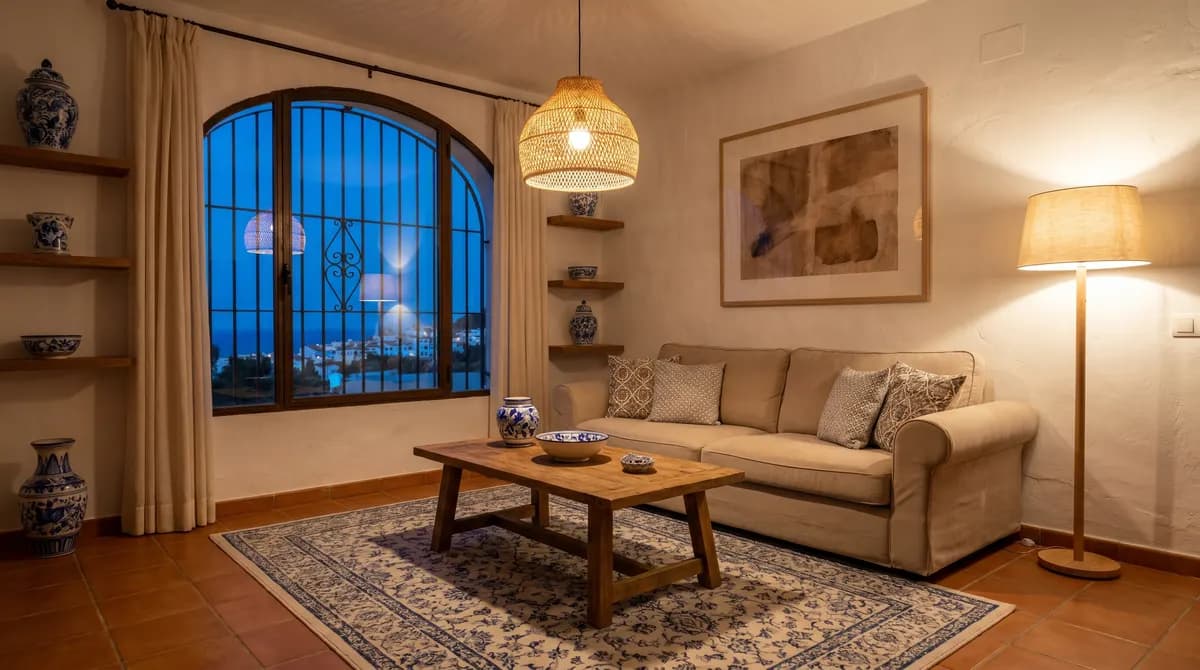
Try Mediterranean Living Room in Your Own Room
Upload a photo of your real living room. Get a photorealistic Mediterranean redesign in about 30 seconds. 4 free credits, no card.
Generate Your Mediterranean Living Room FreeOther Mediterranean Rooms
Apply the same palette and principles to the rest of the home.


Other Living Room Styles
Same room, different aesthetic — explore the rest of the living room style library.


Mediterranean Living Room — Frequently Asked Questions
What colors define a Mediterranean living room?
Do I need plaster walls for a Mediterranean room?
What is the difference between rustic Tuscan and modern Mediterranean?
What flooring works for a Mediterranean living room?
How is Mediterranean different from bohemian for a living room?
Can Mediterranean work in a small living room?
How to Design a Mediterranean Living Room
Five decisions, in this order. Skip any of them and the look will not land.
- 1
Commit to the architecture first
Hand-troweled plaster on at least one feature wall, two or three exposed wood beams overhead, and one arched cased opening between rooms. These architectural moves do more than 50 percent of the styling work. Spend 40 percent of your renovation budget here.
- 2
Pick your sun-baked palette
Cream plaster walls, terracotta or honed travertine floor, walnut or olive wood beams, forged iron hardware. Add one supporting accent — olive green from textiles and plants, or desaturated Aegean blue from one shutter or one ceramic. Resist a fifth colour.
- 3
Source the sofa + leather club chairs as the hero trio
Linen-slipcovered sofa with rolled arms plus two matching aged-leather club chairs. These three pieces are the foundation of the room. The patina of the leather is the point — buy vintage or distressed-aged reproductions, never glossy new leather.
- 4
Add a heavy wood coffee table + vintage rug
Heavy olive-wood or walnut coffee table, 100-130 cm long. A 240 x 320 cm vintage Berber, kilim or Persian rug under all seating. These two pieces together carry the room's textile and material soul.
- 5
Style with restraint + add one olive tree
Three to five hand-thrown ceramics on the shelf, beeswax candles in iron lanterns on the coffee table, two linen-shade table lamps. One large olive tree, citrus or rosemary in a terracotta pot by the window — the Mediterranean is a living landscape and the room needs at least one large plant to read as authentic. Skip the grapevine wallpaper and faux-painted vineyard murals; one piece of original Mediterranean art is enough.
Keep Exploring
Tools and guides that pair with this style.