AI Window and Shutter Design: Frames That Transform a Facade
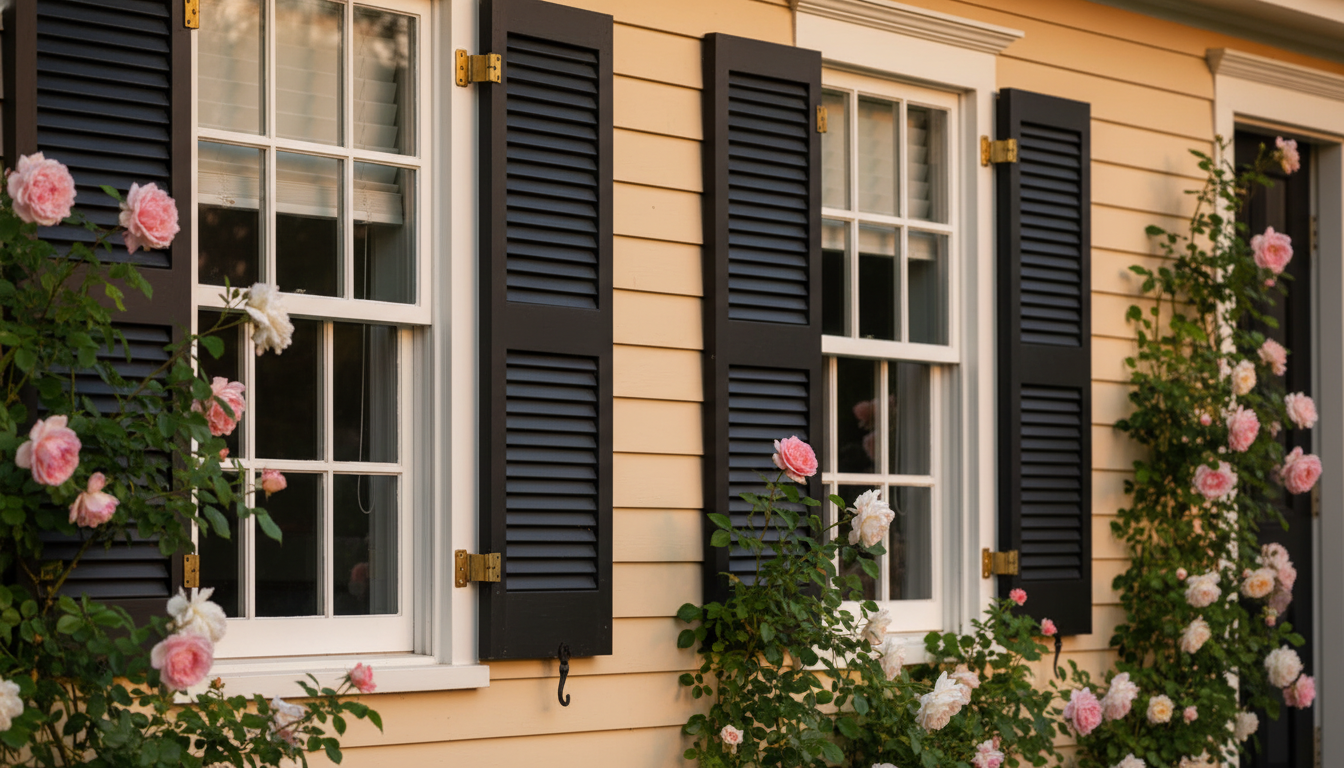
Windows and shutters are the most underestimated visual lever on a residential exterior. They're the second-largest visible surface after the roof, they sit at eye level, and small changes — frame color, shutter material, trim thickness — produce dramatic differences in how a house reads. AI exterior tools now let you upload a photo of your home and preview every reasonable window-and-shutter direction in 30 seconds, on your specific facade, before committing to thousands of dollars in window replacement or shutter installation.
This guide breaks down the seven dominant window and shutter directions for 2026, the materials and proportions that actually work, the moves that quietly date a renovation, and how to use AI to find the right combination for your specific house. GenRoom's Facade tool is one of the most accurate options for this fine-grained work — it preserves your existing window placements while letting you swap frame color, shutter style and color, and trim proportions independently.
If you've been wondering whether your white window frames should be black, whether you should add or remove shutters, or whether your current shutters are the wrong size — this is the cheapest possible way to get answers.
Why Windows and Shutters Matter More Than You Think
Most homeowners think of windows as functional and shutters as decorative. The reverse is closer to true visually. Windows define the visual rhythm and proportion of every facade — and shutters (or the deliberate absence of them) define the architectural era and style.
A few numbers explain the leverage:
- A typical American 2,000 sq ft home has 12-18 visible front windows
- Windows occupy 15-25% of the visible front facade
- Shutter installation costs $500-$3,000 (much less than window replacement)
- Window frame paint costs $200-$800 (DIY) — among the highest-ROI exterior changes you can make
The visual return is concentrated. Painting white window frames black on a tired house does more for curb appeal than re-siding the entire body in many cases. Adding properly proportioned shutters — or removing dated undersized vinyl ones — transforms the architectural character of an entire elevation.
How AI Helps You Test Windows and Shutters Without Committing
Window and shutter decisions used to be high-stakes guesses. Frame replacement is expensive ($800-$2,000 per window). Shutter installation involves drilling, hardware, and physical commitment. Removing existing shutters reveals patches and paint shadows you didn't know were there.
AI exterior tools collapse the risk. The workflow on GenRoom's Facade tab:
1. Photograph your front facade. Across the street, mid-morning or late afternoon. Capture every visible window in frame, with adequate context.
2. Upload to the Facade generator.
3. Test the four major directions. Generate four versions of your house:
- A: Existing windows, frames painted matte black or charcoal
- B: Same windows, fresh shutters added in deep navy or sage
- C: Existing shutters removed entirely, frames painted black, trim thickened
- D: Window proportions enlarged (most expensive — full replacement)
4. Compare the four against your actual house. One direction will be obviously better than the others within minutes. The right answer is usually less expensive than the most ambitious option.
5. Refine the winning direction. If matte black frames win, test 3-4 different trim widths. If sage shutters win, test 3-4 different shutter materials and proportions.
6. Save the final render. Hand it to your contractor. The communication efficiency improvement on installation day is significant.
The whole exercise replaces what used to be multi-week trial-and-error with a focused 30-minute session.
The 7 Dominant Window and Shutter Directions for 2026
These are the directions actually being installed and recommended in 2026. The right one for your house depends on the architecture you're working with.
1. Black-Framed Windows, No Shutters (Modern Farmhouse / Modern)
The most-installed 2026 window direction on new construction and modern renovations. Black-framed double-hung or casement windows with thicker trim, no shutters, generous proportions.

Best for: modern farmhouse, modern, contemporary, transitional homes. Pairs cleanly with white, charcoal, sage, or warm-cream bodies.
The trick is sizing the trim correctly. Builder-default thin trim looks anemic on this style — the trim should be visibly substantial (4-6 inches wide is typical) and finished in the same color as the frames.
2. Oversized Black Frames With Architectural Grilles (Modern Transitional)
Same matte black frames as direction #1, but with traditional grid patterns (3-over-3, 6-over-6) inside the larger panes. Combines modern proportions with traditional rhythm — the dominant 2026 transitional direction.

Best for: transitional homes, updated traditional, large new construction. The grid pattern keeps the house from reading as too aggressively contemporary while letting the window scale modernize the elevation.
3. Classic Black Louvered Shutters (Traditional Refresh)
The timeless choice for traditional homes. Operable or convincing-fake louvered shutters in matte black, properly proportioned (each shutter approximately half the width of the window it flanks), with brushed brass shutter dogs.
The 2026 update is material. Composite, fiberglass, or aluminum shutters have largely replaced thin vinyl — and for good reason. Properly proportioned composite shutters cast real shadow lines and read as architectural; thin vinyl reads as cheap.
Best for: colonial, Cape Cod, Georgian, traditional, and most historical residential vocabularies.
4. Sage Green or Earth-Tone Louvered Shutters (Confident Traditional)
The 2026 evolution. Same proportions and material as classic black shutters, but in deep sage green, eucalyptus, smoky charcoal, or oxblood red. Reads as confident-traditional rather than safe-traditional.

Best for: traditional homes wanting personality without departing from the architectural vocabulary. Cape Cod, colonial, cottage, traditional craftsman.
5. Board-and-Batten Wood Shutters (Craftsman / Cottage)
The cottage and craftsman alternative. Vertical wood plank shutters in stained cedar, painted oxblood red, or deep forest green. More casual than louvered shutters, more architectural than no shutters.

Best for: craftsman, cottage, modern farmhouse (sparingly), Tudor revival, lakehouse, and other rustic-leaning vocabularies.
6. Arched and Decorative Window Surrounds (Mediterranean / Spanish)
The European architectural vocabulary. Arched window tops, terracotta or stucco surrounds, wrought iron grille work, dark-stained wood shutters. Less about shutter style than overall window architecture.

Best for: Mediterranean, Spanish Colonial Revival, Southwestern, Tuscan-revival homes. Largely incompatible with other architectural styles.
7. Thin Modern Black Frames, Floor-to-Ceiling Glass (Contemporary)
The pure contemporary direction. Minimal trim, oversized glass, sometimes corner windows or floor-to-ceiling panels. Black or bronze aluminum frames at the thinnest profile structurally possible.

Best for: contemporary, modern, mid-century modern, high-end transitional. Requires structural design that supports large glass; rarely feasible as a retrofit on existing traditional homes.
Frame Color: The Highest-ROI Single Window Decision
The color of your window frames does more visual work than the type of windows you have, the size, or whether you have shutters. The 2026 hierarchy:
Tier 1 — most flattering across architectural styles:
- Matte black or near-black charcoal
- Deep warm bronze
- Pure white (only on traditional and colonial homes with strong trim hierarchy)
Tier 2 — confident-but-conservative:
- Soft greige
- Smoky deep brown
- Aluminum natural finish (modern only)
Tier 3 — risky, situational:
- Deep navy
- Saturated greens
- Trend colors
For most American homes, painting existing white window frames matte black is the single highest-ROI exterior change available — typically $300-$1,200 in DIY paint and supplies, dramatic visual return.
In AI previews, generate the same house with white frames and black frames side by side. The transformation is usually obvious within 30 seconds. The right answer for most homes is darker frames; the visible cohort that actually wants white frames is smaller than most homeowners assume.
Shutter Sizing: The Detail That Quietly Ruins Most Renovations
Most existing American homes have undersized vinyl shutters that came as builder-grade defaults. They're roughly 30% too narrow, mounted flat against the wall, and made of thin plastic that produces no shadow.
The correct sizing rule: each shutter should be approximately half the width of the window it flanks, mounted with proper offset (not flush to the wall), and made of a material thick enough to cast a visible shadow line.
A useful test: stand 30 feet back from your house and squint. If the shutters disappear visually, they're too small or too thin. They should read as deliberate architectural elements at street viewing distance, not flat decals.
The fix:
- Replace with composite or aluminum shutters — costs $300-$700 per pair installed, vs. $40-$80 for thin vinyl
- Or remove shutters entirely — sometimes the right answer, especially on modern or modern farmhouse renovations
In AI previews, generate the same house with current undersized shutters, with proper full-width shutters, and with no shutters. The right direction is usually obvious immediately.
Create facade design with AI
Upload a photo of your home and get a new facade in the chosen style in 30 seconds. First generation is free.
When to Add Shutters, When to Remove Them
Half of all 2026 renovations are removing shutters; the other half are upgrading them. Both can be the right answer. Here's how to tell which applies to your house.
Remove shutters if your house is:
- Modern, contemporary, or modern farmhouse (shutters fight the architectural vocabulary)
- Mid-century modern (period-incorrect)
- Recently re-windowed with oversized panes (shutters become physically impossible)
- Currently using cheap thin vinyl (worse than no shutter — but you can replace, not just remove)
Add or upgrade shutters if your house is:
- Colonial, Cape Cod, Georgian, traditional craftsman (shutters are part of the architectural language)
- Currently bare with very thin trim (shutters add architectural weight)
- A small house with windows that look proportionally undersized (shutters visually balance)
Replace existing shutters with better-sized, better-material if your house is:
- Traditional and currently has thin vinyl shutters (almost universally the right move)
Before-and-After: The Window+Shutter Transformation
A coordinated window-frame paint, shutter upgrade, and trim refresh is one of the most dramatic single-project transformations in residential renovation.

A typical transformation:
- Existing white aluminum frames → matte black painted ($400-$800 DIY)
- Existing thin vinyl shutters → properly sized composite shutters ($800-$2,400 for 8 windows)
- Trim thickened or repainted in matching color ($300-$700)
- Brushed brass or matte black shutter dogs added ($150-$300)
Total: $1,650-$4,200 for a transformation that typically reads as a complete house refresh.