AI Garage Door Design: Upgrade Your Home's First Impression
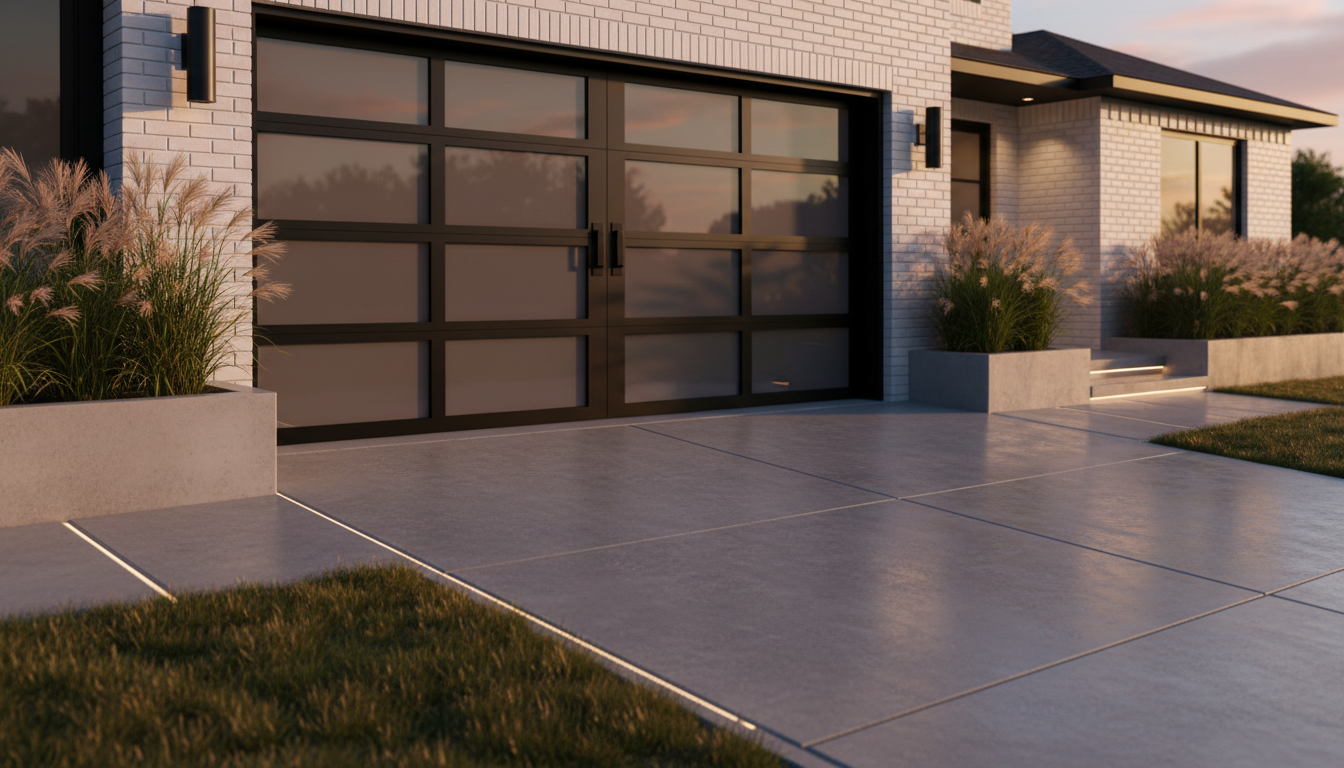
Most homeowners underestimate how much of their house the garage door is. On a typical suburban home with an attached front-facing garage, that single rectangle is 30-40% of the visible facade — more square footage of view than the front door, the windows, and the entry porch combined. A tired beige raised-panel garage door makes the entire facade look tired. A great one makes the whole house look intentional.
AI exterior tools now let you upload a photo of your home and preview every reasonable garage door option — modern flush-panel, carriage-style, full-glass, wood-look, painted color variations — in 30 seconds, on your specific facade. It replaces the brochure-flipping and contractor-quote loop that used to take weeks. GenRoom's Facade tool is one of the most accurate options for this work — it preserves the surrounding architecture while restyling the door, hardware, and color.
This guide covers the seven dominant garage door styles for 2026, the materials and colors actually selling, how to match a door to your house style, and the mistakes that quietly drag the curb appeal of an otherwise-good renovation.
Why the Garage Door Is the Most Underrated Curb Appeal Decision
Walk down any American suburban street and rank the visual hierarchy of each house. On homes built since 1970, the garage door is almost always the largest single surface and the first thing the eye lands on — but most homeowners treat it as a utilitarian afterthought.
A few numbers explain why upgrading is high-ROI:
- Garage door replacement returns 95-103% of cost at resale in most regional markets, according to industry remodeling cost surveys — the highest ROI of any single residential renovation.
- Cost range: $1,200-$3,500 for a quality steel single-bay door installed; $2,500-$8,000 for a double-bay; $6,000-$15,000+ for premium real-wood, full-glass, or custom carriage doors.
- Visual impact: roughly equivalent to repainting the entire front facade, for 1/3 the cost.
The reason this works is dimensional. The garage door is a large, flat, prominent surface. Changing its color, material, and detailing transforms the visual weight of the entire elevation. Almost no other single project has the same leverage.
How AI Garage Door Visualization Works
The traditional process: drive to a garage door showroom, leaf through laminated brochures, drive home with three sample chips that look nothing like the real thing on your house. Most homeowners take 4-6 weeks and three contractor visits to commit.
AI exterior tools collapse the timeline. The workflow on GenRoom's Facade tab:
1. Photograph the front of your house with the garage in frame. Across the street, mid-morning or late afternoon, straight-on. Capture the door, the surrounding wall, and at least three feet of driveway in front.
2. Upload to the Facade generator. The AI identifies the garage and prepares it for restyling.
3. Test door styles first, then colors. Run versions of your house with different door styles — flush-panel modern, carriage with iron hardware, full-glass, vertical cedar plank — to identify which silhouette flatters your facade. Then layer color choices on the winning silhouette.
4. Add specific prompts for hardware and detailing. "Matte black flush-panel garage door with vertical full-height frosted glass panels and dark bronze hardware," or "deep sage green carriage-style garage door with cedar plank lower section, oil-rubbed bronze decorative iron strap hinges, three small frosted windows at top."
5. Compare 6-10 versions, save the top three. Most homeowners need 20-30 minutes to land a confident direction. The right answer is rarely the first or second render — it's usually the version where the door visually disappears into the architecture rather than fighting it.
The whole exercise replaces what used to be multiple showroom visits with a focused half-hour session.
The 7 Garage Door Styles Dominating 2026
Garage door styles cycle on roughly 8-10 year fashion arcs. Here's what's actually selling and being installed in 2026.
1. Modern Flush-Panel With Glass
The defining contemporary garage door. A flat, smooth surface — no decorative panels, no faux carriage hardware — usually finished in matte black, charcoal, or warm wood, often with a band of frosted or bronze-tinted horizontal glass at the top.

Best for: contemporary, modern, mid-century modern, modern farmhouse, and modern transitional homes. Pairs cleanly with stucco, painted brick, fiber cement, and cedar plank facades.
Cost range: $2,500-$6,000 per double-bay.
2. Modern Carriage Style
The "reimagined carriage" — taking the classic American carriage-house silhouette (vertical wood-plank pattern, decorative iron strap hinges, small windows at the top) and reinterpreting it in matte black, deep charcoal, or rich stained wood instead of traditional white.

Best for: modern farmhouse, transitional, craftsman, and traditional homes that want one designed-feeling moment without going fully contemporary.
Cost range: $2,000-$5,500 per double-bay.
3. Full-Glass Garage Door
A garage door entirely composed of large glass panels in an aluminum frame. Either clear, frosted, or bronze-tinted glass. The most architecturally dramatic option — and the one that says "this is intentional contemporary design," not a builder afterthought.

Best for: contemporary, modern, high-end transitional homes. Less appropriate for traditional, colonial, or craftsman silhouettes — it reads as foreign.
Cost range: $4,500-$12,000 per double-bay.
4. Wood-Look Steel (Composite Wood Veneer)
The compromise that has become the dominant 2026 mid-market choice. A steel door with a printed wood-grain finish — usually walnut, cedar, mahogany, or weathered gray — that looks like real stained wood from 30 feet but costs and maintains like steel. The technology has improved significantly; current-generation wood-look steel is very hard to distinguish from real wood at street viewing distance.
Best for: any home where natural wood detailing is part of the target style — modern farmhouse, craftsman, transitional, mid-century, modern with cedar accents.
Cost range: $1,800-$4,500 per double-bay.
5. Real-Wood Custom Carriage
The premium tier. Solid wood doors — cedar, mahogany, redwood — built in carriage style with real iron hardware. The look is unmistakable, the maintenance commitment is significant (re-staining every 3-5 years), and the cost reflects both.
Best for: high-end traditional, craftsman, Tudor, and historic homes where authenticity matters. Increasingly used on premium modern farmhouse builds where one warm-wood moment anchors the elevation.
Cost range: $6,000-$15,000+ per double-bay.
6. Traditional Raised-Panel (Updated)
The 1990s-builder default, refreshed for 2026. Raised-panel design but with cleaner proportions, deeper shadow lines, and modern color palettes — deep navy, charcoal, sage green, painted black instead of beige white.

Best for: traditional colonial, Cape Cod, Georgian, and Federal homes where strict historical proportions matter. The 2026 update keeps the silhouette but modernizes the color and hardware.
Cost range: $1,200-$3,000 per double-bay.
7. Sage Green and Earth-Tone Statement Doors
The 2026 color story. Just as front doors moved from black-and-white to muted greens and earth tones, garage doors are following — sage, smoky jade, eucalyptus, terracotta, deep forest green. A statement-color garage door on an otherwise-neutral facade reads as confident and contemporary.

Best for: craftsman, modern farmhouse, traditional with confidence, transitional. Pairs with white, warm cream, soft greige, or cedar-accented bodies.
How to Match a Garage Door to Your House Style
The shortcut: pick a door that respects the architectural era and material palette of your house, not just your favorite door from Pinterest.
| House Style | Recommended Garage Door |
|---|---|
| Modern / Contemporary | Flush-panel matte black with frosted glass strip OR full glass |
| Modern Farmhouse | Modern carriage in matte black with iron hardware OR wood-look steel |
| Traditional / Colonial | Updated raised-panel in deep navy, charcoal, or classic black |
| Craftsman | Real-wood or wood-look steel carriage with iron hardware, sage or stained finish |
| Cape Cod | Painted raised-panel in navy or black with brushed brass hardware |
| Mid-Century Modern | Flush-panel in warm wood-look or matte charcoal, full or partial glass |
| Mediterranean / Spanish | Wood plank in warm stained finish OR painted in deep terracotta |
| Tudor / English | Real-wood carriage with decorative iron hardware, deep stained finish |
| Ranch (1960s-80s) | Modern carriage or flush-panel with cedar accent — flexible direction |
| Tract Suburban | Updated raised-panel in dark color OR modern carriage — biggest visual upgrade |
A useful rule that prevents most amateur mistakes: the garage door should never be a "feature" in itself. Its job is to integrate visually with the rest of the elevation. The garage doors that win curb appeal awards are the ones that disappear into the architecture rather than calling attention to themselves.
Color: The Single Highest-Leverage Decision
The 2026 garage door color hierarchy is straightforward. From most-to-least conservative:
Tier 1 — Resale-safe choices that flatter most houses:
- Matte black or near-black charcoal
- Off-white or warm cream (only if matched to existing trim)
- Deep navy
- Warm walnut or cedar wood-look
Tier 2 — Confident-but-conservative:
- Soft sage green
- Smoky charcoal-brown
- Deep forest green
Tier 3 — Statement choices (use carefully):
- Terracotta
- Saturated teal or peacock blue
- Oxblood red
- Mustard yellow
In AI previews, generate the door once in each tier on your specific facade. The right tier for your house usually identifies itself in 5 minutes. Most homeowners discover their facade wants Tier 1 or 2; the visible cohort going Tier 3 is a small, confident minority.
Create facade design with AI
Upload a photo of your home and get a new facade in the chosen style in 30 seconds. First generation is free.
The Before-and-After Effect
A garage door swap on a tired suburban facade is one of the most dramatic single-project transformations in residential renovation.

Most photo-documented renovation projects rank the garage door swap as either the #1 or #2 highest-impact change of the entire renovation. AI lets you preview the transformation on your specific house in 30 seconds — and the comparison is usually decisive.
If you've been quietly disappointed with how your house looks from the street and have been struggling to identify why, generate one render with a refreshed garage door (modern carriage in matte black is the safest first test) and the answer often becomes obvious immediately.
Multi-Bay Garages: Specific Considerations
Three-bay garages multiply the design problem. The wrong door style spread across three bays can dominate the elevation; the right one anchors it.

Practical rules for multi-bay garages:
- Match door styles across all bays — never mix carriage on one and flush on another
- Use a single color, even on doors of different sizes — variation in size is fine, variation in color or finish reads as accidental
- Consider asymmetric bay sizing — one double bay plus one single is often more visually interesting than three identical singles
- Add architectural separation between bays — a thin column, a band of trim, or a strip of stone at the foundation creates rhythm without busy-ness
In AI previews of multi-bay garages, generate the same elevation with two style options — the difference between "this is a designed home" and "this is a tract house" is usually visible in the first render.
Hardware and Lighting: The Detail That Matters
The hardware is roughly 5% of the door cost and dramatically drives whether the door reads as professional or amateur.
The 2026 finish hierarchy:
- Matte black — universal, modern, pairs with virtually any door style and color
- Oil-rubbed bronze — traditional and craftsman, develops a richer patina
- Brushed brass — warm and classic, especially for traditional and craftsman doors
- Polished nickel — coastal and traditional applications
The decorative iron strap hinges and handle pulls on a carriage-style door should be sized larger than the manufacturer's default. Most off-the-shelf hardware kits are visually undersized for the door they're sold to install on.
Lighting is the other half. Two matched wall sconces flanking the garage door, scaled appropriately (larger than feels right), in a finish that matches the door hardware. Garage door lighting is the most-skipped detail in a typical garage upgrade — and one of the most consistent quiet drivers of "this house feels expensive."
Common Mistakes to Avoid
Mistake 1: Wood-look that obviously isn't wood. First-generation wood-grain printed steel doors looked artificial up close. Current generation is much better. Either spend on real wood OR on premium current-generation wood-look — never on a discount wood-grain print.
Mistake 2: Decorative hardware that's purely decorative. Bolt-on iron straps with no real function read as costume on contemporary or modern carriage doors. Either go full real-hardware (functional or convincing-fake) or go flush-panel without ornament.
Mistake 3: Mismatching the door to the house era. A flush-panel modern door on a 1920s craftsman is jarring. A carriage door on a contemporary cube is jarring. The era and architectural language need to align — AI previews catch this immediately.
Mistake 4: Ignoring the windows. Window placement on the door (top row of small panes vs. side strip vs. no windows) interacts with the door style. Carriage doors typically have small square windows at the top; modern doors typically have horizontal frosted glass strips; full-glass doors have no separate windows. Mixing across types looks accidental.
Mistake 5: Skipping the AI preview. A garage door is the second-largest single visual surface on most American homes. Committing to a $4,000 purchase based on a 6×6 inch sample chip is the most expensive guess in residential renovation. AI previews close that gap entirely.
Mistake 6: Forgetting the driveway. A premium new garage door installed over a cracked, oil-stained 1985 concrete driveway looks unfinished. Plan for a driveway refresh in the same budget cycle if the existing surface is significantly degraded.
Final Thoughts
The garage door is the single highest-leverage curb-appeal decision on most American homes — biggest visual surface, highest-ROI renovation, and the change that transforms how the entire facade reads from the street. AI previewing on your specific house removes essentially all of the historical guesswork.
Spend 30 minutes on GenRoom's Facade tool, test the seven dominant 2026 garage door styles on your actual home, and walk into the showroom or contractor meeting with a clear photoreal target. The conversation will be measurably more productive — and the door you end up with will be measurably closer to the one that flatters your house, not just the one that flattered the showroom.
If your facade has been quietly disappointing you, the garage door is almost always the place to start.
FAQ
What's the best garage door style for 2026?
Modern flush-panel doors with a frosted glass strip and matte black or wood-look finishes are the dominant 2026 style for contemporary and modern farmhouse homes. Modern carriage-style doors (vertical plank pattern, iron hardware, painted in dark colors instead of traditional white) lead for traditional and transitional homes. The right style for your specific house depends on your architecture — AI previews on tools like GenRoom make the comparison easy.
How much does a new garage door cost in 2026?
A quality steel raised-panel single-bay installs at $1,200-$3,000. A double-bay runs $2,000-$5,500. Premium options — real-wood carriage, full-glass, custom designer doors — range $6,000-$15,000+. Wood-look steel is the dominant mid-market choice at $1,800-$4,500 for a double-bay. Garage door replacement returns 95-103% of cost at resale on average — the highest ROI of any residential renovation.
Can AI accurately preview a new garage door on my house?
Yes. Modern AI exterior tools preserve your house's actual architecture (roof, walls, driveway, surroundings) while restyling the garage door material, color, and hardware. A photoreal preview typically takes 30 seconds. Most homeowners need 6-10 variations to land a confident direction.
What color garage door is most popular in 2026?
Matte black and near-black charcoal lead 2026 garage door color sales — they pair with virtually any siding color and read as crisp and intentional. Wood-look (especially walnut and weathered cedar finishes) is the dominant warm choice. Sage green, deep navy, and warm earth tones have emerged as confident statement options. White and beige garage doors have largely fallen out of fashion outside strict colonial homes.
Are wood-look steel garage doors convincing?
Current-generation wood-look steel doors (printed wood grain on textured steel panels) are usually indistinguishable from real wood at street viewing distance. First-generation models from a decade ago were notably artificial; the technology has improved significantly. They cost about half what real wood costs and require essentially no maintenance.
Should I match my garage door color to my front door?
Not exactly — but they should coordinate. The front door is typically the saturated statement color (sage, navy, terracotta) and the garage door is typically the more conservative anchor (matte black, charcoal, wood-look). Matching them precisely makes the elevation feel small; coordinating them in the same color family makes the elevation feel designed.
What's the highest-ROI garage door upgrade?
A modern carriage-style or flush-panel door in matte black or wood-look finish, replacing a dated beige or white raised-panel door, on a typical suburban house. The visual transformation is dramatic, the cost is contained ($2,000-$4,500 typical), and the resale return is at the top of all residential renovation categories.
Can AI add a garage to a house that doesn't have one?
Yes — modern AI exterior tools handle structural additions including attached garages, detached garages, and garage expansions. The render won't replace an architect's structural calculations or zoning research, but it will tell you within 30 seconds whether the garage-added version of your house is worth pursuing.