How to Make a Room Cozy: 4 Moves Tested on One Photo With AI
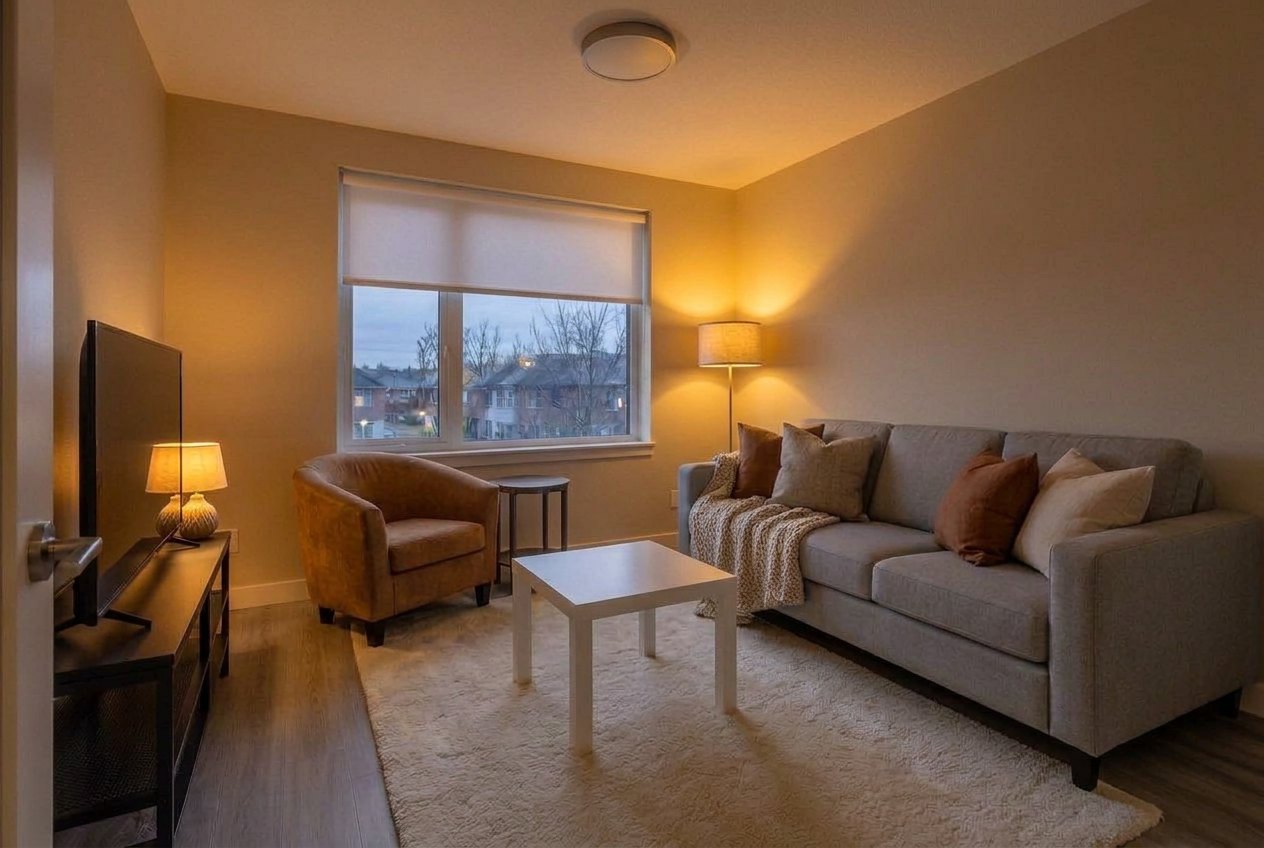
To make a room cozy, you warm up the light first, then soften what you touch and see: two or three warm lamps instead of one ceiling light, a warmer wall colour, a rug that is big enough, and textiles you can feel (a throw, cushions, layered bedding). Then you pull the seating together so the room invites you to sit and talk or read. The hard part is guessing which of these moves will matter most in your room, so we tested them one at a time on the same photo.
Between March and October 2026, 565 people asked GenRoom's Studio for exactly this, in their own words. The requests are short and a little helpless: "I want a room which looks cozy", "more cosy and more decor details", "this is my current bedroom, make it look better, more cozy and inviting". Some set limits: "keep the same elements but make it as cozy as possible", "keep the flooring, the room lacks warmth". One French request was precise: a cosy bedroom with storage and a sage green wall behind the bed.
So we took three ordinary, cold rooms (a sparse living room with grey walls, a plain white bedroom and a small rental room), tried the one-click route, and then rebuilt the living room one cozy move at a time to see which move does the heavy lifting. Every "after" image below is an unedited Studio result made from the "before" photo next to it.
Our cold test living room after four moves (only the wall colour needs paint) and the Evening light view. The sofa, TV stand, coffee table, window and floor are from the original photo.
What actually makes a room feel cozy?
A room feels cozy when it looks warm, soft and occupied, not when it holds a lot of things. Cozy is mostly about light and touch, and only then about style.
The Danish word hygge is the best-known name for this feeling. Visit Denmark says it translates roughly as "cosiness" but means more: a warm atmosphere and enjoying good things with good people, with candlelight as the classic example. That is a useful test for your room: would you light a candle and sit here with a friend?
In practice, the cozy cues fall into five layers:
| Layer | What makes a room feel cold | What makes it feel cozy | Renter-friendly? |
|---|---|---|---|
| Light | One ceiling light, cool white bulbs | Two or three warm lamps at different heights | Yes, lamps and bulbs |
| Colour | Grey or stark white walls | Warm whites, beige, mushroom, clay, muted greens | Ask the landlord |
| Floor | Bare laminate or tile | A rug large enough to sit under the front legs of the seating | Yes |
| Textiles | Bare sofa, one flat duvet | A throw, cushions in two or three textures, layered bedding, curtains | Yes |
| Layout | Seats lined up against walls, facing a TV | Seats facing each other, a chair and lamp in a corner for reading | Yes |
Plants, books, art and a small amount of personal clutter finish the picture. For those, see our separate guide to adding decor to a room photo.
Cozy is not the same as "expensive"
These two goals overlap but pull in different directions. An "expensive" room is about finish and restraint: oversized art, crisp curtains, fewer, larger pieces. A cozy room accepts softness and a bit of mess: a throw that is actually used, a lamp at sitting height, a chair you can curl up in. If your goal is polish, our test of how to make a room look expensive is the better guide. This one is about warmth.
How to try it on your own room first
You can test every move in this guide on a photo of your own room before you buy anything. The path in the Studio takes a few minutes:
- Take a photo from the doorway or a corner, at eye level, in daylight, with the main seating and the window in the frame.
- Upload it in the Studio. It recognises the room type; you can change it in the Type menu at the top if it guessed wrong (our small rental room was labelled an office because of the desk).
- Pick a route. For a one-click result, choose the mode Refresh, no renovation. For targeted moves, skip the mode and type your wish, or tick ready tasks such as Warm lighting and Evening light.
- Create the design (2 credits per result) and compare it with the original using Before/After.
- Refine with Edit. Open Quick actions for single moves: Lighting, Evening light, Wall color, Curtains, Add, or paint an area with Select area to place something exactly.
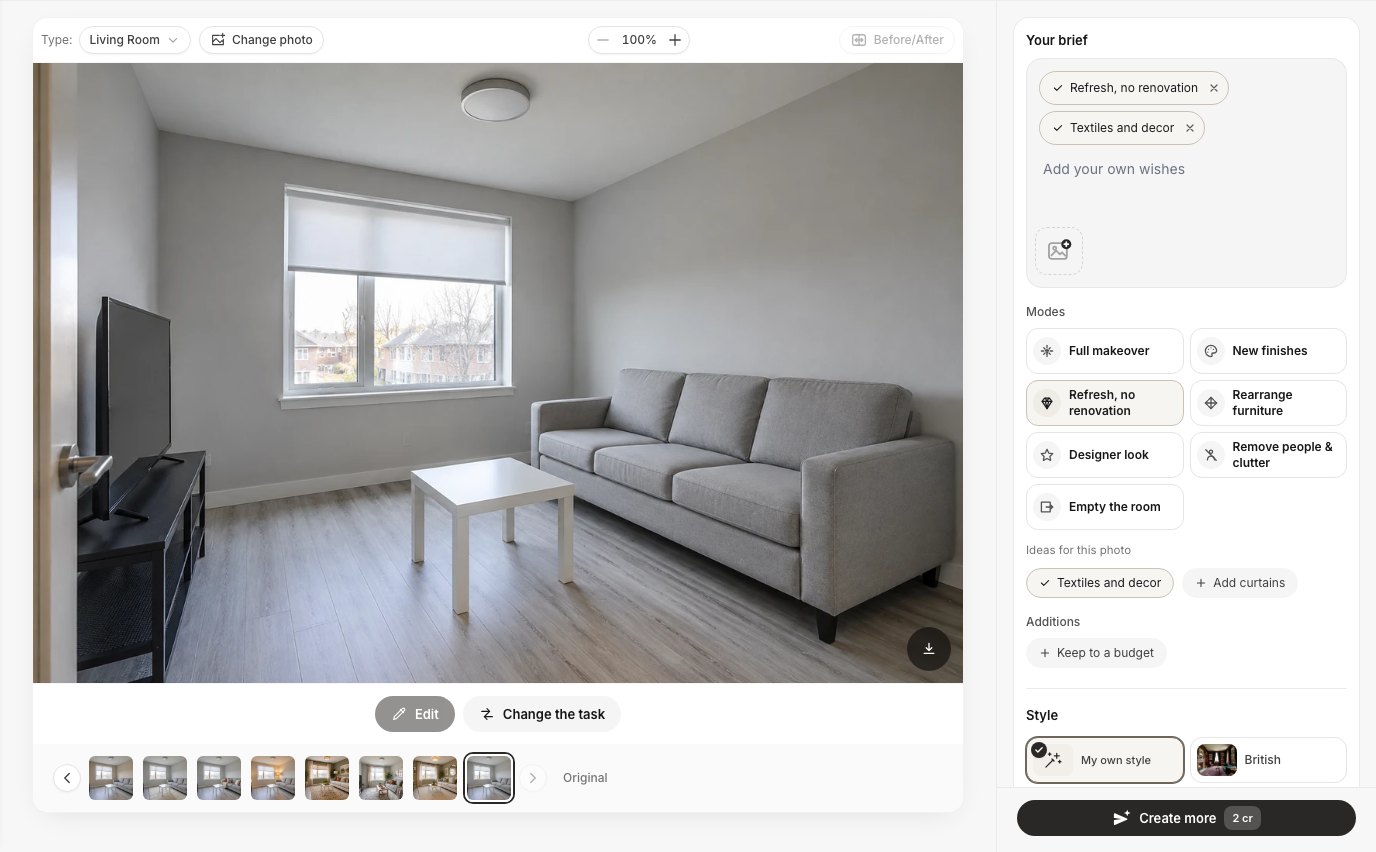 After you pick a mode, the Studio suggests ideas for this specific photo. For our living room it offered "Textiles and decor" and "Add curtains". Other photos got other ideas.
One click: what "Refresh, no renovation" does to a cold room
The fastest route is the Refresh, no renovation mode. In the Studio it is described as paint, textiles, lighting, mirrors, plants and a smarter layout, with floors, ceiling and built-ins staying as they are. Each result took between 17 and 42 seconds to generate in our test.
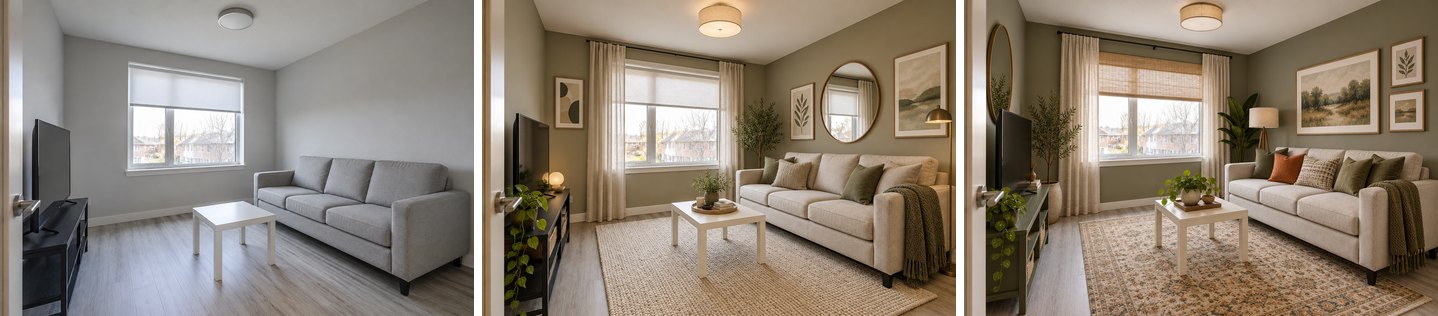 Original, Refresh, and Refresh with the "Textiles and decor" idea. Both results recoloured the grey sofa to cream, which in real life means a slipcover.
The jump from the original is big. The grey box became a room with sheer curtains, a jute rug, a knitted throw, a mirror, a few framed prints, plants and a lamp glowing by the TV. With the "Textiles and decor" idea ticked, the Studio leaned harder on fabric: a patterned rug, more cushions in rust and olive, and a bamboo blind instead of the white roller.
Two things to know before you copy it. First, Refresh changes a lot at once, so you can't tell which move made the difference. Second, it recoloured the sofa in both runs. That is a fair suggestion (a cream slipcover is a real, cheap option), but it is not "keep my furniture as it is".
Just say "cozy": what the words alone did
The most common real request is simply a sentence. We typed one into the brief with no mode selected: "I want this room to look cozy and inviting".
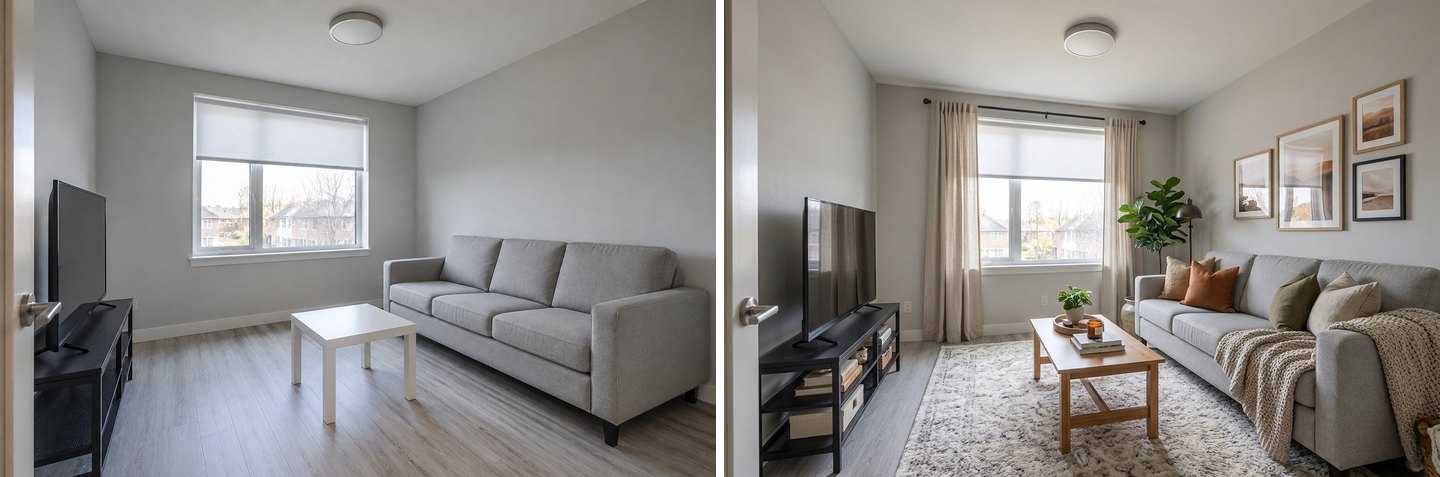 The words-only result kept the grey walls and the grey sofa and put almost all the change into textiles, art and plants. It also replaced the white coffee table with a wooden one.
This version is gentler and closer to what you own: the sofa and walls stayed grey. The warmth came from cushions, a throw, a rug, warm wood and a cluster of prints. If you want the Studio to keep something, say so ("keep the coffee table", "keep the walls"), because a plain wish leaves the model free to swap small pieces.
Four single moves, one at a time: which one makes a room coziest?
To find the move that matters most, we went back to the original living room photo and applied four edits separately, each one on its own copy of the original: warm lamps, a warmer wall colour, a rug, and a throw with cushions. All four were made with Quick actions in the editor.
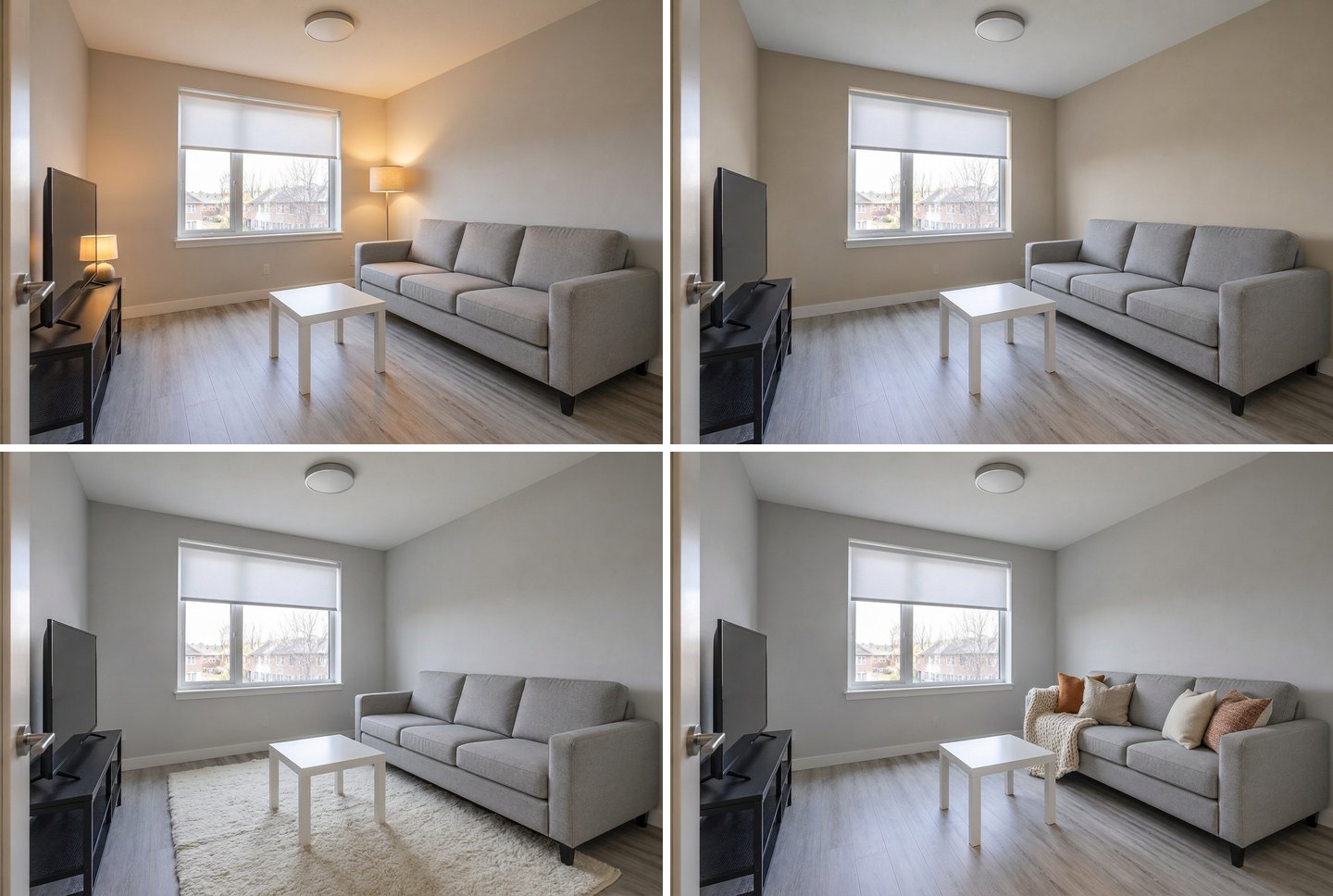 One move per image: warm lamps (top left), warm wall colour (top right), rug (bottom left), throw and cushions (bottom right).
Judged by eye on this room, the ranking was clear:
- Warm lamps changed the mood most. We asked for "warm 2700K light: a floor lamp with a linen shade next to the sofa and a small table lamp on the TV stand". The edit added both lamps and also warmed the whole picture. Keep in mind that the AI shifted the colour of the entire photo, so the effect looks stronger than two lamps would be at midday.
- Wall colour was second. "Warm mushroom beige" took the chill off the grey walls without touching anything else.
- A rug was third. It anchors the coffee table, but alone it doesn't change the light or colour of the room.
- A throw and cushions were last on their own. They are what makes a sofa look used and inviting up close, but in a wide shot they cover a small area.
The order changes by room. In the bedroom test below, bedding was the biggest single move, simply because the bed fills half the frame.
Why lamps matter even more in the evening
You feel coziness mostly after dark, so check every idea at night. The Evening light action (under Light & season in Quick actions) turns the same picture into an evening scene with the lamps on.
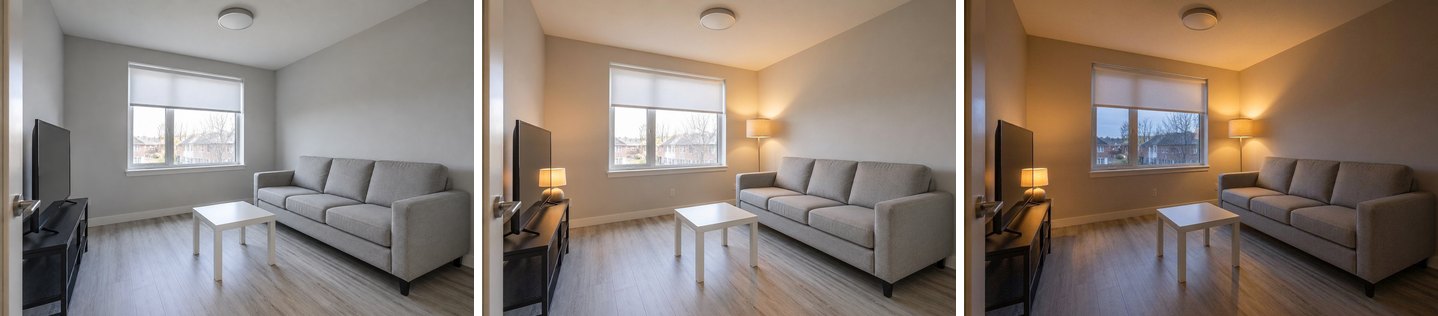 Original, two warm lamps, and the same lamps in the Evening light view. The ceiling light is off; the room is lit from sitting height.
This is the hygge effect in one picture: light comes from low pools at sitting height instead of one disc on the ceiling. Bulb colour matters here. Energy Trust of Oregon notes that people usually prefer around 2700K for living rooms, bedrooms and dining rooms, where you want a relaxing mood, and cooler light around 3500K for kitchens and workspaces. Check the Kelvin number on the bulb box. For more on placing lamps and fixtures, see our AI room lighting guide.
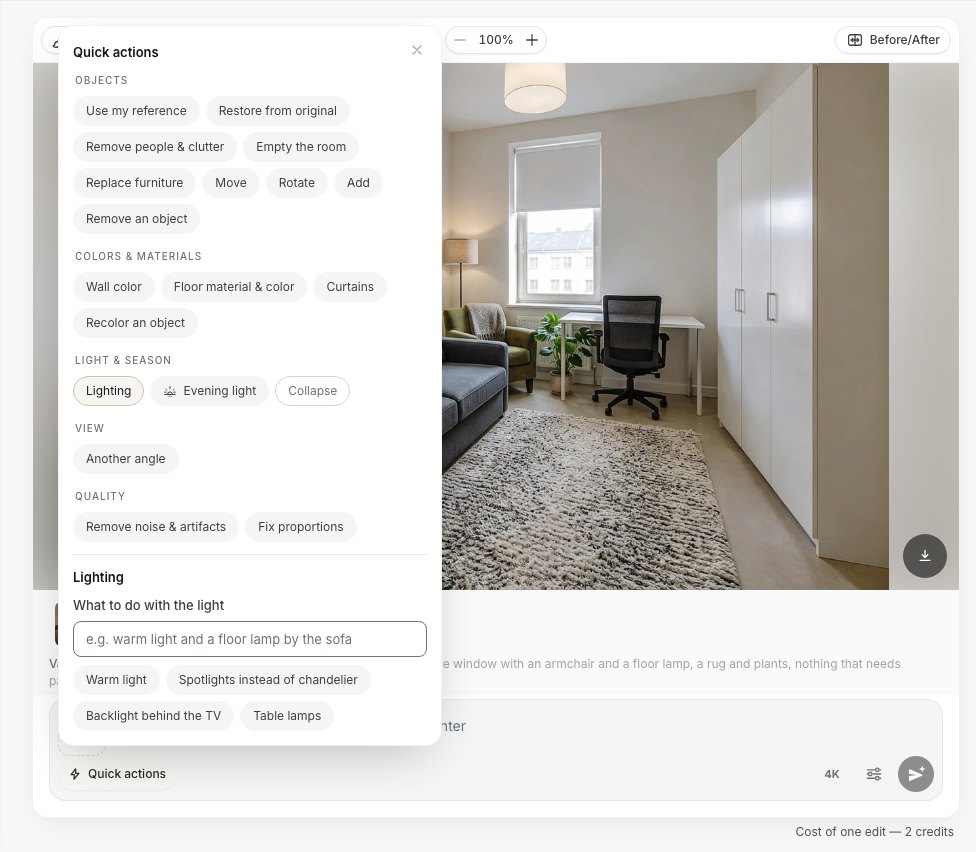 Quick actions in the editor. Lighting has ready choices (Warm light, Table lamps and others) and a field for your own words; Evening light is a one-click action next to it.
How to arrange furniture for conversation
A cozy living room lets two people sit and talk without turning their heads to a TV. The simplest fix is a second seat that faces the sofa at a slight angle, with a small table and a lamp between them.
Distances matter more than style. Havenly designer Heather Goerzen, quoted by Livingetc, suggests keeping seats no less than three feet apart (for example, from a sofa to an accent chair) and no more than eight.
Our first attempt in words went wrong, which is worth showing. We asked to "add an upholstered armchair in warm caramel facing the sofa across the coffee table". The Studio added a large armchair in front of the TV stand, right by the door, where it would block the walkway. Then we used Select area, painted the empty spot by the window and asked for "a small upholstered armchair in warm caramel fabric here, angled toward the sofa for conversation, with a small round side table".
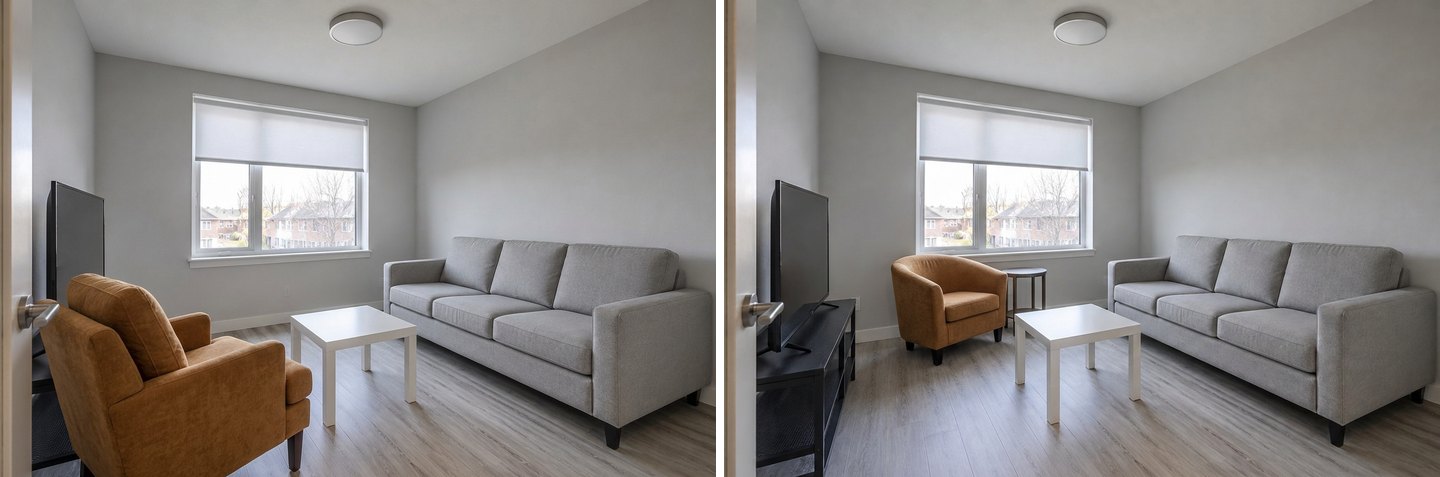 Words alone put the armchair in the walkway (left). Painting the exact spot with Select area put a smaller chair where it belongs (right).
The brushed version is the one to copy: a small chair in the corner by the window, angled toward the sofa, with a side table for a mug. If you'd rather keep the furniture you have and only move it, the Rearrange furniture guide shows that mode in detail.
Stacking the moves: the finished cozy living room
Single moves tell you what matters; stacking them shows the finished room. Starting from the chair-by-the-window version, we added the moves one edit at a time: warm wall colour, then a rug with a throw and cushions, then the two lamps, then Evening light.
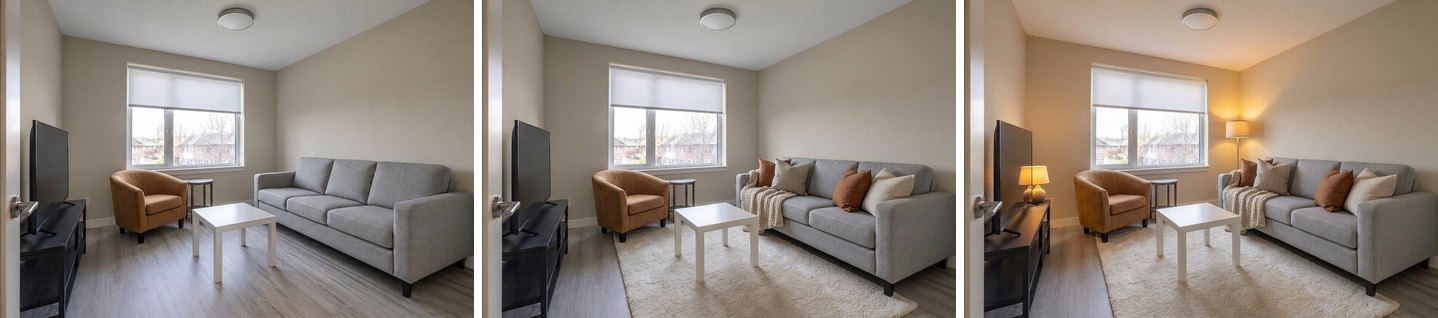 Step by step: wall colour, then rug and textiles, then warm lamps. Each step was one edit of 2 credits.
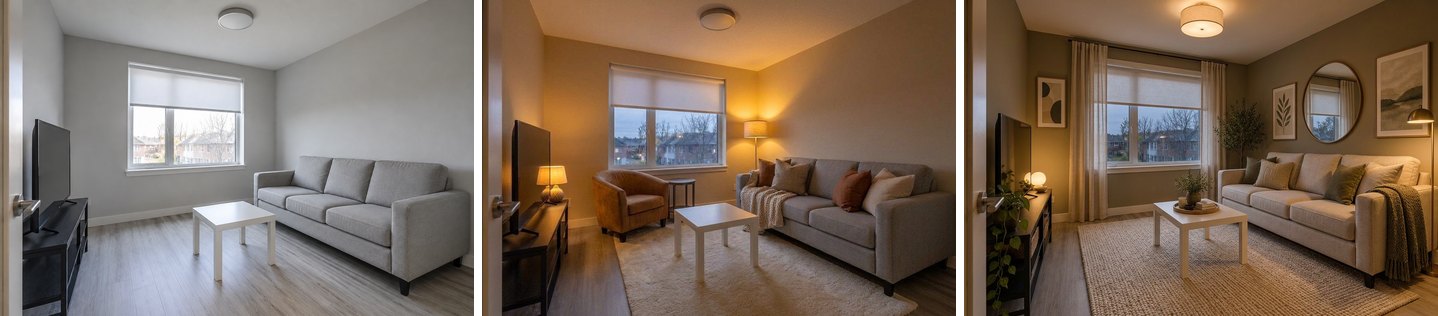 Original, our four stacked moves at dusk, and the one-click Refresh at dusk. The stack kept every piece of furniture; Refresh changed more and decided more for you.
Both evening versions read as cozy. The difference is control. The stacked version kept the grey sofa, the white coffee table and the roller blind, so it shows what you could do this weekend with lamps, a rug, a throw, cushions and a small chair (the wall colour is the only move that needs paint). The Refresh version is a fuller makeover with curtains, art, a mirror and a recoloured sofa.
After four edits in a row we checked the sofa fabric up close for the moiré pattern that long edit chains can produce. This time it stayed clean; if you see it, the Remove noise & artifacts action under Quality fixes it.
Create interior design with AI
Upload a photo of your room and get a professional design in 30 seconds. First generation is free.
How to make a bedroom cozy
The bedroom follows the same rules, but the bed dominates the picture, so textiles on the bed and light beside it do most of the work.
The real request: a cosy bedroom with storage and a sage wall
We typed the French user's wish, in English, into the brief without a mode: "cosy bedroom with storage, sage green wall behind the bed".
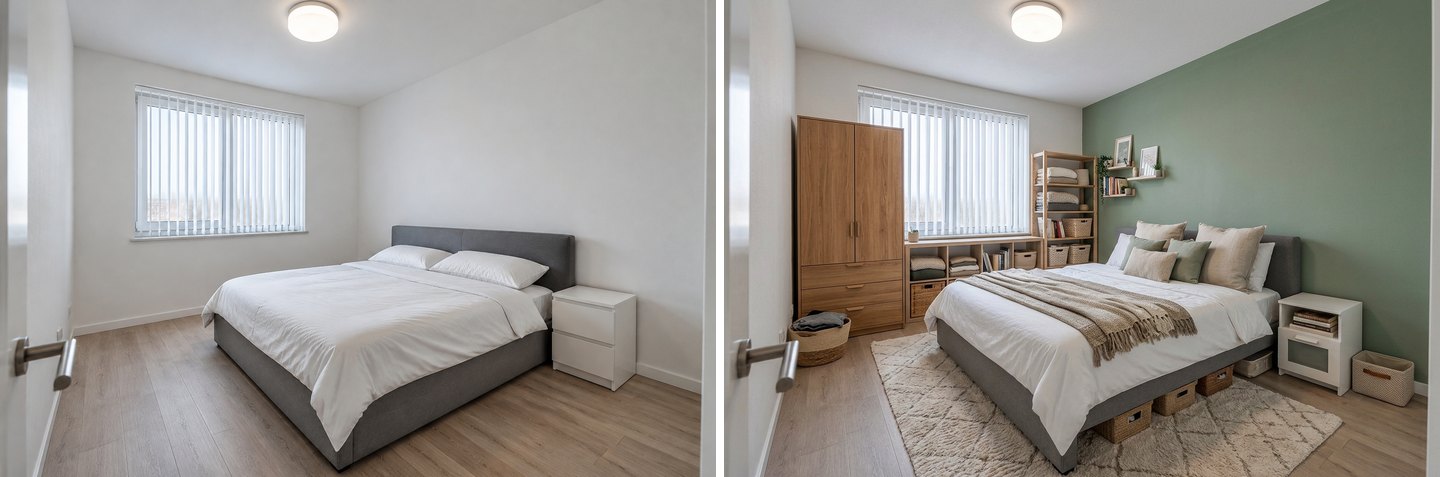 From one sentence: the sage wall went behind the bed, and storage arrived as a wardrobe, open shelves and baskets under the bed. The blinds stayed.
It followed the brief closely: the sage colour landed on the wall behind the bed, not on every wall, and the storage came in three forms. That is a good way to work: name the one wall you want coloured and the one problem you want solved. For more bedroom starting points by style, see our bedroom design ideas.
Bedding first, then two lamps
Next we tried single moves on the original bedroom: first layered bedding and a throw (with the Add action), then two warm bedside lamps on top of that (with Lighting).
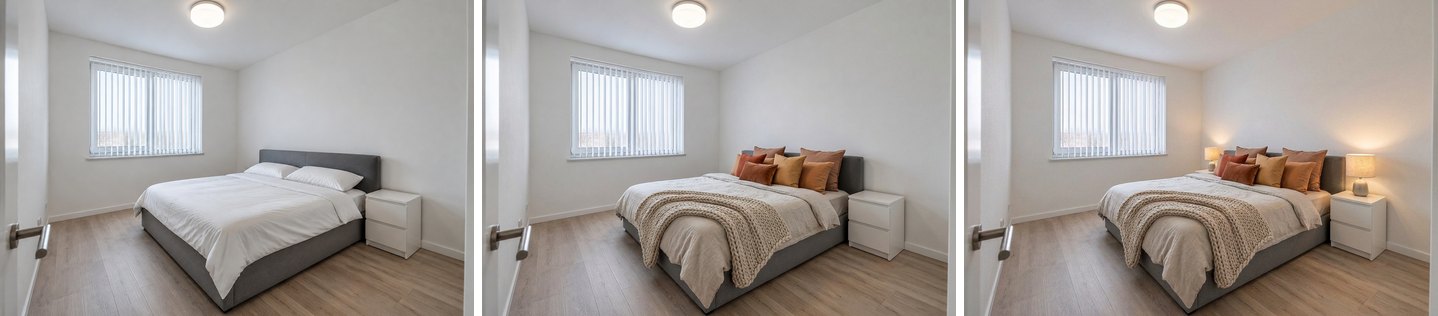 Bedding alone changed the bedroom more than any other single move. Then two bedside lamps added warmth around the headboard.
Bedding gave the biggest change here, but notice the count: we asked for "extra cushions" and got eight. In real life, two sleeping pillows, two or three decorative cushions and one throw are plenty. Emily Henderson's team makes a similar case for one long lumbar cushion instead of a pile, and for at least two warm light sources in a bedroom, in their guide to making a bedroom cozier.
Evening light: switch the ceiling light off
When we ran Evening light on the bedroom with lamps, the Studio switched on every light it found, including the flush ceiling light. That flattens the mood. A second Lighting edit with the words "evening at dusk: the ceiling light switched off, only the two bedside lamps on, warm 2700K glow" gave the version you'd actually want at bedtime.
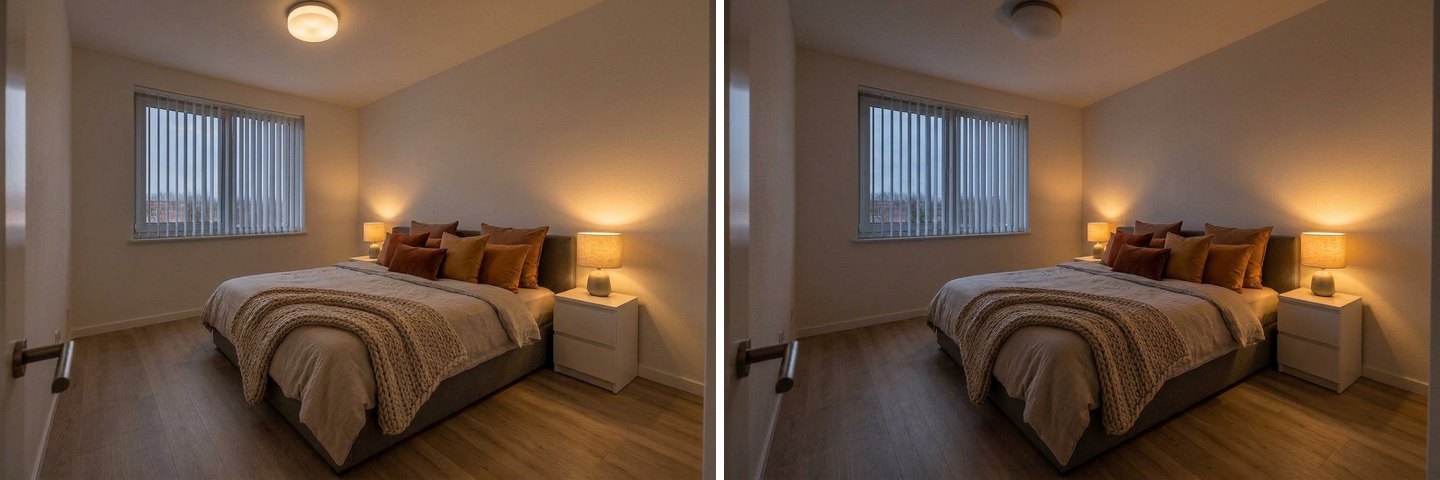 Evening light turned the ceiling light on (left). Asking in words for the ceiling light off gave the cozier version (right).
The same is true in a real bedroom: the ceiling light is for cleaning and finding socks, the lamps are for the evening. If your bedside light is a wall sconce, a plug-in sconce with a cord cover avoids rewiring.
Small rental room: cozy without paint or drilling
A rental adds a rule: nothing permanent. Our third room was a small, bare rental room with a sofa bed, a desk, a white wardrobe and a roller blind. We tried two routes.
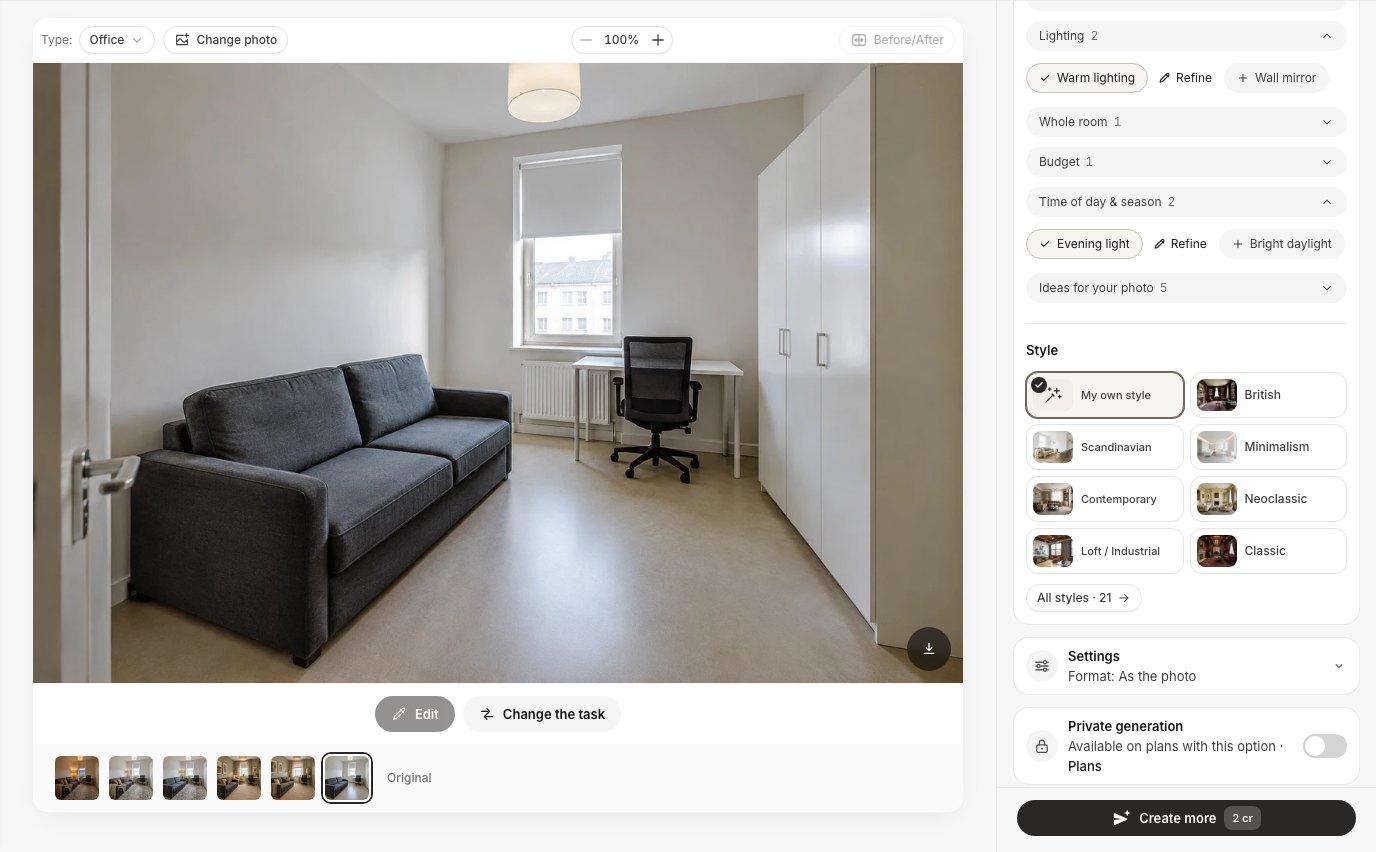 Without a mode, Ready tasks let you combine moves: here Warm lighting plus Evening light. Once you pick a mode, the Studio shows that mode's ideas instead of this list.
First, Refresh, no renovation with our words: "make this small rental room feel cozy: a reading nook by the window with an armchair and a floor lamp, a rug and plants, nothing that needs painting or drilling". Second, the same words with no mode selected.
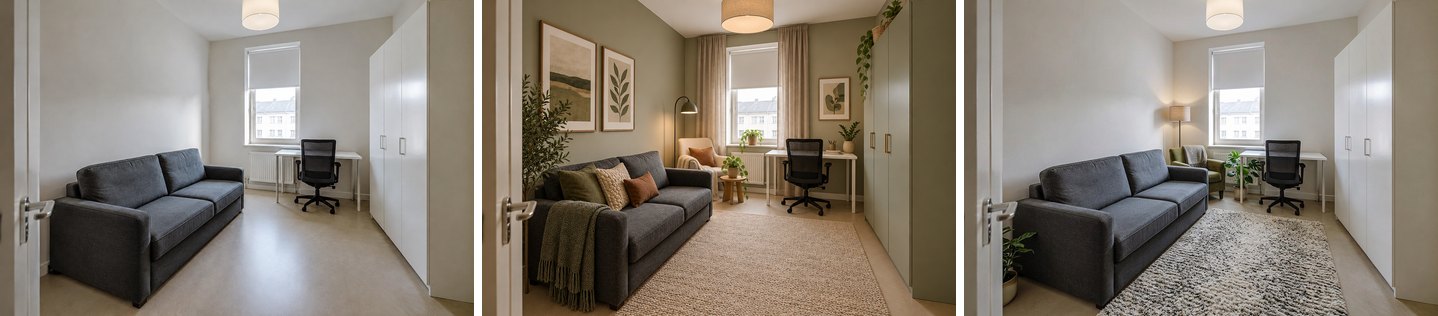 Refresh with "nothing that needs painting" still painted the walls and the wardrobe (middle). The same words without a mode respected the rule (right).
The result is an honest lesson. With the Refresh mode selected, the Studio still painted the walls and the wardrobe sage, because repainting is part of what that mode does. Without the mode, it kept every surface as it was and added only movable things: a small armchair and floor lamp by the window, a shaggy rug and plants. That version is less dramatic, but you could do every bit of it in a rental.
Then we finished the words-only version with two quick edits: a throw and cushions, then Evening light.
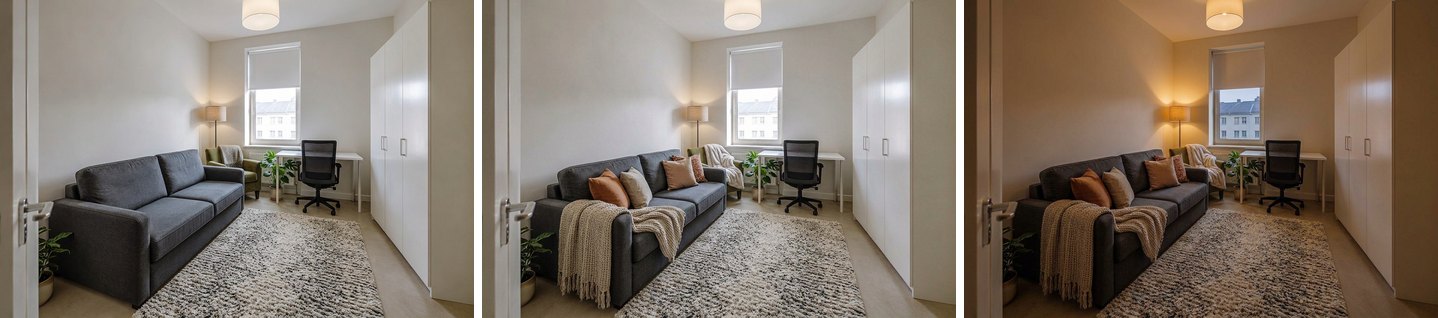 The renter-friendly route: movable pieces, then textiles, then the evening check. Nothing here needs paint, nails or a landlord's permission.
The evening view here mostly warmed the colours; the window stayed fairly light. Treat Evening light as a mood preview, not an exact simulation of your bulbs.
What the AI does not do well (yet)
We kept every miss we hit while shooting this guide, because each one has a simple workaround:
- Modes change more than you ask. Refresh recoloured the grey sofa in the living room and painted the wardrobe in the rental room, even when we wrote "nothing that needs painting". If something must stay, skip the mode and describe your wish in words, or name the item: "keep the sofa grey".
- Placement from words is a guess. "An armchair facing the sofa" ended up in the walkway. Use Select area and paint the exact spot.
- Quantities run high. "Extra cushions" became eight; Refresh added prints, a mirror and plants we didn't ask for. Say the number: "two cushions and one throw".
- Rugs stop short. We asked for a rug under the front legs of the sofa; in the single-move test the rug stayed in front of the sofa. Real rule: the front legs of every seat should sit on the rug.
- Evening light turns everything on. In the bedroom it switched on the ceiling light. Ask for the lights you want off.
- The lighting edit warms the whole photo. It looks more dramatic than two lamps would in daylight. Judge lamps in the evening view.
- Refresh leans sage and beige. All three rooms came back in muted greens and warm neutrals. If that isn't you, add a colour in words or pick a style.
How to make a room cozy in real life: the order to follow
If you want to spend the least and feel the most change, follow the same order our tests suggested:
- Swap the bulbs to warm white (around 2700K) and add two lamps at sitting height. Leave the ceiling light off in the evening.
- Add a rug big enough for the front legs of the sofa and chairs.
- Add textiles you touch: a throw, two or three cushions in different textures, and layered bedding in the bedroom. Floor-length curtains help too; our curtain visualizer guide shows how to try them first.
- Make a conversation or reading spot: one chair angled to the sofa or the window, a small table and a lamp, three to eight feet from the other seats.
- Warm the walls if you're allowed to paint: warm whites, beige, mushroom or muted green. Try colours on your own photo first with our guide to testing paint colours.
- Finish with life: plants, books, a candle, a few things you love.
How much did this test cost?
Every design and every edit costs 2 credits. We made 28 results for this guide (56 credits) across three rooms, including the misses. The renter-friendly living room path alone (chair, wall colour, rug and textiles, lamps, Evening light) is 5 edits, or 10 credits. A free account comes with 6 credits without a credit card; the smallest pack, Start, is $9.99 for 36 credits, with no subscription. Details are on the pricing page.
FAQ
How do I make my room cozy on a budget?
Start with light: warm 2700K bulbs and two cheap lamps placed low, with the ceiling light off in the evening. Then add a rug, a throw and a few cushions. In our living room test, warm lamps changed the mood most and cost the least; textiles were the cheapest finishing touch.
How do I make my living room feel cozy?
Light it from two or three warm lamps at sitting height, warm up the walls, put a rug under the front legs of the seating, and add a throw and cushions. Then turn one chair toward the sofa, three to eight feet away, so the room works for conversation and not only for the TV.
How do I make my bedroom cozy?
Focus on the bed and beside it: a textured duvet, one throw, a few cushions and two warm bedside lamps. Keep the ceiling light off at night. Curtains instead of bare blinds and a rug that reaches past the sides of the bed add softness underfoot and at the window.
How do I make a rental room cozy without painting?
Use only movable layers: warm bulbs and plug-in lamps, a large rug, a throw and cushions, a chair with a floor lamp for a reading corner, plants, and art on removable hooks. In our rental test, describing the wish in words without a mode kept every wall and cupboard untouched.
What colour light is the coziest?
Warm white. Energy Trust of Oregon notes that people usually prefer around 2700K for living rooms, bedrooms and dining rooms, and cooler light around 3500K for kitchens and work areas. Look for the Kelvin number on the bulb box.
What is hygge?
Hygge is the Danish idea of a warm atmosphere and enjoying good things with good people. Visit Denmark translates it roughly as "cosiness" and gives candlelight as the classic example. In a room, it means soft low light, textiles you can touch and a place to sit together.
Can AI make my room cozy from a photo?
Yes. Upload a photo in the Studio and either choose "Refresh, no renovation" for a one-click result or describe what you want, such as "make it cozy, keep the sofa". Then refine single moves with Quick actions (Lighting, Evening light, Wall color, Add) and compare before and after.
The bottom line
How to make a room cozy comes down to an order of moves: warm low light first, then a rug and textiles you can touch, then a seat turned toward the others, and a warmer wall colour if you can paint. On our cold living room, warm lamps did the most on their own, and the evening view showed why. Try your own room in the Studio, check it after dark with Evening light, and buy only the moves that made the difference.