Mediterranean Facade Design
Guide to facade design in Mediterranean Facade style: materials, colors, architectural solutions, and examples
The Mediterranean facade tradition spans 2,500 years and four continents — Greek and Roman antiquity, Moorish Spain, Italian Renaissance, southern French Provence, and the 1920s American "Mediterranean Revival" of Florida (Addison Mizner's Palm Beach) and California (George Washington Smith's Santa Barbara). All variants share the same climate-driven essentials: thick masonry walls for thermal mass, terracotta roof tiles for solar reflectance, arched openings, and a warm-cream palette.
What makes a Mediterranean facade distinctive
Six hallmarks: lime-render or stucco walls in warm cream, low-pitched terracotta-tile hip roofs with deep eaves, arched doorways and windows, wrought-iron balconies, gates, and grilles, red-brown clay tile floors at entries and terraces, and hand-painted Talavera or zellige tile accents on risers, fountains, and entries.
Material palette
- Walls: lime-render stucco in cream/oat/sun-bleached white
- Roof: half-round terracotta barrel tile or flat clay tile, low-pitched (15-30 degrees)
- Trim: wrought iron (window grilles, balconies, lanterns), aged brass
- Floors (entry): Saltillo terracotta tile, limestone, travertine
- Windows: shuttered (wood or wrought iron), arched or rectangular with deep reveals
Regional variants
Spanish Colonial / Mediterranean Revival: white stucco, terracotta barrel tile roof, arched entries, wrought-iron grilles, red-tile floor patio. Italian Tuscan: oat/sand-toned stucco, flat clay tile roof, exposed wood beams at eaves, less ornate trim. Greek Island: bright whitewash, flat roof with parapet, blue-painted shutters and doors. Moroccan/Andalusian: deeper sand-cream stucco, horseshoe arches, hand-painted tile accents, decorative carved-wood doors.
Common mistakes
- Faux-aged finishes overdone. Real lime render develops a soft natural patina; cheap "Tuscan faux" paint techniques look artificial.
- Wrong roof tile. Concrete roof tile in barrel profile looks acceptable; cheap stamped fiber cement does not. Use real clay tile or convincing high-end alternatives.
- Missing arch. At least one arched element (doorway, window, or breezeway) is required for authentic Mediterranean reading.
- Cool grey or pure white stucco. The palette is warm — cream, oat, sun-bleached. Pure white or cool grey breaks the warmth.
Budget approach
For renovations: apply lime-wash paint over existing stucco (Bauwerk, Portola Paints) for $300–$500, replace existing roof with terracotta-look concrete tile in next reroof cycle, add wrought-iron window grilles ($150 per window from architectural-salvage suppliers), install a hand-painted Talavera tile address plaque, plant an olive tree by the entry. Cumulative effect transforms the facade for under $2,000.
Upload a photo of your house and our AI redraws it in Mediterranean facade style in seconds — free to try.
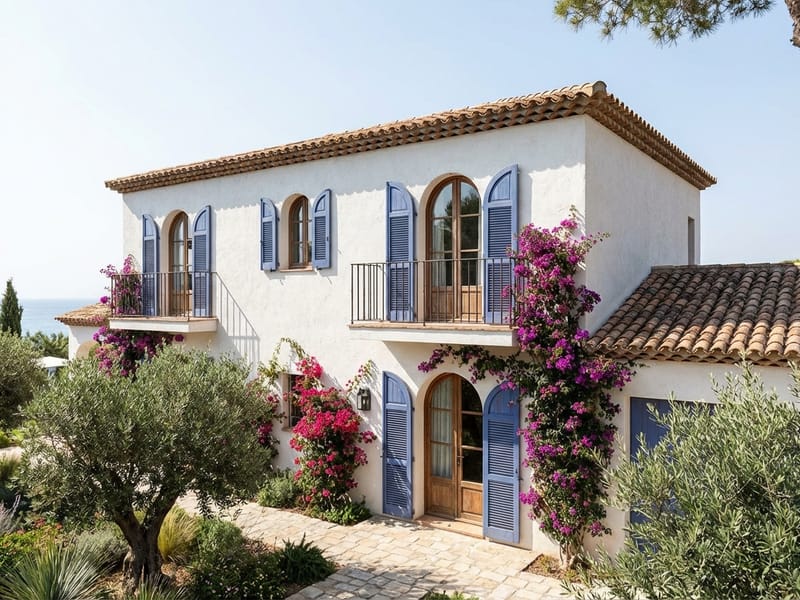
Key elements of Mediterranean Facade style
Stucco or Lime-Render Walls
Hand-applied stucco or lime render in warm cream provides the textured, slightly imperfect surface central to Mediterranean architecture.
Terracotta Tile Roof
Half-round barrel tiles or flat clay tiles in warm red-orange anchor the facade and reflect the Mediterranean sun.
Arched Openings
Rounded or horseshoe arches at doorways, windows, and breezeways reference Roman, Moorish, and Renaissance architectural traditions.
Wrought Iron Details
Hand-forged window grilles, balcony railings, lanterns, and entry gates add the blacksmith craft essential to Mediterranean facades.
Hand-Painted Tile Accents
Talavera, zellige, or azulejo tiles on stair risers, fountains, address plaques, and entry vestibules add color and craft.
Deep Roof Eaves
Exposed wood-beam eaves with substantial overhang provide shade, reduce solar gain, and reveal the building's structural honesty.
Try creating your own design
Upload a photo of your house and get a professional facade design in 30 seconds. First 2 designs are free.
Mediterranean Facade: facade design
See more examples in the Mediterranean Facade style gallery or the full design gallery.
FAQ: facade design in Mediterranean Facade style
- A Mediterranean facade features stucco or lime-render walls in warm cream, a low-pitched terracotta tile roof, arched doorways and windows, wrought-iron details, and warm earth tones. Regional variants include Spanish Colonial, Italian Tuscan, Greek Island, and Moroccan/Andalusian.
- Spanish Colonial uses white stucco, barrel-tile roofs, prominent arched entries, and wrought-iron grilles. Tuscan uses warmer oat-toned stucco, flat clay-tile roofs, exposed eaves, and less ornate trim. Both share the same core climate-driven palette.
- Warm cream, oat, sun-bleached white, and pale sand for walls. Terracotta orange-red for the roof. Wrought-iron black or dark bronze for trim. Accents in deep blue, olive green, or oxblood. Avoid cool grey, pure white, and pastels.
- Yes — the look adapts well. Use insulated stucco systems, clay roof tile rated for freeze-thaw cycles, and double-glazed windows in deep wooden frames. The warm palette and texture provide perceived sun-warmth even in cloudy or snowy weather.
- At least one arched element is essential for authentic reading — most often the front entry. Side windows can be rectangular if proportioned correctly (taller than wide, with deep reveals). All-rectangular facades read Italianate or generic, not Mediterranean.
- Five high-impact moves: apply lime-wash to existing stucco in warm cream, add wrought-iron grilles to ground-floor windows, install a terracotta tile address plaque, plant an olive tree by the entry, and replace the front door with a substantial wood plank version with hand-forged hardware.
- It can range widely. True clay barrel tile roofs are expensive; concrete-tile alternatives are moderate. Authentic lime render is expensive; standard stucco painted in lime-wash colors is budget-friendly. Wrought-iron grilles run $150-400 per window. Plan in phases.