Contemporary Facade Design
Guide to facade design in Contemporary Facade style: materials, colors, architectural solutions, and examples
Contemporary facade design refers to current residential architecture (post-2000) rather than any single historical movement. It blends modernist principles (clean lines, large openings, honest materials) with regional vernacular references and current performance standards. Unlike high-tech or strict modernism, contemporary embraces mixed materials, varied volumes, and warmer palettes — the result is more livable and less doctrinaire than its 20th-century predecessors.
What makes a contemporary facade distinctive
Five common signatures: mixed material palette (typically 2–3 cladding materials combined), strong rectilinear volumes (often offset or cantilevered), large windows in modern proportions (vertical fixed glazing, ribbon windows, or full curtain walls), flat or shallow-pitched roofs, and a warm-neutral palette with one bold accent.
Material palette
- Cladding: wood (vertical or horizontal), white or grey render, fiber cement panels, dark brick
- Windows: large fixed glazing, slim black or charcoal frames, often floor-to-ceiling
- Roof: flat with parapet, single-slope shed, or low-pitched (under 15 degrees) standing-seam metal
- Entry: oversized pivot door, often in wood or steel, recessed under a cantilever
- Accents: Corten steel panels, black metal, or one bold color (typically only on the entry door)
Common compositions
Mixed warm modern: white render + horizontal wood cladding accent + flat roof + large black-framed glazing + Corten entry. Dark contemporary: dark grey render + black metal panels + vertical wood entry accent + flat roof + ribbon windows. Wood-and-stone: charred wood cladding upper level + stacked-stone base + black-framed curtain wall living level + flat roof.
Common mistakes
- Too many materials. More than three cladding materials reads chaotic. Two with a clear hierarchy is ideal.
- Mismatched windows. All windows must share frame color and proportional logic. Random sizes break the design.
- Decorative shutters or muntin grilles. Contemporary uses clean, single-pane glazing only.
- Wrong roof. Steep gables and hip roofs fight the style. Flat, shed, or low-pitch only.
Budget approach
For renovations: paint existing siding charcoal grey or white, replace windows with large fixed glazing in black aluminum frames, add a wood accent panel on one volume, simplify trim to flat profiles, and update the front door to an oversized solid pivot in wood or black steel. The combination dramatically modernizes any house built between 1980 and 2010.
Upload a photo of your house and our AI redraws it in contemporary facade style in seconds — free to try.
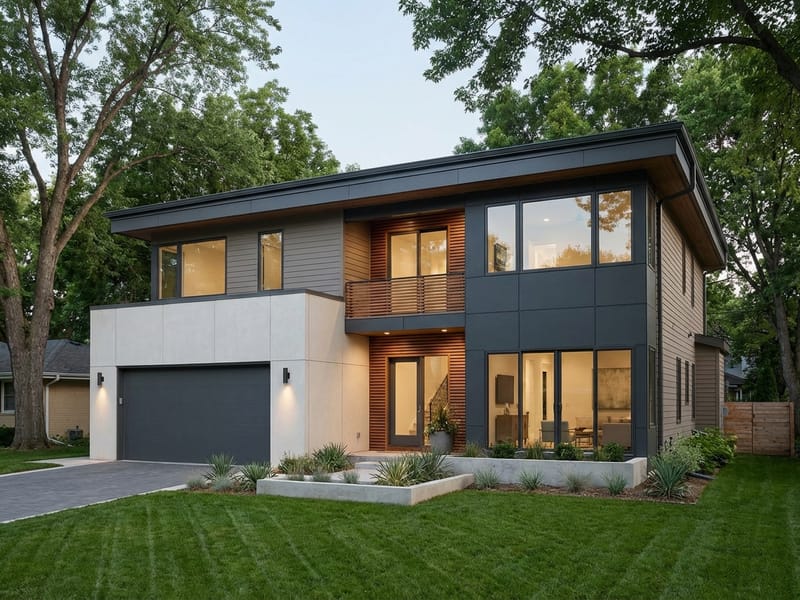
Key elements of Contemporary Facade style
Mixed Material Cladding
Two or three cladding materials — typically wood, render, and metal — combined with clear hierarchy across the facade volumes.
Floor-to-Ceiling Windows
Large fixed glazing panels and full curtain walls replace traditional punched windows, maximizing daylight and views.
Rectilinear Volumes
Strong rectangular forms — often offset, cantilevered, or stacked — create dynamic but disciplined building silhouettes.
Flat or Shed Roofs
Flat roofs with parapet detailing or single-slope shed roofs replace traditional pitched forms for a contemporary horizontal reading.
Oversized Pivot Entry
A 2.4-meter-tall solid pivot door in wood or black steel, recessed under a cantilevered canopy, anchors the contemporary entry.
Warm Neutral Palette
Charcoal, warm grey, white, and natural wood form the base, accented by one bold color (Corten orange, signal red) on a single element.
Try creating your own design
Upload a photo of your house and get a professional facade design in 30 seconds. First 2 designs are free.
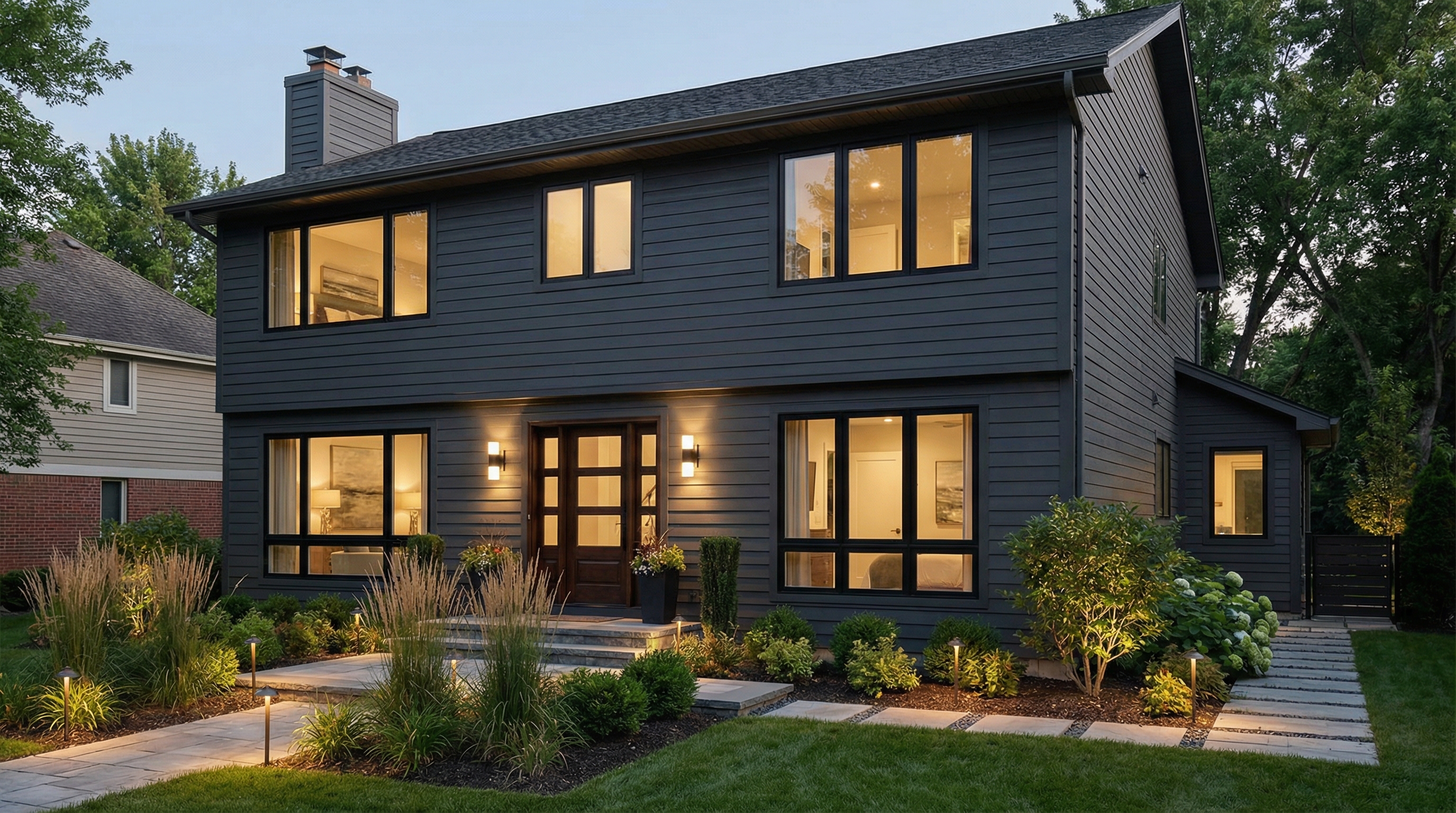
Contemporary Facade: facade design
See more examples in the Contemporary Facade style gallery or the full design gallery.
FAQ: facade design in Contemporary Facade style
- Contemporary refers to current residential architecture (post-2000) — not a single historical style. It combines modernist principles (clean lines, large openings) with mixed materials, varied volumes, and warmer palettes than strict modernism allows.
- Modern technically refers to mid-20th-century modernism (Mies, Le Corbusier). Contemporary means current and is more flexible — mixing wood with render, allowing varied volumes and shed roofs, and embracing warmer materials than pure modernist tradition.
- A mix of typically 2-3 cladding materials: render (white or charcoal), wood (vertical or horizontal cladding), fiber cement panels, dark brick, Corten steel, or stacked stone. Keep to a clear hierarchy — one dominant material plus accents.
- Flat roofs with concealed parapets (most common), single-slope shed roofs (popular for budget builds), or low-pitched roofs under 15 degrees with standing-seam metal. Avoid traditional gables and hip roofs above 25 degrees.
- Yes — many of the best contemporary residential examples are small. Focus on three signature moves: large floor-to-ceiling glazing on the main facade, one wood accent volume, and an oversized solid entry door. Skip ornamentation entirely.
- Five changes deliver dramatic transformation: paint exterior charcoal or warm white, replace windows with black-framed large fixed glazing, add a horizontal or vertical wood accent panel on one volume, install an oversized solid pivot door, and simplify all trim to flat profiles.
- Warm neutral palettes: charcoal grey + natural wood + white; or dark grey + black + Corten orange accent; or warm white + black trim + dark wood entry. Avoid pastels, vivid blue or green, and high-saturation colors except as a single accent on the entry door.