Arabian Facade Design
Guide to facade design in Arabian Facade style: materials, colors, architectural solutions, and examples
Arabian facade design covers a regional tradition stretching from Morocco to Oman, unified by climate-driven design responses: thick walls for thermal mass, narrow openings to limit solar gain, courtyards for cross-ventilation and elaborate screens (mashrabiya) that let air through while shading occupants. The facade language has remained remarkably consistent for over a millennium because the desert and Mediterranean climate logic still works.
Materials and palette
The dominant material is hand-applied lime stucco over masonry or stone, typically 40-60 cm thick in traditional construction. Colors are pulled from local earth: chalk white in Tunisia and Morocco, sandstone yellow in Riyadh, terracotta in Marrakech, pink-ochre in Petra and the UAE. Door and window frames are carved cedar or walnut, often with brass studwork. Mashrabiya screens in turned wood, glazed-tile insets and wrought-iron grilles add ornament without sacrificing climate function.
Facade features
Look for horseshoe and pointed arches over doors and windows, deeply recessed openings (often 30-60 cm into the wall), flat or low-domed roofs with parapet walls and wind-catchers (barjeel in the Gulf) for passive cooling. Windows are narrower than Western norms — typically less than a meter wide — to control heat and glare. Decorative tile bands, carved plaster panels (gypsum stucco) and inscriptions in calligraphy frame entrances.
Common mistakes
Don't conflate sub-regions — a Marrakech riad facade looks different from an Emirati villa or a Cairene mashrabiya house. Don't overscale the windows; the small-opening discipline is climate-correct and aesthetically fundamental.
Budget tips
Lime stucco is more expensive than acrylic ($8-15 per sq ft vs. $3-6) but the patina ages dramatically better. Mashrabiya screens can be CNC-cut from solid wood at about $40-80 per sq ft, far cheaper than hand-turned. Upload a photo of your house and our AI redraws it in Arabian facade style in seconds — free to try.
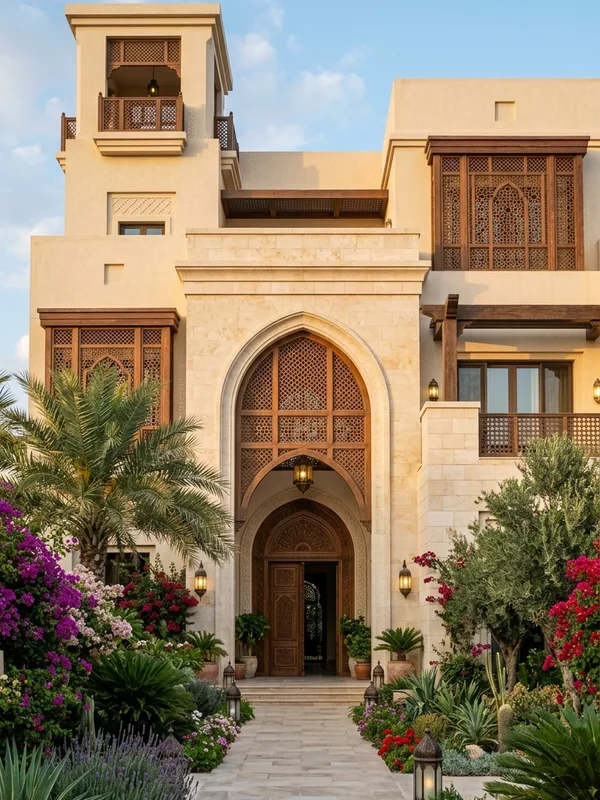
Key elements of Arabian Facade style
Lime Stucco Walls
Hand-applied lime stucco in white, sandstone or terracotta, with the textural irregularity that distinguishes real lime from acrylic paint.
Arched Openings
Horseshoe and pointed arches over doors and windows, often deeply recessed for shade and architectural depth.
Mashrabiya Screens
Turned-wood lattice screens over upper-floor windows, providing privacy and ventilation while creating intricate shadow patterns.
Flat Parapet Roofs
Flat or low-domed roofs with parapet walls, traditionally used for sleeping in summer and signaling family events.
Carved Wood Doors
Cedar or walnut entrance doors with hand-carved geometric panels and brass studwork, set within elaborate stone or tile surrounds.
Climate-Driven Design
Thick walls, narrow windows, courtyards and wind-catchers passively cool the building — a design logic refined over 1,000+ years.
Try creating your own design
Upload a photo of your house and get a professional facade design in 30 seconds. First 3 designs are free.
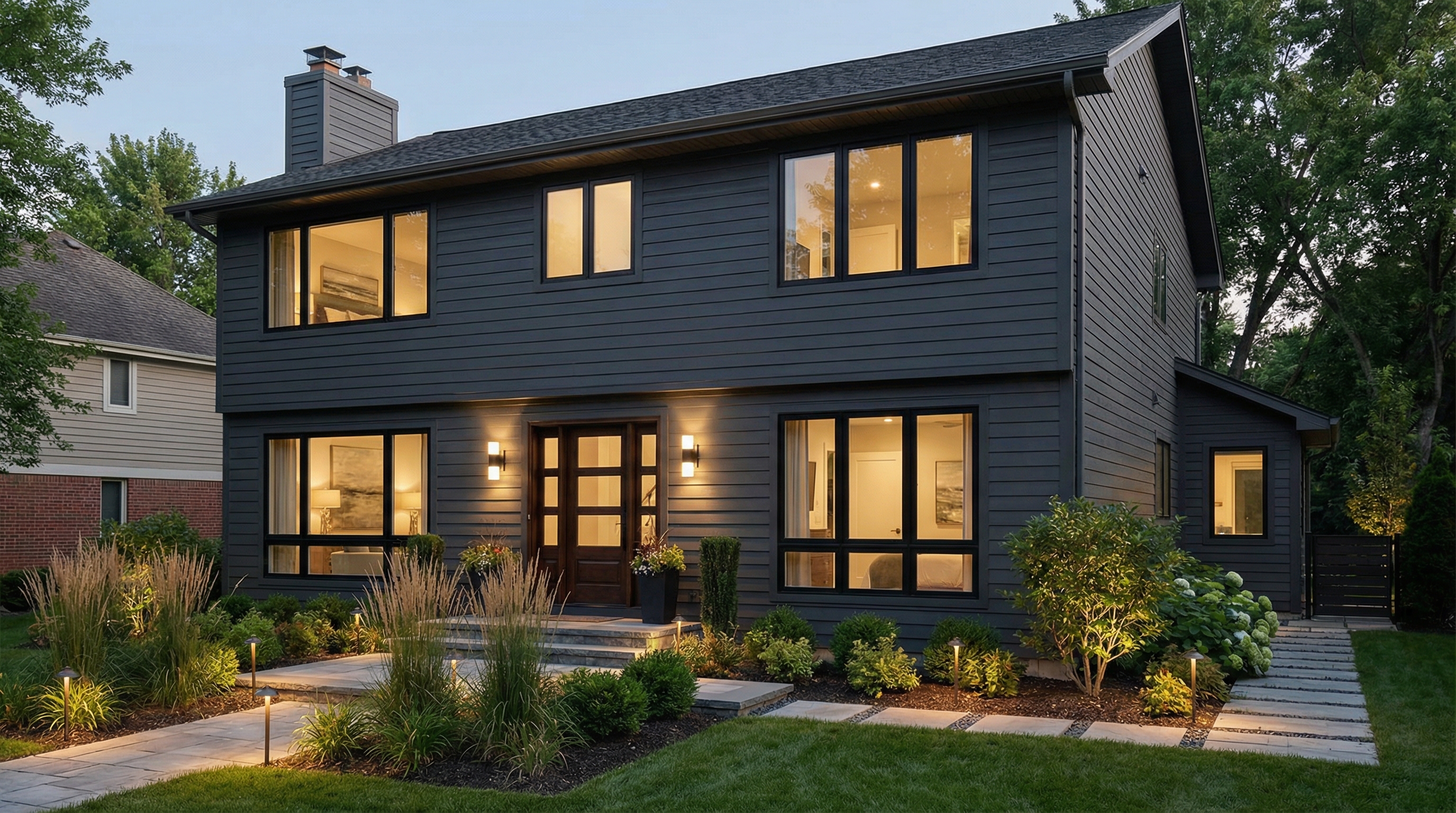
Arabian Facade: facade design
See more examples in the Arabian Facade style gallery or the full design gallery.
FAQ: facade design in Arabian Facade style
- Lime stucco walls, arched openings, narrow recessed windows, flat parapet roofs and mashrabiya screens — all responses to a hot dry climate.
- A turned-wood lattice screen, typically projecting from upper-floor windows. It provides ventilation and privacy while filtering sunlight into geometric shadow patterns.
- Small windows limit solar heat gain and glare in desert and Mediterranean climates, while thick walls store coolness from night air.
- Moroccan facades use more terracotta, carved cedar and zellige tile insets; Gulf facades historically used coral stone, palm-frond doors and wind-catchers (barjeel).
- Local earth tones — chalk white in Tunisia, sandstone in Riyadh, terracotta in Marrakech, pink-ochre in Petra and the UAE. Avoid generic beige.
- Yes, and it ages much better than acrylic — but it requires skilled application. Plan $8-15 per sq ft installed.
- It works best in hot dry climates. In humid or cold regions the climate logic falls apart but the aesthetic can still be applied with modern construction methods.