The legal landscape for virtual staging tightened dramatically on January 1, 2026 when California's Assembly Bill 723 took effect. Even if you are not in California, the law signals where the rest of the country is heading and most regional MLSs are now aligning rules to similar standards.
The law covers anyone advertising real estate in California — agents, brokers, sellers, and anyone acting on their behalf. The core requirement: any digitally altered image of property must carry a conspicuous disclosure that it has been altered, and the unaltered original must be made available to buyers.
What counts as "altered" under AB 723:
- Virtual staging (adding furniture)
- Object removal (deleting clutter, vehicles, debris)
- Sky replacement (swapping cloudy days for clear blue)
- AI enhancements (brightening, color grading beyond normal correction)
- Digital renderings (new construction "what it will look like" images)
What does not count:
- Standard white balance and exposure correction
- Cropping and basic straightening
- HDR processing within reasonable bounds
Penalties: listing removal, MLS fines $500-$5,000, complaints to the state real estate board, license suspension, and in California, criminal misdemeanor charges for repeated or egregious non-disclosure.
Almost every regional MLS now has a staging disclosure rule. The most common requirements:
- Tag staged images with "Virtually Staged" in the caption or on-image
- Provide an unstaged version of the same room in the listing
- Do not alter architecture, finishes, or fixed property features
- Disclose AI enhancement in the listing description
Specific MLSs vary on penalty severity. The strictest (SDMLS in San Diego, Bright MLS in the mid-Atlantic, MRED in Chicago) treat repeated non-disclosure as grounds for MLS suspension.
Article 12 binds every Realtor to "be honest and truthful in their real estate communications." NAR has clarified across multiple advisory bulletins in 2024-2025 that this includes virtual staging — undisclosed staging is an ethics violation independent of any local MLS or state law. Penalties at the NAR level run to license suspension and removal from local Realtor boards.
For every virtually staged listing in 2026, ensure:
- ✅ Each staged image has "Virtually Staged" in the caption or on the image
- ✅ The unstaged source photo is published in the same listing
- ✅ Architecture, finishes, fixtures, outlets, and windows are identical between staged and source
- ✅ The listing description explicitly mentions virtual staging is used
- ✅ You have kept the unedited source files for at least 12 months (in case of dispute)
A 60-second compliance check at upload time prevents 100% of the disclosure complaints that hit MLS boards in 2025.
The optimal AI staging approach varies by what you are selling. Here are the four most common pre-listing scenarios and how to handle each.
The bread-and-butter use case. Stage all five priority rooms (living, primary bedroom, kitchen, dining, one secondary bedroom or office) in a single consistent style chosen for your local market. Budget $25-$50 in AI staging cost; expect $4,000-$30,000 in offer-value lift for a $300,000-$600,000 listing.
Scale matters more here. Pick a style that emphasizes space (warm minimalist, Scandinavian, contemporary coastal) and stage only three rooms (living, bedroom, kitchen if photographed without dining). Smaller homes are most often killed by over-staging — fewer pieces per room is the rule.
These properties often have outdated source-room conditions: dated wallpaper, worn carpet, old fixtures. Do not have the AI "fix" these — that's an AB 723 violation. Instead, stage only rooms where the finishes are neutral and current, and leave the dated rooms unstaged with a "ready for your touches" note in the description.
The most flexible case. Source photos are usually freshly photographed clean rooms; AI staging adds lifestyle warmth instantly. Stage every room you photograph and pair each with an unstaged "spec finish" version that highlights craftsmanship — buyers in this segment want to see both the lifestyle promise and the build quality.
Different markets favor different staging aesthetics. The wrong style choice signals "this seller doesn't get the neighborhood" — a subtle but persistent drag on offers.
Coastal-modern or warm contemporary. Soft whites, blue-gray accents, woven natural fibers, light woods. Buyers in these markets read heavy darks and northern European minimalism as cold.
Warm transitional or contemporary classic. Beige and gray sofas, walnut woods, brass and matte black accents, ivory linens. The Northeast also tolerates more traditional staging (Persian rugs, framed art in clusters) than other markets.
Modern rustic or warm minimalist. Live-edge woods, cream wools, low-saturation art, single plants. Buyers in these markets respond to organic materials and earth tones.
Modern transitional — the safe default. Neutral palette, recognizable furniture forms, no statement pieces. Stages the home without alienating any single buyer demographic.
 Scandinavian minimalism reads as "fresh and updated" to younger buyers in most metro markets.
 Modern transitional is the safe default for most suburban listings — warm but not aspirational.
A typical seller can move from "decision to list" to "MLS-ready photos" in 2-4 days with AI staging. The breakdown:
| Day | Task | Time |
|---|
| Day 1 morning | Clean and prep rooms for photography | 3-4 hours |
| Day 1 afternoon | Photograph all rooms (DIY or hire $150-$300 photographer) | 2-3 hours |
| Day 2 | Upload to GenRoom, generate 5 variants per room | 1-2 hours |
| Day 3 | Review variants, pick one per room, regenerate edge cases | 1 hour |
| Day 4 | Final review, add disclosures, send to agent for MLS upload | 30 min |
Compare to physical staging: 1-2 days consultation, 1 week stager schedules delivery, 1-3 days install, 1-3 months rental period, 1 day removal. The AI workflow saves the seller 4-8 weeks on listing prep alone — which is the actual carrying-cost difference that justifies adoption for most listings.
Yes — provided you disclose it on each staged image and provide the unstaged original. In California, AB 723 makes disclosure a legal requirement as of January 1, 2026, with misdemeanor penalties for repeated non-disclosure. Outside California, MLS rules and NAR Code of Ethics Article 12 still require honest disclosure. The staging itself is legal everywhere in the US.
For a typical 5-room listing in 2026, AI staging costs $0-$150 total, compared to $4,000-$9,500 for one month of physical staging. Per-image AI cost ranges from $0 (free tiers) to $30 (premium tools with unlimited revisions). GenRoom sits in the $1-$5 per image range with unlimited revisions on paid plans.
Only if you over-stage. If the AI staging accurately reflects the room's true dimensions, finishes, and natural light, buyers transition smoothly from photo to in-person. The disappointment usually comes from staging that adds windows, fireplaces, or finishes that do not exist — which is now both illegal in California and unethical everywhere. Honest staging closes the gap; dishonest staging creates it.
For most listings under $1M, stage the three NAR-priority rooms first (living, primary bedroom, kitchen) and add dining and one office or secondary bedroom if budget and time allow. For luxury listings above $1.5M, consider stagings all rooms or supplementing with physical staging. Bathrooms should generally not be virtually staged at all — clean the actual room and shoot it.
AI staging works poorly with occupied homes — the seller's existing furniture, art, and personal items remain visible and the AI cannot cleanly remove them. For occupied homes, either (a) physically declutter and then AI-stage rooms with minimal remaining furniture, or (b) use traditional human-edited virtual staging which can selectively remove items. Most sellers find it easier to physically declutter first.
Most agent resistance comes from outdated authenticity concerns. Share the NAR 2025 staging data (83% of buyers' agents say staging helps buyers envision the home) and the specific ROI numbers for your price point. If your agent still refuses, consider staging only the top two rooms as a compromise — or finding an agent better suited to the 2026 market. The data side is settled; staged listings sell faster and for more.
Every public-facing platform where the staged image appears must carry the disclosure. On Zillow and Realtor.com, add "Virtually Staged" to the image caption directly. On Instagram or Facebook listing posts, add the disclosure to the first line of the caption. On agent websites, place a small "Virtually Staged" badge on the image itself. In California after January 1, 2026, missing this disclosure is a misdemeanor — treat the requirement as universal even if your state has not yet legislated it.
It can make a small room look better-furnished and more aspirational, but it cannot legally make it look physically larger. Adding furniture proportional to the actual room (not oversized to "fill" it) and choosing light colors and minimal pieces will give the strongest "feels larger" effect honestly. Any attempt to AI-edit the room's actual dimensions (extending walls, faking depth) is now an explicit AB 723 violation.
AI staging works for some exterior elements (adding outdoor furniture to a deck or patio, suggesting landscape vignettes) but should not be used to alter the home's actual exterior condition (no AI-painted siding, no faked roof replacement, no removed mature trees). For exterior, focus most effort on real-world curb appeal — the 2025 NAR report ranks curb appeal as the third-most-recommended pre-listing improvement after decluttering and deep cleaning.
GenRoom offers free credits for new users to test the empty-room-to-furnished workflow on your own property photos. Upload one room, try three style variants, and compare against the unstaged source before deciding whether to scale to your full listing.
The pre-listing decision in 2026 is not "AI staging or no staging" — it is "which AI staging workflow, in which style, for which buyer pool, with which disclosure." The technology has matured; the ROI math is clear (60-130x cheaper than physical staging for equivalent or better listing performance); the legal framework is finally explicit thanks to AB 723; and the only remaining question is whether you execute the workflow cleanly. The sellers and agents who treat pre-listing AI staging as a five-step process (photograph correctly, generate five variants, pick one, label honestly, publish with disclosure) consistently see the 1-10% offer-value lift the NAR data predicts. The ones who treat it as a magic button get burned by AB 723 complaints, MLS flags, and skeptical buyers in showings.
Start with the three NAR-priority rooms, pick one style for the whole home, and publish honestly. The investment is under $150, the upside is measured in tens of thousands of dollars on the offer, and the workflow takes a single afternoon. Try the full pre-listing staging workflow on your own empty room at GenRoom — upload, pick a style, and see the furnished version in under a minute.
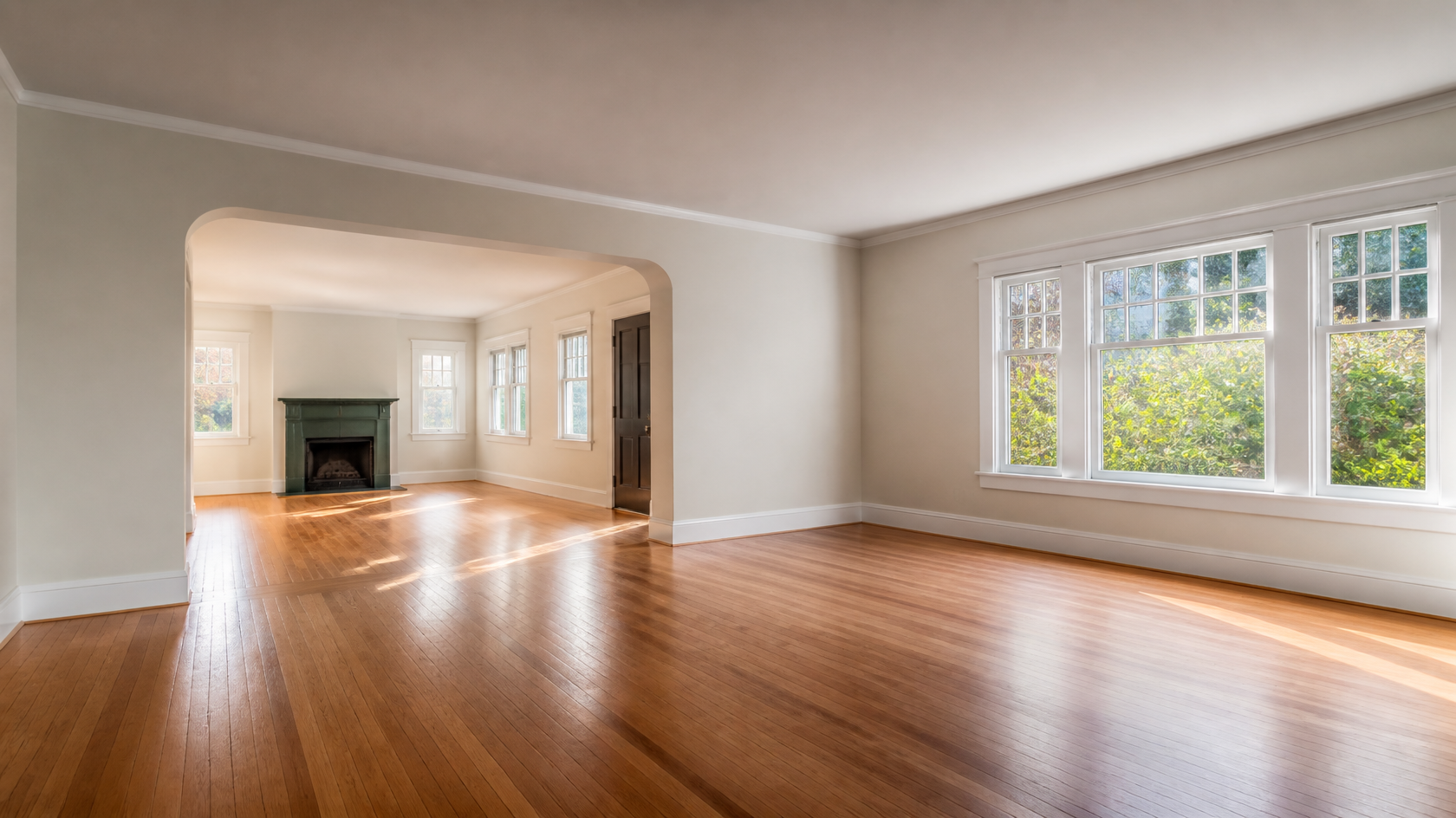
 A single AI staging variant of an empty living room. Pick one style and apply it consistently across all rooms in the listing.
 A primary bedroom AI-staged for a listing. Symmetry, low-contrast palette, and a single focal artwork are the three reliable choices.
 Dining rooms move buyers more than the staging industry usually credits. Even modest pre-listing styling unlocks lifestyle thinking.
 A small empty room before AI staging. Default to "home office" for any spare room under 100 square feet — post-2020 buyers prize WFH capability.