Wabi-Sabi Kids Room Design Ideas: 12 Real Examples (2026 Guide)
Lime-plaster walls, a low solid-wood bed, raw linen sheets, a hand-thrown ceramic lamp — the wabi-sabi kids room is the quietest, most considered space a child can grow up in. We unpack the rules, then show 12 photorealistic examples.
- 12
- Real examples
- ~30s
- AI render time
- 4 free
- Credits, no card
What is Wabi-Sabi Kids Room Design?
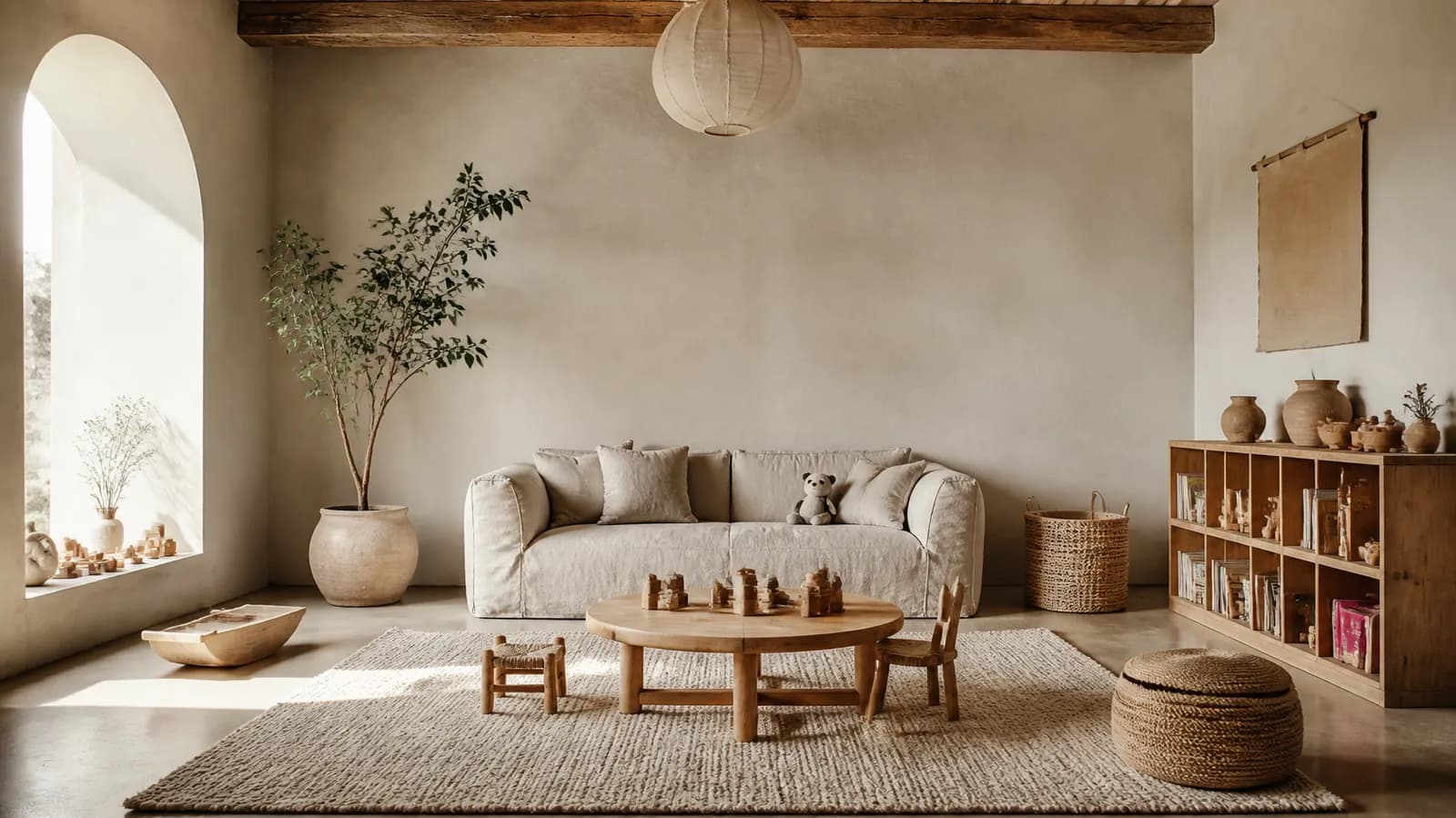
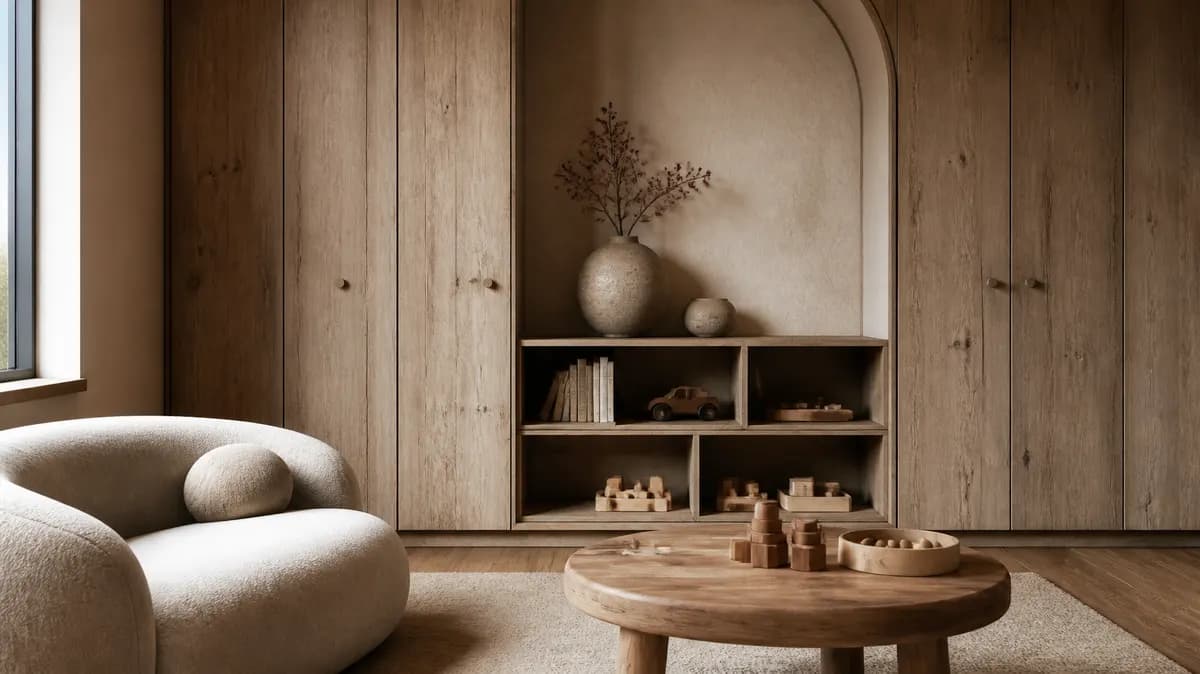
The wabi-sabi kids room applies the Japanese aesthetic of quiet imperfection to a child's bedroom from around age three onwards. The look rejects the primary-colour rainbow rugs, the printed cartoon bedding, the plastic toy clouds and the rocket-ship wallpaper of the standard kids' room. In their place it uses hand-trowelled lime plaster walls, a low solid-wood bed (often a tatami-style platform), raw linen sheets and hand-loomed wool throws, a single floating shelf of carefully chosen toys and books, and one small live plant on a high shelf out of reach.
Three principles guide an authentic wabi-sabi kids room. First, materials a child can grow into: solid hardwood furniture that scales from age three to fifteen, real linen and wool textiles, hand-thrown stoneware rather than plastic. Second, low-stimulation visual environment: bone-white plaster, one accent of warm sand or soft sage, no themed posters and no toy mountains. Third, hidden storage: closed drawers and built-in low cupboards conceal the toys, art supplies and clothes; only the chosen few items sit on display.
In 2026 the wabi-sabi kids room has become the considered alternative to the maximalist children's bedroom. It pairs naturally with Japandi (which adds Scandinavian craft and functionality), with Scandinavian (which shares the pale wood and linen) and with rustic (which shares the wool and the bench). The throughline is always plaster walls, a low solid-wood bed, hidden storage that respects how children actually move through a room, and the assumption that a child is a person who deserves a quiet, beautiful space.
12 Real Wabi-Sabi Kids Room Examples
Each example below is a complete look — not a mood board. Click any image to see it full-size, then hit the generate button to try the same combination on your own room photo.
 1Example
 2Example
 3Example
 4Example
 5Example
 6Example
 7Example
 8Example
 9Example
 10Example
 11Example
 12Example
Key Design Elements
Colors
- Bone white and warm off-white plaster walls
- Warm sand and raw clay accent walls
- Weathered walnut and aged oak furniture
- Soft sage and terracotta textile accents
- Stone grey and oatmeal linen
Materials
- Hand-trowelled lime plaster or tadelakt walls
- Solid walnut, oak or birch for bed and chest
- Stonewashed linen and hand-loomed wool textiles
- Hand-thrown stoneware and wooden toys
- Water-based safe wood finishes, no lacquer
Furniture
- Low solid-wood platform bed or tatami-style frame
- Low solid-walnut chest of drawers for hidden storage
- Hand-caned or solid-wood reading chair with cushion
- Floating wood shelf for carefully chosen toys and books
- Low desk in weathered walnut for drawing
Lighting
- Single linen-shade pendant on a dimmer
- Hand-thrown ceramic table lamp on the chest
- Carved-wood or pottery night light on a dimmer
- Layered warm-white sources at 2700 K
- Small clip-on reading lamp by the bed
Textiles
- Stonewashed linen sheets in oatmeal and sand
- Hand-loomed wool throw on the bed
- Low-pile undyed wool rug on the floor
- Linen-covered cushion on the reading chair
- Sheepskin on the reading nook bench
Wabi-Sabi Kids Room Color Palette
Six pigments do most of the work — start here, then add one accent of your own.
The base white for plaster walls and ceilings — warm, slightly grey, never bright. Lets the child's eye rest and works as a quiet backdrop for play.
The signature plaster accent on one wall behind the bed. Adds depth and gives the eye a tonal partner for the walnut furniture.
The hero wood for the platform bed, chest of drawers and desk. Medium-dark brown with grain visible — only ever finished with water-based safe oils.
The signature textile accent — a wool throw, a linen cushion, a small ceramic vase. Soothing and woodland, never aggressive.
The warm pop — one cushion, a small framed art piece, a hand-thrown vessel. Used sparingly; pairs with sage to keep the palette warm but quiet.
Raw linen drapes, undyed wool rug, hand-thrown grey ceramic. Grounds the palette and gives the eye somewhere quiet to land.
Must-Have Furniture & Fixtures
If you only buy these seven, you will read as authentically wabi-sabi.
Low solid-wood platform bed
Solid walnut, oak or birch platform frame, 25–35 cm above the floor, no headboard or with a low slatted headboard. Linen sheets in oatmeal.
Low chest of drawers
Six-drawer solid-walnut chest acting as hidden storage for clothes and toys. Wood or recessed-finger pulls, never chrome. Child-friendly height.
Reading chair or hand-caned slipper chair
Low solid-wood or hand-caned chair with a linen-covered cushion, sized for the child. Replaceable with a slightly larger version as the child grows.
Hand-trowelled plaster walls
Lime plaster on every wall, or tadelakt on a single accent wall behind the bed. Cured for at least two weeks before the child moves in.
Floating wood shelf
Single thick slab of weathered oak mounted asymmetrically, holding four to six carefully chosen wooden toys, two hand-thrown ceramics and a stack of cloth-spine books.
Linen-shade pendant and ceramic lamp
One central linen-shade pendant on a dimmer. One hand-thrown ceramic table lamp on the chest. Carved-wood night light on a dimmer. Every bulb at 2700 K.
Low desk for drawing
Small weathered-walnut writing desk, 60 cm deep, with a single wooden cup of pencils and a stack of paper. Drawing storage is hidden in the chest, not on the desk.
Common Mistakes to Avoid
Buying themed character bedding — printed cartoon sheets and pillows clash with every other wabi-sabi surface and date within months. Plain linen lasts.
Toy mountains on display — a maximalist toy storage system on open shelves over-stimulates the child. Use closed drawers in the chest; only the chosen few toys sit on the shelf.
Plastic plug-in nightlights — colour-changing plastic gadgets break the look and over-stimulate at bedtime. Use a carved-wood or pottery night light on a dimmer.
Cool overhead light — a single 4000 K LED panel destroys the calm. Use one linen pendant on a dimmer, one ceramic lamp and a warm clip-on reading lamp. Every bulb at 2700 K.
Adult-style austerity — wabi-sabi for a kids room must allow real play. Closed drawers full of toys, a soft sheepskin reading nook, one drawer of dress-up clothes. The aesthetic is not a museum.
Try Wabi-Sabi Kids Room in Your Own Room
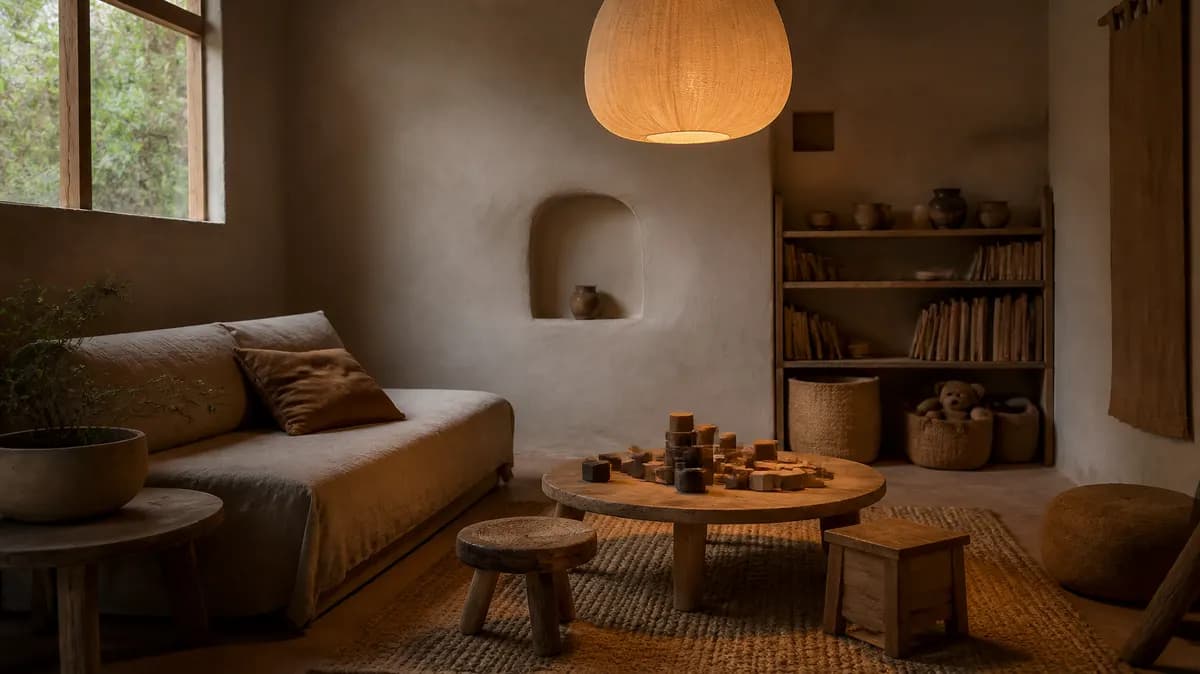
Upload a photo of your real kids room. Get a photorealistic wabi-sabi redesign in about 30 seconds. 4 free credits, no card.
Generate Your Wabi-Sabi Kids Room FreeOther Wabi-Sabi Rooms
Apply the same palette and principles to the rest of the home.


Other Kids Room Styles
Same room, different aesthetic — explore the rest of the kids style library.


Wabi-Sabi Kids Room — Frequently Asked Questions
What colors define wabi-sabi kids room design?
Will a child want a wabi-sabi room?
How do I store all the toys in a wabi-sabi kids room?
What flooring works best for a wabi-sabi kids room?
Can a wabi-sabi kids room grow from age 3 to age 12?
Is wabi-sabi kids room good for a small room?
How to Design a Wabi-Sabi Kids Room
Five decisions, in this order. Skip any of them and the look will not land.
- 1
Plaster the walls
Hand-trowelled lime plaster on every wall in bone white. One accent wall behind the bed in warm sand or tadelakt. Cure for two weeks before the child moves in. The texture is what makes the room read as wabi-sabi rather than as a small adult bedroom.
- 2
Buy the bed, chest and desk
Low solid-walnut platform bed (no headboard or low slatted). Six-drawer low chest of drawers as the main hidden storage. Small weathered-walnut writing desk for drawing. Three pieces — never more. All in the same wood tone.
- 3
Build the hidden storage system
Organise the chest of drawers by toy category, not appearance. One woven seagrass basket under the chest for the current project. Single floating wood shelf with only four to six rotating favourites, swapped weekly. The storage architecture is what allows the visible room to stay wabi-sabi.
- 4
Layer warm, low lighting
One central linen-shade pendant on a dimmer. One hand-thrown ceramic table lamp on the chest. Small clip-on reading lamp by the bed. Carved-wood night light on a dimmer. Every bulb at 2700 K. The room should dim from playtime bright to single-lamp bedtime calm.
- 5
Style the visible layer — toys, textiles, one branch
On the floating shelf: four to six carefully chosen wooden toys and one or two hand-thrown ceramics. On the bed: linen sheets, a hand-loomed wool throw and one soft toy. On the reading chair: a linen cushion and a folded sheepskin. One small ceramic vessel on the desk with a single eucalyptus or olive sprig. Resist the urge to add a second shelf, a wall hanging or a printed art print. Empty space is part of the design.
Keep Exploring
Tools and guides that pair with this style.