Wabi-Sabi Dining Room Design Ideas: 12 Real Examples (2026 Guide)
Live-edge walnut table, lime-plaster walls, hand-thrown stoneware — the wabi-sabi dining room turns every meal into a slow, deliberate ritual. We unpack the rules, then show 12 photorealistic examples.
- 12
- Real examples
- ~30s
- AI render time
- 4 free
- Credits, no card
What is Wabi-Sabi Dining Room Design?
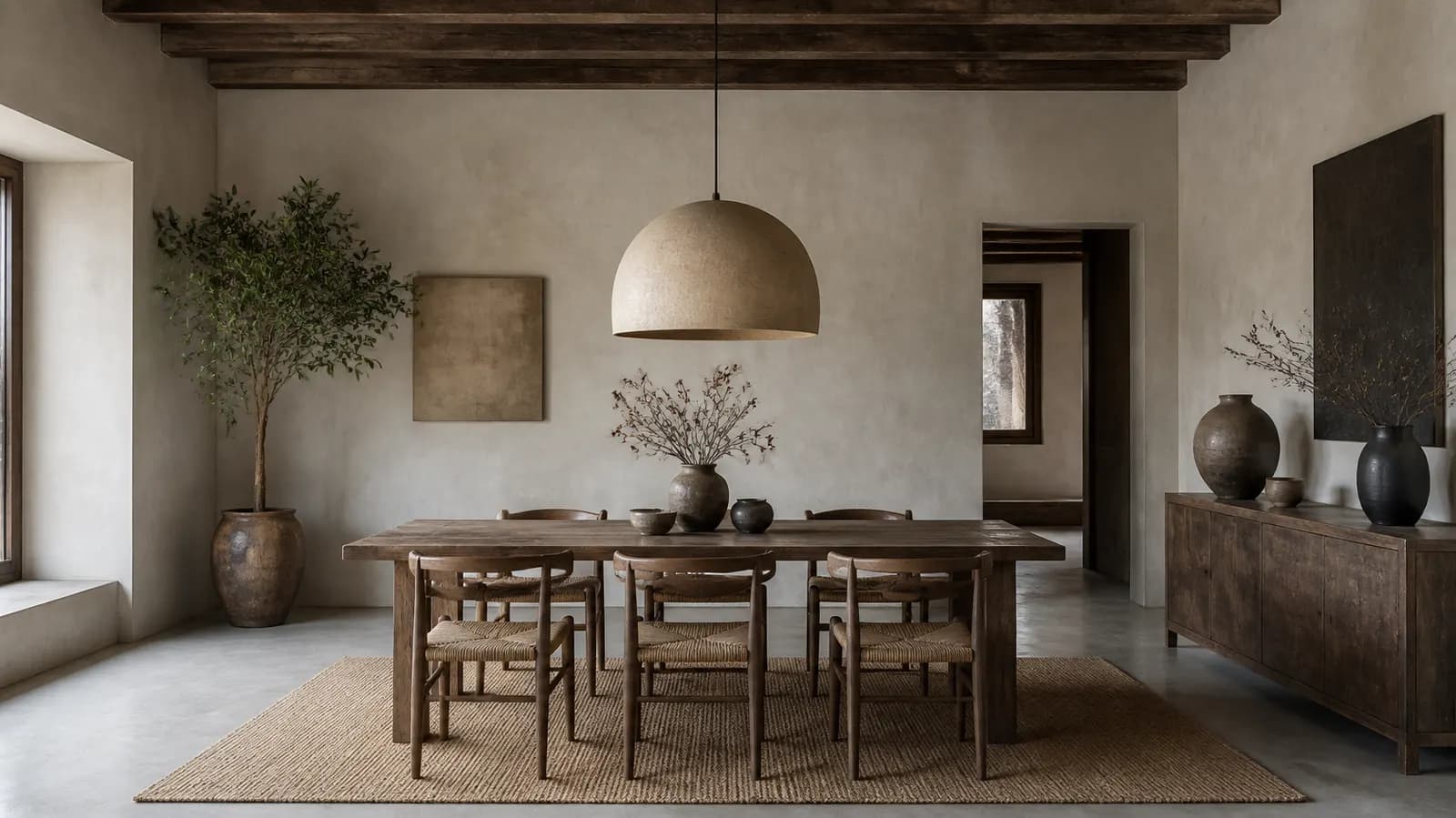
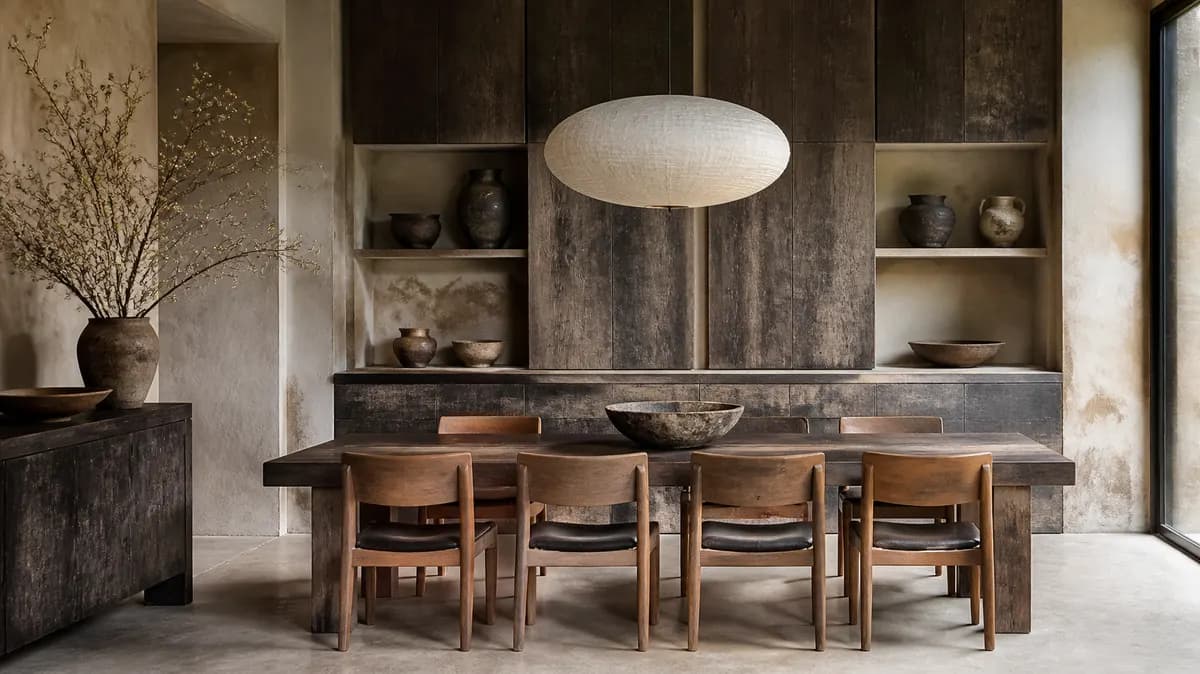
The wabi-sabi dining room is the slowest, quietest take on the family-table tradition. It rejects the gloss of a lacquered table, the glitter of crystal chandeliers and the matched dinner sets in favour of a hand-hewn single-slab table, mismatched stoneware plates and a paper pendant that hangs lower than feels comfortable at first glance. Meals here are eaten more slowly, conversation runs longer, and the table itself ages visibly — knife marks, water rings and oil stains become part of the surface rather than damage to be repaired.
Three principles guide an authentic wabi-sabi dining room. First, a hero live-edge table — usually a single thick slab of walnut, oak or elm with its natural edge preserved and a hardwax oil finish. Second, asymmetric arrangement: a long bench on one side, three or four mismatched chairs on the other, no centred display. Third, the discipline of subtraction at every meal — one ceramic vessel as the centrepiece, one branch, two beeswax candles. No charger plates, no crystal, no place cards.
In 2026 wabi-sabi dining has become a global aspirational style, especially among the slow-food and natural-wine generations. It pairs naturally with Japandi (which adds Scandinavian craft), with Mediterranean (which shares the plaster walls and stone palette) and with rustic (which shares the heavy wood). The throughline is always the live-edge table, the absence of gloss, the presence of mismatched hand-made ceramics and the sense that the room exists primarily to extend a meal, not to display the host.
12 Real Wabi-Sabi Dining Room Examples
Each example below is a complete look — not a mood board. Click any image to see it full-size, then hit the generate button to try the same combination on your own room photo.
 1Example
 2Example
 3Example
 4Example
 5Example
 6Example
 7Example
 8Example
 9Example
 10Example
 11Example
Key Design Elements
Colors
- Bone white and warm off-white plaster walls
- Raw clay and warm sand on accent walls or pottery
- Weathered walnut and aged oak table tones
- Charcoal and ink-black strict accents
- Stone grey and oatmeal linen
Materials
- Live-edge walnut, oak or elm slab table
- Hand-trowelled lime plaster on the walls
- Hand-thrown stoneware, raku and raw clay vessels
- Stonewashed linen and raw cotton textiles
- Hand-forged iron and aged brass hardware
Furniture
- Live-edge slab dining table, 220–280 cm long
- Long weathered-wood bench on one long side
- Mismatched solid-wood chairs or hand-caned dining chairs
- Low weathered-walnut sideboard or built-in
- Floating wood shelf for stoneware and serving
Lighting
- Single low paper-shade pendant over the table
- Hand-thrown ceramic sconce beside the sideboard
- Two beeswax candles on the table at every meal
- Layered warm-white sources at 2700 K
- Recessed niche light to graze the plaster wall
Textiles
- Raw-linen runner or no runner at all on the slab
- Stonewashed linen napkins, mismatched if possible
- Woven jute or undyed wool rug under the table
- Linen-covered bench cushion in oatmeal
- Hand-thrown stoneware service
Wabi-Sabi Dining Room Color Palette
Six pigments do most of the work — start here, then add one accent of your own.
The base white for plaster walls — warm, slightly grey, never bright. Looks alive against walnut and stoneware in evening light.
The signature plaster accent on a single feature wall. Pulls the room toward warmth and gives the eye a tonal partner for the walnut.
The hero wood for the live-edge table and sideboard. Medium-dark brown with knots and saw marks — finished with hardwax oil, never lacquer.
The strict accent — iron candle holders, the rim of a raku bowl, a single sumi-e ink scroll. Used sparingly, almost as punctuation.
The ceramics colour — stoneware platters, hand-thrown serving bowls, the centrepiece vessel. Used in small to medium doses but consistently.
Raw linen runner and napkins, woven jute rug, a hand-thrown grey pitcher. Grounds the palette and gives the eye somewhere quiet to rest.
Must-Have Furniture & Fixtures
If you only buy these seven, you will read as authentically wabi-sabi.
Live-edge slab dining table
Single thick slab of walnut, oak or elm, 220–280 cm long, with natural edge preserved on at least one side. Hand-forged iron base. Hardwax oil finish.
Long bench
Weathered-wood bench running the length of one long side, often the same wood as the table. Linen-covered cushion in oatmeal or sand.
Mismatched dining chairs
Three or four hand-caned, rush-seat or solid-wood chairs on the opposite long side and at the ends. No two identical. Different woods welcome.
Low sideboard
Weathered-walnut credenza for serving and storing linen, with two or three large stoneware platters on top. Hand-thrown ceramic lamp at one end.
Hand-trowelled plaster walls
Lime plaster on every wall, or tadelakt on a single accent wall behind the dining nook. The micro-texture is essential to the look.
Single low paper pendant
One large paper or linen shade pendant hung asymmetrically (not perfectly centred) over the table, 70–80 cm above the slab, on a dimmer at 2700 K.
Hand-thrown stoneware service
A small collection of mismatched stoneware plates, bowls, pitchers and the centrepiece vessel. Buy one piece at a time from real potters.
Common Mistakes to Avoid
Buying a matching dining set — six identical chairs around a glossy table reads catalogue, not wabi-sabi. Mix at least two chair styles and use a bench on one side.
Glossy lacquer or high-shine wood — wabi-sabi rejects gloss. Specify hardwax oil or matte oil finish on every wood surface in the room.
A crystal chandelier — crystal reads traditional or modern, never wabi-sabi. Use a single paper or linen pendant instead, hung low over the table.
Maximalist tablescape — wabi-sabi rejects layered place settings, chargers, crystal and place cards. One ceramic vessel, one branch, two beeswax candles. That is the styling.
Cool overhead light — a single 4000 K LED panel destroys the mood. Use a paper pendant on a dimmer, a ceramic sconce, and table candles. Every bulb at 2700 K.
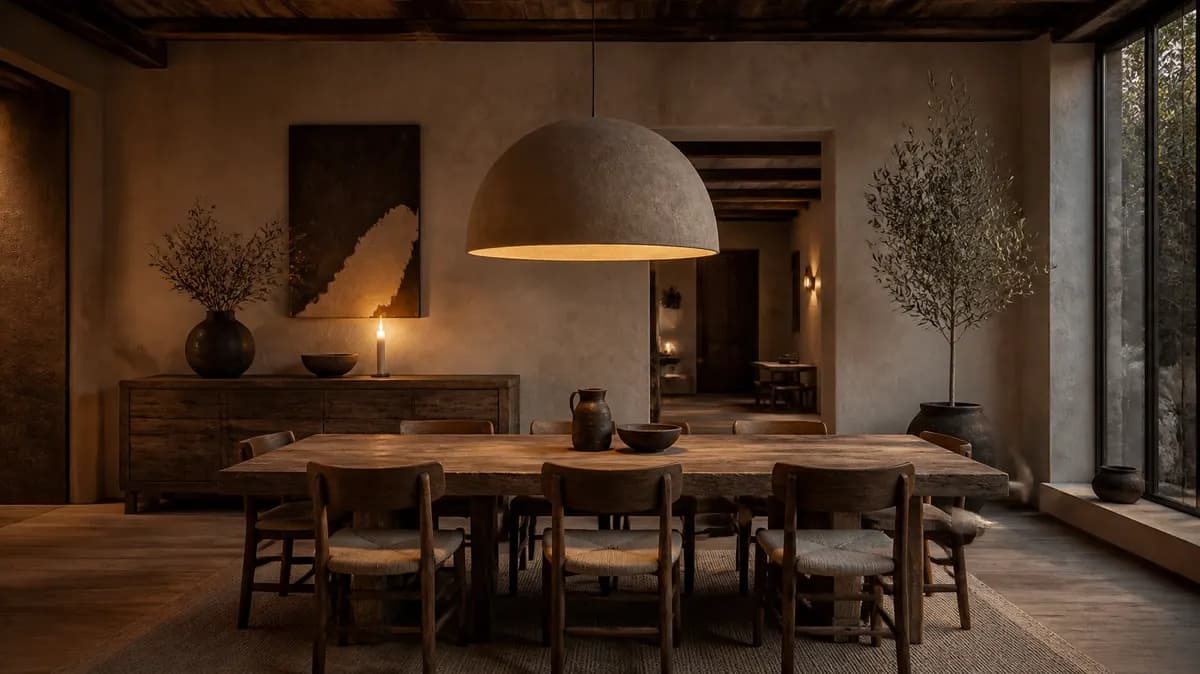
Try Wabi-Sabi Dining Room in Your Own Room
Upload a photo of your real dining room. Get a photorealistic wabi-sabi redesign in about 30 seconds. 4 free credits, no card.
Generate Your Wabi-Sabi Dining Room FreeOther Wabi-Sabi Rooms
Apply the same palette and principles to the rest of the home.


Other Dining Room Styles
Same room, different aesthetic — explore the rest of the dining style library.


Wabi-Sabi Dining Room — Frequently Asked Questions
What colors define wabi-sabi dining room design?
Is a live-edge slab table practical?
Should I use a tablecloth or runner?
What lighting works above a wabi-sabi dining table?
How is wabi-sabi different from Japandi in a dining room?
Is wabi-sabi dining good for small open-plan apartments?
How to Design a Wabi-Sabi Dining Room
Five decisions, in this order. Skip any of them and the look will not land.
- 1
Buy the live-edge slab table first
Walnut, oak or elm, 220–280 cm long, single thick slab with live edge preserved on at least one side. Hand-forged iron base. Hardwax oil finish, no lacquer. This is the single most important purchase in the room — spend more here than on anything else.
- 2
Plaster the walls
Hand-trowelled lime plaster on every wall, or tadelakt on a single accent wall behind the dining nook. The texture is what makes the entire room read as wabi-sabi rather than as a wood table in a modern room.
- 3
Mix the seating — bench plus mismatched chairs
Long weathered-wood bench on one long side of the table. Three or four mismatched solid-wood or hand-caned chairs on the other side and at the ends. No two identical. Different woods welcome as long as all are matte-finished, not glossed.
- 4
Hang one low paper pendant
Single large paper or linen pendant, hung slightly off-centre (the fukinsei principle), 70–80 cm above the tabletop, on a dimmer. Every bulb at 2700 K. Add one ceramic sconce by the sideboard for general fill. No chandelier, no row of identical pendants.
- 5
Style the centrepiece — one vessel, one branch, two candles
A single hand-thrown stoneware or raku vessel in the centre of the table, holding one fig, persimmon or plum branch. Two beeswax pillar candles in iron holders flanking the vessel. Stonewashed linen napkins, mismatched if possible. Resist any further styling — the empty wood is the point.
Keep Exploring
Tools and guides that pair with this style.