Wabi-Sabi Bedroom Design Ideas: 12 Real Examples (2026 Guide)
The Japanese art of finding beauty in imperfection. We explore how to create a serene, soulful bedroom using natural materials, an earthy palette, and a philosophy of quiet simplicity. Here are the core principles and 12 photorealistic examples to inspire you.
- 12
- Real examples
- ~30s
- AI render time
- 4 free
- Credits, no card
What is Wabi-Sabi Bedroom Design?
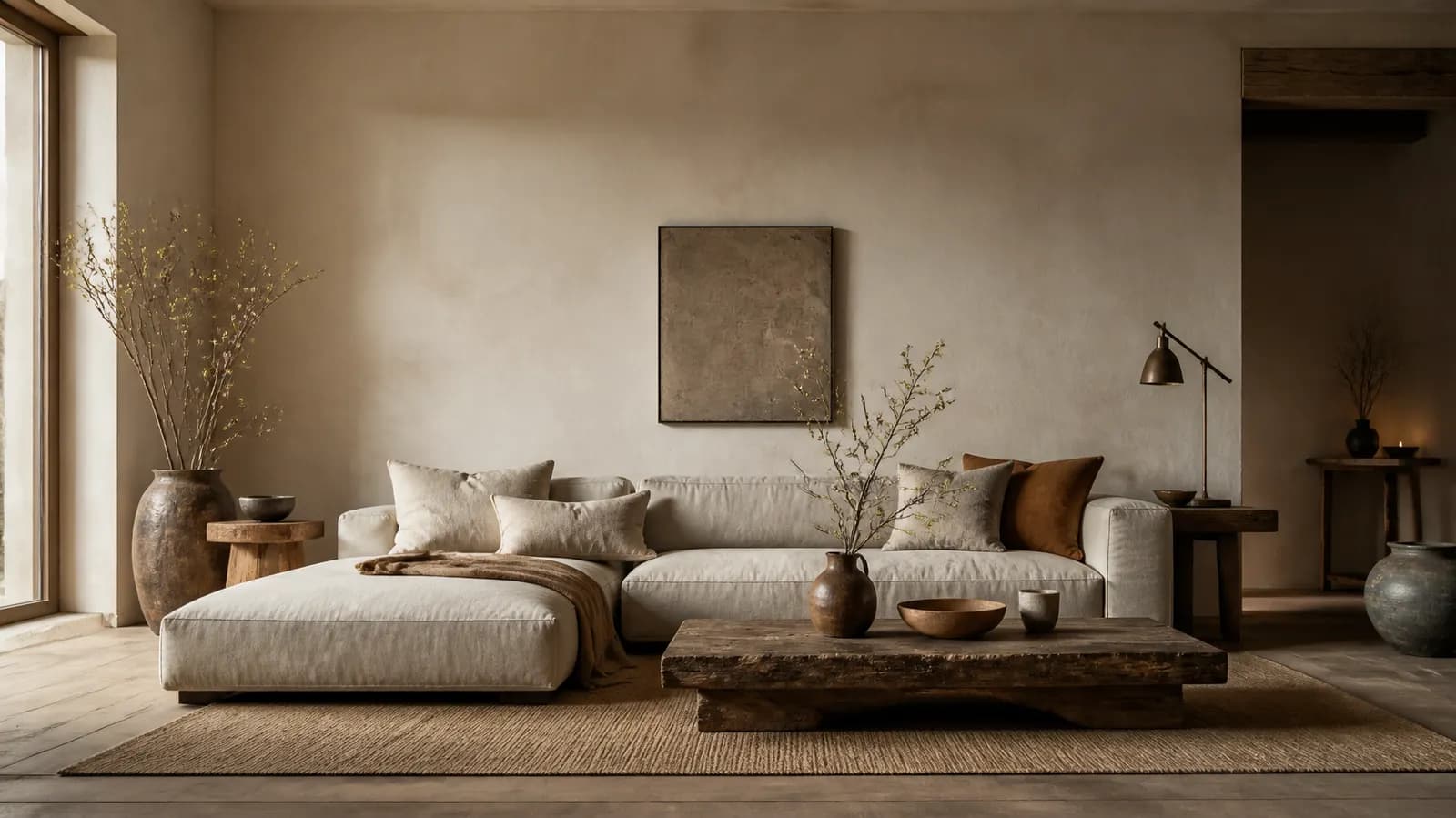
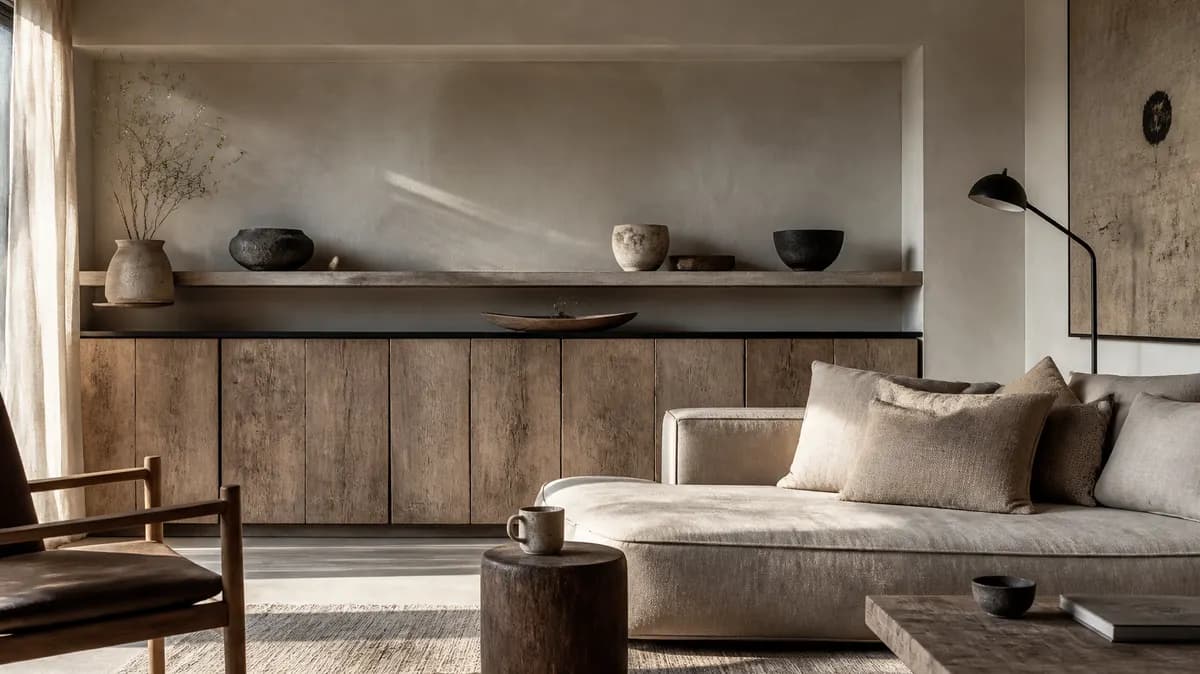
Wabi-Sabi is a traditional Japanese worldview centered on the acceptance of transience and imperfection. In interior design, it translates to an aesthetic that is unpretentious, modest, and deeply connected to nature. A Wabi-Sabi bedroom is a sanctuary stripped of the non-essential, celebrating the beauty of materials in their most natural state: the grain in a piece of wood, the wrinkle in linen, the crack in a ceramic vase.
Three principles define the Wabi-Sabi bedroom. First, authenticity of materials: surfaces are rough, unfinished, and patinated. Think limewash walls, reclaimed wood, and hand-spun wool. Second, asymmetry and irregularity: furniture is mismatched, objects are placed off-center, and symmetry is deliberately avoided to create a more natural, relaxed feeling. Third, a deep appreciation for tranquility: the room is uncluttered, the light is soft, and the palette is muted to create a space for rest and quiet contemplation.
In 2026, Wabi-Sabi has become a necessary antidote to our hyper-digital, mass-produced world. It offers a way to create a home that feels personal, soulful, and grounded. It is the philosophical parent of Japandi, but where Japandi can be crisp and modern, Wabi-Sabi remains more rustic, raw, and introspective. It pairs well with Organic Modern and Minimalism, offering a warmer, more textured alternative to both.
12 Real Wabi-Sabi Bedroom Examples
Each image below is a complete look, not a mood board. Click any to see it full-size, then hit generate to apply a similar aesthetic to your own bedroom photo.
 1Example
 2Example
 3Example
 4Example
 5Example
 6Example
 7Example
 8Example
 9Example
 10Example
 11Example
 12Example
Key Design Elements
Colors
- Muted earth tones: mushroom, taupe, stone, and putty.
- Shadowy greys and soft, off-blacks for depth.
- The natural, un-dyed color of linen, hemp, and raw cotton.
- Warm, organic hues like terracotta, rust, and indigo as subtle accents.
- Mossy, olive, and sage greens that echo the natural world.
Materials
- Reclaimed and unfinished woods like oak, elm, and cedar.
- Textured wall finishes: limewash, clay plaster, or tadelakt.
- Natural, unpolished stone such as travertine, slate, and soapstone.
- Handmade ceramics, earthenware, and raku ware with visible imperfections.
- Natural fibers: linen, jute, hemp, and raw, hand-spun wool.
Furniture
- Low-profile platform beds in solid, raw wood or upholstered in linen.
- Asymmetrical nightstands—a weathered stool, a stack of books, a stone block.
- A single, beautifully aged piece like an antique bench or primitive chair.
- Minimalist, open storage made from reclaimed wood planks.
- Furniture that is functional, humble, and shows signs of its making or history.
Lighting
- Diffused, indirect light from paper or linen shade pendants.
- Low-level ambient lighting to create a calm, intimate atmosphere.
- Emphasis on natural light, softened by sheer, unlined curtains.
- Warm temperature bulbs (2200K–2700K) to mimic candlelight.
- Beeswax or soy candles for a flickering, organic light source.
Textiles
- Rumpled, un-ironed linen bedding in earthy, muted colors.
- Large, hand-woven jute or wool rugs with natural texture.
- Sheer, gauzy curtains made from linen or raw cotton that drift.
- A single, chunky-knit wool or cashmere throw for tactile warmth.
- Hand-dyed textiles with natural variations, like those made with shibori or bogolan.
Wabi-Sabi Bedroom Color Palette
Six core earth tones that create a foundation of serenity. Start here, then let nature provide the accents.
The foundational off-white of raw textiles. Use for bedding and curtains to create a soft, light-filled base.
A warm, earthy neutral for walls. Limewash or clay plaster in this tone adds texture and depth.
The cool, grounding color of river stones and concrete floors. It balances the warmth of wood and linen.
The deep, rich tone of damp soil and reclaimed elm. Use for a key piece of furniture or a rustic door.
A muted, dusty green that connects the room to the outdoors. Use sparingly, like moss on a stone.
A soft, deep grey-black for subtle contrast. Found in aged steel, charred wood (shou sugi ban), or dark pottery.
Must-Have Furniture & Fixtures
If you only acquire these seven pieces, you will capture the authentic Wabi-Sabi spirit.
Low Platform Bed
Made from raw, reclaimed wood or upholstered in heavy linen. Its low profile creates a grounded, humble feeling.
Textured Walls
A finish of limewash, clay plaster, or tadelakt. The subtle variations and chalky texture are essential.
An Asymmetrical Nightstand
Replace a matching set with a single, characterful object: a weathered wooden stool, a block of stone, or a stack of books.
Handmade Ceramic Object
A single vase, bowl, or cup. It should be visibly handmade, with slight imperfections that make it unique.
Paper Lantern Pendant
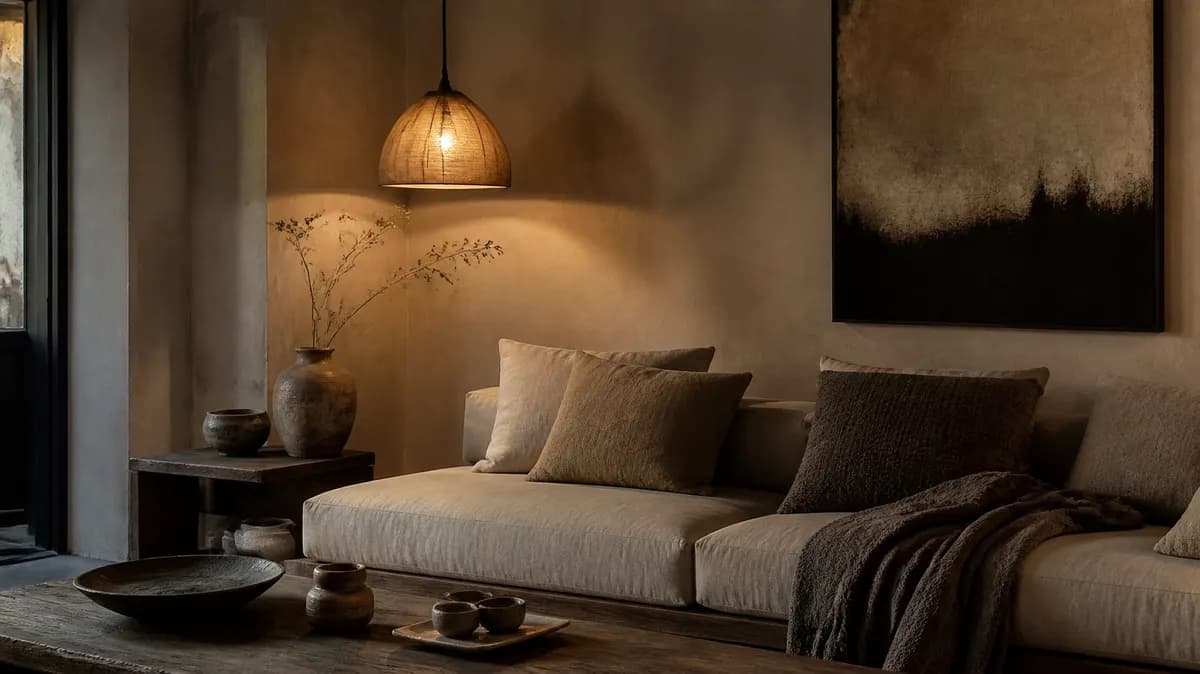
A classic Noguchi Akari lamp or similar. It provides soft, diffuse, non-directional light that feels like moonlight.
Natural Fiber Rug
A large, hand-woven rug in jute, sisal, or undyed wool. It adds critical texture and warmth to the space.
Sheer Linen Curtains
Hung from a simple rod, these soften daylight without blocking it, connecting the room to the changing light outside.
Common Mistakes to Avoid
Faking the patina — Wabi-Sabi is about authentic age, not artificially distressed furniture. Choose genuinely old or honestly made new pieces.
Confusing 'imperfect' with 'messy' — The style is highly curated minimalism. It is serene, not cluttered. Every object has a purpose and a place.
Forcing symmetry — Avoid matching nightstands, pairs of lamps, or perfectly centered artwork. The goal is a natural, organic balance.
Ignoring texture — A room with all smooth surfaces will feel sterile. It needs the roughness of raw wood, the coarseness of jute, and the chalkiness of plaster.
Making it too cold — While minimalist, Wabi-Sabi is warm and inviting. Balance cool stone or concrete with warm woods, soft lighting, and cozy textiles.
Try Wabi-Sabi in Your Own Bedroom
Upload a photo of your real bedroom. Get a photorealistic Wabi-Sabi redesign in about 30 seconds. 4 free credits, no card.
Generate Your Wabi-Sabi Bedroom FreeOther Wabi-Sabi Rooms
Extend the philosophy of serene imperfection throughout your home.


Other Bedroom Styles
Same room, different aesthetic — explore the rest of the bedroom style library.


Wabi-Sabi Bedroom — Frequently Asked Questions
What colors define a Wabi-Sabi bedroom?
Is a Wabi-Sabi bedroom just messy or unfinished?
How is Wabi-Sabi different from Japandi?
How can I achieve a Wabi-Sabi look on a budget?
What kind of bed works best in a Wabi-Sabi bedroom?
Is Wabi-Sabi a good style for a small bedroom?
How to Design a Wabi-Sabi Bedroom
Five steps to create a sanctuary of imperfect beauty.
- 1
Start with a Textured, Neutral Base
Forget flat, perfect paint. Choose a wall finish with natural texture, like limewash or clay plaster, in a muted earth tone. This creates an immediate sense of depth and imperfection that is the foundation of the look.
- 2
Choose Natural, Humble Materials
Commit to materials that show their age and origin. Unfinished wood, rumpled linen, coarse jute, handmade ceramics, and unpolished stone. Avoid anything synthetic, glossy, or mass-produced.
- 3
Embrace Asymmetry and Imperfection
Ditch matching sets. Use a stool on one side of the bed and a small chest on the other. Hang art off-center. Source at least one piece that is visibly old, worn, or repaired. This is where the room's soul comes from.
- 4
Edit Mercilessly
Wabi-Sabi is about subtraction. Remove everything that is not essential or deeply meaningful. Clear surfaces. The goal is visual quiet, allowing the few remaining objects to have a powerful presence.
- 5
Layer Soft, Diffuse Light
Light should be gentle and warm. Use paper or linen lampshades to diffuse harsh bulbs. Let natural light filter through sheer curtains. In the evening, rely on low-level lamps and candlelight to create an intimate, serene atmosphere.
Keep Exploring
Tools and guides that pair with this style.