Wabi-Sabi Bathroom Design Ideas: 12 Real Examples (2026 Guide)
Tadelakt walls, a hand-carved stone tub, an unlacquered brass tap — the wabi-sabi bathroom is the deeply quiet alternative to the all-tile, all-chrome renovation. We unpack the rules, then show 12 photorealistic examples.
- 12
- Real examples
- ~30s
- AI render time
- 4 free
- Credits, no card
What is Wabi-Sabi Bathroom Design?
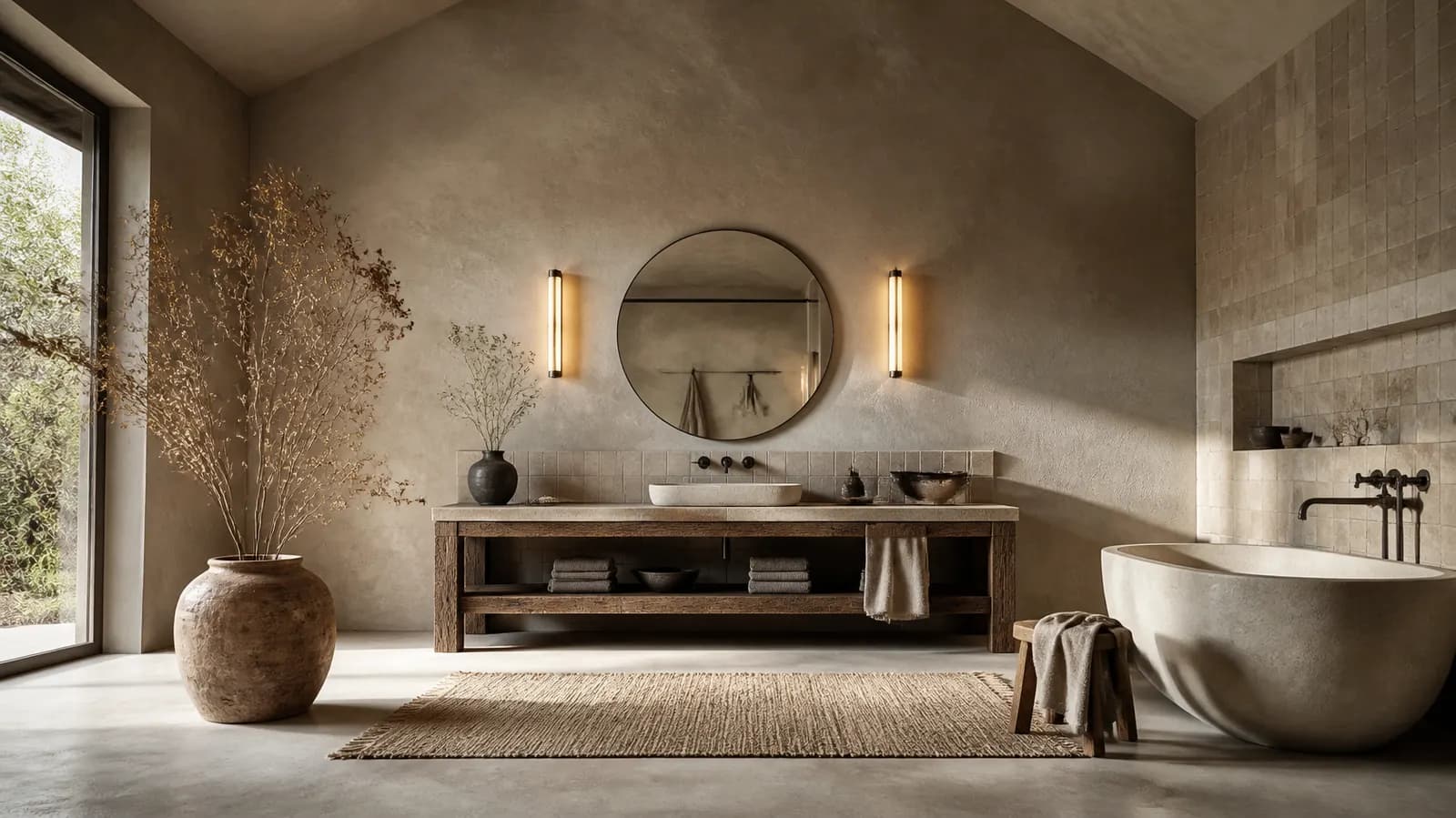
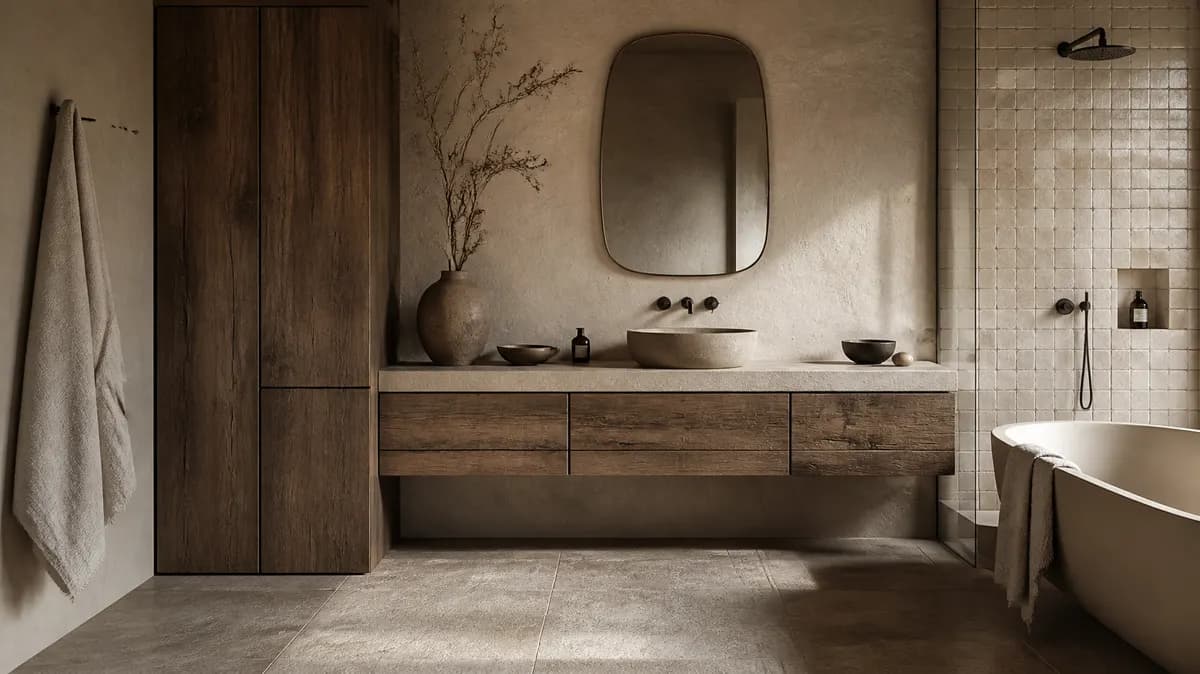
The wabi-sabi bathroom takes the bathing rituals of the Japanese tea house and the Moroccan hammam and re-engineers them for a contemporary wet room. The aesthetic refuses tile in favour of tadelakt — a hand-burnished, water-resistant Moroccan lime plaster that has waterproofed bath houses for centuries and reads as a soft, hand-thrown surface rather than an industrial cladding. The tub is hand-carved stone or a deep cast vessel; the tap is unlacquered brass; the floor is honed limestone; and almost nothing is on display.
Three principles guide an authentic wabi-sabi bathroom. First, plaster instead of tile: tadelakt on every wall and the shower, with stone or unsealed lime on the floor. Second, sculptural fixtures: a single hand-carved soaking tub or a deep stone vessel basin, treated as the room's focal point rather than as plumbing. Third, the discipline of subtraction: one mirror, one ceramic soap dish, one rolled linen towel, one branch in a clay vessel. Bottles and gadgets are hidden in a closed cabinet.
In 2026 the wabi-sabi bathroom has become a global aspirational design, especially in Japan, Spain, Mexico, Morocco and Australia. It pairs naturally with Japandi (which adds Scandinavian wood), with Mediterranean (which shares the tadelakt and stone) and with modern architecture (where the soft plaster reads as a deliberate counterpoint). The throughline is always plaster instead of tile, stone instead of acrylic, brass instead of chrome and the kind of quiet that a four-tile-edged shower can never deliver.
12 Real Wabi-Sabi Bathroom Examples
Each example below is a complete look — not a mood board. Click any image to see it full-size, then hit the generate button to try the same combination on your own room photo.
 1Example
 2Example
 3Example
 4Example
 5Example
 6Example
 7Example
 8Example
 9Example
 10Example
 11Example
 12Example
Key Design Elements
Colors
- Bone white tadelakt on the walls
- Warm sand and clay on accent walls or shower
- Honed limestone or stone-grey floor
- Weathered walnut for vanity and built-ins
- Unlacquered brass and aged bronze fixtures
Materials
- Tadelakt lime plaster on walls and shower
- Honed limestone or large-format stone on the floor
- Hand-carved stone or deep ceramic vessel basin
- Weathered walnut or aged oak vanity carcase
- Unlacquered brass and aged bronze plumbing
Furniture
- Floating weathered-walnut vanity with stone basin
- Hand-carved stone soaking tub
- Open shelving for rolled linen towels
- Weathered-wood bench in the shower or beside the tub
- Single ceramic stool as a sculptural piece
Lighting
- Hand-thrown ceramic sconces beside the mirror
- Recessed warm-white niche lights for plaster texture
- Layered warm sources at 2700 K, never bare overhead
- Single beeswax pillar candle for evening soak
- Optional skylight for raking daylight
Textiles
- Stonewashed linen bath towels in oatmeal
- Heavy waffle bath mat in raw cotton
- Hand-loomed wool runner on the stone floor
- Single linen wrap on a hand-forged iron hook
- Hand-thrown stoneware soap dish and tumbler
Wabi-Sabi Bathroom Color Palette
Six pigments do most of the work — start here, then add one accent of your own.
The base tone for tadelakt walls — warm, slightly grey, never bright. Hand-burnished to a soft sheen that subtly catches the light.
The signature tadelakt accent on the shower wall or behind the basin. Adds depth and brings the room from monastic to softly warm.
Honed limestone floor, the tub, the slab counter. The most-used colour after the walls; grounds the otherwise warm palette.
The vanity carcase and built-ins. Medium-dark brown with grain visible — sealed against humidity but never glossed.
The ceramics colour — soap dishes, the vessel basin if ceramic, a small jar of bath salts. Used sparingly but consistently.
The strict metal accent — unlacquered tap, towel ring, hooks. Develops a soft patina from the steam and water; never polished bright.
Must-Have Furniture & Fixtures
If you only buy these seven, you will read as authentically wabi-sabi.
Tadelakt walls
Hand-burnished Moroccan lime plaster on every wall including the shower. Waterproof when properly sealed with olive-oil soap. The room's defining material.
Hand-carved stone tub
Single block of honed limestone, basalt or river stone carved into a deep soaking tub. Centred against the longest wall as a sculptural focal point.
Ceramic vessel basin
Single hand-thrown raw-clay or stoneware vessel sitting on top of a weathered-walnut counter. Tall unlacquered brass tap mounted in the wall behind.
Floating walnut vanity
Slim, low-profile wall-mounted vanity in weathered walnut with two recessed-pull drawers. Sealed with marine-grade hardwax oil for steam resistance.
Honed limestone floor
Large-format honed limestone or unsealed concrete in a warm sand tone. With underfloor heating in any climate that gets cold underfoot.
Unlacquered brass fixtures
Wall-mount tap, towel ring, hooks and shower set in raw brass. Will tarnish quickly into a soft golden-grey; this patina is the point.
One hand-thrown ceramic and one branch
A single small clay soap dish, a rolled linen towel and one slim ceramic vessel holding an olive sprig or eucalyptus branch. The room's only styling.
Common Mistakes to Avoid
Tiling the whole room — tile shouts modern. Use tadelakt or lime plaster everywhere except the wet floor, where honed stone takes over.
Polished chrome fittings — chrome belongs to contemporary. For wabi-sabi always unlacquered brass, aged bronze or hand-forged matte iron.
Acrylic or moulded tub — the tub must be stone, copper or a deep cast vessel. Acrylic kills the entire wabi-sabi read instantly.
Cluttered counters — bottles, gadgets, two electric toothbrushes and a hairdryer destroy the look. Hide everything in a closed drawer; one soap dish only on the counter.
Cool LED downlights — a row of 4000 K pots in the ceiling kills the mood. Use ceramic sconces, a niche light and a single candle. Every bulb at 2700 K.
Try Wabi-Sabi Bathroom in Your Own Room
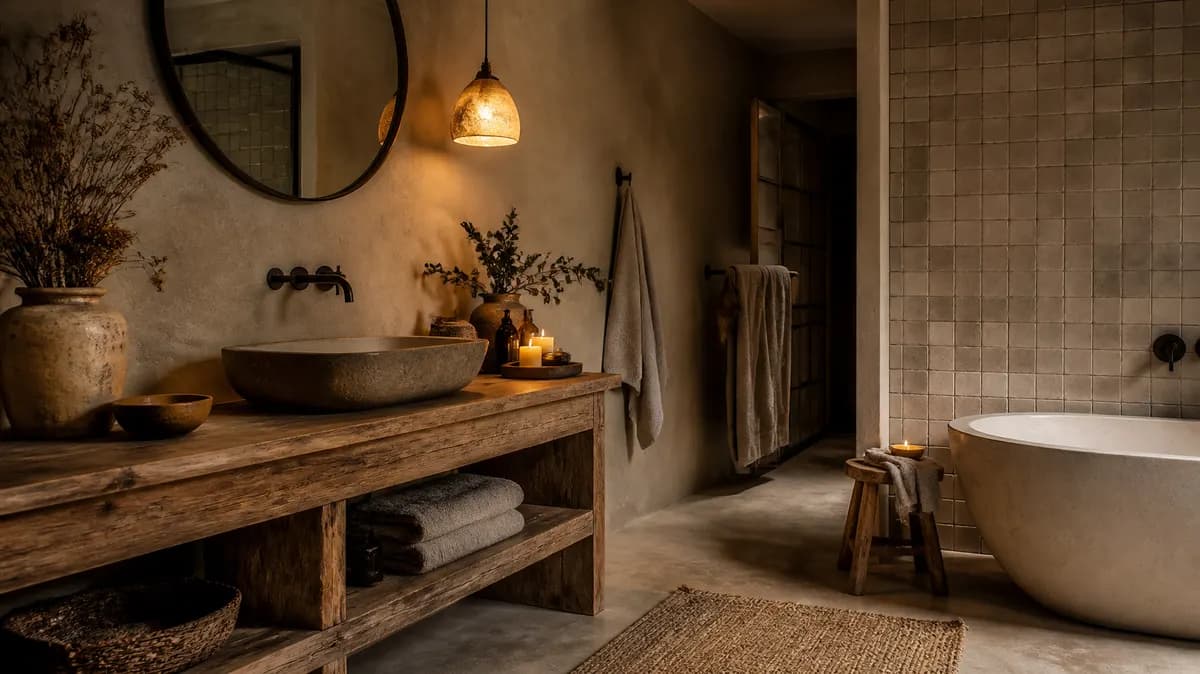
Upload a photo of your real bathroom. Get a photorealistic wabi-sabi redesign in about 30 seconds. 4 free credits, no card.
Generate Your Wabi-Sabi Bathroom FreeOther Wabi-Sabi Rooms
Apply the same palette and principles to the rest of the home.


Other Bathroom Styles
Same room, different aesthetic — explore the rest of the bathroom style library.


Wabi-Sabi Bathroom — Frequently Asked Questions
What is tadelakt and why is it the wabi-sabi wall material?
Is a stone bathtub practical?
How do I waterproof a wabi-sabi bathroom?
What flooring works best for a wabi-sabi bathroom?
How is wabi-sabi different from Japandi in a bathroom?
Is wabi-sabi bathroom good for a small powder room?
How to Design a Wabi-Sabi Bathroom
Five decisions, in this order. Skip any of them and the look will not land.
- 1
Plaster everything in tadelakt
Every wall and the shower in hand-burnished tadelakt. This is the single most important decision — tile in any quantity will pull the room toward modern or contemporary. If your budget cannot stretch to tadelakt everywhere, do the shower walls and the splashback in tadelakt and the rest in lime plaster.
- 2
Choose the bathing vessel — stone, ceramic or copper
Hand-carved limestone or basalt soaking tub for full effect. Deep cast-iron drop-in in a matte sand finish if weight or budget is an issue. For the basin, a hand-thrown ceramic vessel or a small hand-carved stone bowl. Both treated as sculptural focal points, not as plumbing.
- 3
Lay honed limestone floor
Large-format (600 mm or larger) honed limestone with underfloor heating and a long linear shower drain set in a 1.5 percent fall. Same stone wraps into the shower. No mosaic, no transition strips, no glass screen with a chrome frame — use a frameless glass panel only where code requires.
- 4
Fit unlacquered brass fixtures
Wall-mount brass tap above the vessel basin, brass shower set, brass towel ring, brass hooks and a single unlacquered brass robe ring. They will tarnish to a soft golden-grey within months. Specify all from the same maker so the brass tone matches.
- 5
Style the single vignette
One hand-thrown ceramic soap dish. One rolled linen towel. One small clay vessel with an olive sprig or eucalyptus branch. One framed ink-on-paper print on the tadelakt wall. One ceramic sconce by the mirror. Nothing else on display. Closed drawers hide everything else, including the toothbrushes, the bottles and the hairdryer.
Keep Exploring
Tools and guides that pair with this style.