Contemporary Nursery Design Ideas: 12 Real Examples (2026 Guide)
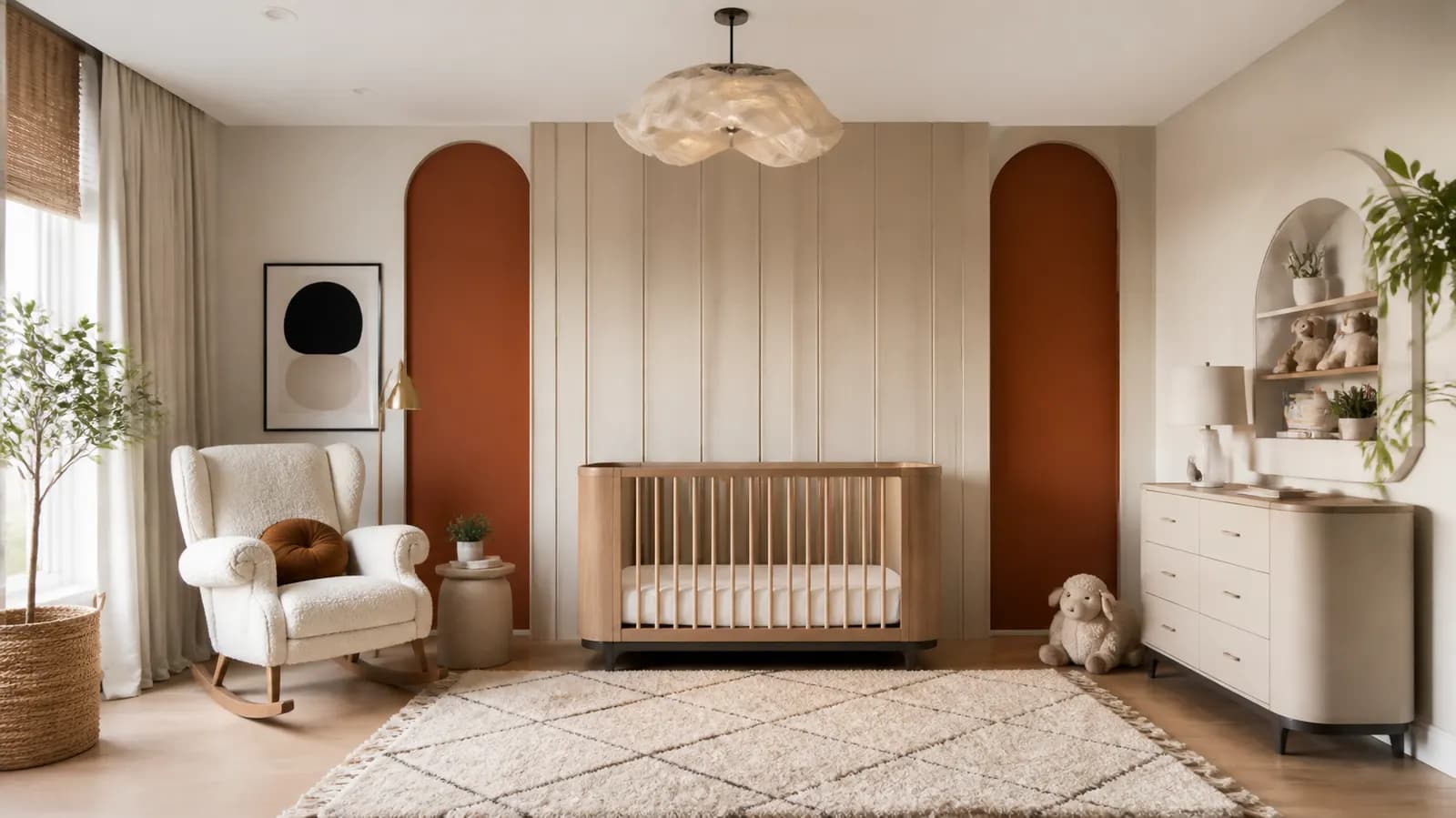
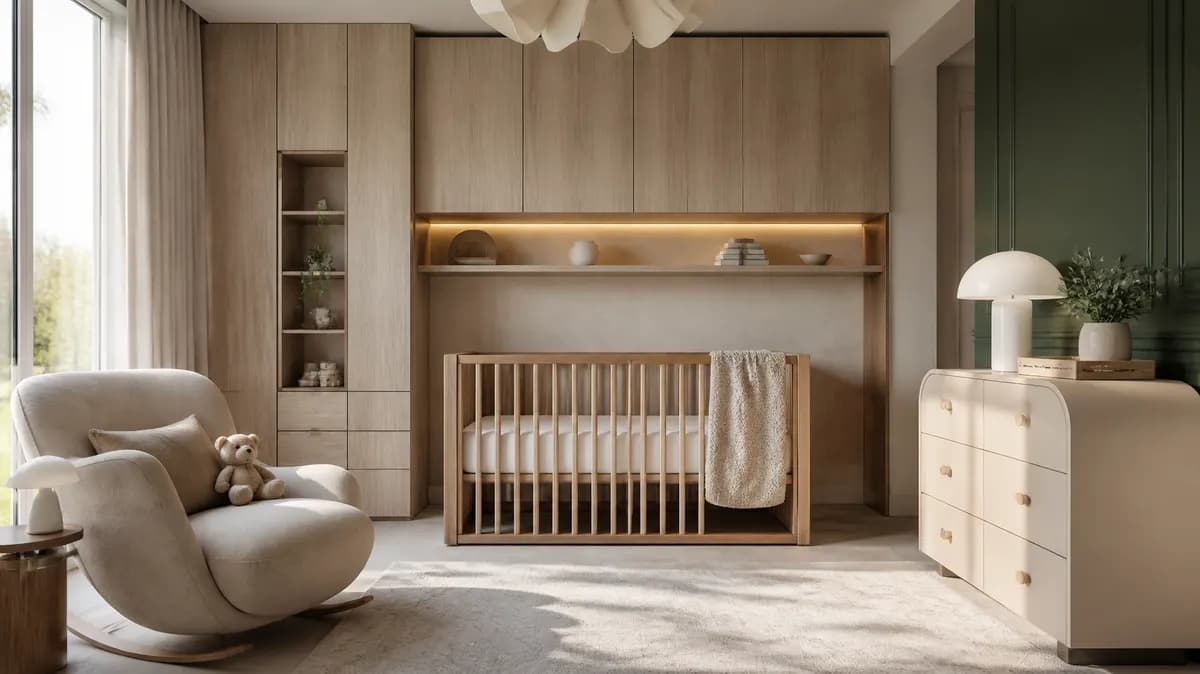
A curved pale-oak crib, an oat-linen glider, a sculptural pendant overhead and a single abstract painting in warm caramel — Contemporary at its 2026 peak, applied to the nursery. We unpack what makes it land, then show 12 photorealistic examples.
- 12
- Real examples
- ~30s
- AI render time
- 4 free
- Credits, no card
What is Contemporary Nursery Design?
Contemporary nursery design in 2026 takes the curved-and-warm-neutral language of the Contemporary living room and dials it down to baby scale. The crib is a curved pale-oak convertible cot, the glider is a boucle armchair in cream, the dresser is a long pale-oak chest with rounded corners, and a single sculptural pendant or wall sconce throws warm light. Walls are oat limewash, the rug is wool flatweave in oat and terracotta, and a single large abstract in warm caramel and ochre anchors the room.
Three principles run through every authentic Contemporary nursery. First, curves over angles: the crib is rounded, the glider is sculptural, the dresser has soft edges, the mirror is arched. Second, layered warm neutrals: oat walls, cream boucle, soft caramel throw, one terracotta cushion — the same five-value system that defines Contemporary throughout the home. Third, single sculptural anchor: one statement pendant or one large abstract painting, never both competing.
In 2026 Contemporary has overtaken Scandinavian as the dominant nursery aesthetic in serious parenting and design press. The look photographs spectacularly on grandparents' phones, supports calmer bedtimes (warm light and tonal palette), and grows beautifully — every piece transitions cleanly into a Contemporary toddler or kids room without redecoration. It pairs naturally with Contemporary bedrooms and Mediterranean or Japandi sibling rooms.
12 Real Contemporary Nursery Examples
Each example below is a complete look — not a mood board. Click any image to see it full-size, then hit the generate button to try the same combination on your own nursery photo.
 1Example
 2Example
 3Example
 4Example
 5Example
 6Example
 7Example
 8Example
 9Example
 10Example
 11Example
 12Example
Key Design Elements
Colors
- Warm oat and cream walls
- Soft caramel and dusty terracotta accents
- Sage green or muted ochre as a third accent
- Warm brass and antique gold for hardware
- Honey oak and travertine for natural anchors
Materials
- Pale oak for the crib, changing chest and dresser
- Boucle and shearling for the glider
- Travertine for the side table
- Organic cotton, linen and wool for textiles
- Warm brass and antique gold for fittings
Furniture
- Curved pale-oak convertible crib
- Boucle glider armchair with low profile
- Long pale-oak changing chest with rounded corners
- Round travertine side table by the glider
- Slim oak credenza for storage along one wall
Lighting
- Sculptural pendant centred over the room
- Brass arc floor lamp by the glider
- Ceramic table lamp on the credenza
- Soft amber plug-in nightlight by the changing chest
- Warm 2700 K LED, dimmable, no cool overheads
Textiles
- Oat muslin swaddles in warm neutral
- Cream linen crib sheet with soft caramel throw
- Wool flatweave rug in oat and terracotta
- Single textured cushion on the glider
- Stoneware mug for parent tea, ceramic toy
Contemporary Nursery Color Palette
Six pigments do most of the work — start here, then add one accent of your own.
The dominant wall tone. A warm, slightly mottled neutral that flatters skin and feels calm to a newborn nervous system.
The hero glider colour. The single most photographed Contemporary upholstery — soft, textured and warm.
An accent — the throw on the glider, a cushion, the binding of a board book. The warmest temperature in the palette.
A single deep clay accent — one cushion, a ceramic vessel, the edge of the rug pattern. Used as punctuation.
Drawer pulls, picture frames, lamp bases. Slightly warmer and less polished than Art Deco brass — the Contemporary brass has a soft sheen.
Side table by the glider, a single sculptural object on the credenza. The honed stone that anchors the room without going industrial.
Must-Have Furniture & Fixtures
If you only buy these seven, the room will read as authentically Contemporary.
Curved pale-oak convertible crib
A solid pale-oak convertible crib with curved spindles or a soft-curved headboard — Oeuf Sparrow, Babyletto Hudson or similar. Converts to a toddler bed and then a daybed. The single most consequential purchase and the visual anchor.
Boucle glider armchair
A cream boucle glider with a low sculptural profile and polished brass or chrome base. Comfortable for hour-long feeds and beautiful enough to migrate into the primary bedroom after the nursery phase ends.
Long pale-oak changing chest
A solid oak chest of drawers with rounded corners, five deep drawers, with a removable changing top. Becomes a regular dresser after the changing years end without redecoration.
Sculptural pendant lamp
One sculptural pendant centred over the room — a Vibia Wireflow, a paper-and-brass alternative, or a soft fluted glass dome. Dimmable, 2700 K, throws warm diffused light for night feeds.
Brass arc floor lamp
A warm brass arc floor lamp curving over the glider, providing the second source of light for feeding and reading. Dimmable, never directly over the crib.
Wool flatweave rug
A large oat-and-terracotta wool flatweave rug under the glider and play area. Skip synthetic shag and skip cartoon-print rugs; this rug stays in the room for the next decade.
Large-format abstract painting
One abstract painting in warm caramel and ochre above the dresser, sized at least 100 by 80 cm. The single piece of art the room is composed around — and the most photographed object in grandparents' phone galleries.
Common Mistakes to Avoid
Bright primary palette — clashes with the warm Contemporary aesthetic. Soften everything to oat, cream, caramel and terracotta; the nursery can still feel feminine, masculine or gender-neutral via the rug pattern and small accents.
Cartoon-character mobiles and wall stickers — cap the room at one age and one franchise and break the calm. Use a single hand-painted monochrome poster or one woven textile on the wall instead.
Cool LED ceiling lights at 4000 K — destroy the warmth instantly and read poorly at 2 am during night feeds. Specify 2700 K everywhere, dimmable, with the sculptural pendant as the main source.
Sharp-angled IKEA white furniture — kills the curved Contemporary language. Specify pale oak with rounded corners; the crib, changing chest and dresser all share the same soft-edge vocabulary.
Too many toys on display — Contemporary is curated restraint. Three to five wooden toys on one open oak shelf, everything else hidden in the dresser drawers or two woven jute baskets.
Try Contemporary Nursery in Your Own Room
Upload a photo of your real nursery. Get a photorealistic Contemporary redesign in about 30 seconds. 4 free credits, no card.
Generate Your Contemporary Nursery FreeOther Contemporary Rooms
Apply the same palette and principles to the rest of the home.


Other Nursery Styles
Same room, different aesthetic — explore the rest of the nursery style library.


Contemporary Nursery — Frequently Asked Questions
Is a Contemporary nursery safe?
Will a Contemporary nursery grow with my child?
What lighting works in a Contemporary nursery?
How is Contemporary different from Scandinavian for a nursery?
Are dark accent walls OK for a Contemporary nursery?
Can Contemporary work in a small nursery or shared bedroom?
How to Design a Contemporary Nursery
Five decisions, in this order. Skip any of them and the look will not land.
- 1
Choose your curved pale-oak convertible crib
The crib is the room. A solid pale-oak convertible crib with curved spindles or a soft-curved headboard. Convertible to a toddler bed and then a daybed. This single piece commits you to Contemporary and serves the next ten years of childhood.
- 2
Layer five values of warm neutral
Walls in oat limewash. Crib sheet in cream linen. Glider in cream boucle. Throw on the glider in soft caramel. One cushion or rug accent in dusty terracotta. The five-value system is what makes the nursery photograph as tonal and intentional.
- 3
Add the sculptural lighting anchor
One large sculptural pendant centred over the room, plus one brass arc floor lamp curving over the glider. Both at 2700 K, both dimmable. Add a soft amber plug-in nightlight near the changing chest. This three-source layer covers ambient warmth, feeding light and night-feed safety.
- 4
Hang the large abstract painting
One abstract painting in warm caramel and ochre above the dresser, sized at least 100 by 80 cm. The single piece of art the room is composed around and the most-photographed object in grandparents' phone galleries. Skip cartoon prints, alphabet posters and personalised name banners.
- 5
Edit the toys and hide the plastic
Three to five curated wooden toys on one open oak shelf — a stacking ring, a wooden rattle, a single soft toy. Everything else lives in the changing chest drawers or in two large jute baskets under the crib. The eye should land on oak, boucle, travertine and warm brass, never on a plastic monitor screen or a branded character toy.
Keep Exploring
Tools and guides that pair with this style.